Last updated:
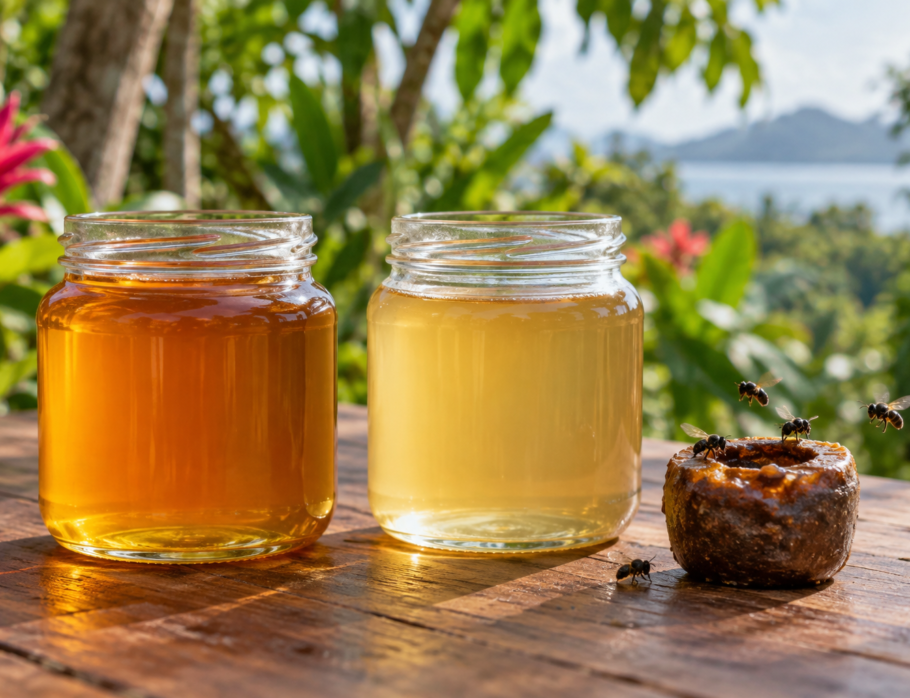
Sunshine Coast honey comes from two quite different bees. Almost all of it is made by European honey bees in managed hives: a runny to creamy, shelf-stable honey you can buy by the kilo. A tiny amount is made by native stingless bees (Tetragonula carbonaria), which produce a tangy, syrupy honey called sugarbag at roughly 1 kg per hive per year. If you want an everyday honey, buy hive honey. If you want a rare tasting experience, look for labelled native bee honey.
At QLD Honey & Hives we are European honey bee beekeepers, so we are upfront: we do not sell sugarbag. What follows is the comparison we give customers who ask us about it at the markets, backed by the Australian standard and published research.
Key Takeaways
- Hive honey and native bee honey are legally different foods: sugarbag must be sold as “native bee honey” under Standard 2.8.3, with no more than 28% moisture and at least 2% trehalulose.
- A peer-reviewed study of Queensland stingless bee honey measured 26.5% to 30.0% moisture, far wetter than hive honey, which is why sugarbag is tangier and ferments more easily.
- One stingless bee hive yields only about 1 kg a year, so sugarbag is a rare, premium product, while hive honey is plentiful and affordable.
- Stingless bees are not susceptible to varroa mite, but they can still be affected indirectly by sick European honey bees nearby.
- Never give honey of any kind to babies under 12 months.
What Counts as Sunshine Coast Honey?
Sunshine Coast honey is any honey produced by bees foraging in the Sunshine Coast and its hinterland, from the coastal heath and paperbark wetlands to the eucalypt forests behind Maleny and Mapleton. In practice that means two products from two bee types, and shoppers often mix them up.
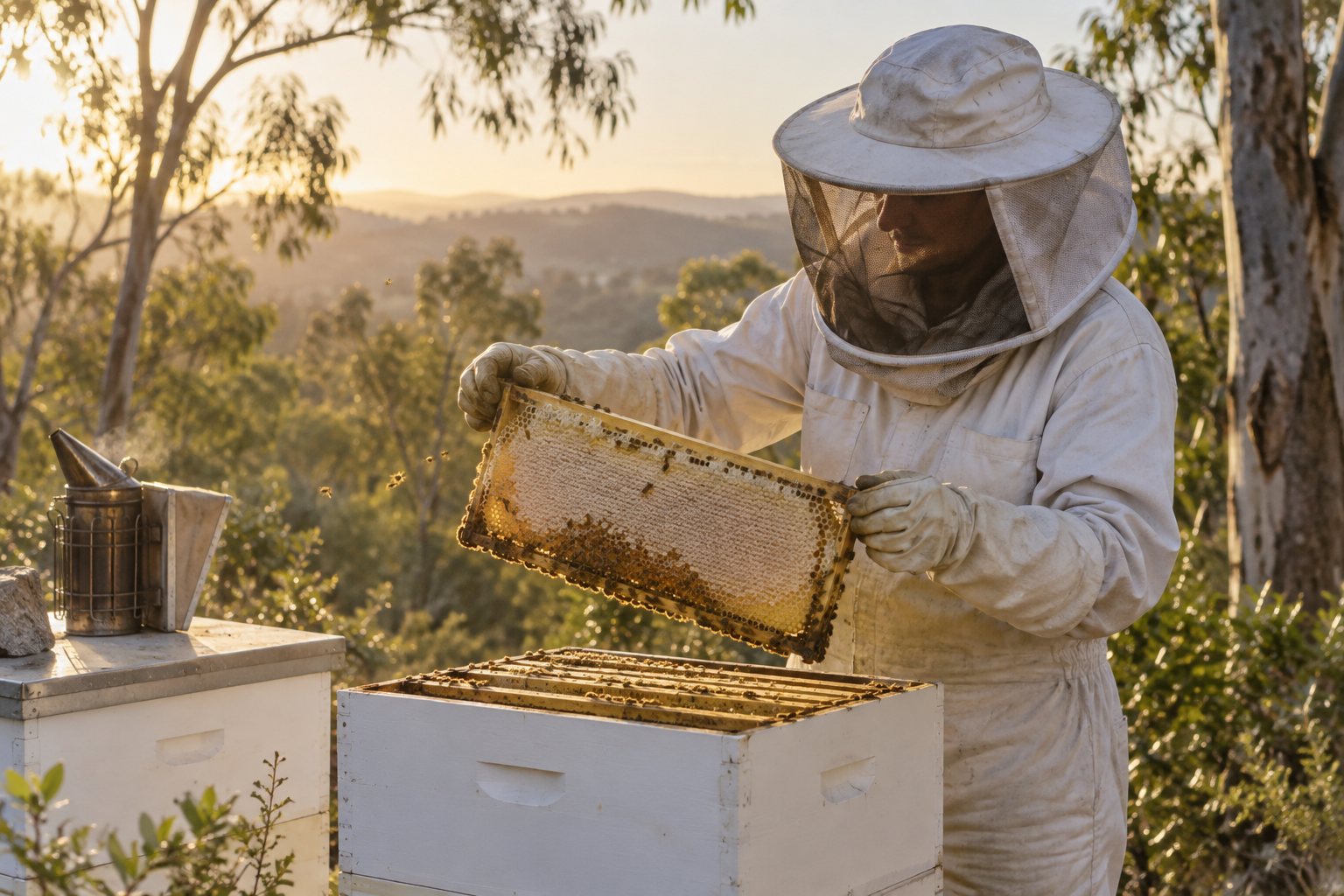
European honey bees (Apis mellifera) live in boxed hives managed by beekeepers. They store honey in wax comb, cap it when it is ripe, and make far more than they need. This is the honey in nearly every jar, and the one we write about in our seasonal forage guide and our varieties and where to buy guide.
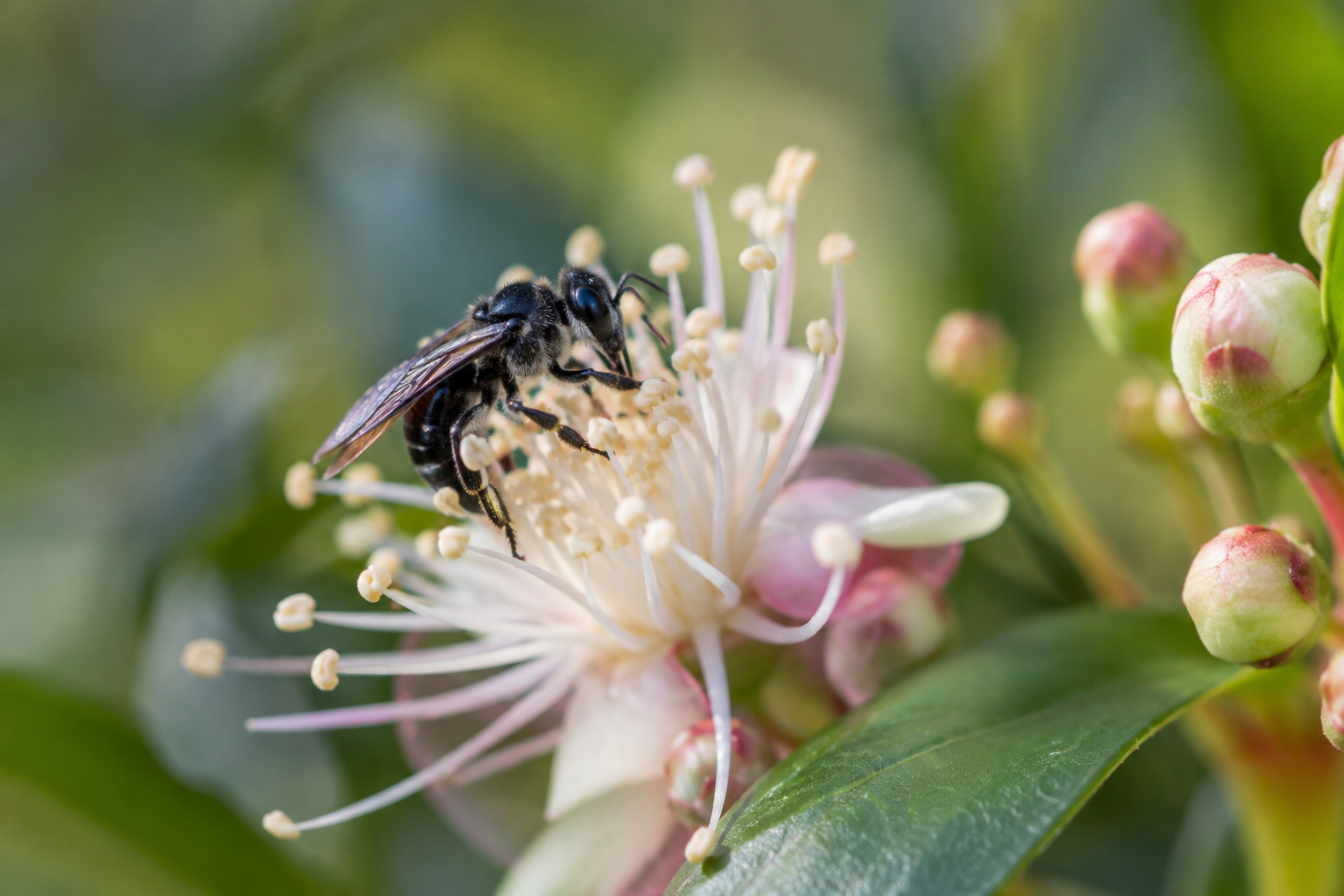
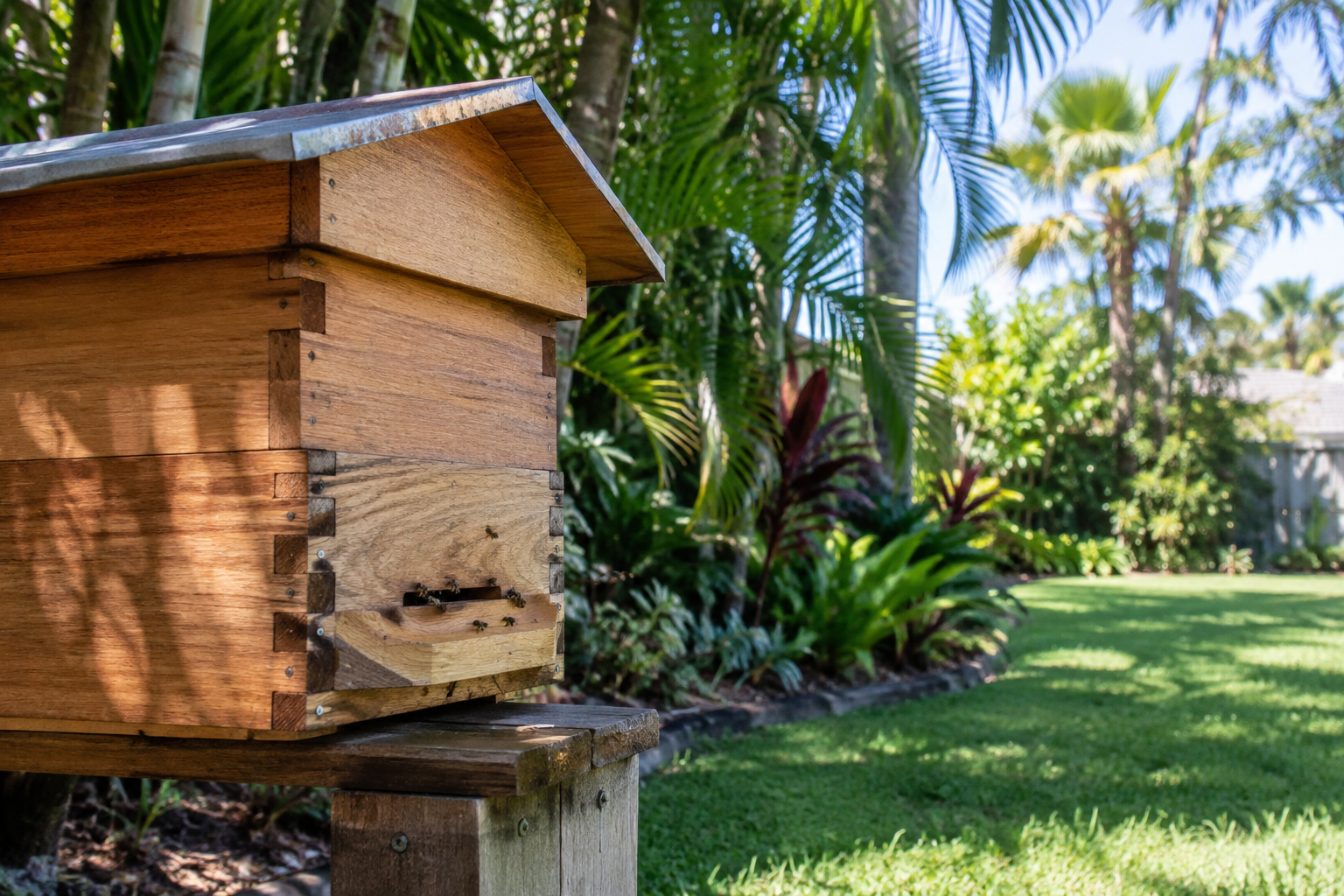
Native stingless bees (Tetragonula carbonaria and relatives) are small, black, harmless bees that build a spiral of brood comb inside a tree hollow or a backyard box. Instead of wax cells they store honey in clusters of small resin pots. They are a popular backyard bee in south-east Queensland, which is why “Sunshine Coast honey” search results increasingly include sugarbag.
Sunshine Coast Honey Compared: Hive Honey vs Sugarbag
The quickest way to choose is side by side. The figures below come from the Australian Food Standards Code, Aussie Bee (the Australian Native Bee Research Centre’s resource) and a peer-reviewed Queensland study, and our own jars for the hive honey column.
| Feature | European hive honey | Native stingless bee honey (sugarbag) |
|---|---|---|
| Made by | Apis mellifera, in managed boxed hives | Tetragonula carbonaria and similar, in tree hollows or small boxes |
| Typical yield | Many kilos per hive per season | About 1 kg per hive per year |
| Moisture | Low, typically under 20% | 26.5% to 30.0% in a Queensland study; legal maximum 28% |
| Texture | Runny, or sets firm or creamy | Thin, syrupy, rarely crystallises |
| Flavour | Varies by tree: butterscotch, floral, earthy, fruity | Tangy, sometimes citrus or eucalyptus notes from the resin pots |
| Storage | Pantry, years if sealed | Fridge or freezer commonly advised because it ferments more easily |
| Price and supply | Affordable, widely available | Premium, small batches only |
| Legal label | “Honey” | “Native bee honey” (or similar description) |
28%: the maximum moisture allowed in honey sold as native bee honey, alongside at least 2% trehalulose and 50% reducing sugars, under Standard 2.8.3 of the Australia New Zealand Food Standards Code, approved by FSANZ in April 2024 and notified to Food Ministers in May 2024. Source: FSANZ approval report A1257, May 2024
Why Does Sugarbag Taste So Different?
Sugarbag tastes different because of water, sugars and resin. Stingless bees do not dry their honey the way European bees do, so it is much wetter and the flavour is brighter and more acidic. The resin pots add the lemon or eucalyptus notes Aussie Bee describes.
A peer-reviewed study of honey from T. carbonaria and T. hockingsi hives at Burpengary East, Queensland, measured moisture from 26.5% to 30.0%, acidity between pH 3.57 and 4.19, and a distinctive sugar called trehalulose at 13.9 to 30.3 g per 100 g. Trehalulose is a slow-crystallising sugar, which is why sugarbag stays liquid. The same study found the honey varied with the time of year it was harvested, just as hive honey changes with the flowering season.
Compare that with hive honey from our own hives. Our Ironbark has butterscotch notes, Brushbox is sweet and floral, and Melaleuca is earthy. Those differences come from the flowering tree, not from the bee. Sugarbag differences come largely from the bee itself.
How Rare Is Sugarbag?
Very rare. Aussie Bee reports that each stingless bee hive produces only about 1 kg of honey per year, and that stingless bees only make a harvestable surplus in warm areas such as Queensland and northern New South Wales. In cooler areas, harvesting can weaken or even kill the nest.
Their 2010 national survey put total stingless bee honey production under 300 kg per year, compared with 27,800 tonnes from commercial European honey bees. It also recorded a retail price of about $140 per kg at that time. That survey is more than 15 years old, so treat the price as an indication of scarcity rather than a current quote.
This scarcity is why sugarbag is a treat rather than a pantry staple, and why a jar that claims to be “native bee honey” at a pantry-staple price deserves a question or two.
Is Native Bee Honey Legal to Buy on the Sunshine Coast?
Yes. Until 2024, the Food Standards Code defined honey as made by honey bees, which left native bee honey in a grey area. FSANZ approved Standard 2.8.3 in April 2024 after an application from the Australian Native Bee Association, and it now sets clear rules. To be sold as native bee honey, a product must contain:
- no less than 50% reducing sugars
- no more than 28% moisture
- no less than 2% trehalulose
The label must also describe its true nature, for example “Australian native bee honey”. See the standard on the Federal Register of Legislation. If you want a sense of how purity rules work for hive honey, our guide to verifying genuine Queensland honey covers it.
Do Varroa Mites Affect Sunshine Coast Honey?
Varroa affects European honey bees, not stingless bees. Dr Smith, quoted by the ABC in 2022, said stingless Australian bees are not susceptible to the varroa destructor mite. The same article warned that colonies of European bees carrying varroa tend to have more viruses, and some of those may spill over to native bees.
In practical terms, a healthy local beekeeping industry helps native bees too. When you buy honey from a local beekeeper you support the people who monitor, report and manage hive health in your area. Our post on where to buy Gold Coast honey covers what varroa has done to wild colonies in south-east Queensland this year.
Which Should You Buy: Everyday Honey or Rare Sugarbag?
It depends on the job. Use this quick guide:
- Toast, tea, baking, glazes and the family pantry: European hive honey. It is stable, affordable and consistent. Try our Ironbark for baking or Brushbox for tea.
- Savoury food and cheese: hive honey again, for example Melaleuca (tea tree), which is dark and earthy.
- Spreading on toast for kids: a set, creamy honey stays put. Our creamed honey is the easy one.
- A once-off tasting or gift for a food lover: labelled native bee honey from a local stingless beekeeper, in a very small jar.
Whatever you choose, ask the seller three things: which bee made it, where the hives are, and whether it has been heated or blended. A genuine small producer can answer all three in a sentence.
How Do You Buy Our Honey From the Sunshine Coast?
Our hives and base are at Bahrs Scrub, between Brisbane and the Gold Coast, so we are not on the Sunshine Coast, but our honey reaches you in a few ways:
- Online: order any variety from the shop.
- Stockists: our stockist page lists independent retailers including Moamart Korean Grocery in Springwood, Modi’s IGA in Carindale, and Go Vita in Stanthorpe and Warwick.
- Markets: we rotate pop-up locations weekly; check pop-up locations before you travel.
One date to note: our personal delivery ends on 15 November 2026 and all orders move to Australia Post from 16 November. Sunshine Coast orders will keep arriving, just via Australia Post.
How Can You Spot Genuine Sugarbag?
Because sugarbag is rare and valuable, it is worth knowing what a trustworthy jar looks like. Use this checklist before you pay a premium:
- The label says “native bee honey” or similar. Under Standard 2.8.3 a jar sold simply as “honey” should be hive honey.
- It is thin and syrupy, not thick and set. A stingless bee honey that sets solid like creamed honey is a red flag, given its trehalulose content and moisture.
- The tasting notes are tangy, not just sweet. Expect acidity, and sometimes citrus or eucalyptus.
- The jar is small and the seller names the hives. With a yield around 1 kg per hive per year, a producer selling kilo tubs on a shelf would need dozens of hives.
- Storage advice is given. A reputable seller will tell you whether to refrigerate, because they know it ferments more easily than hive honey.
The same sense applies to hive honey. A genuine small beekeeper can tell you the floral source, the harvest month and whether it has been heated. If you are curious about that side, we explain the unheated, unfiltered approach on our shop pages and in the verification guide linked above.
What Does This Mean for Choosing Sunshine Coast Honey This Season?
Spring is the busiest flowering period in south-east Queensland, and both bee types are active. Hive honey is being harvested now, so jars are fresh. Stingless bee harvests are small and tied to warm weather, so expect limited stock whenever you see it. A sensible approach is to buy a family-size jar of hive honey for daily use and, if you are curious, one small jar of labelled sugarbag to taste alongside it. Doing both teaches you more about Queensland flora than reading any label.
Can You Keep Stingless Bees on the Sunshine Coast?
Yes, and many people do. Aussie Bee says Tetragonula carbonaria is suited to southern Queensland and warm coastal areas, and that no permit is currently required to keep native bees. It is illegal to remove native bee nests from national parks and reserves, so source hives from a reputable breeder, a timber cutter who found the nest, or your own private land.
A backyard hive is a pollinator for your garden, not a honey factory. Expect small amounts: remember, about 1 kg a year is a good result, and taking too much can weaken the nest. If honey volume matters to you, a European bee hive on a rural property needs registration and training. Our about us page tells the story of how Ian’s family, three generations of beekeepers, got started.
Frequently Asked Questions
Is Sunshine Coast honey the same as native bee honey?
No. Most Sunshine Coast honey is made by European honey bees. Native bee honey, or sugarbag, is a separate, much rarer product made by stingless bees and regulated under Standard 2.8.3.
Does native stingless bee honey taste better than regular honey?
It tastes different rather than better. Sugarbag is thinner, tangier and sometimes citrusy, with a more acidic edge. Hive honey ranges from butterscotch to floral depending on the tree the bees worked.
Why is sugarbag so expensive?
Each stingless bee hive yields about 1 kg a year at best, and harvesting must be gentle to avoid harming the nest. Tiny supply and high effort make it a premium product.
Does sugarbag need to be refrigerated?
Because it is much wetter than hive honey, sugarbag ferments more readily, so producers commonly advise the fridge or freezer. Follow the storage advice on the producer’s label.
Is stingless bee honey safe for babies?
No. FSANZ found risks from native bee honey comparable to honey bee honey, and no honey of any kind should be given to babies under 12 months.
Does QLD Honey & Hives sell native stingless bee honey?
No. We keep European honey bees and sell raw, unfiltered hive honey, creamed honey, beeswax candles and Sovereign Soaps products. We would rather send you to a specialist stingless beekeeper than sell something we do not produce.
Is it legal to sell native bee honey in Australia?
Yes. Since Standard 2.8.3 was approved in 2024, it can be sold if it meets the composition rules and is labelled as native bee honey.
Do I need a permit to keep stingless bees in Queensland?
Aussie Bee advises that no permit is currently required to keep native bees, but you must not remove nests from national parks or reserves.
Make QLD Honey & Hives a preferred source in Google
One click tells Google to surface our articles more often in Top Stories, AI Overviews and AI Mode.