Last updated:
Gold Coast honey is best bought directly from a local beekeeper, either online for delivery, in person at a Gold Coast pop-up market, or from one of a small number of stockists, rather than from a supermarket shelf where “Australian” blended honey can be mixed from several regions. In 2026, buying it this way matters more than usual: a varroa mite crisis has cut deeply into South East Queensland’s bee colonies, tightened supply, and pushed prices up across the industry. This guide covers exactly where to buy Gold Coast honey, what a fair price looks like this year, and how to check that the jar in your hand is genuinely local.
Key Takeaways
- Buy genuine Gold Coast honey online via QLD Honey & Hives, at rotating pop-up market stalls, or from stockists like Moamart, Modi's IGA and Go Vita.
- Varroa mite has collapsed an estimated 90 per cent of South East Queensland's wild bee colonies since reaching the region in March 2025.
- One Queensland beekeeper reported miticide treatments now cost an extra $1,500 to $3,000 a month across just 150 hives.
- Verify authenticity by checking for a named region or flora on the label, natural crystallisation, and a beekeeper who can answer questions directly.
- Spring is the best time to buy, as it lines up with the main flowering season, though 2026 supply remains below pre-2025 levels.
What Makes Honey “Gold Coast Honey”?
Local honey from this region is raw honey extracted from hives kept in and around the Gold Coast and its hinterland, including the ranges behind Springbrook, Tamborine, and Nerang, and the coastal bushland corridors that connect them. Because bees forage within a few kilometres of their hive, the honey they produce reflects exactly what is flowering nearby, from Ironbark and Brushbox to Melaleuca (tea tree) and swamp mahogany. That single-region character is what separates it from a supermarket blend, which is legally allowed to combine honey from multiple countries and regions under one label.
At QLD Honey & Hives, every jar is extracted straight from the hive, never heated above natural hive temperature, and never ultra-filtered, so the pollen and flavour profile of the source flora stays intact. You can read more about how the family behind the hives works on the About Us page.
Where to Buy Gold Coast Honey: Your Three Main Options
There are three reliable ways to buy genuine Gold Coast honey this year: order online for delivery, visit a pop-up market stall, or buy from a listed local stockist. Each suits a different kind of shopper.
1. Order Online for Delivery
Ordering through the QLD Honey & Hives online shop is the most reliable option if you want a specific variety guaranteed in stock, such as Ironbark, Brushbox, or Melaleuca (Tea Tree). It also suits anyone outside the immediate Gold Coast area, since online orders ship further afield than the pop-up and stockist network reaches.
2. Visit a Pop-Up Market Stall
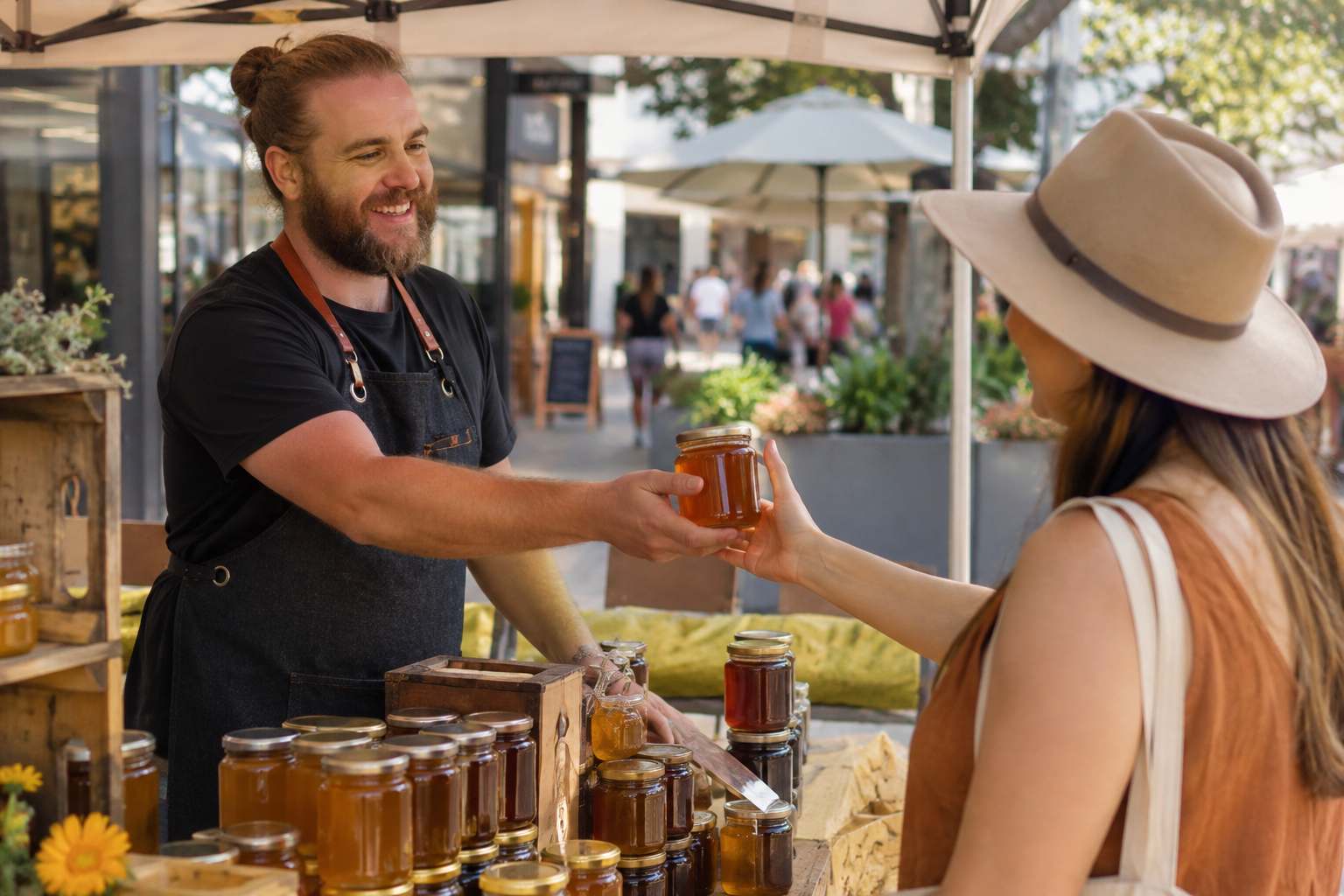
QLD Honey & Hives runs a rotating schedule of pop-up stalls at Gold Coast and South East Queensland shopping centres, moving to a new centre roughly every week. This is the only option where you can taste a variety before buying, ask the beekeepers questions directly, and pick up the full current schedule on the website, since dates and centres change through the year. Genuine customer feedback from these stalls backs up why the in-person option is worth the trip: one Orion Springfield Central shopper wrote, “the customer service I received today was amazing… they knew their products, but they weren’t uncomfortably trying to hard sell,” while another described using a soap bought at an Orion stall and feeling the difference immediately on sensitive skin.
3. Buy From a Local Stockist
A smaller number of independent grocers stock QLD Honey & Hives products year-round, useful if you want to add a jar to a normal grocery run rather than planning around a pop-up date. Current stockists include Moamart Korean Grocery in Springwood, Modi’s IGA in Carindale, and Go Vita stores in Stanthorpe and Warwick. The full, current list is kept updated on the stockists page, since retail partnerships are added over time.
90% of South East Queensland’s wild honey bee colonies are estimated to have collapsed since varroa mite first reached the region in March 2025, and almost all managed hives are now in an active fight for survival. Source: ABC News, June 2026
Why Local Honey Prices Have Risen in 2026
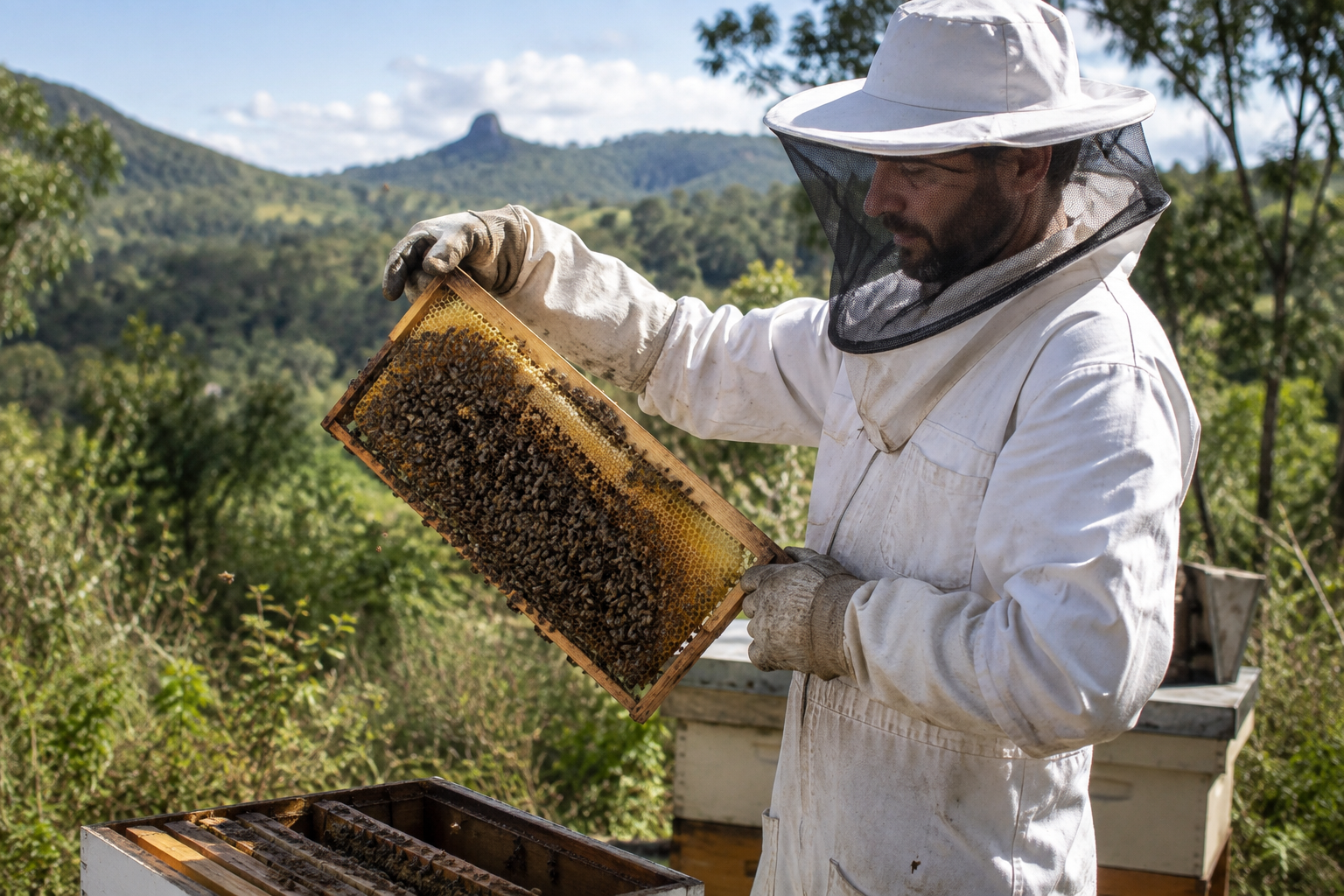
This local honey costs more this year mainly because of varroa mite, a parasite that reached South East Queensland in March 2025 and has since collapsed an estimated 90 per cent of the region’s wild bee colonies, according to ABC News reporting from June 2026. Beekeepers who want to keep managed hives alive now have to run regular miticide treatment programs, and one Queensland beekeeper told the ABC this was costing him an extra $1,500 to $3,000 a month across just 150 hives. That cost has to be reflected somewhere in the price of the jar.
Australian honey sommelier Jessica Locarnin told Nine.com.au in April 2026 that the industry is also dealing with a newly emerged mite population resistant to the standard oxalic acid treatment, which is pushing costs higher again for beekeepers trying to stay ahead of it. The Australian Honey Bee Industry Council’s own August 2026 seasonal update described a similar picture heading into spring: reasonable rainfall and budding in many areas, but ongoing colony losses from varroa layered on top, meaning supply remains tighter than a normal season even where the flowering is good.
For a Gold Coast buyer, the practical takeaway is that a price a little higher than last year is not price gouging, it is closer to what full-cost, ethically kept local honey actually costs to produce right now. Buying direct from a beekeeper, rather than a heavily discounted supermarket blend, keeps that money going to the exact hives under pressure.
How to Verify You’re Buying the Genuine Article
Genuine local honey can be verified with a short checklist rather than guesswork, since labelling alone does not guarantee single-region origin. Look for these signals before you buy:
- A named region on the label, not just “Product of Australia.” Genuine local honey will name the Gold Coast, hinterland, or specific flora like Ironbark or Melaleuca.
- A visible flavour and colour difference between jars. Single-flora honey from one region varies noticeably between varieties; a blended product tastes uniform regardless of the “type” printed on the jar.
- Crystallisation over time. Raw, unheated, unfiltered honey will naturally crystallise in the jar within weeks to months depending on the variety. Honey that never crystallises has usually been heavily processed.
- A beekeeper you can actually ask. At a pop-up stall you can ask what suburb or hinterland range the hives are in. A supermarket shelf cannot answer that question.
- Consistent stock from a known small producer rather than an anonymous private-label jar with no traceable business behind it.
Local Honey vs Supermarket Honey: A Cost Comparison
The table below sets out the practical differences buyers should weigh up, based on how each channel typically operates rather than a single fixed price, since prices move through the year as supply tightens.
| Buying Channel | Traceability | Best For |
|---|---|---|
| Supermarket blended honey | Low, often multi-region or imported blend | Lowest price, general pantry use |
| QLD Honey & Hives online shop | High, single hive location per variety | Guaranteed stock, specific varieties, gifting |
| Pop-up market stall | Highest, beekeeper present to answer questions | Tasting before buying, building trust with a producer |
| Local stockist (grocer) | High, single named producer | Convenience alongside a normal shop |
Best Time of Year to Buy It
Spring is generally the strongest time to buy it, because it lines up with the region’s main flowering season and the freshest harvest of the year. The Australian Honey Bee Industry Council’s August 2026 chair report described pollination season as “well underway” heading into spring, with reasonable rainfall supporting budding across much of the state, though it also cautioned that varroa-related colony losses mean even a good flowering season will not translate into pre-2025 supply volumes. In practice, that means popular single-flora varieties can sell out faster once harvested, so buying when you see a variety in stock, rather than waiting, is a reasonable strategy this year.
Buying in Bulk or for Gifts
Buyers wanting larger quantities, for a business, event, or corporate gift run, should order ahead rather than expecting stall or shelf stock to cover it, since pop-up and stockist volumes are set for regular retail traffic. QLD Honey & Hives’ honey gift packs and creamed honey are popular gifting formats, and the Contact Us page is the right first step for a bulk or wholesale enquiry, so lead time and quantity can be confirmed against current hive supply.
The Family Behind Your Jar
QLD Honey & Hives is a small, family-run operation based out of Bahrs Scrub, run by Ian and Esther across three generations of beekeeping experience. That matters for anyone weighing up where to buy, because it means the person answering the phone or standing behind a pop-up table is the same person who checked the hives that week, not a call centre reading from a script. It is also why the business can tell you which range or suburb a jar came from, something a private-label supermarket brand structurally cannot do once honey from different suppliers has been blended into one tank.
That direct line between hive and customer is also what carried the business through the Orion Springfield Central stall interaction described earlier, where a first-time shopper who “wasn’t going to purchase anything” left as a repeat customer after being able to ask questions and try a sample on the spot. It is a small example of why the in-person option still has a place even in an online-shopping era.
Gold Coast Honey Varieties at a Glance
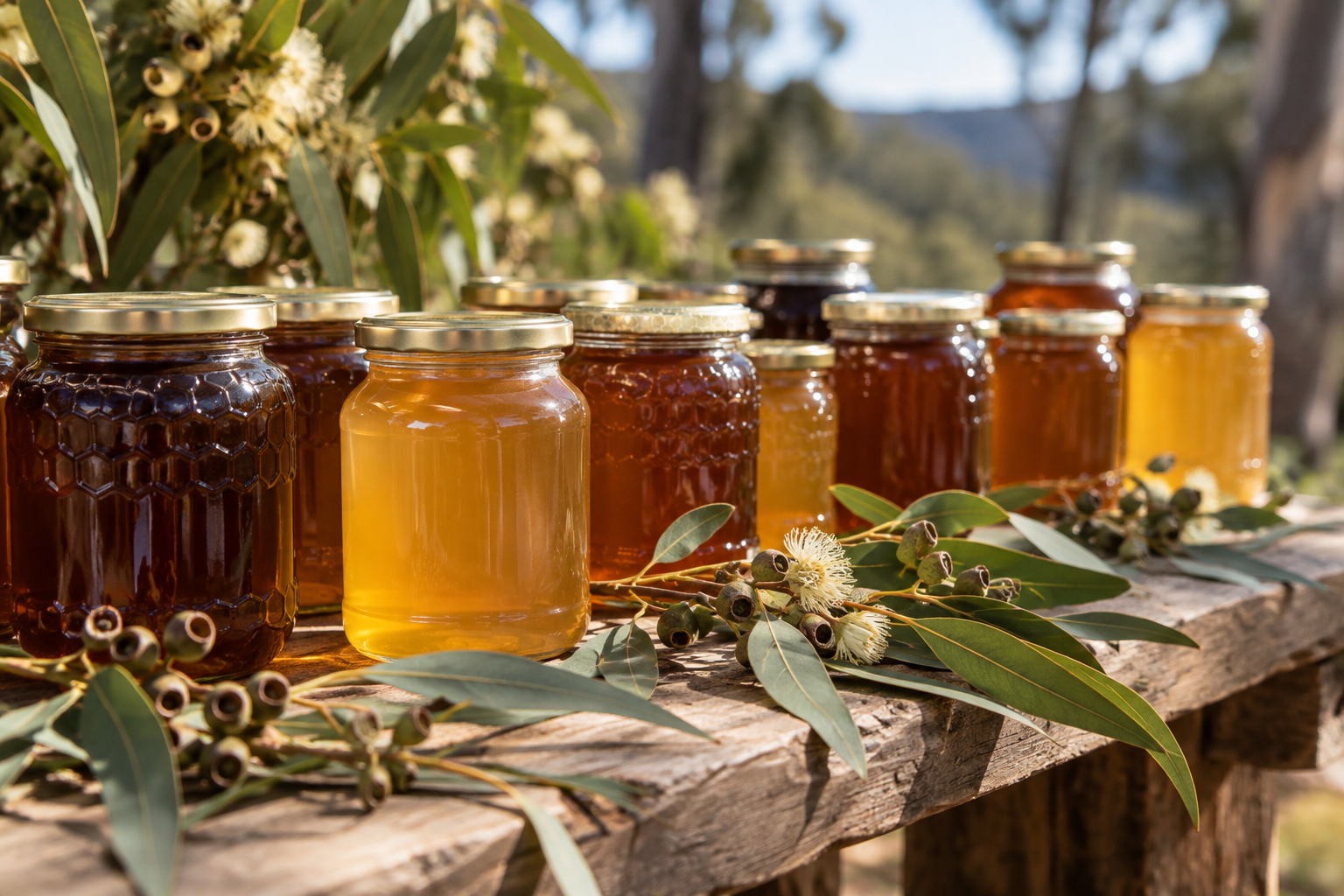
Not every jar on a Gold Coast shelf tastes the same, and knowing the main varieties helps explain why. Ironbark produces a darker, robust honey with a stronger mineral note, popular with people who find lighter honeys too mild. Brushbox is a native variety with a distinctive, slightly caramel character that is harder to find outside South East Queensland. Melaleuca, commonly called tea tree honey, has a more savoury, herbal profile and is often chosen for its traditional association with the tea tree family of plants. Polyfloral, sometimes labelled mixed gum, blends whatever a hive foraged from broadly across a season, making it the most representative “everyday” taste of the region. Creamed honey is not a separate variety but a texture, made by controlling crystallisation so the honey spreads like a soft butter rather than pouring.
According to Wikipedia’s summary of honey composition, honey’s flavour, colour and crystallisation rate are all driven primarily by the nectar source and its natural sugar ratio, which is exactly why single-region, single-flora jars taste so different from a blended product even before any additional processing is considered.
What the Industry Is Saying About the Season Ahead
The pressure on supply is not limited to South East Queensland. Jessica Locarnin’s April 2026 interview described the broader Australian honey market as still climbing out of “the honey crisis,” with prices expected to stay elevated while the industry works through resistant mite populations and reduced feral bee numbers nationally. The Council’s most recent seasonal reporting has repeated a similar message through 2026: reasonable rainfall and flowering in many regions, offset by an industry-wide reduction in managed and wild colony numbers that keeps total honey volumes below what the season’s flowering alone would suggest. For a Gold Coast shopper, that combination is the practical reason a favourite variety might occasionally be out of stock and worth reordering promptly once it returns.
Frequently Asked Questions
Where can I buy Gold Coast honey?
You can buy Gold Coast honey online through the QLD Honey & Hives shop, in person at a rotating schedule of Gold Coast and South East Queensland pop-up market stalls, or from a small number of local stockists including Moamart, Modi’s IGA, and Go Vita stores.
Why is local honey more expensive in 2026?
Prices have risen because varroa mite has collapsed an estimated 90 per cent of South East Queensland’s wild bee colonies since 2025, forcing beekeepers into costly ongoing miticide treatment programs that add hundreds to thousands of dollars a month to running managed hives.
How do I know if honey is really from the Gold Coast?
Check for a named region or flora variety on the label, a beekeeper you can ask directly at a market stall, natural crystallisation over time, and a visible flavour difference between varieties, all signs of single-region, minimally processed honey.
Is raw local honey the same as Manuka honey?
No. Manuka honey comes from a specific tea tree species and is graded for its antibacterial strength, while Gold Coast honey covers a broader range of native varieties such as Ironbark, Brushbox, and Melaleuca, each with its own flavour rather than a single grading system.
Can I order it for delivery outside the region?
Yes, QLD Honey & Hives ships its raw honey range through its online shop, which is the most reliable option for buyers outside the immediate pop-up and stockist network.
Does raw local honey crystallise, and is that a problem?
Crystallisation is normal and expected in raw, unheated honey and is not a sign of spoilage. It can be gently reversed by standing the jar in warm (not boiling) water; honey that never crystallises has usually been processed to prevent it.
What is the best variety to start with?
Polyfloral honey is a good starting point since it reflects a broad mix of local flora and gives a general sense of the region’s flavour, before moving on to single-flora varieties like Ironbark or Melaleuca for a more distinct taste.
Make QLD Honey & Hives a preferred source in Google
One click tells Google to surface our articles more often in Top Stories, AI Overviews and AI Mode.