Last updated:
Genuine Queensland honey is raw, unheated and unblended, traceable back to a single apiary, a single season and a specific native flora source, and it will show low moisture content, no added sugar syrup, and a clear country-of-origin declaration on the label. Supermarket honey sold under a Queensland label is frequently a blend from multiple sources, heat-treated for shelf stability, and only loosely connected to a single region. Knowing the difference matters, because honey fraud is a documented, ongoing problem in the Australian market, and the only honey you can fully trust is honey you can trace back to the beekeeper.
At QLD Honey & Hives, every jar is harvested from our own hives across the Gold Coast, Sunshine Coast Hinterland and Brisbane hinterland regions of Queensland, extracted cold, and never blended with honey from another apiary, another season, or another country. This guide explains exactly what “genuine Queensland honey” should mean, the tests and labelling rules that expose blended or adulterated honey, and how to check before you buy.
Is Queensland Honey Actually Pure? The Short Answer
Pure honey from this region contains nothing but nectar collected and processed by honeybees; no added sugar syrup, no water, no colouring, and no honey imported from overseas blended in to stretch volume. Under the Australian Food Standards Code, honey sold as “honey” in Australia must be a pure bee product, but enforcement testing has repeatedly found imported and blended products failing purity checks. The safest way to guarantee purity is to buy single-origin honey directly from a Queensland beekeeper whose hive locations you can verify, rather than a supermarket blend with a vague “packed in Australia from local and imported ingredients” statement.
Why Honey Fraud Is a Real Problem in Australia
Honey adulteration, cutting real honey with cheap sugar syrup or passing off imported honey as local, has been investigated by Australian regulators for years. The Australian Competition and Consumer Commission (ACCC) opened a formal investigation into major honey brands after Nuclear Magnetic Resonance (NMR) testing suggested some products labelled “100% pure” contained added sugar syrups. The ACCC ultimately closed the case in 2018 due to uncertainty in the test methods used at the time, not because the honey was cleared, but because the testing science itself was still being validated for Australian floral sources.
Since then, the Department of Agriculture, Fisheries and Forestry (DAFF) has tightened biosecurity and purity testing on imported honey entering Australia. Every consignment referred for testing is checked against a specific benchmark:
- C4 sugar adulteration must be less than or equal to 10% (C4 sugars come from cane sugar or corn syrup, not nectar)
- Moisture content must be 21% or lower (excess water suggests unripe extraction or dilution)
- Reducing sugars must be 60% or higher (a marker of genuine floral nectar conversion)
These tests exist because imported honey has, in documented cases, failed to meet them. Locally produced, single-origin honey that never leaves the beekeeper’s control until it reaches your pantry sidesteps this risk entirely, because there is no blending step where fraud can occur.
What “Single-Origin” Honey Actually Means
Single-origin honey comes from one harvest, one apiary region, and one flowering season, rather than being pooled from multiple beekeepers, regions or even countries and mixed into a uniform blend. This matters for two reasons: traceability and flavour.
A single-origin jar of Ironbark honey from the Gold Coast hinterland will taste, look and crystallise differently from a single-origin jar of Melaleuca honey harvested near the coast weeks later, because the bees foraged on different native flora at a different time. A blended commercial product smooths all of that variation out into one consistent, shelf-stable flavour, which is exactly why supermarket honey tastes the same jar after jar regardless of season.
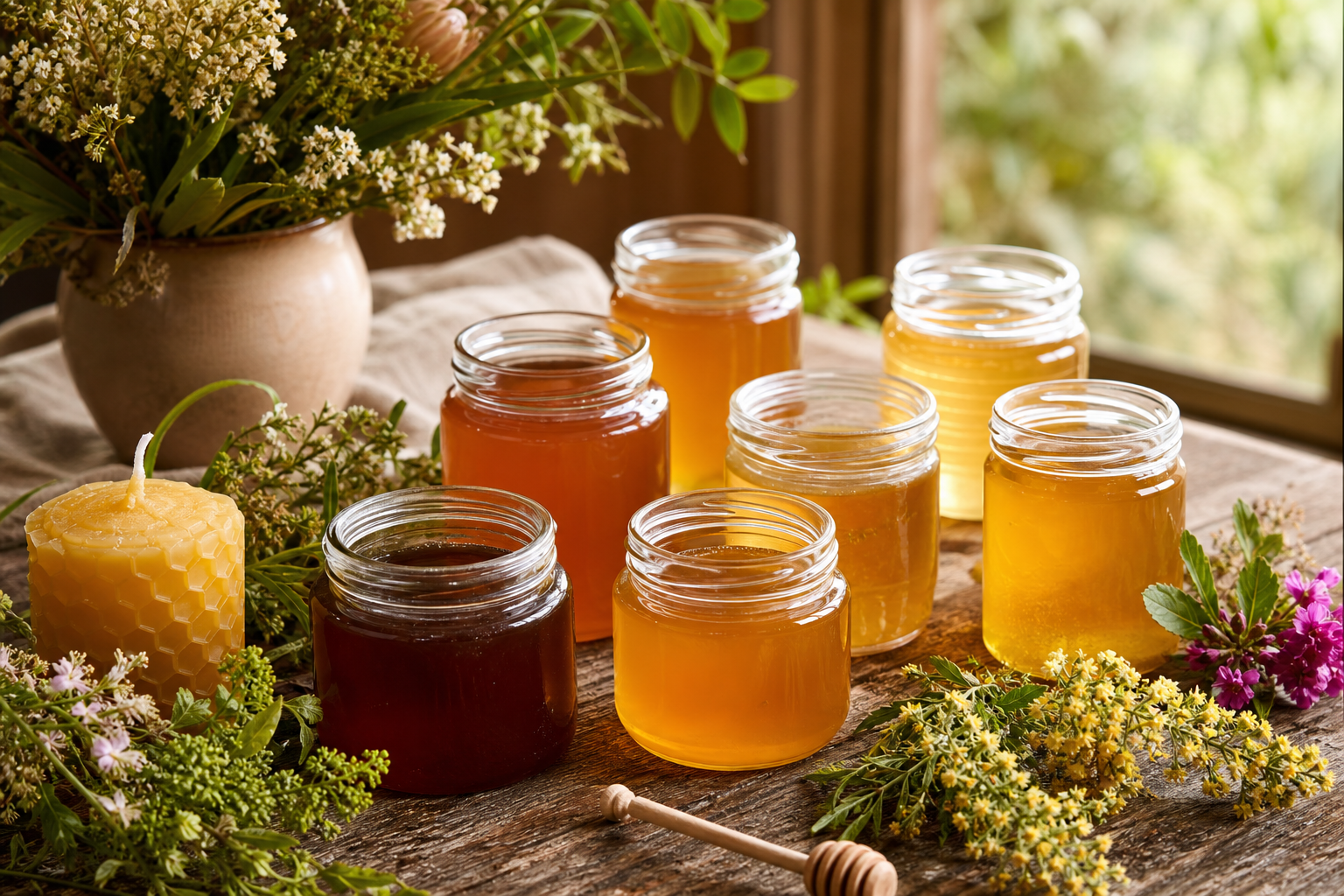
At QLD Honey & Hives we lean into that variation rather than hiding it. Our Ironbark honey, Brushbox honey and Melaleuca (Tea Tree) honey are each harvested and jarred separately by variety and season, so what is on the label is what is actually in the jar.
The Native Flora Behind Queensland Honey
Queensland’s honey character comes directly from its native tree and wildflower diversity, one of the richest in the country for beekeeping. The Queensland Beekeepers’ Association has documented the specific eucalypts, melaleucas and native wildflowers that give the state’s honey its regional character. Depending on the apiary location and time of year, Queensland honey can be sourced from:
- Grey Ironbark (Eucalyptus siderophloia): bold, dark amber, caramel-rich honey with strong antioxidant activity
- Brushbox (Lophostemon confertus): smooth, buttery, mild sweetness
- Melaleuca / Tea Tree (Melaleuca quinquenervia): herbaceous, with notable antibacterial properties
- Spotted Gum (Corymbia citriodora): light, clean, with a citrus-like finish
- Jacaranda: a limited, seasonal variety available only during Jacaranda flowering
No two seasons produce identical honey, because flowering is weather-dependent. A beekeeper who can tell you exactly which flora your jar came from, and when, is a beekeeper selling you genuine, unblended honey.
Reading a Queensland Honey Label Correctly
Under Australia’s Country of Origin Food Labelling requirements, any packaged food, including honey, must display a standard mark showing the proportion of Australian ingredients. Genuine, wholly Australian honey should show a label stating it is 100% grown or produced in Australia, with a filled-in bar chart symbol. Watch for these red flags on a jar claiming to be Queensland or Australian honey:
- A country-of-origin statement that reads “made in Australia from local and imported ingredients” rather than “grown in Australia”
- No mention of a specific apiary region, beekeeper, or harvest season anywhere on the packaging
- Ingredients list that includes anything other than “honey” (such as glucose syrup or fructose syrup)
- A price point far below what raw, single-origin Australian honey typically costs, since genuine, single-origin honey production has real seasonal and labour costs attached
- Marketing language emphasising “Australian made” without the stronger “Australian grown” or “100% Australian honey” claim
QLD Honey & Hives honey is harvested, extracted and jarred in Queensland from our own apiaries, with no imported honey ever entering the supply chain. Every product on our shop page states the honey variety and, where relevant, the harvest region.
Raw vs Heat-Treated: Another Purity Marker
Most supermarket honey sold under a Queensland label is pasteurised, heated to around 70°C or higher, to prevent crystallisation and extend shelf appeal. That heat treatment destroys much of the honey’s natural enzyme content, pollen profile and some heat-sensitive antioxidants. Genuinely raw honey is never heated beyond the natural warmth of the hive (around 35°C), which preserves enzymes such as diastase and glucose oxidase, along with the pollen grains that allow palynologists to trace honey back to its floral and geographic source.
This is also why raw honey crystallises over time and pasteurised honey does not. Crystallisation is not a sign of spoilage or low quality, it is a sign the honey has not been heat-processed. If your jar of “pure local honey” never crystallises no matter how long it sits in the pantry, it has likely been heated.
Regional Queensland Honey: Gold Coast, Sunshine Coast, Hinterland & Brisbane
This honey is not one uniform product, it varies meaningfully by region:
- Gold Coast honey often draws on coastal gums, Melaleuca and Banksia along the hinterland fringe
- Sunshine Coast honey reflects subtropical rainforest and Hinterland wildflower foraging
- Brisbane honey often carries a lighter, urban-flora character from parks, gardens and street trees
- Hinterland honey (Gold Coast and Sunshine Coast ranges) tends toward bolder eucalypt varieties like Ironbark and Bloodwood
QLD Honey & Hives places hives across the Gold Coast and its hinterland specifically to capture this regional character, rather than trucking hives long distances between broadacre crops purely to maximise yield, a common commercial beekeeping practice that can dilute the “single region” claim on a label.
A Queensland Honey Season Calendar
Because genuine, single-origin honey follows the flowering calendar rather than a factory schedule, availability shifts throughout the year:
- Late summer to autumn (February to May): Spotted Gum and coastal Melaleuca typically flower, producing lighter, herbaceous honey
- Winter (June to August): Grey Ironbark often flowers, yielding the bold, dark amber honey many customers request specifically
- Spring (September to November): Brushbox and Macadamia blossom periods, along with the short Jacaranda window in the hinterland
- Summer (December to January): Bloodwood and mixed subtropical wildflower foraging rounds out the annual cycle
This is precisely why a beekeeper cannot guarantee unlimited stock of every variety year-round, and why some jars, like our limited-run Jacaranda honey, sell out within weeks of harvest. If a supplier can supply the exact same variety in unlimited volume every month of the year regardless of weather, it is worth asking where that consistency is really coming from.
From Hive to Jar: How We Protect Traceability
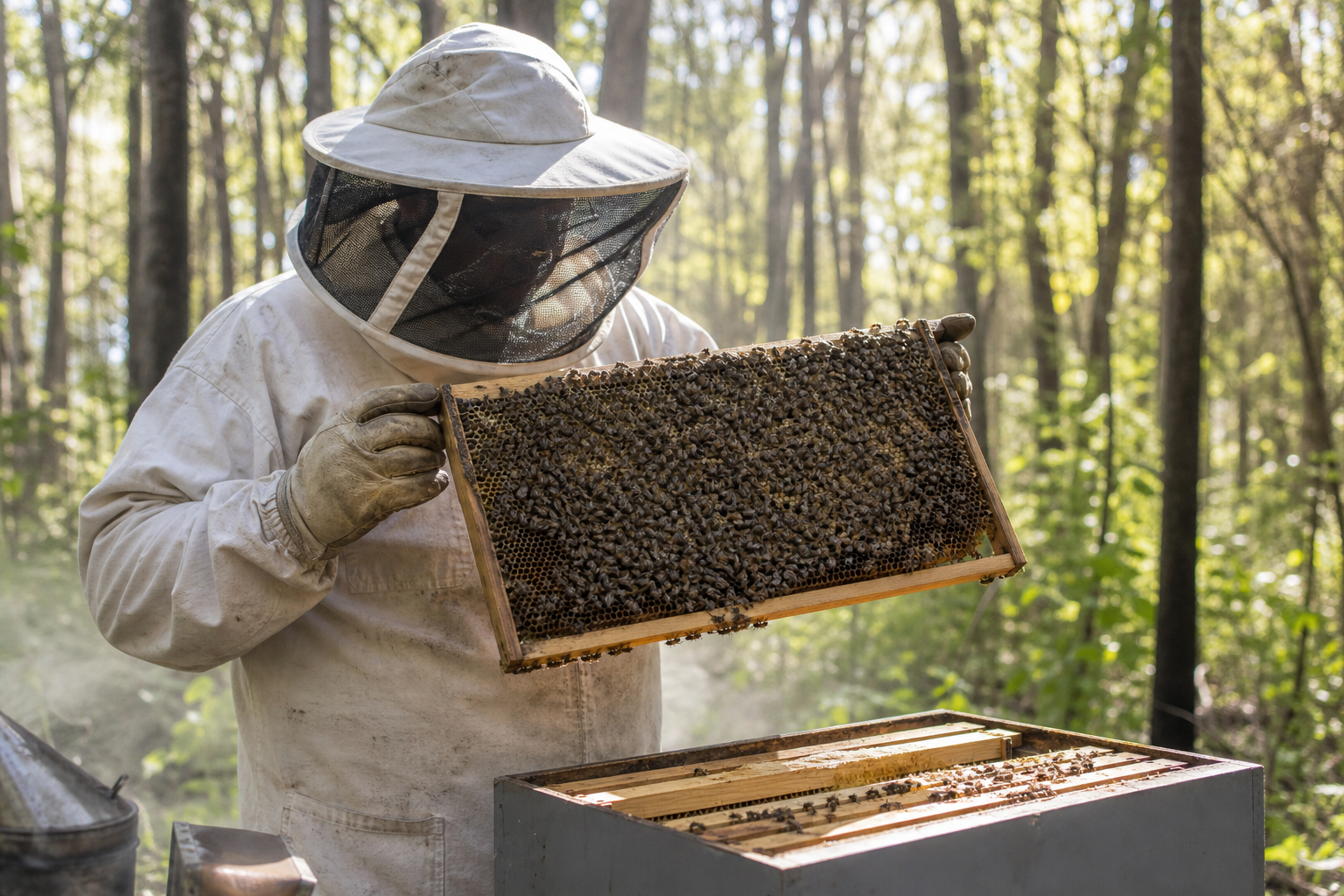
Every batch we extract goes through the same documented process: hives are placed at a known location, honey is extracted cold without heating, filtered only to remove wax and debris (never fine-filtered to strip pollen), and jarred with a label noting the variety and harvest window. Nothing is combined with honey from a different harvest, region, or supplier at any stage.
This is a meaningfully different model to large commercial packers, who often receive drums of honey from dozens of beekeepers and multiple states, blend them for consistency, and pasteurise the final product before bottling. Both approaches are legal under Australian food law, but only one preserves the single-origin traceability that lets you verify exactly what you are eating and where it came from.
How to Buy Genuine Queensland Honey With Confidence
The most reliable way to guarantee you are getting real, pure honey from this region is to buy directly from a beekeeper who can answer three questions clearly: which hives did this come from, which flora did the bees forage on, and when was it harvested. If a retailer or brand cannot answer those three questions specifically, the honey is likely a blend.
You can buy direct from QLD Honey & Hives via our online shop, find us at one of our pop-up market locations, or check our list of local stockists across the Gold Coast. We also offer creamed honey, honey gift packs, and beeswax products such as our beeswax candles, all sourced from the same traceable hives.
Frequently Asked Questions
How can I tell if Queensland honey is genuine?
Check that the label states a specific region or apiary source, confirms 100% Australian-grown origin, lists only “honey” as the ingredient, and shows natural crystallisation over time. Buying directly from a local beekeeper who can name the hive location and harvest season is the strongest guarantee.
Does crystallised honey mean it has gone bad?
No. Crystallisation is a natural process in raw, unheated honey and is actually a sign the honey has not been pasteurised. It does not indicate spoilage and the honey remains safe and enjoyable to eat; gently warming the jar in warm water will return it to a liquid state if preferred.
What is the difference between single-origin and blended honey?
Single-origin honey comes from one apiary, one region and one harvest season, so its flavour and colour vary naturally between batches. Blended honey is pooled from multiple sources, often multiple countries, and processed to taste uniform, which removes the traceability that lets you verify where it actually came from.
Is imported honey sold in Australia tested for purity?
Yes. The Department of Agriculture, Fisheries and Forestry refers a percentage of imported honey consignments for testing against C4 sugar adulteration, moisture content and reducing sugar benchmarks before it can be sold. Locally produced, direct-from-beekeeper honey avoids this risk entirely because it never enters an imported supply chain.
Why does Queensland honey taste different depending on when I buy it?
Because genuine Queensland honey reflects whatever native flora was flowering when the bees foraged that season, a jar harvested during Ironbark flowering will taste noticeably different from one harvested a few months later during Melaleuca flowering. That variation is a sign of authenticity, not inconsistency.
Where can I buy genuine, traceable Queensland honey on the Gold Coast?
QLD Honey & Hives sells raw, single-origin Queensland honey direct from our own hives via our online shop, at Gold Coast pop-up markets, and through local stockists. Every jar is traceable to a specific harvest and region, never blended, and never heat-treated.
Is all “100% Australian” honey automatically raw and single-origin?
Not necessarily. A honey can be genuinely 100% Australian in origin while still being blended from multiple Australian beekeepers and pasteurised for shelf stability. “100% Australian” addresses country of origin, not processing method or single-source traceability, so check for both claims separately.
Learn more about our beekeeping story on our About Us page, browse the full range on our blog, or get in touch with any questions about a specific harvest or hive location.
Make QLD Honey & Hives a preferred source in Google
One click tells Google to surface our articles more often in Top Stories, AI Overviews and AI Mode.