Last updated:
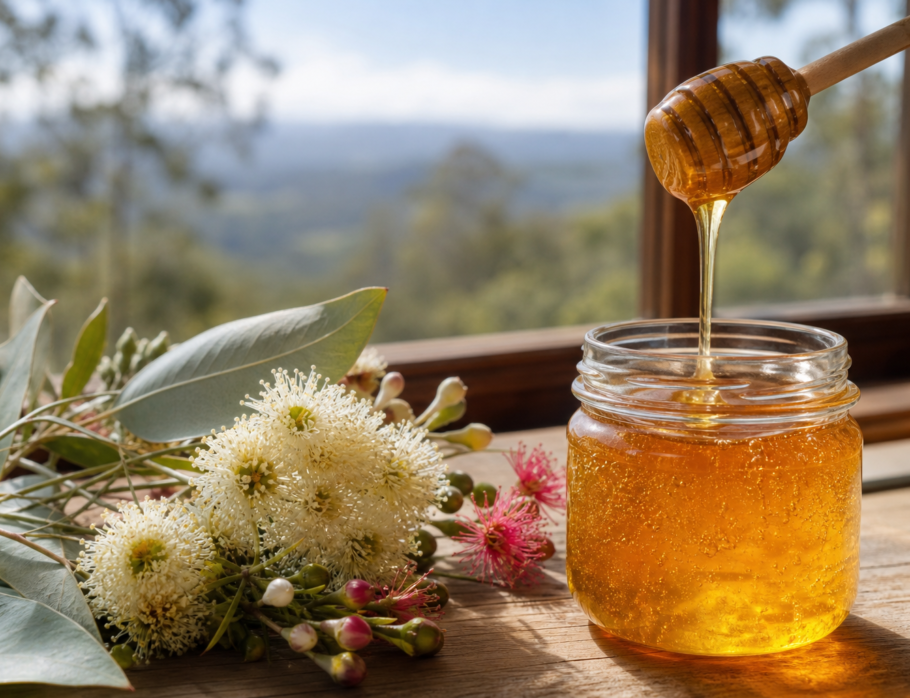
Sunshine Coast honey is raw, unfiltered honey harvested from beehives placed among the subtropical rainforests, eucalypt woodlands, and coastal heathlands of Queensland’s Sunshine Coast region. Sourced from native flora such as Ironbark, Brushbox, Melaleuca, and Spotted Gum, it delivers unique flavour profiles and genuine health benefits that mass-produced honey simply cannot match. If you are looking for pure, local Sunshine Coast honey with full traceability from hive to jar, QLD Honey & Hives offers a range of single-origin and polyfloral varieties harvested across South-East Queensland — including the Sunshine Coast Hinterland.
Why Sunshine Coast Honey Tastes Different
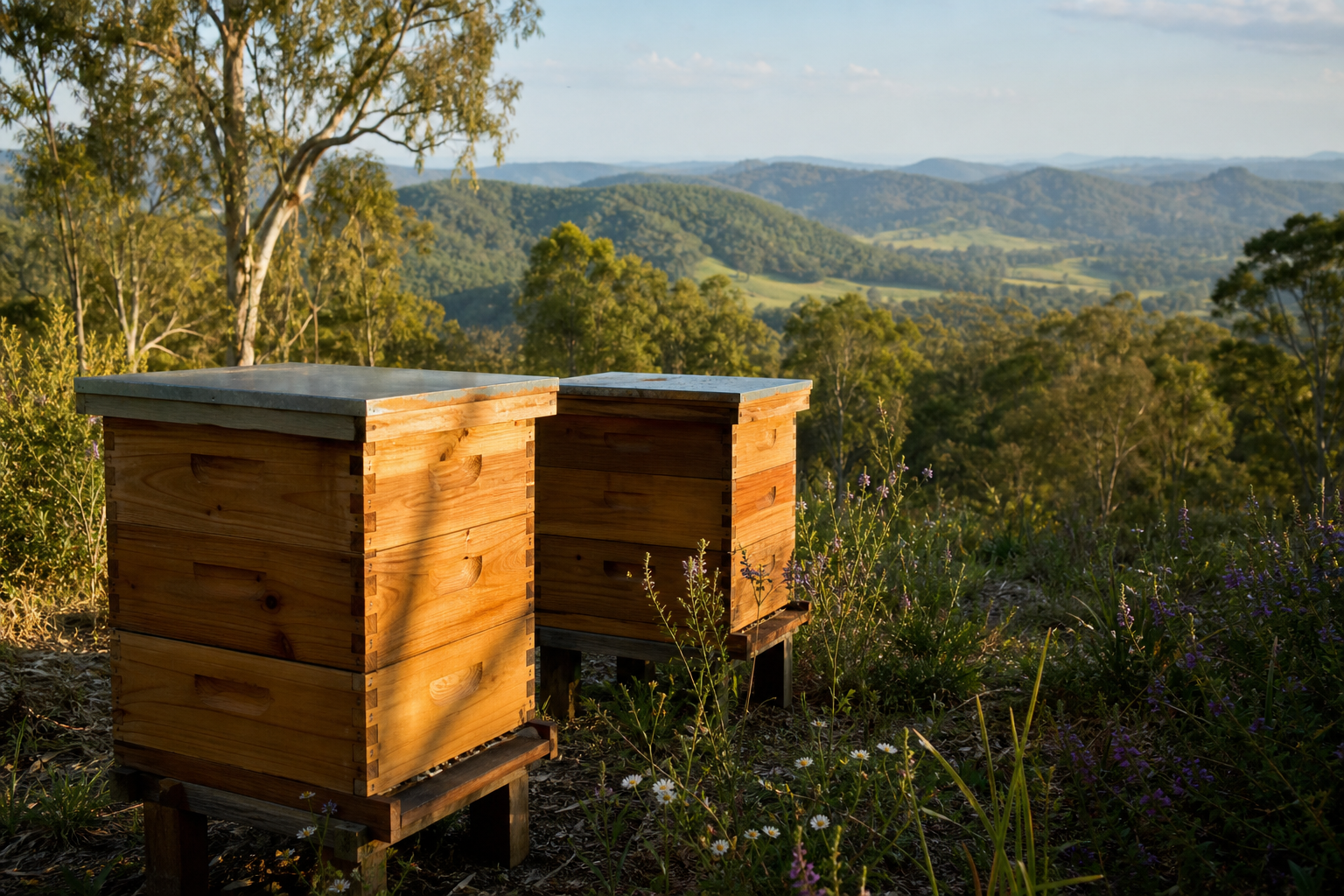
The Sunshine Coast stretches from Caloundra in the south to Noosa in the north, with the Blackall Range and Glass House Mountains forming its lush hinterland. This geography creates a diverse mosaic of flowering species — subtropical rainforest, wet sclerophyll, dry eucalypt forest, and coastal wallum heath — all within a compact corridor. Bees foraging in these conditions produce honey with a complexity of flavour that single-crop, monoculture honeys lack entirely.
Research published in March 2026 by the University of Sydney confirmed that honeybees collecting nectar from a “buffet” of Australian native plants — exactly the conditions on the Sunshine Coast — produce honey with stronger antimicrobial properties than single-origin honey. The study, published in Microbiology Open, found that more than three-quarters of honey samples made from native flora such as Eucalyptus, Leptospermum, and Melaleuca could inhibit dangerous bacteria even at low concentrations. This is exactly the kind of native diversity Sunshine Coast beekeepers work with.
The flavour of any honey is dictated by the nectar source. On the Sunshine Coast, the dominant honey flora includes:
- Grey Ironbark (Eucalyptus siderophloia) — bold, caramel-rich honey with a dark amber colour
- Brushbox (Lophostemon confertus) — smooth, buttery honey with a mild sweetness
- Melaleuca / Tea Tree (Melaleuca quinquenervia) — distinctly herbaceous honey with noted antibacterial activity
- Spotted Gum (Corymbia citriodora) — light, clean honey with a citrus-like finish
- Macadamia blossom — subtle, nutty honey produced during spring flowering
- Bloodwood (Corymbia intermedia) — medium-bodied honey with a warm, rounded profile
Each variety reflects the terroir of the Sunshine Coast — the soil, the rainfall, the season, and the microclimate where the hives are placed. This is what makes raw Sunshine Coast honey a genuine artisan product.
Sunshine Coast Honey Varieties Worth Trying
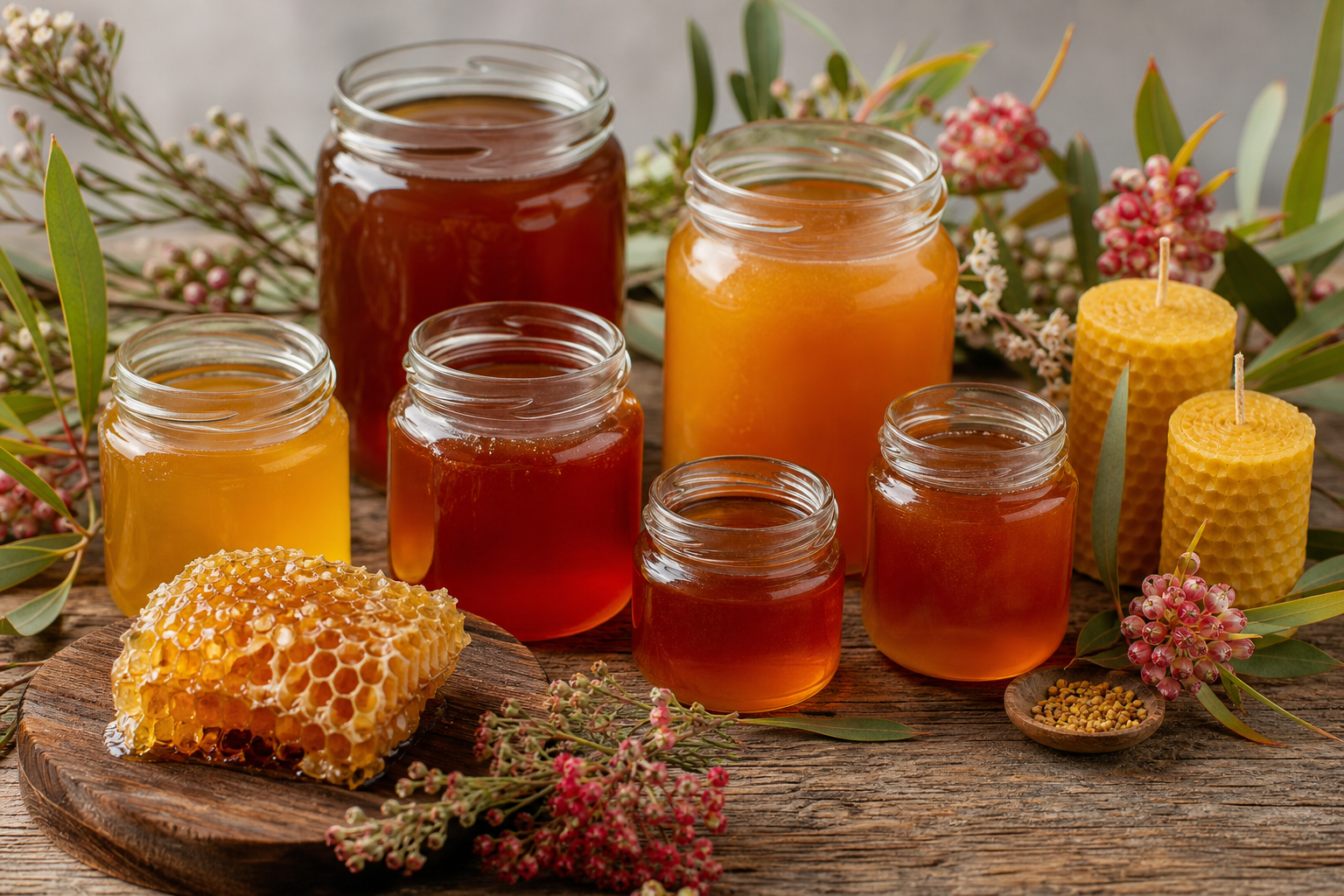
Not all honey is equal, and on the Sunshine Coast the variety of native flora means you can find markedly different honeys depending on the season, the location of the hives, and the dominant flowering species at harvest time. Here are the standout varieties to look for.
Ironbark Honey
Ironbark is the heavyweight of Queensland honey. Produced when bees forage on Grey Ironbark and Narrow-leaved Ironbark trees, this honey is deep amber with a rich, caramel-like sweetness and a long finish. It is prized for its high antioxidant content and strong, complex flavour. Ironbark is one of the most sought-after Australian honey varieties and performs exceptionally in baking, marinades, and cheese pairings. QLD Honey & Hives’ Ironbark honey is harvested raw and unfiltered to preserve its full nutritional profile.
Brushbox Honey
Brushbox honey comes from Lophostemon confertus, a native rainforest tree that flowers prolifically across the Sunshine Coast Hinterland and Gold Coast ranges. The honey is light to medium amber with a remarkably smooth, buttery texture and mild sweetness. It is an excellent everyday table honey and a favourite for drizzling over yoghurt, porridge, or fresh fruit. Try QLD Honey & Hives’ Brushbox honey for a genuine taste of the hinterland.
Melaleuca (Tea Tree) Honey
Melaleuca honey is harvested when bees work the paperbark tea trees that line the creeks and wetlands of the Sunshine Coast lowlands. This honey has a distinctive herbaceous, slightly medicinal flavour with noted antibacterial properties — owing to the same bioactive compounds found in tea tree oil. It has been used traditionally for sore throats, wound dressings, and digestive support. You can find raw Melaleuca honey from QLD Honey & Hives in their online shop.
Polyfloral (Mixed Gum) Honey
When bees forage across multiple native species simultaneously — which is the natural state on the biodiverse Sunshine Coast — the result is polyfloral honey. This honey changes subtly with each harvest, reflecting the seasonal mix of flowering species. The 2026 University of Sydney study found that polyfloral honeys made from native Australian plants had superior antimicrobial performance compared to single-origin honeys, with higher levels of phenolics and antioxidants. QLD Honey & Hives’ polyfloral honey captures this diversity in every jar.
Creamed Honey
Creamed honey is raw honey that has been gently crystallised under controlled conditions to produce a smooth, spreadable texture. It retains all the enzymes, pollen, and beneficial compounds of liquid raw honey but is easier to spread on toast, scones, or crumpets. The Sunshine Coast’s cool hinterland mornings make creamed honey a popular choice for locals. Explore QLD Honey & Hives’ creamed honey for an indulgent breakfast addition.
Health Benefits of Raw Sunshine Coast Honey
Raw honey that has not been heated, pasteurised, or ultra-filtered retains its full spectrum of bioactive compounds. When that honey comes from the native flora of the Sunshine Coast, the health benefits are particularly noteworthy.
Antibacterial and Antimicrobial Activity
The antimicrobial potency of honey is influenced by its floral source. Australian native species — especially Eucalyptus, Melaleuca, and Leptospermum — produce nectar that yields honey with high levels of hydrogen peroxide, methylglyoxal (in Manuka), and phenolic compounds. These compounds give raw Sunshine Coast honey genuine antibacterial properties that have been documented in peer-reviewed research, including the 2026 Microbiology Open study from the University of Sydney.
Antioxidant Content
Dark honeys such as Ironbark consistently score higher in antioxidant assays than lighter varieties. Antioxidants help neutralise free radicals in the body, supporting cellular health and reducing inflammation. Consuming a tablespoon of raw, dark Sunshine Coast honey daily adds a meaningful dose of polyphenols, flavonoids, and organic acids to your diet.
Prebiotic Support for Gut Health
Raw honey contains oligosaccharides — complex sugars that act as prebiotics, feeding beneficial gut bacteria such as Lactobacillus and Bifidobacterium. Pasteurisation destroys many of these compounds, which is why raw, unheated honey from local producers is nutritionally superior to supermarket blends.
Seasonal Allergy Support
While the scientific evidence is still developing, many Sunshine Coast locals report that consuming raw local honey — which contains trace amounts of regional pollen — helps them manage seasonal hay fever symptoms. The theory is that gradual exposure to local pollen through honey may help desensitise the immune system. Whether or not the clinical evidence is conclusive, the anecdotal support from thousands of raw honey users across Queensland is substantial.
How to Tell Real Raw Sunshine Coast Honey From Fakes
Australia’s honey market has been affected by adulteration scandals, with imported blends labelled as “Australian” despite containing foreign sugars. Buying directly from a local Sunshine Coast or Gold Coast beekeeper is the most reliable way to ensure authenticity. Here is what to look for:
- Traceability: A genuine local producer will tell you exactly where their hives are located and what flora the bees forage on.
- Crystallisation: Real raw honey crystallises naturally over time. If it never crystallises, it may have been ultra-filtered or adulterated.
- Label detail: Look for “raw”, “unfiltered”, and “unheated” on the label. Avoid “honey blend” or “product of multiple countries”.
- Direct purchase: Buy from the producer’s own shop, market stall, or website. QLD Honey & Hives sells direct from their online store with Australia-wide delivery.
- Local stockists: Check for local stockists and pop-up market locations — producers who sell face-to-face stand behind their product.
Where to Buy Sunshine Coast Honey
Finding authentic, raw Sunshine Coast honey is easier than you might think. Here are the best options:
Direct From the Beekeeper
Buying direct ensures full traceability and freshness. QLD Honey & Hives operates across South-East Queensland, including the Sunshine Coast Hinterland and Gold Coast, and sells online through their shop. They ship Australia-wide, so even if you are not on the Sunshine Coast, you can still enjoy genuinely local Queensland honey.
Farmers Markets and Pop-Ups
The Sunshine Coast has a thriving farmers market scene — Eumundi Markets, Caloundra Street Fair, Cotton Tree Markets, and Noosa Farmers Market all feature local honey producers. QLD Honey & Hives regularly appears at pop-up locations across the Gold Coast and Sunshine Coast regions. Markets give you the chance to taste before you buy and speak directly with the beekeeper.
Local Stockists and Health Food Stores
Many health food shops, delicatessens, and organic grocers across the Sunshine Coast and Gold Coast carry locally produced raw honey. You can find a list of QLD Honey & Hives stockists on their website. Supporting local stockists keeps money in the regional economy and reduces food miles.
Online Ordering With Delivery
For convenience, online ordering with tracked delivery is the simplest option. QLD Honey & Hives offers their full range online — from single jars to 1 kg pots, gift packs, and beeswax products. Orders are packed fresh and shipped promptly. Visit their contact page for any questions about orders or wholesale enquiries.
The Native Flora Behind Sunshine Coast Honey
Understanding the flora is key to appreciating why Sunshine Coast honey tastes the way it does. The Sunshine Coast region sits within South-East Queensland’s biogeographic zone, which the Australian Government identifies as one of the state’s most productive honey-producing areas — accounting for 43 per cent of all Queensland honey production.
The dominant honey-producing species include:
- Grey Ironbark (Eucalyptus siderophloia) — flowers irregularly, producing abundant nectar in good seasons. One of Australia’s premium honey trees.
- Narrow-leaved Ironbark (Eucalyptus crebra) — widespread across drier ridgelines. Produces a slightly lighter Ironbark honey.
- Brushbox (Lophostemon confertus) — a rainforest margin species that flowers reliably in late spring and early summer.
- Spotted Gum (Corymbia citriodora) — produces a clean, light-coloured honey that crystallises slowly.
- Swamp Mahogany (Lophostemon suaveolens) — a wetland species producing mild, sweet honey.
- Melaleuca / Paperbark (Melaleuca quinquenervia) — lines waterways and produces the distinctive tea tree honey.
- Macadamia (Macadamia integrifolia) — the Sunshine Coast’s macadamia orchards provide a spring nectar source.
This diversity is what gives local beekeepers the ability to produce single-varietal honeys at different times of the year, as well as the rich polyfloral blends that capture the full complexity of the region’s ecosystem.
Sunshine Coast Honey in the Kitchen
Raw honey is far more versatile than a toast topping. Here are ways to use Sunshine Coast honey varieties in your kitchen:
- Ironbark honey — drizzle over a cheese board with aged cheddar and walnuts, or use as a glaze for roast pork
- Brushbox honey — stir into Greek yoghurt with granola, or blend into smoothies for natural sweetness
- Melaleuca honey — dissolve a teaspoon in warm water with lemon for a soothing throat drink
- Polyfloral honey — ideal for baking, salad dressings, and marinades where you want balanced sweetness
- Creamed honey — spread on fresh sourdough, scones, or pikelets straight from the jar
When cooking with raw honey, avoid heating above 40°C to preserve the enzymes and beneficial compounds. Add honey to dressings, marinades, and drinks after the cooking process where possible.
Supporting Local Beekeepers on the Sunshine Coast
Buying locally produced honey does more than fill your pantry. It directly supports small-scale beekeepers who manage hives ethically, maintain pollination services for local agriculture, and protect native bee habitats. The Sunshine Coast’s agricultural economy depends heavily on honeybee pollination — macadamia, avocado, strawberry, and citrus crops all benefit from managed beehives nearby.
When you choose QLD Honey & Hives, you are supporting a family-run Queensland operation that prioritises chemical-free hive management, sustainable apiary practices, and genuine transparency about where every jar of honey comes from.
Frequently Asked Questions About Sunshine Coast Honey
What makes Sunshine Coast honey different from other Australian honey?
Sunshine Coast honey is produced in one of Queensland’s most biodiverse regions, where bees forage on a wide range of native eucalypts, tea trees, and rainforest species. This diversity creates unique flavour profiles and higher levels of bioactive compounds compared to honeys from monoculture farming areas. The subtropical climate allows year-round honey production, with different varieties available as different species flower throughout the seasons.
Is Sunshine Coast honey raw and unfiltered?
When purchased from a local beekeeper like QLD Honey & Hives, yes. Raw honey is extracted from the comb and lightly strained to remove wax particles but is never heated or ultra-filtered. This preserves the natural enzymes, pollen, propolis, and antioxidants. Always check the label — genuine raw honey will state “raw” and “unfiltered” clearly.
Can I buy Sunshine Coast honey online?
Yes. QLD Honey & Hives offers online ordering with Australia-wide delivery. Their range includes Ironbark, Brushbox, Melaleuca, polyfloral, and creamed honey, as well as beeswax candles and skincare products. Orders are packed fresh and shipped with tracked delivery.
Does local honey help with allergies?
Many people on the Sunshine Coast and Gold Coast report that consuming raw local honey helps manage seasonal allergy symptoms. The theory is that trace amounts of local pollen in raw honey may help desensitise the immune response over time. While clinical evidence is still being developed, the widespread anecdotal support among raw honey consumers in Queensland is significant.
How should I store raw Sunshine Coast honey?
Store raw honey in a sealed glass or food-grade container at room temperature, away from direct sunlight. Do not refrigerate — cold temperatures accelerate crystallisation. If your honey does crystallise (which is a natural sign of purity), gently warm the jar in a bowl of warm water (below 40°C) until it liquefies again. Properly stored raw honey has an almost indefinite shelf life.
What is the best Sunshine Coast honey for health benefits?
For maximum health benefits, choose raw, unfiltered varieties. Melaleuca (tea tree) honey offers the strongest antibacterial properties, while Ironbark honey has the highest antioxidant content among common Sunshine Coast varieties. Polyfloral honey — made from multiple native species — was shown in a 2026 University of Sydney study to have superior antimicrobial performance compared to single-origin honeys.
Does QLD Honey & Hives sell Sunshine Coast honey?
Yes. QLD Honey & Hives is a Queensland-based honey producer operating across South-East Queensland, including the Sunshine Coast Hinterland and Gold Coast. They harvest raw, unfiltered honey from native flora and sell direct through their online shop, at pop-up market locations, and through local stockists.
Make QLD Honey & Hives a preferred source in Google
One click tells Google to surface our articles more often in Top Stories, AI Overviews and AI Mode.