Last updated:
The best way to use Queensland honey in the kitchen is to match the variety to the job: mild, sweet honeys such as Brushbox suit tea, yoghurt and dressings; rich, butterscotch-style Ironbark suits baking and glazes; and bold, earthy Melaleuca (tea tree) stands up to marinades, cheese and roasted vegetables. Use raw honey uncooked wherever you can, add it at the end of cooking when you can’t, and swap it for sugar at roughly three-quarters of the volume.
At QLD Honey & Hives, Ian and Esther’s family has kept bees for three generations from our base at Bahrs Scrub, between Brisbane and the Gold Coast. The flavour notes in this guide come from the tasting descriptions we write for our own jars, not from a generic chart.
Key Takeaways
- Each Queensland honey variety tastes different because it comes from a different flowering tree, so pair by flavour strength: light with light, bold with bold.
- Ironbark (butterscotch) is the all-rounder for baking; Brushbox (intensely sweet, floral) is the pick for drinks; Melaleuca (earthy, herbal) is best with savoury food.
- Swap 1 cup of sugar for about 3/4 cup of honey, cut other liquid by about 1/4 cup and drop the oven around 15°C.
- Raw honey keeps its delicate aromas best below about 40°C, so drizzle it on after cooking wherever possible.
- Never give honey to babies under 12 months, raw or cooked.
Why Does Queensland Honey Taste Different From Jar to Jar?
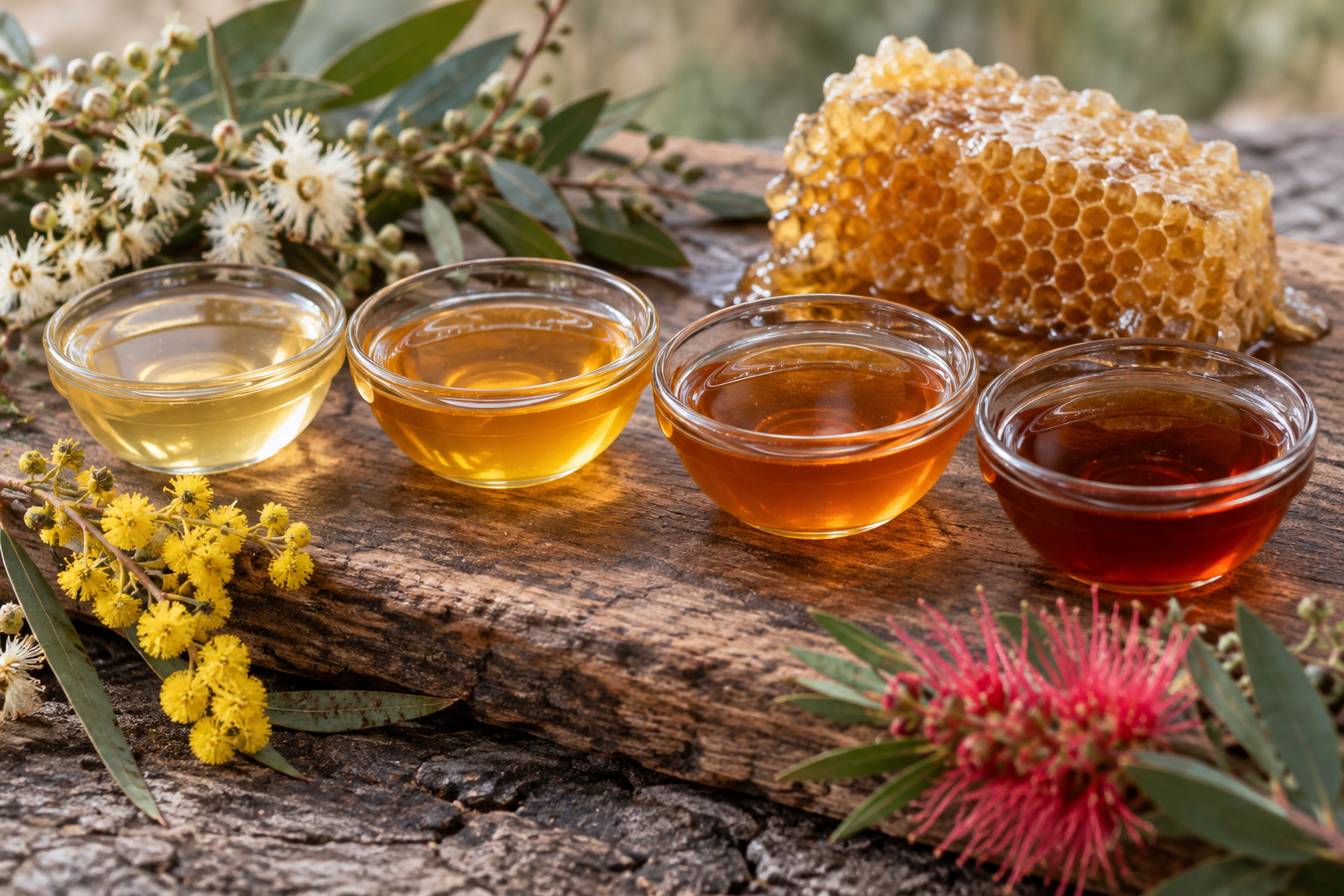
Queensland honey varies because bees make it from whatever is flowering within a few kilometres of the hive. A hive parked near ironbark forest makes a caramel-toned honey; the same hive near paperbark swamp makes something darker and more medicinal. Supermarket blends iron those differences out. Single-variety honey keeps them.
Colour is a rough guide. As a rule, lighter honeys are milder and darker honeys taste stronger, with more mineral and malty notes. Moisture and the balance of fructose to glucose also change texture, which is why some jars stay runny for months and others set firm within weeks.
This matters in the kitchen. A strong honey in a delicate panna cotta will bully every other flavour. A mild honey in a sticky barbecue glaze will disappear. Getting the variety right is the single biggest upgrade you can make to honey cooking.
The Queensland Honey Pairing Table
Here is how the varieties we sell line up, using the tasting notes from our own product pages. Treat it as a starting point and trust your palate.
| Variety | Flavour (our tasting notes) | Strength | Best kitchen uses | Pairs with |
|---|---|---|---|---|
| Ironbark | Butterscotch, a family favourite | Medium | Baking, glazes, porridge | Oats, pumpkin, pork, walnuts |
| Brushbox | Intensely sweet and floral | Light to medium | Tea, smoothies, yoghurt, dressings | Citrus, berries, green tea, ricotta |
| Melaleuca (Tea Tree) | Bold, earthy, slightly medicinal, hints of eucalyptus and herbs | Strong | Marinades, cheese boards, roast vegetables | Blue cheese, lamb, carrots, ginger |
| Swamp Turpentine | Sweet and fruity, a crowd favourite | Medium | Fruit salads, cocktails, pancakes | Mango, passionfruit, lime |
| Messmate (Swamp Mahogany) | Smooth and buttery on the tongue | Medium | Toast, hot drinks, simple desserts | Butter, banana, cinnamon |
| Polyfloral (Mixed Gum) | Changes with the seasons | Varies | Everyday sweetening | Almost anything |
| Creamed honey | Smooth like butter, no graininess, no additives | Mild | Spreading, frosting, no-drip lunchboxes | Crumpets, scones, apples |
We occasionally bottle rarer runs too. This season’s Jacaranda honey, which tastes a little like cotton candy, is likely a one-off because it depends on an unusual flowering year.
Ironbark: The Queensland Honey for Baking
Ironbark is the honey to reach for when you bake. Its butterscotch depth survives the oven better than lighter honeys, and it is dense with a relatively low moisture content, which helps cakes stay moist without going soggy.
Try it in:
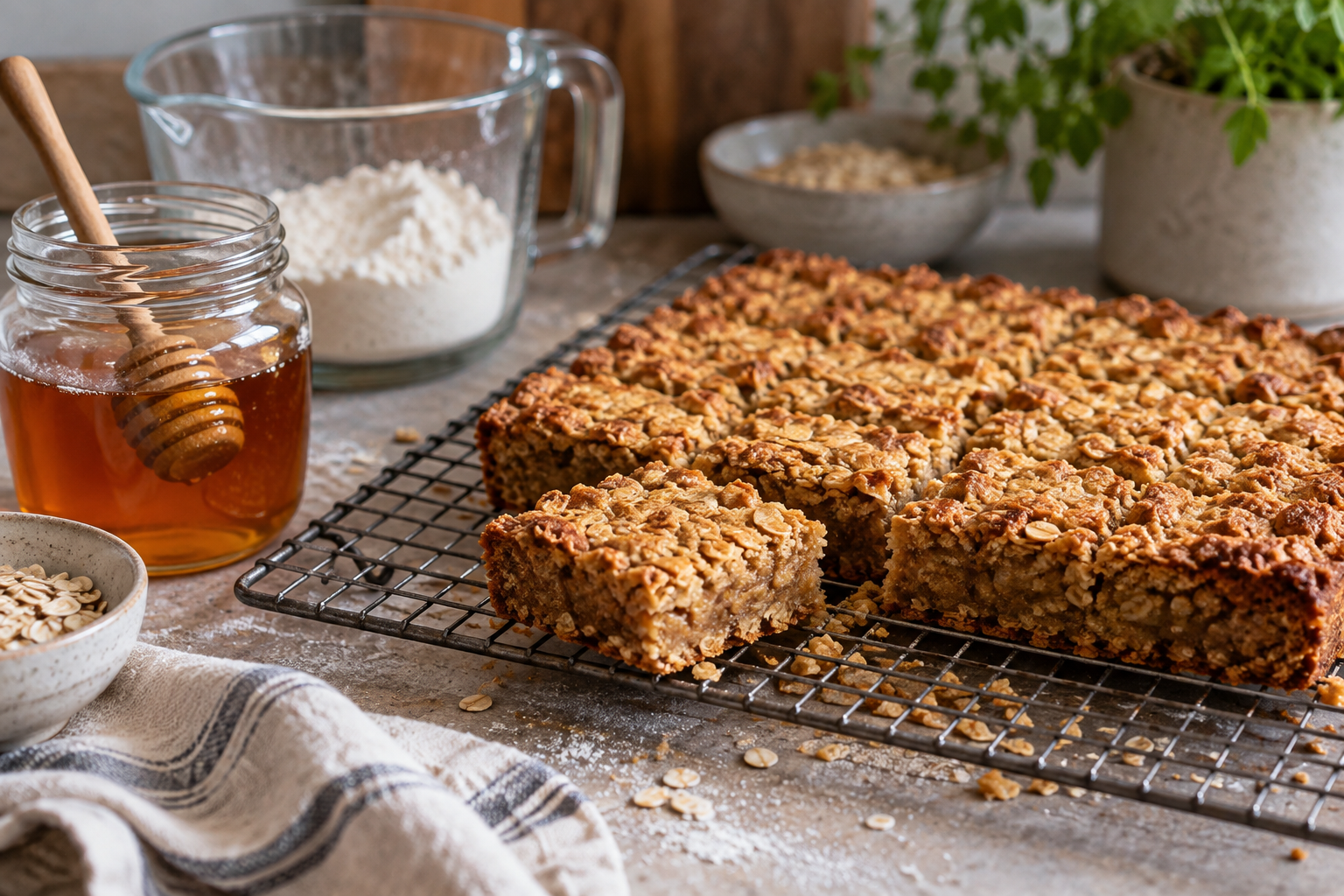
- Honey oat slice: Ironbark replaces golden syrup almost one for one and gives a toffee note.
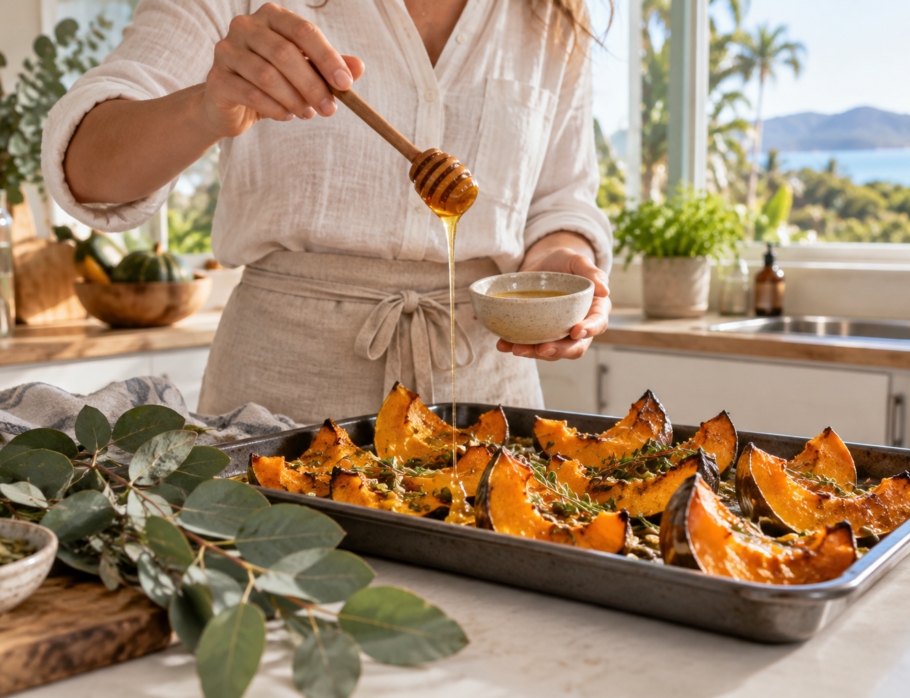
- Glazed pumpkin: toss wedges in olive oil, roast, then brush with Ironbark and a pinch of chilli for the final five minutes.
- Pork belly or ham glaze: mix Ironbark with Dijon mustard and orange zest and brush on late so it caramelises without scorching.
- Porridge: a spoonful stirred through at the table, not in the pot.
Ironbark eucalypts flower across much of eastern Australia, and in our part of South East Queensland it is one of the honeys families come back for most. If you only buy one jar for cooking, make it this one.
Brushbox: Light Queensland Honey for Drinks and Dressings
Brushbox works best where honey is a main flavour rather than a background sweetener. It is intensely sweet and floral, so a small amount goes a long way, and it dissolves cleanly into warm liquids.
- Tea: let the water cool for a minute or two before stirring it in. Boiling water flattens the floral top notes.
- Vinaigrette: one part Brushbox, two parts lemon juice, three parts extra virgin olive oil, salt and pepper. Shake in a jar.
- Breakfast bowls: drizzle over Greek yoghurt with passionfruit and toasted macadamias.
- Smoothies: blend with frozen banana and berries instead of adding sugar.
Because Brushbox is sweeter than most, reduce the amount by about a quarter if you are swapping it into a recipe written for a generic honey.
Melaleuca: Bold Honey for Savoury Food
Melaleuca, often called tea tree honey, is the most savoury-friendly honey we produce. Its earthy, slightly medicinal character with eucalyptus and herb notes can taste strong on toast, but next to salt, fat and spice it comes into its own.
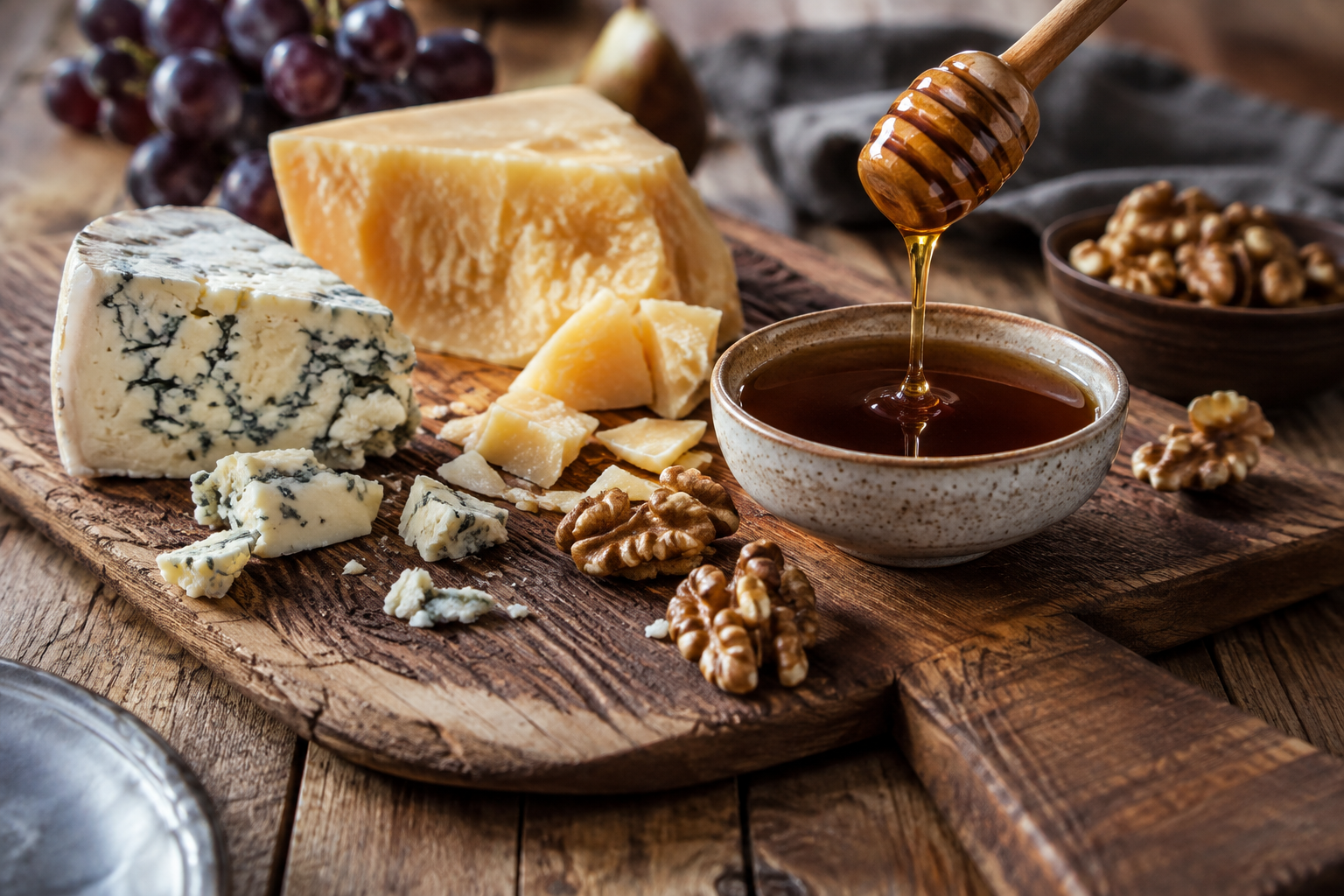
- Cheese boards: drizzle over blue cheese or aged cheddar with a few walnuts.
- Lamb marinade: Melaleuca, garlic, rosemary, lemon and olive oil, marinated overnight.
- Roast carrots: finish with Melaleuca, thyme and a squeeze of orange straight from the oven.
- Ginger drinks: the herbal edge sits well with fresh ginger and lemon on a cold night.
Our advice is to taste Melaleuca on its own first. People either love it straight away or learn to love it once they have tried it with cheese.
Swamp Turpentine, Messmate and Seasonal Blends
These three are the flexible middle of the range. They are milder than Melaleuca, less caramel-heavy than Ironbark, and happy in both sweet and fresh dishes.
Swamp Turpentine
Sweet and fruity, Swamp Turpentine is a natural match for tropical fruit. Spoon it over mango cheeks, whisk it into a lime and mint syrup for iced drinks, or serve it warm over pancakes.
Messmate
Messmate is smooth and buttery. It is the honey we suggest for people who find stronger varieties too much: great on hot buttered toast, in a banana smoothie, or stirred into warm milk with cinnamon.
Polyfloral
Our polyfloral (mixed gum) honey reflects whatever was flowering when it was harvested, so two bottles from different months can taste noticeably different. That makes it the easiest everyday honey for the pantry, and the squeeze bottle is handy for kids’ breakfasts.
How to Cook With Queensland Honey Without Losing Its Goodness
Raw Queensland honey keeps its delicate aromas and natural enzymes best when it is not heated hard. Gentle warmth is fine; prolonged high heat changes the honey.
Heat changes honey. Heating honey drives the formation of hydroxymethylfurfural (HMF), the compound food standards use as a marker of heat damage and ageing, with an international quality ceiling of 40 mg/kg in most honey. Source: BMC Chemistry review of HMF in honey, April 2018.
In practice, that gives you a few simple rules:
- Drizzle at the end. For roasts, grains and stir-fries, add honey off the heat or in the last few minutes.
- Warm, don’t boil. To loosen crystallised honey, stand the jar in warm (not boiling) water. Never microwave it in a plastic jar.
- Save your best jars for raw uses. Use polyfloral in the cake tin and single varieties on the table.
- Watch the sugar. Honey browns faster than white sugar, so glazes need to go on late.
Baking does cook honey, of course, and that is fine. You are trading some of the raw honey’s delicate aromas for flavour, colour and moisture in the finished cake. Just choose a variety whose character survives the oven, which is why Ironbark wins here.
Swapping Sugar for Honey in Recipes
Honey is sweeter than sugar and contains water, so you cannot swap it cup for cup. The widely used conversion from the US National Honey Board is a good starting point:
- Use about 3/4 cup of honey for every 1 cup of sugar.
- Reduce other liquids by about 1/4 cup per cup of honey.
- Add about 1/4 teaspoon of bicarb soda per cup of honey to balance its natural acidity (unless the recipe already uses sour cream or buttermilk).
- Lower the oven by about 15°C and check early, because honey browns faster.
A tip from our own kitchen: lightly oil your measuring cup or spoon before adding honey and every drop slides out.
Is honey healthier than sugar? It is still a sugar, so moderation matters. Honey’s glycaemic index varies with the floral source because the fructose-to-glucose balance changes. The AgriFutures Australia honey bee research program (formerly RIRDC) has funded work on the GI of Australian honeys, and varieties with higher fructose tend to sit lower. Our fuller look at the evidence is in the QLD Honey & Hives blog.
Creamed Honey and Honeycomb on the Table
Creamed honey is simply honey that has been crystallised in a controlled way so the crystals are tiny. Ours is pure honey with no additives, smooth like butter without graininess. It is perfect wherever drips are a problem: kids’ sandwiches, scones, crumpets and a quick frosting beaten with butter and a pinch of salt.
Try our creamed honey pot spread thinly on warm toast, or our flavoured and infused ranges for grazing boards. If you are building a gift for a keen cook, the honey gift pack lets them taste several varieties side by side.
Storing Queensland Honey So It Stays Kitchen-Ready
Store honey in a sealed jar at room temperature, out of direct sun. The pantry beats the fridge, which speeds up crystallisation.
- Crystallised honey is not spoiled. It is a natural sign of real honey. Warm the jar gently in water to re-liquefy.
- Keep water out. Always use a dry spoon; moisture is what can make honey ferment.
- Keep the lid tight. Honey absorbs moisture and smells from the air.
Queensland’s humid summers make that last point more important than in cooler states, so don’t leave jars open on the bench.
Where to Buy Queensland Honey for Cooking
You can buy our honey online through the QLD Honey & Hives shop, at our weekly pop-up locations around Runaway Bay, Robina, Loganholme and Springfield Central, or from our stockists. Pop-ups are the best place to taste before you buy, which is exactly what you want when choosing a cooking honey.
Please note that our personal delivery service finishes on 15 November 2026. From 16 November all online orders ship with Australia Post. The 1kg jars are the best value if you cook with honey often.
Frequently Asked Questions
Which Queensland honey is best for baking?
Ironbark. Its butterscotch flavour and dense texture hold up in the oven better than lighter honeys, and it gives cakes, slices and glazes a toffee depth.
Which honey is best in tea?
A light, floral honey such as Brushbox. Add it once the water has cooled slightly so the floral aroma survives.
Does cooking destroy the benefits of raw honey?
Prolonged high heat reduces enzyme activity and raises HMF, a heat marker. Short, gentle warming is fine. For the most raw character, add honey after cooking.
Can I use honey instead of sugar in any recipe?
Most, with adjustments: use about three-quarters of the amount, cut liquid, add a little bicarb soda and lower the oven temperature. Meringues and recipes that rely on dry sugar crystals are harder to convert.
Why has my honey gone solid?
That is natural crystallisation, not spoilage. Stand the jar in warm water and stir until it runs again, or enjoy it as a spread.
Is honey safe for babies?
No. Do not give honey to children under 12 months, including in baked goods, because of the risk of infant botulism. Healthdirect Australia has more on feeding infants safely.
How much honey should I put in a marinade?
For about 1kg of meat or vegetables, 2 to 3 tablespoons of a bold honey such as Melaleuca or Ironbark is plenty. Balance it with acid (lemon, vinegar) and salt, and cook on moderate heat so the sugars caramelise rather than burn.
Want to taste the difference yourself? Visit a pop-up this weekend or contact us for help choosing the right jar for your kitchen.
Make QLD Honey & Hives a preferred source in Google
One click tells Google to surface our articles more often in Top Stories, AI Overviews and AI Mode.