
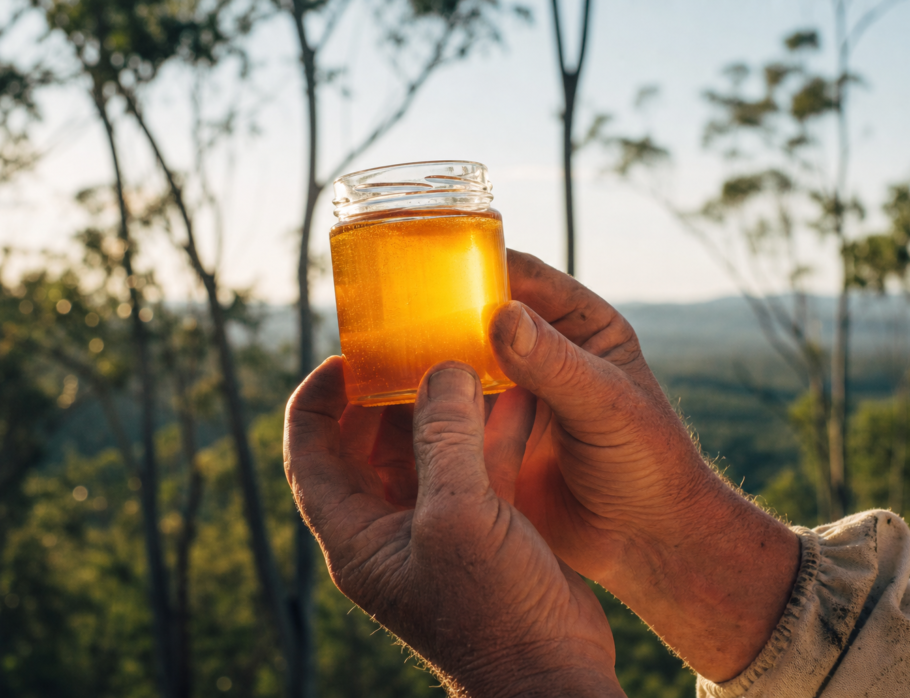
Local honey Gold Coast shoppers can trust is honey you can trace back to a named hive, a specific beekeeper, and a specific patch of bushland, not a blend from a supermarket shelf assembled from honey of unknown origin. With federal testing in 2025 and 2026 repeatedly flagging imported honey sold in Australian supermarkets as adulterated or diluted with cheap syrups, buying from a local Gold Coast producer like QLD Honey & Hives is no longer just a “nice to have” for flavour. It is the most reliable way to know exactly what is in your jar.
This guide explains what the recent honey fraud findings actually mean, why local sourcing sidesteps the problem entirely, and how to identify genuinely local beekeepers versus honey that is merely packaged in Queensland.
What Recent Testing Revealed About Imported Honey in Australia
In late 2025, the Department of Agriculture, Fisheries and Forestry (DAFF) ran a pilot survey testing imported honey sold in Australian supermarkets. The results, reported by the ABC, found a meaningful share of tested imported samples did not pass authenticity checks, meaning the product was diluted or blended with cheap sugar syrups and sold to consumers as pure honey.
The Australian Honey Bee Industry Council has been raising this issue for years through its Honey Fighting Fund, arguing that the standard C4 carbon isotope test used at the border is not sensitive enough to catch every modern adulteration technique. Newer Nuclear Magnetic Resonance (NMR) profiling, which builds a chemical fingerprint of a honey sample and compares it against a reference database, is now being trialled to close that gap.
None of this is a new problem. Back in 2018 the ACCC investigated allegations of widespread honey adulteration and, while it ultimately found the testing methods of the time were not reliable enough to prove fraud in court, it also confirmed there was no confidence that existing checks could reliably detect every case. The upshot for shoppers: imported and blended honey carries a documented risk that home-grown, single-origin honey does not.
Why Local Honey Gold Coast Producers Avoid the Problem Entirely
Honey fraud happens at scale, in supply chains that blend honey from dozens of countries before it ever reaches a bottling plant. A small Gold Coast producer selling honey harvested from their own hives has no incentive and no opportunity to do this. When you buy local honey Gold Coast beekeepers have extracted themselves, from hives they manage personally, there is no blending step, no anonymous overseas supplier, and no syrup to cut costs.
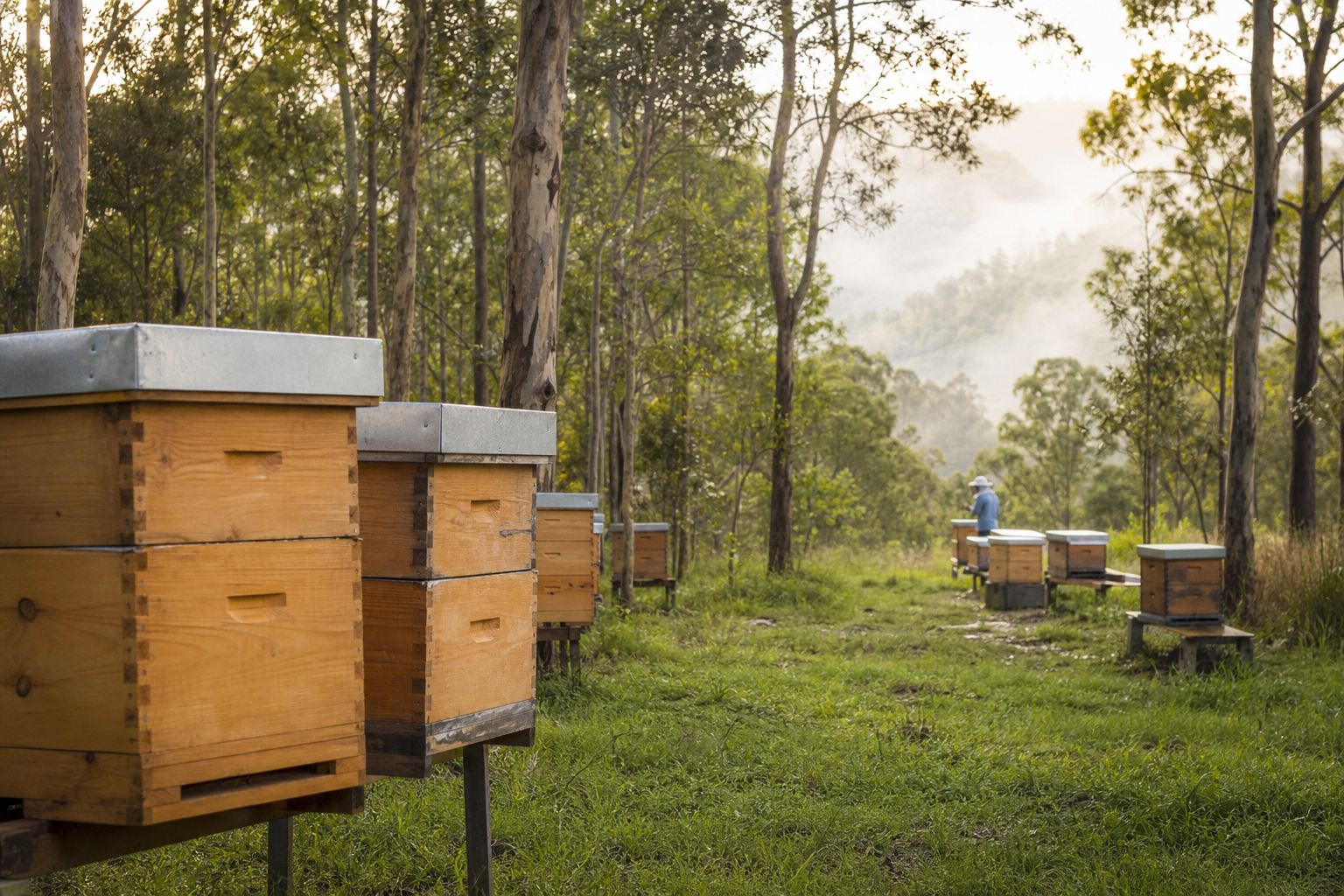
At QLD Honey & Hives, every jar comes from hives we manage across the Gold Coast hinterland and surrounding South East Queensland bushland. We can tell you which forest a jar of Ironbark honey or Brushbox honey came from and roughly when it was harvested, because we were the ones who harvested it. That traceability is the practical, everyday benefit of buying local: you are not trusting a label, you are trusting a beekeeper you can actually talk to.
How to Tell a Genuinely Local Jar From a Repackaged Import
Not every jar that says “Queensland” or “Australian” on the front is honey that was actually harvested here. Some brands blend imported honey with a small percentage of local honey, or simply bottle in Queensland using honey sourced from elsewhere. Look for these signals before you buy:
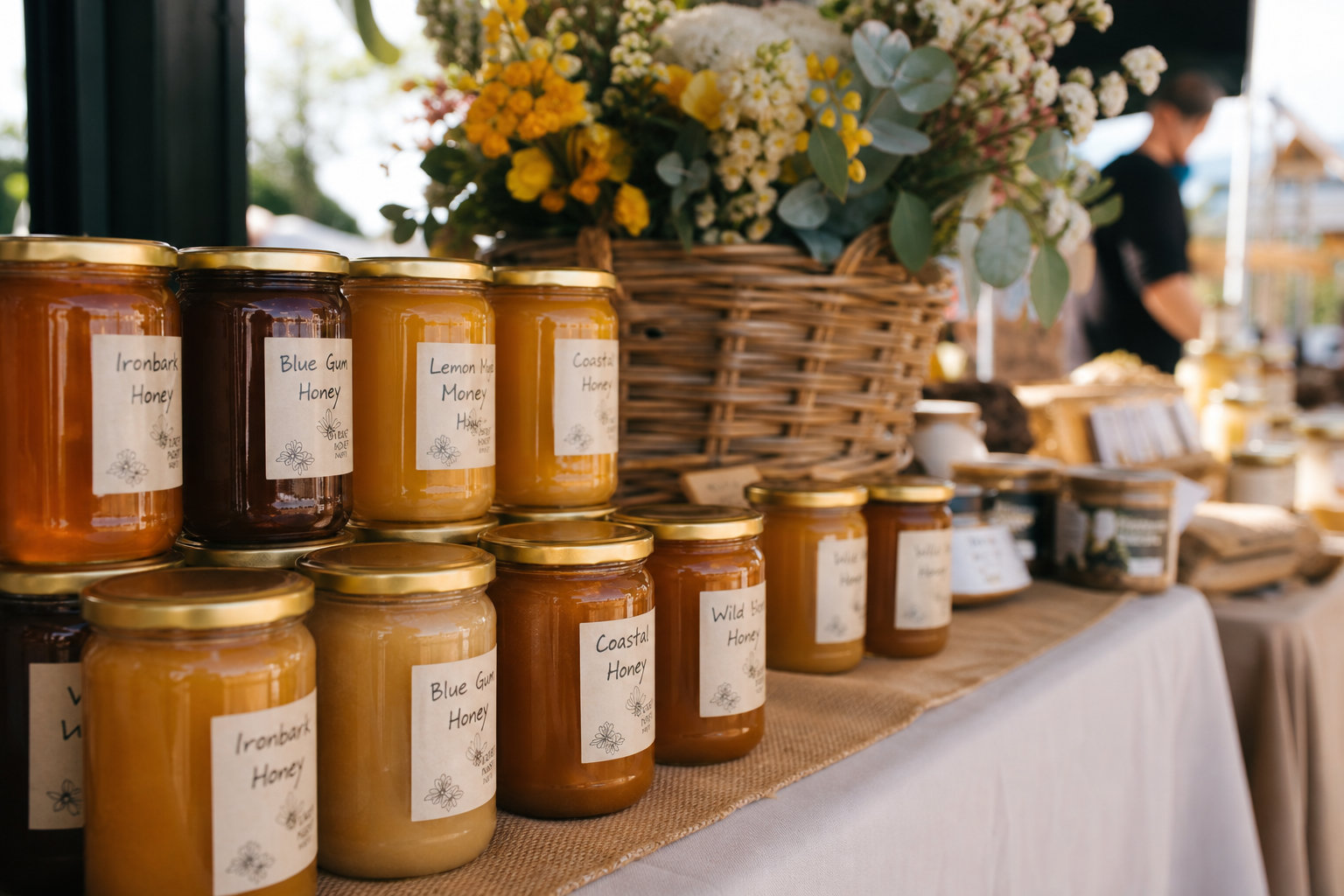
- Named floral source: Genuine local single-origin honey is usually labelled by tree, such as Ironbark, Brushbox, or Melaleuca, not just “raw honey.”
- A beekeeper you can find: Local producers list their hive locations, sell at farmers markets and pop-ups, and answer questions directly.
- Seasonal availability: Real local honey runs out or changes variety with the seasons. If a “local” brand has identical stock all year round in large volumes, some of it is likely being topped up from elsewhere.
- Crystallisation over time: Raw, unheated, unfiltered honey crystallises naturally in the jar. Honey that stays perfectly liquid for years has usually been heavily processed.
- Stockist relationships: Check our list of Gold Coast stockists for cafes and stores that carry our jars directly, a sign of a genuine local supply chain rather than a distribution deal with an importer.
The Bigger Picture: Buying Locally Supports Pollination, Not Just Producers
Buying honey from a nearby beekeeper does more than protect your own jar from fraud. According to the Australian Honey Bee Industry Council, honey bees are responsible for pollinating around 65% of Australia’s horticultural and agricultural crops. Every hive a local beekeeper keeps healthy and productive is also working, unpaid, on the almond orchards, macadamia farms, and vegetable crops across South East Queensland.
When Australians buy cheaper imported honey instead, fewer dollars flow back into local beekeeping operations, and fewer hives get maintained. Industry advocates have pointed out that Australia imports around nine million kilograms of honey a year, honey that displaces demand for local product and, by extension, reduces the economic case for keeping bees here at all. Choosing a Gold Coast producer is a small but direct way to keep pollination services, and the beekeepers who provide them, viable in your own region.
The Health Case for Buying Fresh and Local
Beyond fraud and pollination, there is a straightforward freshness argument. Raw, unfiltered local honey retains the pollen, enzymes, and antimicrobial compounds that heavy processing and long international supply chains tend to strip away. Local, low-processed honey is also the variety most commonly referenced in discussions around antibacterial honey and seasonal allergy management, precisely because it hasn’t been heated above hive temperature or ultra-filtered before it reaches your pantry.
That doesn’t mean local honey is a medicine or a cure, and no reputable producer should claim otherwise. What it does mean is that if you want honey close to its natural state, buying from a beekeeper who bottled it within weeks of extraction is a far more reliable path than buying an imported blend that may have travelled through several countries and processing facilities first.
A Seasonal Snapshot: What “Local” Actually Looks Like Across the Year
One of the clearest signs of genuinely local production is that supply changes with the seasons, because it depends on what is actually flowering in the hinterland at any given time. On the Gold Coast, our hives move between forests as different native trees come into bloom, and the honey we bottle reflects that rhythm rather than a constant, unchanging supermarket stock level.
- Late summer to autumn (February to April): Melaleuca (Tea Tree) stands flower in coastal wetlands, producing a distinctive, slightly medicinal honey prized for its antibacterial reputation.
- Autumn to winter (April to July): Ironbark forests across the hinterland flower on a multi-year cycle, producing one of our richest, darkest, and most sought-after single-origin varieties when conditions align.
- Winter to spring (July to September): Brushbox trees bloom, giving a lighter, more delicate honey that tends to crystallise into a smooth, spreadable texture over a few months.
- Spring to summer (September to December): Swamp Turpentine and mixed native gum flowering periods produce smaller, limited batches that sell out quickly because supply is genuinely capped by what the bees bring in.
If a brand sells “Gold Coast” honey in unlimited quantities across every one of these seasons with no variation in colour, flavour, or availability, it is worth asking whether all of it was actually harvested locally, or whether local honey has simply been used to top up a larger imported blend.
How QLD Honey & Hives Manages Hives Across the Region
Beyond sourcing, the way hives are managed also affects what ends up in the jar. We rotate hive placements seasonally to follow native flowering, monitor colony health regularly, and avoid unnecessary heat treatment during extraction so the honey retains its natural enzymes and pollen content. Frames are extracted using minimal processing: honey is strained to remove wax fragments and bee parts, but it is not ultra-filtered or pasteurised, which is why our jars crystallise naturally over time rather than staying artificially liquid.
This hands-on approach is only realistic at a small, local scale. Large-scale importers and bulk blenders manage supply chains measured in shipping containers, not individual hive boxes, which is part of why fraud risk concentrates at that end of the market rather than among small regional producers who know exactly where every jar came from.
Where to Buy Genuine Local Honey Gold Coast Wide
QLD Honey & Hives sells directly through our online shop, with home delivery across the Gold Coast and Australia-wide shipping, and in person at weekend markets and pop-up stalls from Runaway Bay to Robina and beyond. You can also find our jars at a growing list of independent stockists across the region.
Our current range includes single-origin varieties such as Ironbark, Brushbox, and Melaleuca (Tea Tree) honey, plus creamed honey and gift packs for anyone wanting to introduce a friend or family member to genuinely local honey. Every jar is harvested, bottled, and sold by the same small team, with no importer, blender, or unknown supplier in between.
What to Ask Before You Buy “Local” Honey
If a brand’s local credentials aren’t obvious from the label, a few quick questions will usually clear it up:
- Which suburb, region, or forest were the hives kept in?
- Who manages the hives, and can I contact them directly?
- What floral source produced this specific batch?
- Is the honey raw, unfiltered, and unheated, or has it been processed?
- Is any portion of the jar blended with imported honey?
A genuine local Gold Coast beekeeper will answer all five without hesitation. If a seller can’t or won’t say where the hives actually are, treat the “local” label with caution.
Frequently Asked Questions About Local Honey Gold Coast
Is local honey Gold Coast producers sell actually cheaper to fake?
No. Small-batch local honey is harder to fake because it comes from a traceable, single source with no blending step. Fraud typically occurs in large-scale supply chains that mix honey from multiple countries before bottling, not in direct-from-beekeeper sales.
How can I check if honey labelled “Product of Australia” is genuinely local?
Look for a named floral source, seasonal availability, and a beekeeper or business you can contact directly. Broad, generic labelling with no regional detail and constant year-round stock are both signs the honey may be blended or imported.
Why does local honey crystallise while supermarket honey stays liquid?
Raw, unheated honey naturally crystallises over weeks or months because it hasn’t been processed to remove the fine sugar and pollen particles that trigger crystallisation. Heavily filtered and heated commercial honey resists crystallising, which is a processing effect rather than a sign of higher quality.
Does buying local honey Gold Coast wide really help bees?
Yes. Revenue from local honey sales helps beekeepers maintain hive numbers, which supports pollination of regional crops. The Australian Honey Bee Industry Council estimates bees pollinate roughly 65% of Australia’s horticultural and agricultural produce, so supporting local hives has flow-on benefits for regional food production.
Where can I buy local honey Gold Coast wide from QLD Honey & Hives?
You can order online through our shop for home delivery, visit us at Gold Coast markets and pop-ups, or pick up a jar from one of our local stockists.
Is imported honey unsafe to eat?
Adulterated honey diluted with sugar syrup isn’t typically a food safety hazard in the sense of making you sick, but it means you are paying for pure honey and receiving a diluted product. It also lacks the full range of natural enzymes, pollen, and compounds found in raw, unprocessed honey.
What honey varieties count as truly local to the Gold Coast?
Varieties such as Ironbark, Brushbox, Melaleuca (Tea Tree), and Swamp Turpentine are all native Queensland floral sources harvested from hinterland and coastal hives in our region, making them genuinely local to the Gold Coast rather than generic blended honey.
Choose Honey You Can Trace
The honey aisle in an average Gold Coast supermarket now carries real risk of dilution and mislabelling, according to the federal government’s own 2025-2026 testing. The fix is simple: buy from a beekeeper you can name, in a region you can point to on a map. QLD Honey & Hives has been doing exactly that across the Gold Coast hinterland, and we’ll keep telling you which hive your honey came from, every single time.
Browse our full range in the online shop, read more about our beekeeping story on the About Us page, or get in touch via our Contact Us page if you have questions about a specific batch or variety. You can also browse more articles like this on our blog.


