
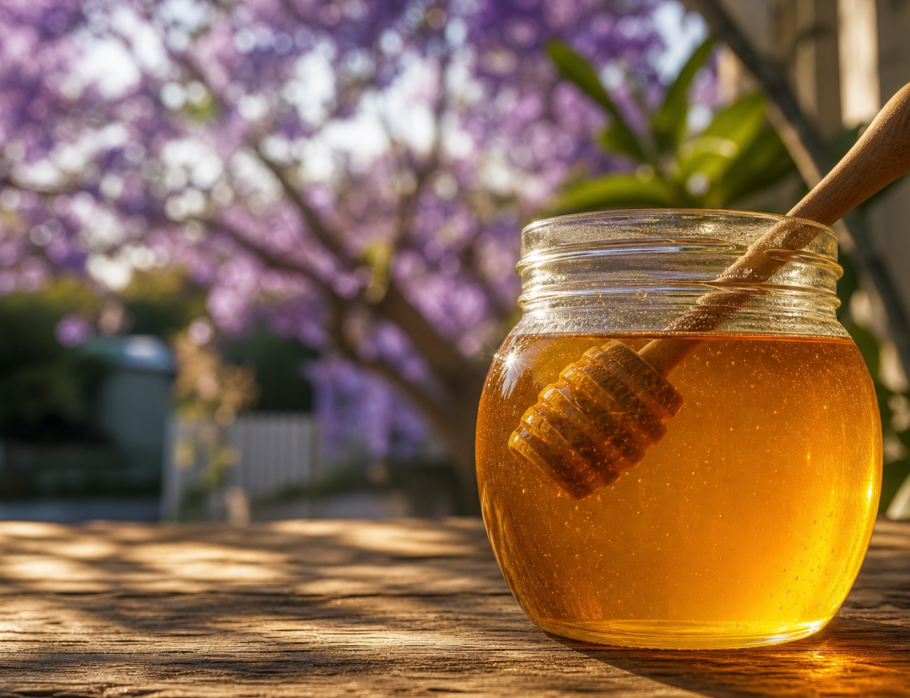
Brisbane honey tastes the way it does because Brisbane bees forage across one of Australia’s greenest capital cities: flowering eucalypts lining suburban streets, jacaranda canopies in spring, community gardens, and macadamia orchards on the city’s western fringe. The result is a honey that is generally light to medium amber, smooth and only lightly floral, reflecting a broad, mixed nectar flow rather than a single dominant tree species. At QLD Honey & Hives, we work with beekeepers across South East Queensland, including hives placed in and around Brisbane’s leafy suburbs, to bring that distinctive urban character to the jar.
This guide explains exactly what shapes the flavour of Brisbane honey, why urban beekeeping has become one of the fastest-growing parts of the Queensland honey industry, and how to tell a genuine local product from something merely labelled “local” on a supermarket shelf.
What Makes Brisbane Honey Different from Other Queensland Honey
Brisbane honey is shaped less by any single flowering tree and more by the sheer diversity of the urban landscape. Unlike a rural apiary parked beside a single ironbark forest for weeks at a time, a Brisbane hive might draw nectar from flowering gums on the nature strip, jacarandas and poincianas in October and November, backyard citrus and bottlebrush, and community garden herbs, all within a single foraging radius of a few kilometres.
That diversity is exactly why the honey tends to be smoother and less intensely flavoured than a single-origin ironbark or brushbox honey from a rural apiary. It’s a blended, “whole of city” nectar flow, and many customers describe it as an easy, everyday honey that works well on toast, in tea, or stirred through yoghurt.
A Rough Seasonal Nectar Calendar for the City
Because Brisbane’s flowering calendar is so mixed, harvests taken at different times of year can taste noticeably different even from the same hive site. Late winter and early spring often bring lighter notes from flowering wattles and early eucalypts. October and November add the short but intense jacaranda and poinciana bloom that many long-term Brisbane residents associate with the city’s identity. Summer forage leans on bottlebrush, grevillea and backyard vegetable and herb flowers, while autumn often reflects a mix of late-flowering natives and exotic garden species as gardens are replanted for the cooler months.
- Late winter to early spring (Aug–Sep): Wattle and early eucalypt blossom, lighter colour and mild flavour.
- Spring (Oct–Nov): Jacaranda and poinciana influence, often a slightly deeper amber with a soft floral note.
- Summer (Dec–Feb): Bottlebrush, grevillea and backyard garden flowers dominate.
- Autumn (Mar–May): A settling mix of late natives and exotic garden blooms as the nectar flow tapers off.
This is also why a producer who can tell you roughly when a batch was harvested, rather than simply stamping every jar as generic “Queensland honey,” is generally a more trustworthy source of genuinely local product.
The Urban Beekeeping Boom in South East Queensland
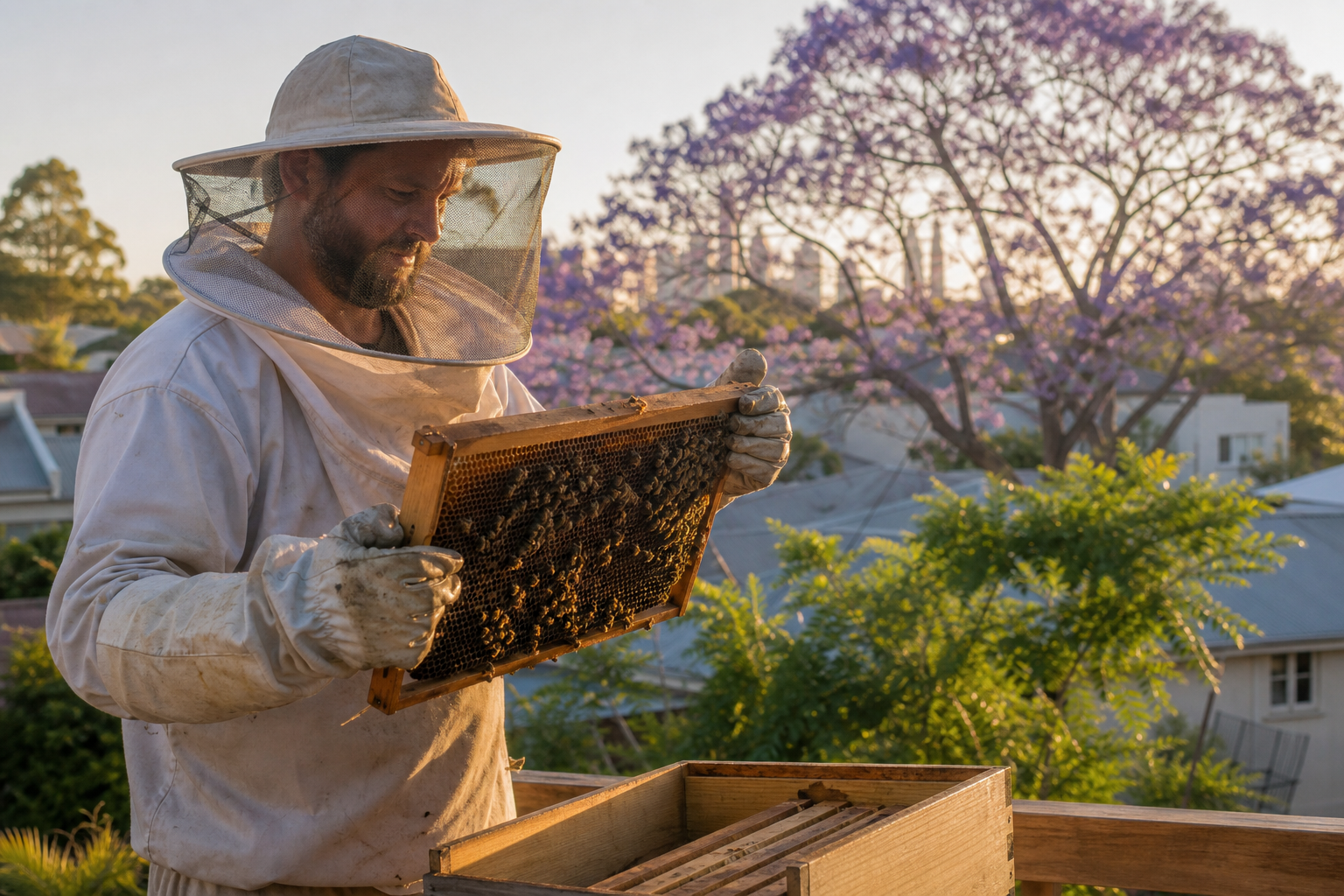
Backyard and rooftop beekeeping has grown steadily across the city over the past decade, and it’s no longer just a hobbyist trend. The Brisbane Convention & Exhibition Centre now maintains its own rooftop hives as part of a broader sustainability and urban pollination program, harvesting a “Rooftop Reserve” honey from bees foraging across the CBD and inner-city green spaces. It’s a clear sign that even Australia’s third-largest city takes its bee population seriously.
Wildlife Queensland, a conservation body focused on the state’s native species, has published planting guides encouraging South East Queensland households to grow native bee-friendly species such as melaleucas, callistemons, leptospermums and native daisies specifically to support pollinators in urban backyards. Every one of those plantings adds another layer of forage diversity to the local nectar flow, which is part of why the honey produced across the city varies so much from suburb to suburb and even season to season.
A 2022 peer-reviewed study on subtropical urban pollinators reinforced this point, finding that backyard-scale vegetation cover had a measurable effect on how much insect pollinator activity a suburb supported, independent of how close that suburb sat to remnant bushland. In practical terms, a well-planted inner-city block can rival a semi-rural property for bee forage, which is exactly why hobbyist and small commercial apiaries have multiplied across the suburbs in recent years.
Why Urban Hives Can Actually Outperform Rural Ones
Counterintuitively, city hives sometimes have more consistent access to nectar than rural hives. Suburban gardens are watered through dry spells, street trees are planted for year-round flowering, and the mix of exotic and native species means something is usually blooming somewhere within a few kilometres. Rural apiaries, by contrast, are more exposed to boom-and-bust flowering cycles tied to rainfall and a single dominant species like ironbark or spotted gum.
This same pattern shows up on the western fringe of the city, where small macadamia orchards sit close enough to suburban development that hives can draw on both the orchard bloom in late winter and nearby garden forage the rest of the year. It’s a useful reminder that “urban” doesn’t mean isolated from agriculture altogether; in South East Queensland, city, orchard and bushland forage often overlap within the same beekeeper’s route.
- Diverse forage: Dozens of flowering species within a small radius reduces the risk of a total nectar dearth.
- Reliable water access: Garden irrigation keeps flowering going through dry months.
- Warmer microclimate: Urban heat islands can extend the flowering season slightly compared to surrounding bushland.
- Community engagement: More backyard beekeepers means more monitoring, quicker disease detection, and better hive health outcomes overall.
How to Tell If Your Brisbane Honey Is Genuinely Local and Raw
Not everything labelled “Brisbane honey” on a shelf actually comes from hives in the greater Brisbane region. Australian food labelling law requires country of origin claims, but “local” and regional claims aren’t independently policed the way organic or Manuka MGO ratings are. A few practical checks help separate genuine local product from marketing language:
- Ask where the hives are located. A real local producer can tell you the suburb, region or apiary site, not just “Queensland” in general.
- Check for raw, unfiltered, unheated claims. Genuine raw honey retains fine pollen and propolis particles and will crystallise naturally over time, which is a sign it hasn’t been ultra-filtered or heavily heat-treated.
- Look for seasonal variation. A producer selling the exact same colour and flavour of “local” honey twelve months a year, regardless of season, is more likely blending stock rather than harvesting a genuine seasonal nectar flow.
- Buy direct where possible. Farmers markets, pop-up stalls and small-batch suppliers like QLD Honey & Hives’ pop-up locations let you talk to the people who actually manage the hives.
Brisbane Honey vs Gold Coast and Sunshine Coast Honey
Queensland’s honey character shifts noticeably as you move along the coast. Gold Coast hives, closer to the hinterland ranges, often pick up more ironbark and brushbox character. Sunshine Coast honey frequently reflects the mountain ranges and forestry country behind Maleny and the hinterland. Brisbane honey sits in between: less forest-dominant, more suburban and mixed-floral, with the seasonal jacaranda and poinciana bloom giving spring harvests a distinctive lift.
If you’re comparing regional Queensland honeys side by side, our Polyfloral Honey is the closest match to a genuine mixed urban and semi-rural nectar flow, while our single-origin Ironbark Honey and Brushbox Honey show what a more forest-dominant Gold Coast hinterland harvest tastes like by comparison.
Health and Quality Considerations for Brisbane Honey
Raw honey sourced from a genuinely diverse urban and peri-urban forage base carries the same general properties associated with unprocessed honey more broadly: natural enzymes, trace pollen, and antioxidant compounds that are reduced or removed by heavy commercial filtration and pasteurisation. It’s worth noting that no honey, however local, is recommended for infants under 12 months due to the small risk of infant botulism, a standard caution from Australian health authorities that applies to all raw and commercial honey alike.
For everyday use, unfiltered Brisbane-style honey works well stirred into warm (not boiling) tea, spread on toast, or used as a natural sweetener in baking and marinades. Heating raw honey above around 40°C for extended periods will gradually degrade some of its more delicate enzymes and aromatic compounds, so many customers prefer to add it after cooking rather than during.
Buying and Storing Brisbane Honey
Genuine raw local honey and other unfiltered Queensland varieties should be stored at room temperature, away from direct sunlight, in a sealed jar. Crystallisation is completely normal for raw honey and is actually a good sign of minimal processing. If a jar crystallises, sit it in a bowl of warm (not hot) water to gently return it to liquid form without damaging its natural enzymes.
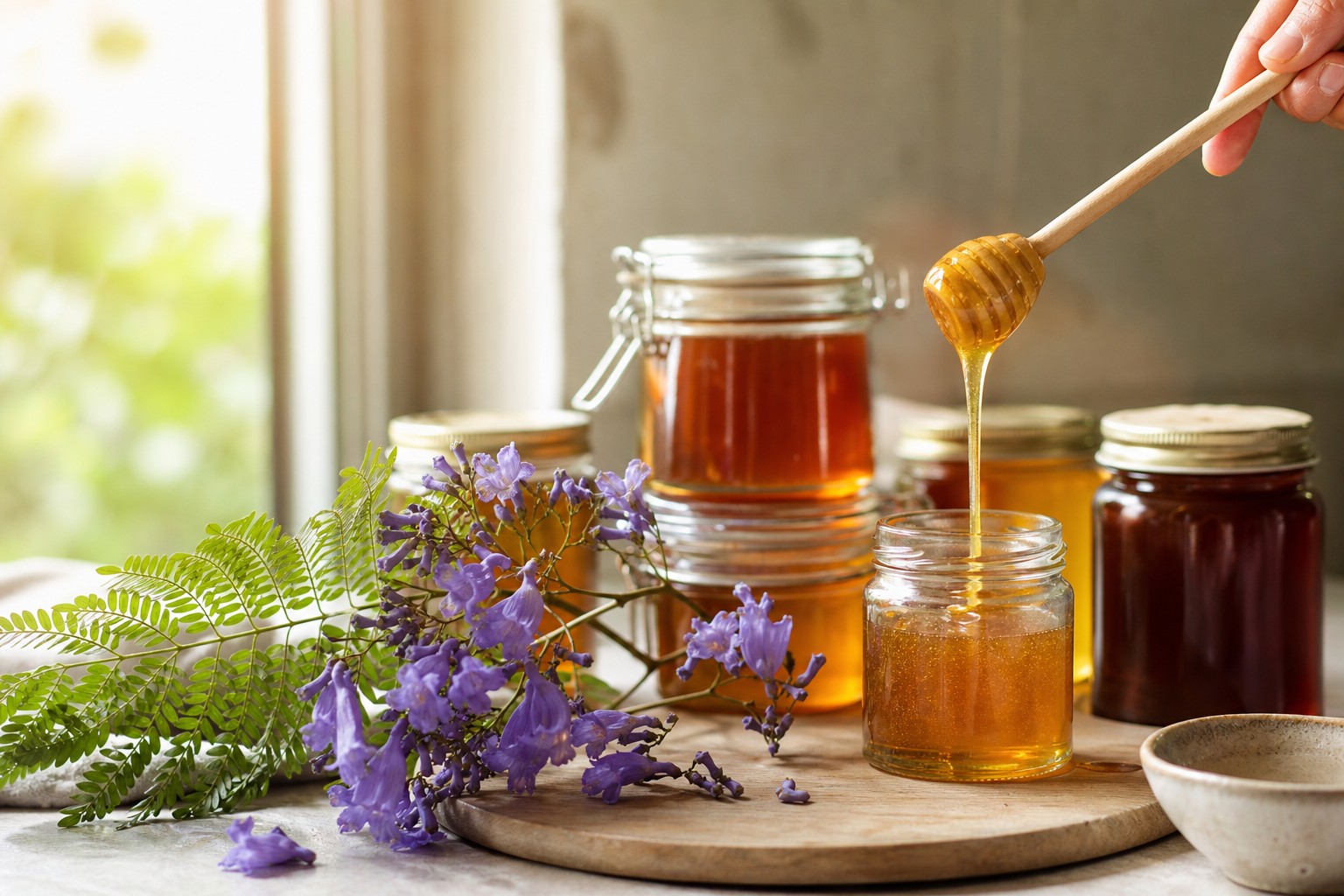
QLD Honey & Hives ships raw, unfiltered honey across South East Queensland and delivers Australia-wide through our online shop. You’ll also find us at rotating pop-up markets and through our list of stockists if you’d rather buy in person and ask questions directly.
Gifting and Everyday Uses for a City-Grown Honey
A mild, approachable jar sourced from the greater Brisbane region also makes a genuinely local gift for interstate friends, visiting family, or corporate hampers, since it tells a story about the city rather than just being “honey from Queensland.” Our Honey Gift Pack pairs well with a note explaining the seasonal jacaranda and eucalypt forage behind it, and pairs neatly with our beeswax candles for a complete, locally made gift set.
For households who prefer a thicker, spreadable texture rather than a runny honey, our Creamed Honey is produced using the same raw, unfiltered principles and works particularly well on toast or stirred through porridge. Whichever format you choose, look for a producer who’s transparent about hive location and harvest timing, the two details that matter most when you’re trying to buy something genuinely tied to the city rather than a generic blend.
Frequently Asked Questions About Brisbane Honey
Is Brisbane honey different from Gold Coast or Sunshine Coast honey?
Yes. Brisbane honey tends to be lighter and more mixed-floral, reflecting the diversity of suburban gardens, street trees and seasonal blooms like jacaranda, while Gold Coast and Sunshine Coast honey often shows stronger single-species character from nearby ironbark, brushbox or hinterland forest.
Can bees really produce good honey in the middle of a city?
Yes. Urban environments often provide more consistent forage than rural bushland because gardens are watered and planted with a wide range of species that flower at different times of year, giving city bees reliable access to nectar even during regional dry spells.
How can I tell if honey labelled “Brisbane” or “local” is genuine?
Ask the seller where the hives are actually located, check for raw and unfiltered claims, and look for natural seasonal variation in colour and flavour. Buying directly from a small producer at a market or online store is the most reliable way to verify origin.
Does raw Brisbane honey crystallise?
Yes, and that’s a good sign. Raw, unfiltered honey naturally crystallises over time because it retains fine particles of pollen and wax. It’s easily returned to liquid form with gentle warm water and doesn’t need refrigeration.
Is Brisbane honey safe for babies?
No. Honey of any kind, including raw local honey, should not be given to infants under 12 months of age due to the risk of infant botulism. This applies to all honey, not just unfiltered or raw varieties.
Where can I buy genuine raw Brisbane and Queensland honey?
QLD Honey & Hives sells raw, unfiltered Queensland honey through our online shop, at rotating pop-up markets, and through our local stockists, with delivery available across Brisbane and Australia-wide.
What does Brisbane honey taste like?
Most of it is light to medium amber with a smooth, mild floral flavour rather than a single bold note. It’s shaped by a broad mix of nectar sources rather than one dominant flowering species, which makes it an easy, versatile everyday honey.
To learn more about how QLD Honey & Hives sources and harvests raw Queensland honey, visit our About Us page, or get in touch through our Contact page with any questions about origin, harvest dates or bulk orders.


