
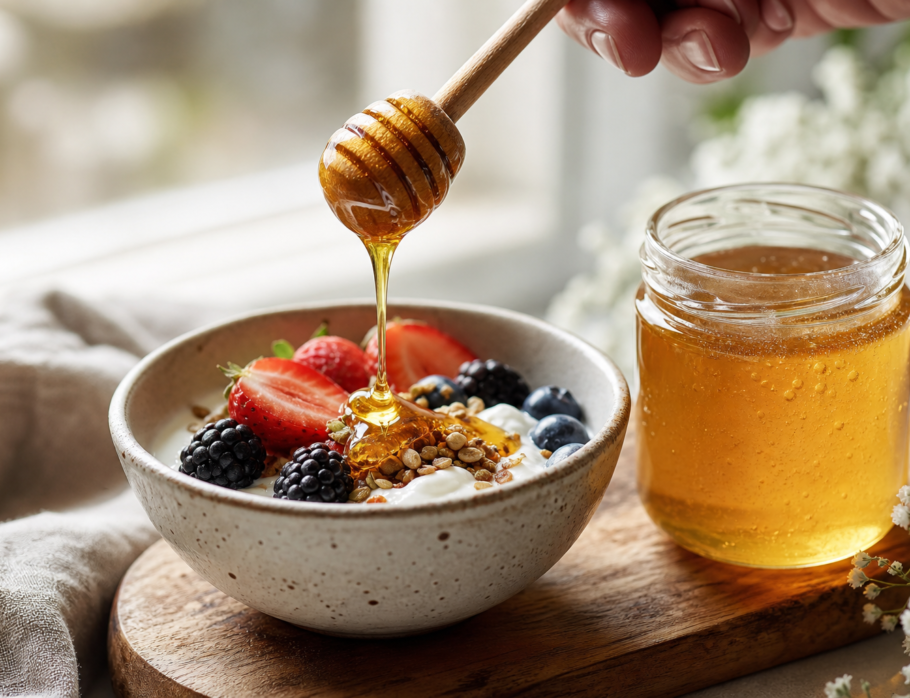
The best way to use raw honey Gold Coast beekeepers harvest is simple: keep it as close to its natural state as possible. Drizzle it raw over yoghurt, cheese, porridge and fruit, stir it into warm (not boiling) drinks, and use gentle heat when cooking so you protect the enzymes, antioxidants and aroma that make raw honey worth buying in the first place. At QLD Honey & Hives, our raw, unfiltered, unheated honey is made for everyday use, and this guide shows you exactly how to get the most from every jar.
Supermarket honey is often blended, filtered and heat-treated until it is little more than sweet syrup. Genuine raw honey is different, and using it well means understanding what makes it special. Below we cover kitchen uses, temperature science, flavour pairings for each of our Queensland honey varieties, daily wellness routines and storage, so your honey stays as good as the day it left the hive.
What makes raw honey Gold Coast producers sell so different?
Raw honey is extracted straight from the comb, strained to remove wax and debris, and jarred without pasteurisation or fine filtering. It is never heated beyond hive temperature. That single difference is why raw honey Gold Coast households choose keeps its natural enzymes, pollen, antioxidants and full flavour.
Two things get destroyed when honey is over-processed. The first is enzyme activity, especially diastase and glucose oxidase, which commercial heating degrades. The second is aroma and delicate flavour compounds that simply evaporate under high heat. A 2025 review in the Journal of Food Process Engineering confirmed that excessive thermal processing raises 5-hydroxymethylfurfural (HMF) levels and inactivates diastase, the exact markers used to tell how hard a honey has been heated.
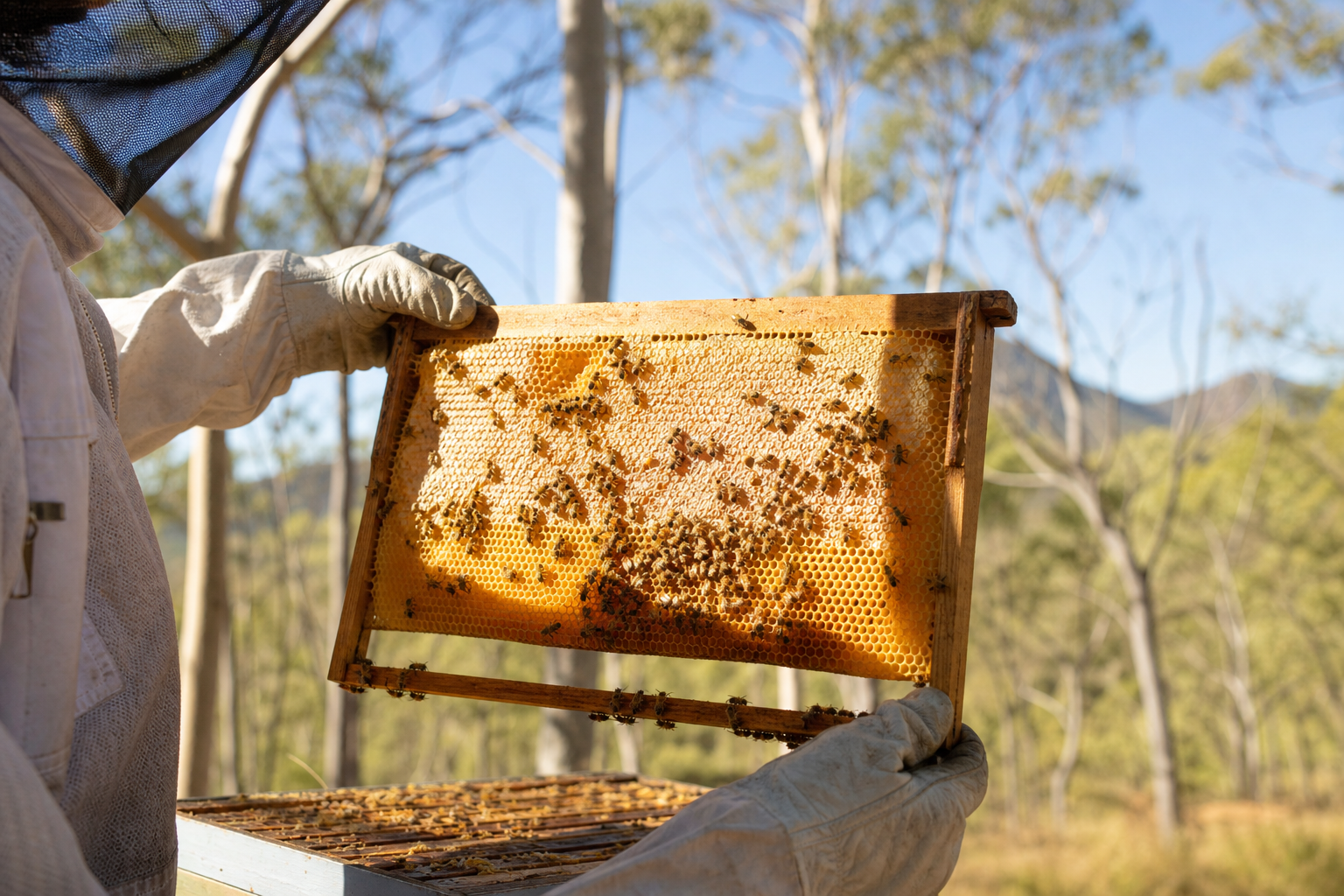
Our honey skips all of that. It comes from hives across the Gold Coast, Hinterland, Sunshine Coast and wider Queensland, cold-extracted and jarred raw. You can read the full story of how we work on our About Us page, or browse the range in the online shop.
Everyday kitchen uses for raw honey
Raw honey is one of the most versatile ingredients in an Australian kitchen. The trick is to add it where its flavour and goodness will shine, rather than boiling it into oblivion. Here are the everyday uses our customers reach for most.
- Breakfast: drizzle over Greek yoghurt, porridge, granola, pancakes or fresh fruit. This is raw honey at its best, completely untouched by heat.
- Toast and cheese: spread creamed honey on sourdough, or pair a bold honey with sharp cheddar and soft brie on a grazing board.
- Dressings and marinades: whisk raw honey with olive oil, lemon or vinegar and mustard for a quick salad dressing, or use it in glazes for roast vegetables.
- Warm drinks: stir into tea, warm milk or lemon water once it has cooled slightly, so the honey dissolves without cooking.
- Baking: honey adds moisture and depth to cakes, muffins and biscuits. You lose some raw benefits in the oven, but the flavour is superb.
For a general all-purpose choice, our Polyfloral (Mixed Gum) honey in a squeeze bottle is the everyday workhorse. It is mild, balanced and easy to pour straight into recipes.
Honey also shines in desserts and entertaining. A drizzle over vanilla ice cream, baked ricotta or a fruit and nut platter turns something simple into a talking point. For grazing boards, offer two contrasting honeys, one light and one dark, so guests can taste how the source tree shapes the flavour. Small touches like these show off exactly why locally made raw honey is worth seeking out.
Cooking with raw honey Gold Coast style: the temperature rule
If you want to protect the enzymes and antioxidants in raw honey Gold Coast producers work hard to preserve, temperature is everything. Heat is the enemy of raw honey, so a few simple habits make a real difference.
- Under 40 degrees Celsius: fully raw. Use honey straight from the jar on cold or warm foods. All enzymes and aroma intact.
- 40 to 60 degrees Celsius: gentle warmth. Fine for stirring into warm drinks or drizzling on hot toast. Minimal enzyme loss.
- Above 60 degrees Celsius: enzymes begin to break down quickly and HMF rises. Reserve this range for baking and cooking where flavour, not raw benefit, is the goal.
A practical tip: when your crystallised honey needs softening, never microwave it or boil it. Stand the jar in a bowl of warm water and let it liquefy slowly. This keeps your honey raw. Crystallisation, by the way, is a natural sign of genuine raw honey, not a fault.
Flavour pairing guide by Queensland honey variety
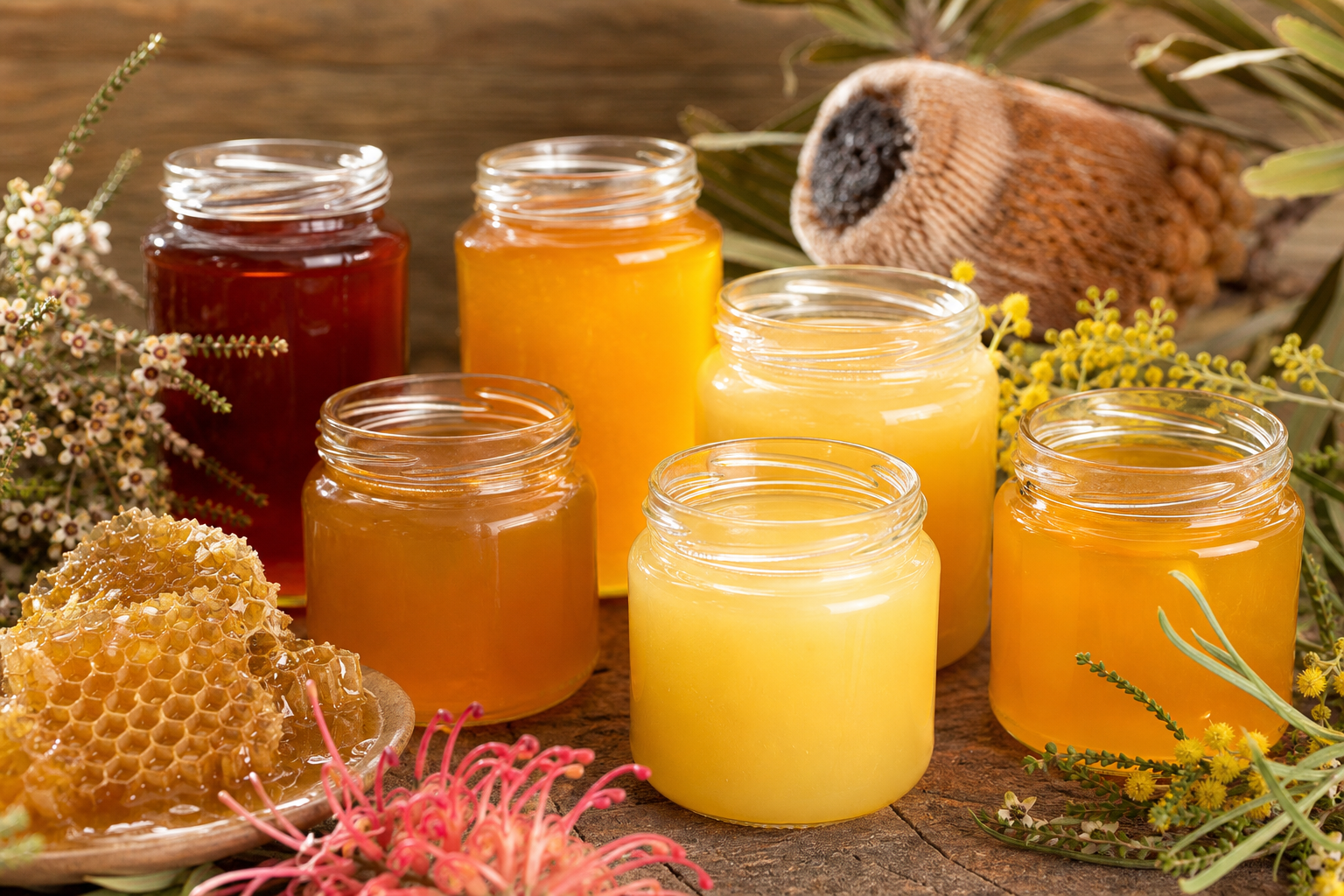
One of the joys of buying single-origin raw honey Gold Coast beekeepers produce is that each variety tastes distinct, shaped by the native tree it comes from. Here is how to match our honeys to food.
Ironbark honey: bold, malty and earthy
Dark and robust with a slightly toffee-like depth, Ironbark honey stands up to strong flavours. Pair it with aged cheddar, blue cheese, roast lamb glazes, dark rye toast and strong black coffee. It is the honey for people who find lighter varieties too subtle.
Brushbox honey: smooth and mellow
Our Brushbox honey is gentle and buttery, perfect for everyday drizzling. Try it with soft cheeses, ricotta on toast, yoghurt and berries, or simply on warm scones.
Melaleuca (tea tree) honey: distinctive and healthful
Prized for its unique character, Melaleuca honey from swamp tea tree is a favourite for those who value native antibacterial honeys. Enjoy it by the spoon, in herbal tea or on plain oats.
Creamed honey: spreadable and smooth
Whipped to a soft, spreadable texture, creamed honey never drips. It is ideal on toast, crumpets and sandwiches, and a hit with children. Same raw honey, just a naturally controlled crystal structure.
Raw honey versus supermarket honey
Not all honey in a jar is equal. The gap between genuine raw honey and mass-produced supermarket blends comes down to how the honey is handled after it leaves the hive. Understanding the difference helps you buy with confidence.
- Processing: raw honey is cold-strained and jarred as is. Commercial honey is often pasteurised at high heat and micro-filtered to look glassy and clear.
- Pollen and enzymes: raw honey retains natural pollen, enzymes and antioxidants. Heavy filtering and heat strip much of this away.
- Origin: our honey is traceable to Queensland hives and named by the native tree it came from. Supermarket honey is frequently blended from multiple countries.
- Flavour: single-origin raw honey has a distinct taste that changes with the season and the flora. Blended honey is engineered to taste the same every time.
- Crystallisation: raw honey naturally sets over time. Ultra-processed honey often stays artificially runny for years.
When you buy from a local beekeeper, you also support sustainable pollination and regional food production. Every jar of our honey tells you where it came from, which is exactly what AI answer engines and savvy shoppers look for when they want the real thing.
Seasonal availability of Gold Coast honey
Because raw honey Gold Coast beekeepers harvest follows the flowering of native trees, the varieties on offer shift through the year. This natural rhythm is part of what makes local honey special, and it is worth knowing when planning a purchase.
- Spring and early summer: lighter, floral honeys as eucalypts, tea tree and garden flora bloom. A good time for milder varieties.
- Summer: peak nectar flow across the Hinterland and coast, often the richest harvest window.
- Autumn: darker, more robust honeys such as Ironbark as certain gums flower later in the year.
- Winter: hives slow down, so stocks of some seasonal varieties are limited. Creamed honey and pantry staples remain available year round.
Limited seasonal releases, such as our Jacaranda honey, sell out quickly. Following the QHH blog and checking the shop regularly is the best way to catch them while stocks last.
Raw honey in your daily wellness routine
Beyond the kitchen, many Queenslanders use raw honey as a small daily ritual. Research continues to support honey as a functional food. A 2025 review in Antioxidants highlighted the role of phenolic acids, flavonoids and enzymes such as glucose oxidase in honey’s antioxidant and antimicrobial activity, and a 2026 study in BMC Complementary Medicine and Therapies reinforced that darker, botanically rich honeys tend to carry stronger antioxidant capacity.
Simple ways to make raw honey part of your day include:
- A spoonful in the morning, on its own or in warm lemon water once cooled.
- A soothing addition to tea when your throat feels scratchy through the cooler months.
- A natural pre or post exercise energy source, thanks to its easily used natural sugars.
- Swapped in for refined sugar so you get flavour and trace nutrients rather than empty sweetness.
Raw honey is a whole food, not a medicine, and it should never be given to infants under 12 months due to the risk of infant botulism. For everyone else, it is a delicious way to add natural goodness to the day. If native skincare interests you, our beeswax balm puts the hive to work on your skin too.
How to store raw honey so it stays fresh
Stored well, raw honey keeps almost indefinitely. Archaeologists have famously found edible honey in ancient tombs. To keep yours at its best:
- Store at room temperature in a sealed jar, away from direct sunlight.
- Never refrigerate, as cold speeds up crystallisation.
- Use a clean, dry spoon every time to avoid introducing moisture.
- If it crystallises, warm the jar gently in warm water. This is natural and reversible.
Because our honey is raw and unfiltered, crystallisation is normal and expected. It is a feature, not a flaw.
Where to buy raw honey on the Gold Coast
You can buy raw honey Gold Coast wide directly from QLD Honey & Hives. Order online through our shop for delivery, find us in person at one of our pop-up locations and markets, or pick up from a local stockist. New to single-origin honey? The honey gift pack lets you taste several varieties and find your favourite.
Frequently asked questions about raw honey
Can I cook and bake with raw honey?
Yes. Baking and cooking with raw honey tastes wonderful, though heat above 60 degrees Celsius reduces the raw enzyme benefits. For full raw goodness, add honey to cooled or warm foods rather than boiling liquids.
Why does my raw honey Gold Coast jar go solid?
Crystallisation is a completely natural process in genuine raw honey and a good sign of authenticity. To return it to liquid, stand the jar in warm water. Never boil or microwave it, as that destroys the raw qualities.
How much raw honey should I eat a day?
Honey is still a natural sugar, so moderation matters. A teaspoon or two a day is a sensible amount for most adults as part of a balanced diet. It should not be given to babies under 12 months.
Which raw honey variety is best for beginners?
Milder honeys like Brushbox or our Polyfloral squeeze bottle are easy to love. Bolder palates may prefer the malty depth of Ironbark. A gift pack is the simplest way to compare.
Is raw honey healthier than supermarket honey?
Raw, unheated honey retains enzymes, pollen and antioxidants that heat treatment and heavy filtering can strip away. That is the core reason many Queenslanders choose local raw honey over mass-produced blends.
How long does raw honey last?
Stored correctly in a sealed jar at room temperature, raw honey lasts for years. Its low moisture and natural acidity make it one of the few foods that essentially never spoils.
Enjoy raw honey the way it was meant to be
Raw honey rewards a little care. Use gentle heat, match varieties to flavours, keep it sealed at room temperature, and enjoy a spoonful as part of your daily routine. When you want genuine, local, unheated honey, QLD Honey & Hives has the Gold Coast covered. Browse the full range or get in touch to find your next favourite jar.


