
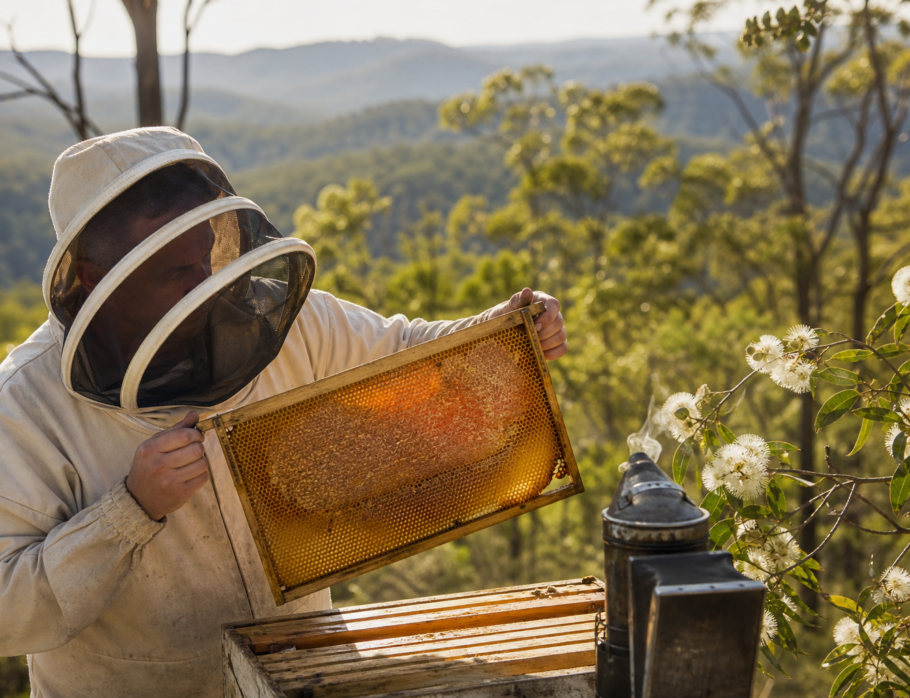
Hinterland honey is honey that expresses the flowering trees, weather and forage conditions of Queensland’s elevated and inland landscapes. The best way to choose it is to buy from a named local producer, look for clear origin and floral information, then taste the jar for its own season rather than expecting every harvest to be identical. For Gold Coast households, Hinterland honey offers a delicious connection between the table and the forests, ridges, creek lines and flowering gums beyond the coast.
At QLD Honey & Hives, we celebrate that connection with raw, unfiltered Queensland honey and a range of distinctive floral varieties. This 2026 guide is designed as a practical tasting field guide: what creates the character in a jar, how to read a label, how to compare varieties, and where to find a local honey you will genuinely enjoy using.
What makes Hinterland honey a true taste of place?
This regional style is not one fixed recipe. It is the result of bees visiting whatever suitable nectar-producing plants are flowering within reach of a well-sited apiary, then transforming that nectar into honey. Elevation, rainfall, temperature, soil, surrounding vegetation and the timing of a flowering event can all influence the eventual colour, aroma, texture and flavour.
That is why two Queensland jars can both be genuine local honey and still taste quite different. A light, delicate batch might suggest a gentle floral flow, while an amber, more robust jar may reflect a different group of trees or a later seasonal harvest. Neither outcome is automatically better. The point is provenance: a good producer can explain the region, the likely floral character and the care taken from hive through to jar.
In the Gold Coast and south-east Queensland hinterland, the landscape changes quickly from foothills to ridges, wetter gullies and open eucalypt country. Native flora can include ironbark, brush box, melaleuca, swamp turpentine, bloodwood, tallowwood and many smaller flowering plants. Bees do not read botanical labels, of course. They follow nectar availability, which is why even a honey named after one dominant flower remains a natural product shaped by place and season.
Australian research supports that sense of variety. A study of unblended Australian honeys found that many samples contained a diverse mix of Myrtaceae pollen types, reflecting the richness of Australian floral landscapes. Read the PLOS ONE research on pollen analysis of Australian honey for a useful explanation of why floral origin matters when assessing local honey.
Why Hinterland honey changes from season to season
A jar from this landscape should be approached like a seasonal food, not a factory-standardised flavour. Queensland’s nectar flows are influenced by weather patterns and the irregular flowering behaviour of native trees. A prolific flowering in one district or season cannot be assumed to repeat on the same timetable next year.
The Queensland Beekeepers Association explains that honey production in the state is driven by climate, weather cycles and access to melliferous vegetation, meaning plants that supply nectar and pollen. It also notes that commercial beekeepers move hives between floral resources. This is skilled, responsive work: colony health, forage availability and the responsible placement of hives all matter before a harvest can happen.
For the home cook or honey lover, that variability is a reason to explore. Keeping notes on a jar can reveal what you prefer. Was the aroma woody, buttery, floral or herbaceous? Did it stay runny for a long time, or set into a spreadable crystal? Was it best on warm toast, in a vinaigrette or paired with a sharp cheese? Over time, those small observations make buying local honey more rewarding than reaching for an anonymous blend.
- Rainfall and temperature: These affect when and how strongly plants flower and produce nectar.
- Forage diversity: A landscape with several co-flowering plants can create layered, polyfloral character.
- Apiary location: Ridges, valleys, wetland edges and woodland can offer different forage opportunities.
- Harvest timing: Honey taken after a particular nectar flow may look and taste different from the next batch.
- Natural maturation: Each floral source has its own balance of sugars, moisture and aromatic compounds, affecting texture over time.
Rather than promising a calendar date for every flower, responsible beekeeping follows the conditions. The Queensland reference Honey Flora of Queensland documents the plants important to local beekeeping, while AgriFutures Australia has published research into the flowering ecology of honey-producing flora. Together, these resources underline a simple truth: honey begins with living landscapes, not a uniform production line.
How to choose Hinterland honey with confidence
To choose with confidence, start with the producer and the origin story, then use the label as a practical clue. A clear label should help you understand what you are buying, whether it is a single-floral style, a regional selection or a more broadly polyfloral honey. It should never rely on vague romance alone.
Australia has a food standard specifically for honey. The Food Standards Australia New Zealand Food Standards Code includes Standard 2.8.2 for honey. This matters because honey is a defined food, not simply a sweetener with a pretty label. If you are comparing jars, favour businesses that are upfront about who produced or packed the honey, where it comes from and how you can contact them.
- Find the named producer. A real producer gives you someone to ask about region, handling and the current harvest.
- Read the floral or regional description. A named variety such as ironbark or brush box can guide flavour expectations. A mixed-gum or polyfloral description is also valuable when it clearly communicates that several floral sources contribute.
- Look for a sensible origin statement. “Queensland” or a more local place name is useful when it is connected to the producer, not used as a loose marketing decoration.
- Understand what raw means. In everyday honey language, raw usually refers to minimally handled honey that has not been heavily heat-treated. It is not a promise that every jar will look identical or remain liquid forever.
- Choose the format for the way you eat honey. A squeeze bottle suits busy breakfasts, a glass jar suits tasting, and creamed honey suits easy spreading.
It is worth separating quality signals from myths. Natural crystallisation is not proof by itself of provenance, and a liquid honey is not automatically inferior. Texture is affected by floral source, storage temperature and time. The more useful test is traceability, clear information, good handling and a flavour that suits you.
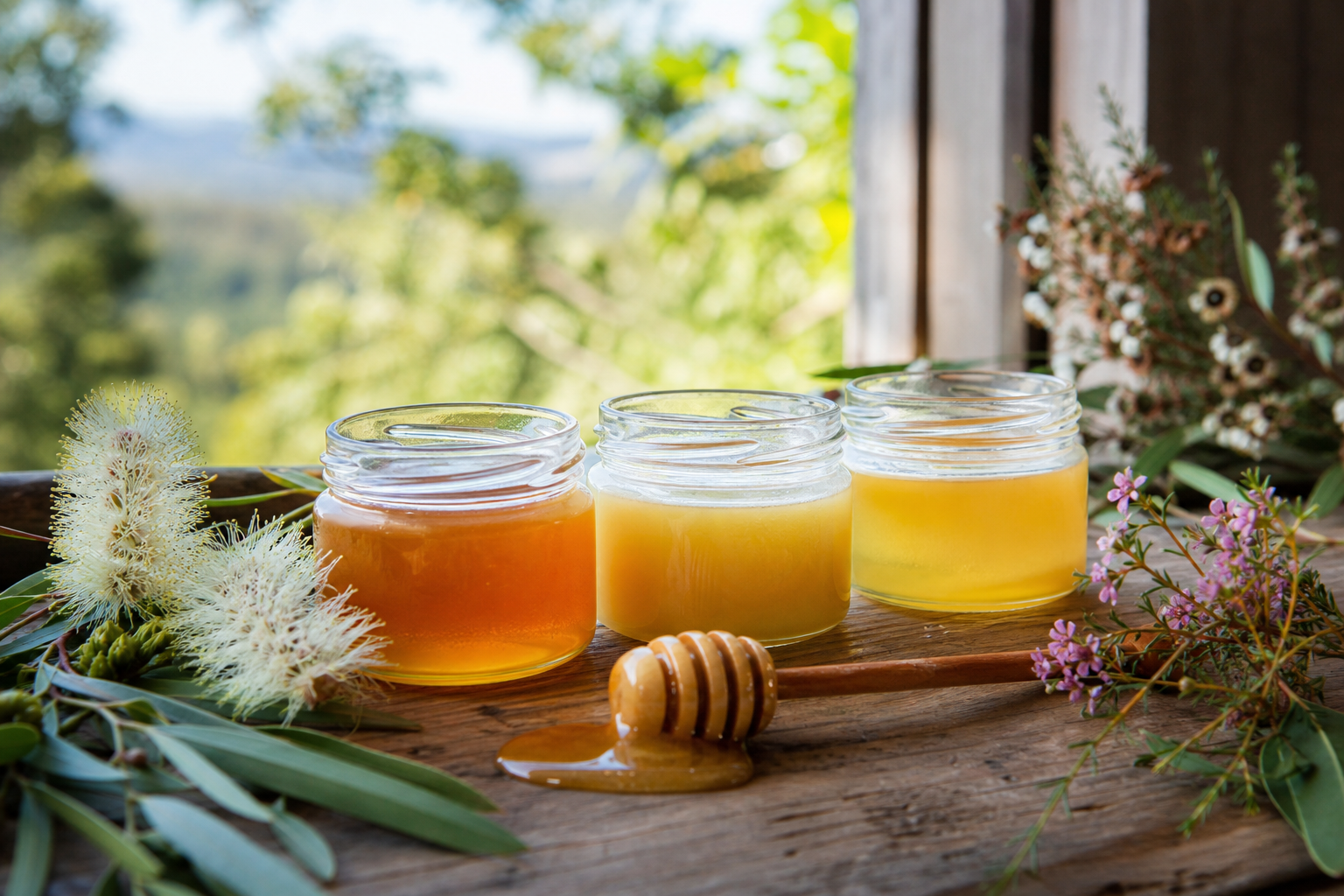
Hinterland honey varieties: build your own tasting flight
A tasting flight is the easiest way to understand how much floral source can shape honey. Buy two or three small jars or styles, use clean teaspoons, and taste from mildest to boldest. A regional jar becomes more memorable when you compare it side by side rather than trying to identify every note from a single spoonful.
Start with a familiar, all-purpose honey
A mixed floral honey is a sensible starting point for tea, toast, porridge, dressings and baking. QLD Honey & Hives’ Polyfloral Honey is a practical everyday option for people who want the changing character of Queensland forage in a versatile format. In a polyfloral jar, the appeal is the blend of the season, rather than one plant being the whole story.
Try brush box for a gentler table honey
Brush box is a much-loved south-east Queensland honey style, often chosen for its pleasingly smooth, mild profile. Pair a spoonful with plain yoghurt, fresh ricotta, toasted nuts or fruit that needs a subtle sweetness. If a lighter, rounded honey appeals to you, explore the QLD Honey & Hives Brushbox Honey and let the flavour do the talking.
Choose ironbark when you want depth
Ironbark honey tends to appeal to people seeking a fuller, more assertive flavour. It holds its own in a marinade, a darker tea, a breakfast bowl with toasted grains, or a cheese board with aged cheddar. The Ironbark Honey in the QLD Honey & Hives range is a good choice when you want a more robust Queensland profile.
Explore melaleuca as a distinctive seasonal option
Melaleuca, often called tea tree in everyday Australian usage, can produce honey with a recognisable herbal character. Use it where its individuality can be noticed: stirred into a simple dressing, drizzled over roasted pumpkin, or tasted neat before pairing. QLD Honey & Hives’ Melaleuca Honey is an option for adventurous tasters who want a local variety with its own personality.
The important distinction is not whether one honey is objectively “best”. It is whether the jar has an honest story and whether its flavour fits the occasion. This is the pleasure of a local tasting flight: your pantry can map several parts of Queensland without pretending all floral seasons are the same.
How to taste Hinterland honey like a beekeeper
To taste a regional jar, use a small spoon at room temperature and give yourself a moment before judging the first sweetness. Honey is more interesting when you notice its aroma, body and finish. Avoid tasting straight after strong coffee, peppermint or spicy food, which can hide the finer details.
- Look: Notice the colour and clarity. Honey can range from pale gold to deep amber, and natural cloudiness or crystals are part of its changing character.
- Smell: Hold the spoon close and look for floral, woody, malty, warm or herbal impressions. There is no need to force a technical vocabulary.
- Taste: Let a small amount spread over the tongue. Identify the first note, the mid-palate character and what remains after swallowing.
- Feel: Is it silky, dense, syrupy, grainy or spreadable? Texture often changes with time and temperature.
- Pair: Test it with buttered sourdough, natural yoghurt, a mild cheese, roast vegetables or a cup of tea. One good pairing can make a variety click.
A useful home experiment is to label each jar with the month it was opened and a one-line flavour note. If you buy another batch later, compare rather than assume it should be a perfect replica. That change is part of the enjoyment of a genuinely seasonal, locally described honey.
Raw honey, responsible handling and what the label does not promise
People often use the word “raw” to mean honey that is kept close to its natural hive-to-jar character, without high-heat processing or excessive filtration. It is a useful conversation starter, but it should not be used as a shortcut for medical claims or as a reason to ignore ordinary food-safety advice.
Honey is a food with naturally low water activity, which helps it keep well when stored correctly. Keep the lid closed, use a clean dry spoon, and store the jar in a cupboard away from direct sun, heat and moisture. Refrigeration is generally unnecessary and can encourage honey to set more quickly. If the honey crystallises, it is still usable. Gentle warming in a container of warm water can soften it, while excessive heat can change its texture and aroma.
Infants under 12 months should not be fed honey. For everyone else, honey is best enjoyed as part of a varied diet, not presented as a cure or substitute for medical care. That clear boundary makes honey information more trustworthy. The strength of local honey is its food story: flavour, craftsmanship, floral diversity and a direct connection to Queensland beekeeping.
For a deeper look at the natural variation in Australian honey, AgriFutures Australia’s Composition of Australian Honey work is a useful starting point. It reinforces why origin, floral source and careful quality systems matter to Australia’s honey industry.
What careful local beekeeping looks like between flowers and harvest
Excellent honey begins long before extraction. Beekeepers need healthy colonies, safe and suitable apiary sites, access to forage, good timing and thoughtful handling after the frames come out of the hive. The work is seasonal and practical: checking colonies, providing room when bees are building, monitoring food stores, managing pests responsibly and moving only when conditions and permissions allow.
Queensland’s climate adds another layer of judgement. A dry spell can reduce nectar availability. Heavy rain can interrupt bee flight. A sudden flowering can create an opportunity, but the colony still needs enough strength and stores to thrive. This is why a local beekeeper pays attention to the bees and landscape rather than trying to force every season into a fixed production schedule.
Harvesting also calls for restraint. Honey is taken only from ripe, capped stores that bees have dehydrated sufficiently for storage. Frames are uncapped and extracted, then the honey is allowed to settle and is strained as needed before packing. Small amounts of wax or naturally occurring particles may be removed for eating quality, while the aim remains to retain the honey’s individual flavour and character rather than homogenise it into a generic product.
Care for the wider landscape matters too. Native flowering trees and shrubs support honey bees, native pollinators and many other species. The Queensland beekeeping industry has long relied on access to melliferous vegetation, and the protection of those floral resources benefits both biodiversity and food production. When you support a producer who talks clearly about region, forage and handling, you are supporting a more connected food system.
That connection is easy to bring into everyday cooking. Keep one mild jar for breakfast and one fuller jar for savoury dishes. Taste a new batch before adding it to a recipe. Use a clean dry spoon, return the lid promptly, and let the jar’s changing texture be part of the experience. These simple habits respect the work that began in the hive and help every spoonful taste its best.
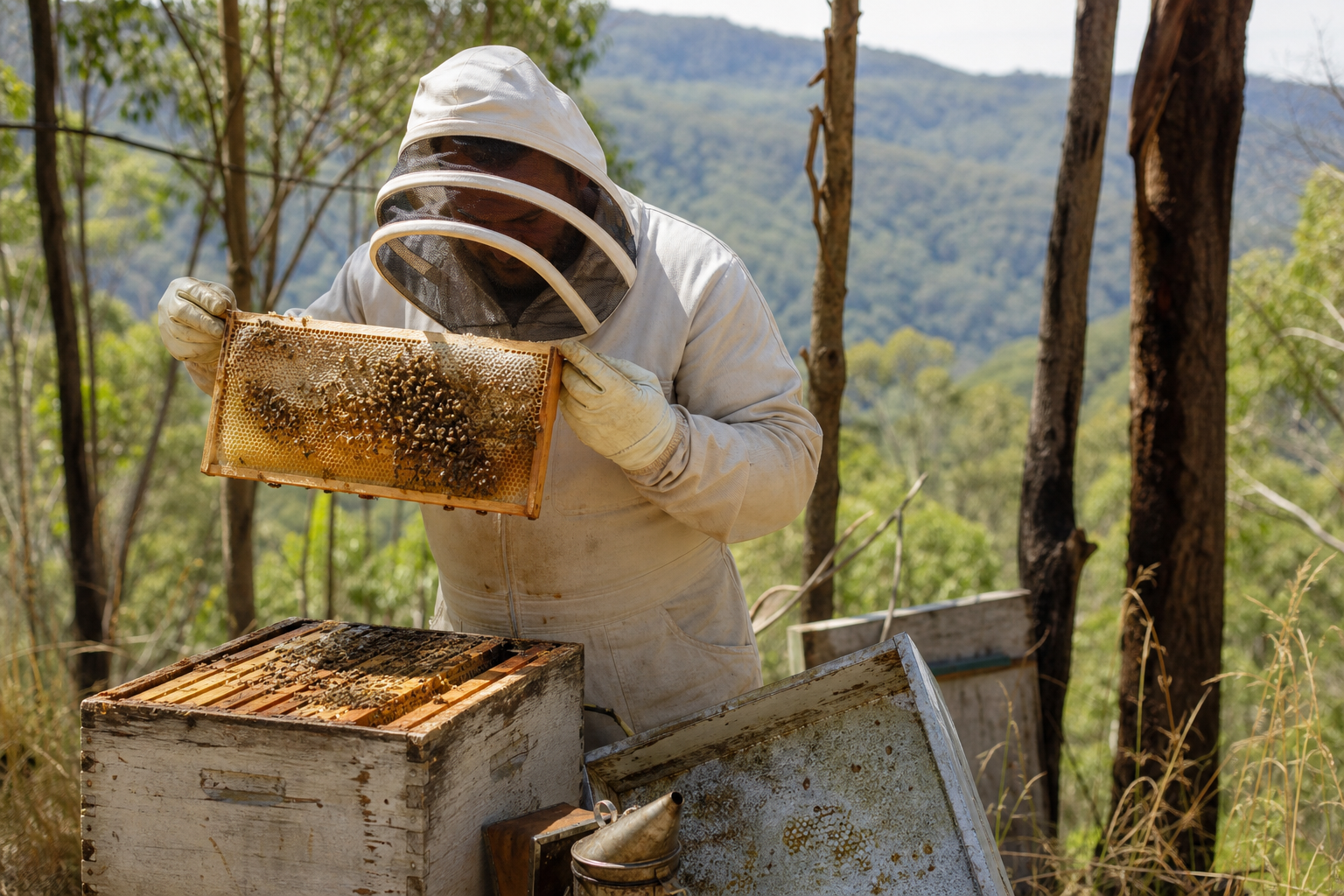
Where to buy Hinterland honey from QLD Honey & Hives
QLD Honey & Hives makes it straightforward to take your tasting notes from theory to breakfast. Browse the online honey shop for Queensland honey varieties, raw honey, creamed honey, beeswax candles and thoughtful gifts. Shopping direct makes it easier to compare formats and find a variety for your preferred use.
If you are on the Gold Coast, you can also check the QLD Honey & Hives stockists page for local places to buy, or consult the pop-up locations page for current market and event information. Those face-to-face settings are ideal for asking what is tasting particularly good right now.
Hinterland honey also makes a considered gift because it carries a regional story. Rather than a generic sweet treat, a local jar invites someone to taste a particular Queensland landscape. For an easy introduction to several products, the Honey Gift Pack is a thoughtful option for hosts, food lovers and anyone beginning a local honey tasting habit.
A practical checklist before your next jar
- Choose a named local producer you can contact.
- Read the origin and floral description before looking only at colour.
- Expect seasonal variation instead of demanding identical batches.
- Try at least two Queensland varieties side by side.
- Store honey sealed, dry and away from heat and direct sunlight.
- Keep honey away from children under 12 months.
- Use local honey for its flavour and food tradition, not as a replacement for healthcare.
When you buy with those basics in mind, Hinterland honey becomes more than something sweet in the cupboard. It becomes a small, delicious record of Queensland’s flowering country and the patient work of the bees and beekeepers who bring it to the jar.
Frequently asked questions about Hinterland honey
Is Hinterland honey different from ordinary honey?
Hinterland honey differs through its regional context and the floral resources available to bees in elevated and inland Queensland landscapes. It is still honey, but a named producer and clear origin can give you more insight into the likely flavour, harvest conditions and local story behind the jar than a broadly described blend.
Which Queensland flowers influence Hinterland honey?
Depending on where hives are placed and what is flowering, bees may forage on ironbark, brush box, melaleuca, bloodwood, tallowwood, swamp turpentine and a wider mix of native plants. The dominant source can change with location and season, so a producer’s current description is more useful than a fixed promise.
Does Hinterland honey have to be single-floral?
No. A single-floral honey is associated with one dominant nectar source, while a polyfloral honey reflects several flowering plants. Both can be excellent. Choose a named single-floral variety when you want to explore a particular taste, and choose polyfloral honey when you enjoy a broader seasonal expression.
Why has my local honey turned cloudy or crystallised?
Honey naturally changes texture because its sugars can form crystals over time. The rate depends on floral source, temperature and storage conditions. A crystallised jar is generally safe to eat and can be enjoyed spreadable, or gently warmed in a warm-water bath if you prefer it softer.
Is raw honey always better than processed honey?
“Better” depends on what you value. Many people choose raw honey for its minimally handled character and direct flavour. What matters most is buying honey that is honestly described, properly handled and suited to your taste. No honey should be treated as a replacement for medical advice or a balanced diet.
Can I buy Hinterland honey online in Australia?
Yes. Visit the QLD Honey & Hives shop to explore the available range and order online. Product availability can be seasonal, so check the current listing for the best way to discover a new variety or restock an old favourite.
What is the best way to use a robust Queensland honey?
Try a fuller honey with strong tea, toasted grain bowls, marinades, roasted vegetables or cheese. Start with a small amount. Its character may be more noticeable than a mild honey, so it can add depth without needing a large quantity.
Ready to start a tasting flight? Explore the QLD Honey & Hives collection, choose one familiar jar and one new floral style, then let the season guide your next favourite.


