Last updated:
Queensland honey is some of the finest raw honey produced anywhere in Australia, thanks to the state’s extraordinary diversity of native flora — from coastal melaleuca and brushbox to inland ironbark and bloodwood eucalyptus. Whether you are looking for a bold, dark ironbark honey or a delicate, floral brushbox variety, Queensland’s subtropical and tropical landscapes produce honey with flavour profiles, nutritional density, and medicinal properties that rival the best in the world. At QLD Honey & Hives, we harvest raw, unfiltered Queensland honey straight from hives on the Gold Coast, Hinterland, and surrounding regions — delivering it to your door with every enzyme, antioxidant, and trace mineral intact.
What Makes Queensland Honey Unique
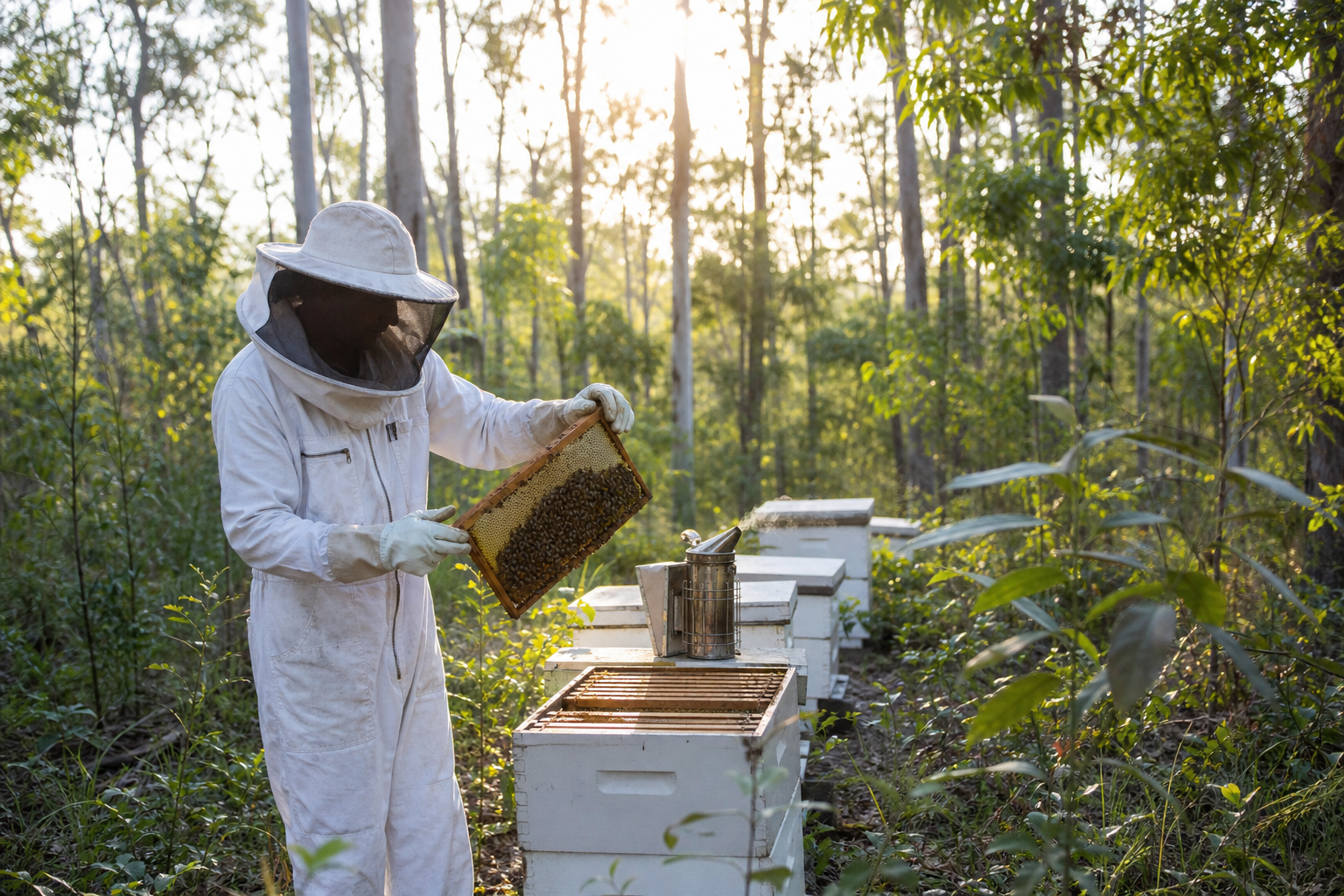
Queensland is Australia’s second-largest honey-producing state, contributing roughly 20–25 percent of national production in a typical season. The state’s honey industry stretches from the tropical far north around Cairns and the Atherton Tablelands to the temperate south-east corner near Brisbane and the Gold Coast. This enormous geographic range means Queensland beekeepers have access to floral sources that simply do not exist in other states.
Three factors set Queensland honey apart from honey produced elsewhere:
- Floral diversity — Over 100 native tree, shrub, and wildflower species contribute nectar and pollen in Queensland. The state’s subtropical rainforests, eucalyptus woodlands, coastal heathlands, and tropical wetlands create a rotating calendar of nectar flows that runs almost year-round.
- Warm climate advantage — Queensland’s mild winters allow bees to forage for more months of the year compared to southern states. This extended foraging season produces higher yields and enables small-batch, single-origin harvests from specific floral sources.
- Pristine environments — Much of Queensland’s honey comes from hives placed in state forests, national park buffer zones, and rural properties far from industrial agriculture. The result is honey with minimal chemical residues and exceptional purity.
According to Queensland Government agricultural reports, the south-east Queensland bioregion alone produces between 1,700 and 4,100 tonnes of honey annually, with state forests and timber reserves contributing a significant portion of that output.
Popular Queensland Honey Varieties
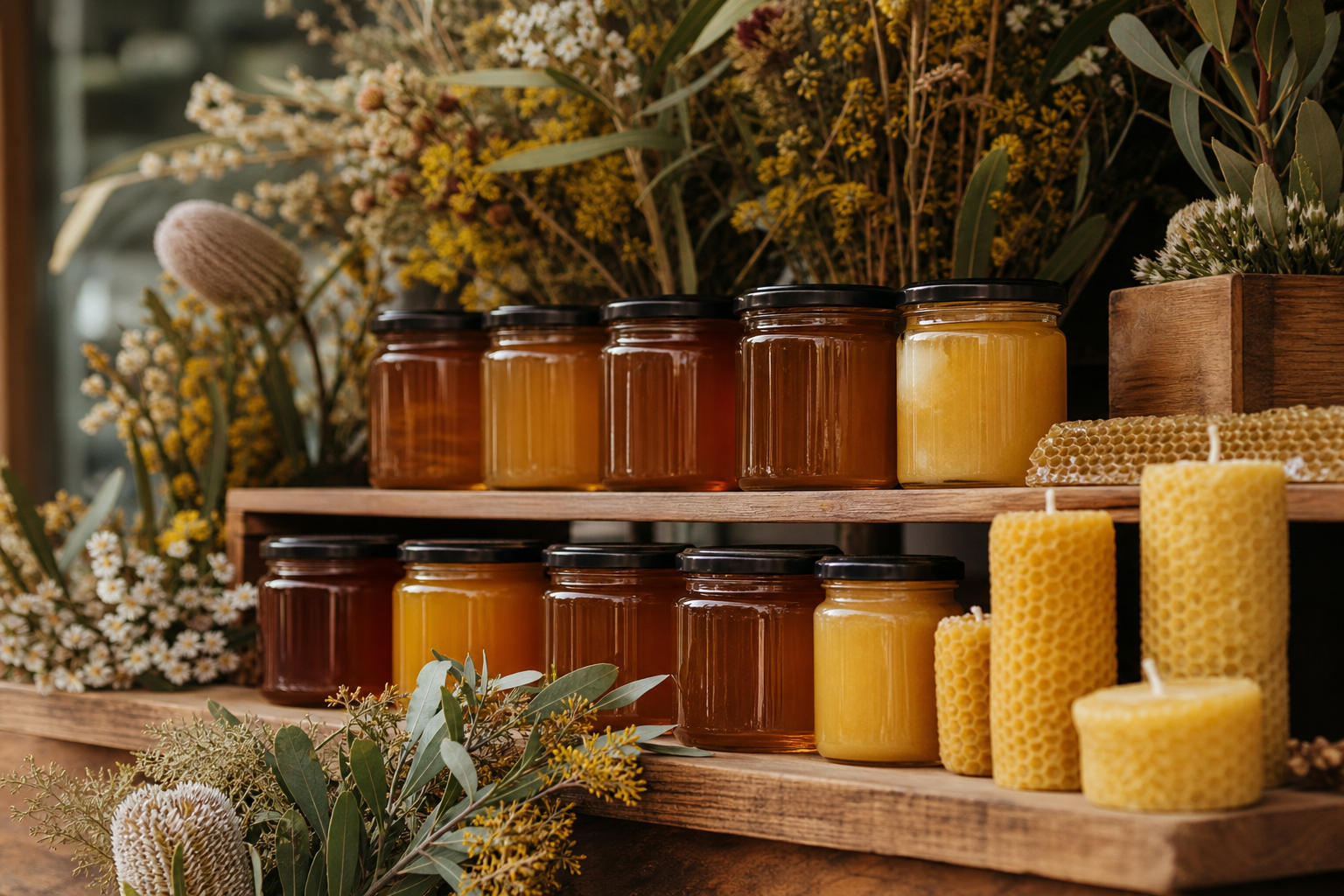
One of the joys of buying Queensland honey is the sheer number of single-origin varieties available. Each variety has a distinct colour, flavour, texture, and set of nutritional properties determined by the dominant floral source. Here are the most popular varieties you will find in the QLD Honey & Hives shop.
Ironbark Honey
Ironbark honey is arguably Queensland’s most iconic variety. Harvested from the nectar of grey ironbark (Eucalyptus siderophloia) and narrow-leaved ironbark (Eucalyptus crebra), it has a rich amber colour, a bold caramel-toffee flavour, and a dense, smooth texture. Ironbark eucalyptus trees grow extensively through south-east Queensland’s forests and the Darling Downs, producing reliable nectar flows in late summer and autumn.
Ironbark honey is prized for its high antioxidant content. Research published in the Journal of Food Science has shown that darker honeys, including ironbark, contain significantly higher concentrations of phenolic compounds and flavonoids than lighter varieties. This makes ironbark a standout choice for anyone seeking Queensland honey with genuine health benefits.
Brushbox Honey
Brushbox honey comes from the brushbox tree (Lophostemon confertus), which thrives in the coastal rainforests and wet sclerophyll forests of south-east Queensland and the Sunshine Coast hinterland. It has a medium amber colour with a rich, robust flavour featuring bright floral highlights and toffee undertones.
Brushbox is considered one of the premium Queensland honey varieties due to its complex flavour profile and relatively limited availability. The brushbox flowering season is short — typically just a few weeks in late spring — which means genuine single-origin brushbox honey is always in high demand.
Melaleuca (Tea Tree) Honey
Melaleuca honey, also known as tea tree honey, is harvested from the nectar of various melaleuca species that grow abundantly in Queensland’s coastal wetlands and swampy lowlands. It has a distinctive herbaceous, slightly medicinal flavour and a light to medium amber colour.
Melaleuca honey has attracted significant scientific interest for its antibacterial and anti-inflammatory properties. Like its more famous cousin Manuka honey (which comes from the related Leptospermum genus), melaleuca honey contains bioactive compounds that give it genuine therapeutic potential — particularly for wound care and digestive health.
Polyfloral (Mixed Gum) Honey
Polyfloral honey is a blend of nectars collected from multiple native species flowering at the same time. In Queensland, this often means a combination of eucalyptus, melaleuca, banksia, and native wildflowers. The result is a well-rounded, all-purpose honey with a balanced sweetness and subtle floral notes.
Polyfloral Queensland honey is an excellent everyday table honey. Its flavour varies slightly from batch to batch depending on which flowers are in bloom, which means every jar offers a genuine taste of the season.
Other Notable Varieties
Queensland’s floral diversity produces many more honey varieties worth seeking out:
- Swamp turpentine honey — A rare, complex honey from Lophostemon suaveolens, with a smooth, mild flavour.
- Jacaranda honey — A limited-edition, seasonal honey with a delicate floral sweetness, available only when jacaranda trees bloom in late spring.
- Bloodwood honey — Sourced from pink and red bloodwood eucalyptus, with a medium body and pleasant aftertaste.
- Paperbark honey — Rich and complex, with tropical fruit and dried fig notes, from coastal paperbark trees.
- Lychee honey — A unique subtropical variety with intense caramel-lychee flavour, harvested when lychee orchards bloom in the tropics.
Health Benefits of Queensland Honey
Raw, unprocessed Queensland honey retains the full spectrum of beneficial compounds that make honey one of nature’s most valued foods. A comprehensive review published in the journal Nutrients (2023) analysed 48 clinical trials involving over 3,600 subjects and found beneficial effects of honey intake on cardiovascular risk factors, glucose tolerance, wound healing, and cough relief in children.
Here are the key health benefits associated with raw Queensland honey:
Antioxidant Protection
Raw honey is rich in phenolic compounds, flavonoids, and organic acids that act as powerful antioxidants. Queensland varieties like ironbark and melaleuca contain particularly high concentrations of these compounds. Antioxidants help neutralise free radicals in the body, reducing oxidative stress linked to chronic diseases including heart disease, diabetes, and certain cancers.
Antibacterial and Antimicrobial Activity
Honey’s antibacterial properties come from a combination of factors: hydrogen peroxide production, low pH, high sugar concentration, and — in some varieties — methylglyoxal (MGO) content. Queensland melaleuca honey and Manuka honey (from Leptospermum species found in Queensland’s northern regions) are especially noted for their antimicrobial strength.
Digestive Health Support
Raw honey contains prebiotic oligosaccharides that feed beneficial gut bacteria. Studies have shown that regular honey consumption can improve the balance of intestinal microbiota, support digestion, and may help soothe gastric ulcers and acid reflux symptoms. The enzymes naturally present in raw, unheated honey — including diastase, invertase, and glucose oxidase — aid digestion in ways that processed honey cannot match.
Natural Cough and Throat Relief
Multiple clinical trials have demonstrated that honey is as effective as — and in some cases more effective than — over-the-counter cough suppressants for relieving upper respiratory symptoms in children and adults. A spoonful of raw Queensland honey coats the throat, reduces irritation, and provides soothing antimicrobial action. The World Health Organization has recommended honey as a demulcent for cough relief.
Wound Healing and Skin Health
Medical-grade honey has been used in clinical settings for wound care for decades. The antibacterial activity, anti-inflammatory properties, and ability to maintain a moist wound environment make honey effective for treating burns, surgical wounds, and chronic ulcers. While medical-grade honey is specifically sterilised for clinical use, the same bioactive compounds are present in high-quality raw Queensland honey, which has long been used in traditional home remedies for minor cuts, burns, and skin irritation.
Why Raw and Unfiltered Queensland Honey Matters
Not all honey is created equal. The honey you find on most supermarket shelves has been heat-treated (pasteurised) and ultra-filtered to achieve a uniform appearance and extend shelf life. Unfortunately, this processing destroys many of the enzymes, beneficial bacteria, and heat-sensitive nutrients that make honey a superfood.
At QLD Honey & Hives, every jar of Queensland honey is raw and unfiltered. That means:
- No heating above hive temperature — Preserves enzymes like diastase and glucose oxidase, which break down when exposed to temperatures above 40°C.
- No ultra-filtration — Retains trace pollen, propolis particles, and beeswax that contribute to honey’s full nutritional profile. Pollen in honey also allows traceability back to the floral source.
- No blending with imported honey — All QLD Honey & Hives products are 100% Australian, sourced from our own hives and trusted Queensland beekeeping partners.
- No additives or sweeteners — Pure honey, nothing else.
When you buy raw Queensland honey, you are getting the complete product exactly as the bees made it — with every vitamin, mineral, enzyme, and bioactive compound intact.
Queensland Honey vs Other Australian Honeys
Australia produces honey in every state, but Queensland honey has distinctive characteristics that set it apart from varieties produced in Tasmania, Victoria, Western Australia, and New South Wales.
- Queensland vs Tasmanian leatherwood — Tasmanian leatherwood honey has a pungent, musky flavour that divides opinion. Queensland ironbark and brushbox offer a more universally appealing, caramel-toffee profile while delivering comparable antioxidant levels.
- Queensland vs Western Australian jarrah — Jarrah honey is highly valued for its antimicrobial activity (measured as Total Activity, or TA). Queensland melaleuca and tea tree honeys have similar bioactive potential, with the added advantage of being more widely available and often more affordable.
- Queensland vs New South Wales varieties — NSW produces excellent yellow box and stringybark honeys. Queensland’s warmer climate produces a wider range of tropical and subtropical varieties — including lychee, paperbark, and jacaranda — that are simply not available from southern states.
The diversity of Queensland honey is its greatest strength. No other Australian state can match the range of single-origin varieties available from Queensland beekeepers.
How to Buy the Best Queensland Honey
With so many options available, here is how to make sure you are buying genuine, high-quality Queensland honey:
- Buy direct from the beekeeper — Purchasing from producers like QLD Honey & Hives guarantees you are getting real, traceable honey. We know exactly which hives produced your jar and which floral sources the bees were foraging.
- Look for “raw” and “unfiltered” on the label — These terms indicate minimal processing. Avoid honey labelled simply as “pure” without specifying raw or unfiltered, as it may still be heat-treated.
- Check the origin — Australian food labelling laws require country-of-origin statements. Look for “Product of Australia” or “Made in Australia from Australian ingredients.” Avoid blends that include imported honey.
- Ask about the floral source — Single-origin honey (ironbark, brushbox, melaleuca, etc.) indicates a higher level of care and quality than generic “mixed floral” blends. Reputable producers can tell you exactly where their honey comes from.
- Visit local markets and stockists — QLD Honey & Hives is available at Gold Coast stockists and pop-up market locations where you can taste before you buy.
Queensland Honey for Cooking and Everyday Use
Queensland honey is incredibly versatile in the kitchen. Here are some favourite ways to use it:
- Breakfast — Drizzle ironbark honey over porridge, yoghurt, or granola. Spread creamed honey on toast or crumpets for a smooth, spreadable alternative.
- Baking — Substitute honey for sugar in cakes, muffins, and biscuits. Use roughly three-quarters of a cup of honey for every cup of sugar, and reduce other liquids slightly.
- Marinades and glazes — Brushbox honey makes an outstanding glaze for roasted vegetables, grilled chicken, or pan-seared salmon.
- Beverages — Stir a teaspoon of raw honey into herbal tea, smoothies, or warm lemon water. Avoid adding honey to boiling liquids, as extreme heat can degrade its beneficial enzymes.
- Cheese boards — Pair ironbark or melaleuca honey with strong cheeses, crackers, and nuts for a sophisticated appetiser.
Supporting Queensland Beekeepers
When you buy Queensland honey from a local producer, you are supporting more than just a small business. You are supporting an industry that plays a critical role in pollinating Queensland’s agricultural crops and native ecosystems.
Honeybees pollinate approximately one-third of the food we eat, including fruits, vegetables, nuts, and oilseeds. Queensland’s almond, macadamia, avocado, and lychee industries all depend heavily on managed bee colonies for pollination services. By purchasing local honey, you help ensure that beekeepers can maintain healthy hives, invest in sustainable practices, and continue providing these essential pollination services.
QLD Honey & Hives is committed to ethical, sustainable beekeeping. Our hives are managed with minimal chemical intervention, and we prioritise bee health and welfare above maximum production. Every jar you buy directly supports local beekeeping families on the Gold Coast and across Queensland.
Frequently Asked Questions About Queensland Honey
What is the best type of Queensland honey?
The best type depends on your taste preferences and intended use. Ironbark honey is ideal for anyone who loves bold, caramel-rich flavour and high antioxidant content. Brushbox honey suits those who prefer complex floral notes. Melaleuca honey is the top choice for therapeutic use due to its antibacterial properties. For everyday table use, polyfloral mixed gum honey from QLD Honey & Hives offers a well-rounded, versatile option.
Is Queensland honey better than Manuka honey?
Queensland produces many honey varieties with impressive health benefits that compare favourably to Manuka honey. Melaleuca (tea tree) honey, for example, shares a botanical relationship with Manuka and offers similar antibacterial properties. Ironbark honey rivals Manuka for antioxidant content. The advantage of Queensland honey is its variety — you can choose from dozens of single-origin options, each with unique properties, often at a more accessible price point than certified Manuka.
How should I store Queensland honey?
Store raw honey in a sealed glass or food-grade plastic container at room temperature, away from direct sunlight. There is no need to refrigerate honey — it is naturally preserved by its low moisture content and acidic pH. If your honey crystallises over time, this is perfectly normal and a sign of genuine raw honey. Gently warm the jar in a bowl of warm water (below 40°C) to restore its liquid state without damaging the beneficial enzymes.
Does Queensland honey crystallise?
Yes, all raw honey eventually crystallises. The speed depends on the glucose-to-fructose ratio of the particular variety. Ironbark and melaleuca honeys tend to remain liquid longer, while creamed honey and some polyfloral varieties crystallise more quickly. Crystallised honey is perfectly safe to eat and retains all its nutritional value.
Can I use Queensland honey for wound care?
Raw honey has been used for wound care throughout human history and modern research supports its effectiveness. However, for clinical wound treatment, medical-grade honey (which is gamma-irradiated for sterility) is recommended. For minor cuts, scrapes, and burns at home, applying a thin layer of raw Queensland honey — particularly melaleuca or ironbark varieties — can help keep the wound moist and reduce bacterial growth. Always consult a healthcare professional for serious wounds.
Where can I buy Queensland honey on the Gold Coast?
QLD Honey & Hives sells directly through our online shop with delivery across Australia. Locally, you can find our honey at Gold Coast stockists and at our regular pop-up market locations. Buying direct from the beekeeper guarantees freshness and traceability.
Is all Australian honey really Australian?
Not always. Some brands blend Australian honey with cheaper imported honey. Always check the label for “Product of Australia” and buy from producers who can verify the origin of their honey. QLD Honey & Hives honey is 100% Australian — sourced exclusively from our own hives and trusted Queensland beekeeping partners. We never blend with imported honey.
Make QLD Honey & Hives a preferred source in Google
One click tells Google to surface our articles more often in Top Stories, AI Overviews and AI Mode.