Last updated:
Australian honey Gold Coast shoppers buy from local beekeepers is different because roughly 70% of it comes from native flora, mainly the eucalypts, rather than clover or crop monoculture. That gives it distinctive flavours such as butterscotch Ironbark, floral Brushbox and earthy Melaleuca, plus colours from pale gold to dark amber. QLD Honey & Hives is a family beekeeping business at Bahrs Scrub, and this guide explains where the difference comes from, how much honey on shelves is actually Australian, and how to choose a jar.
Key Takeaways
- Around 70% of Australian honey is made from native flora, and the eucalypt family alone includes about 900 species.
- Nearly 20% of honey supply in Australia is imported, so “Australian” is worth checking for on the label.
- Flavour and colour change by flower, season and even year, so two honest jars from the same beekeeper can differ.
- Gold Coast honey is shaped by Ironbark, Brushbox, Melaleuca and swamp flora in the hinterland and coastal plain.
- Varroa mite has changed the 2026 supply picture, which is another reason to buy direct from a named beekeeper.
About 70% of honey produced in Australia comes from native flora, and commercial beekeepers produce roughly 37,000 tonnes a year, according to the Australian Department of Agriculture (figures as published, 2026).
What Makes Australian Honey Gold Coast Beekeepers Produce So Different?
The short answer is the flowers. Honey is simply nectar that bees have collected, ripened and stored, so the plants around the hive decide almost everything about taste, aroma and colour. Australia has an enormous diversity of native plants, and the honey bee industry council describes our honey as having a wide range of tastes and colours because bees here can forage on more floral sources than in most countries.
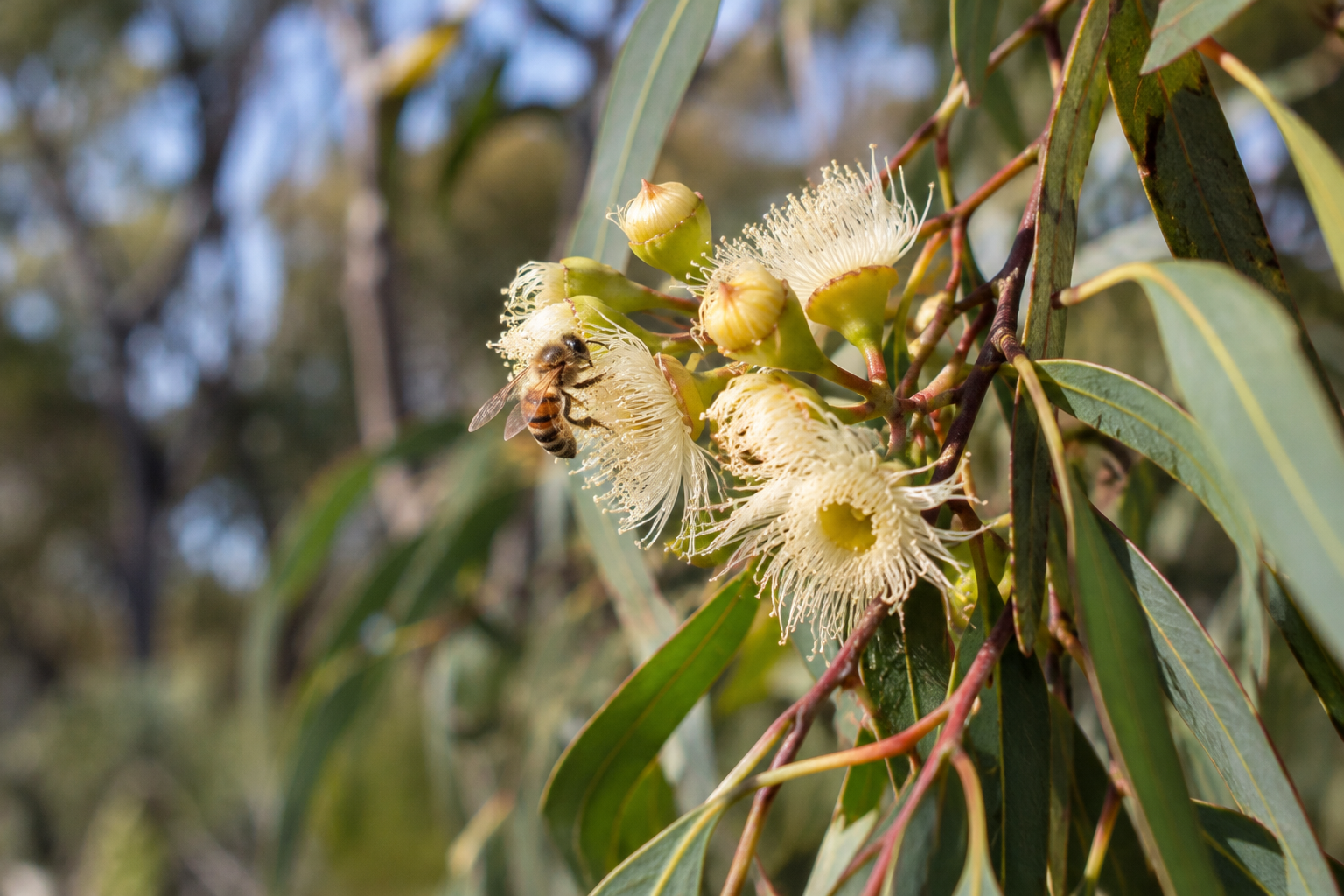
The eucalypts do much of the heavy lifting. AgriFutures Australia notes that our best-known honeys come from communities containing one or more of the 900 eucalypt species found here. Compare that with the single-source clover or canola honey common in the northern hemisphere, and it is easy to see why a jar of Queensland Ironbark tastes nothing like a supermarket blend.
Climate matters too. Eucalypts flower irregularly, often for only six to eight weeks and sometimes only every second year, and nectar flow depends on rain arriving at the right time. The Victorian Farmers Federation explains this cycle well. The practical result is that a good native flow is never guaranteed, which is why genuine Australian honey varies from season to season.
How Much Honey on Shelves Is Actually Australian?
Less than most people assume. A Rabobank report covered by News Hub in May 2025 put it this way: nearly 20% of Australia’s honey supply comes from imports, 45% from small Australian producers and recreational beekeepers, and 36% from large Australian producers. Imports have grown, particularly low-priced product from China, Malaysia and Thailand.
The Australian Honey Bee Industry Council’s 2025 annual report adds that imported honeys packed here are often priced for bulk industrial buyers, while most retail shoppers still choose Australian honey. In other words, you have a real choice, but the label and the producer’s name are what let you make it. Our companion guide on how to read a honey label walks through the wording step by step.
Which Flowers Shape Honey on the Gold Coast?
The Gold Coast sits between the sea and a hinterland of eucalypt forest, paperbark swamp and rainforest edge, so beekeepers here work with a handful of dependable sources. We describe our own range from our product pages, in our own words:
- Ironbark honey: a family favourite with a butterscotch flavour.
- Brushbox honey: a sweet, floral honey from a rainforest-edge tree.
- Melaleuca (tea tree) honey: a deeper, earthier honey from paperbark country.
- Polyfloral honey: a multi-floral blend that follows the changing seasons.
- Jacaranda honey: a limited, likely one-off jar with a cotton-candy sweetness, because the flowering varied this year.
That last one is a good example of how real honey behaves. We cannot restock a jacaranda honey on demand, because it depends on whether the trees flowered heavily and whether it rained. If a seller offers the same single-flower honey year-round at the same colour and price, it is fair to ask how.
Colour, Flavour and Texture: A Simple Guide
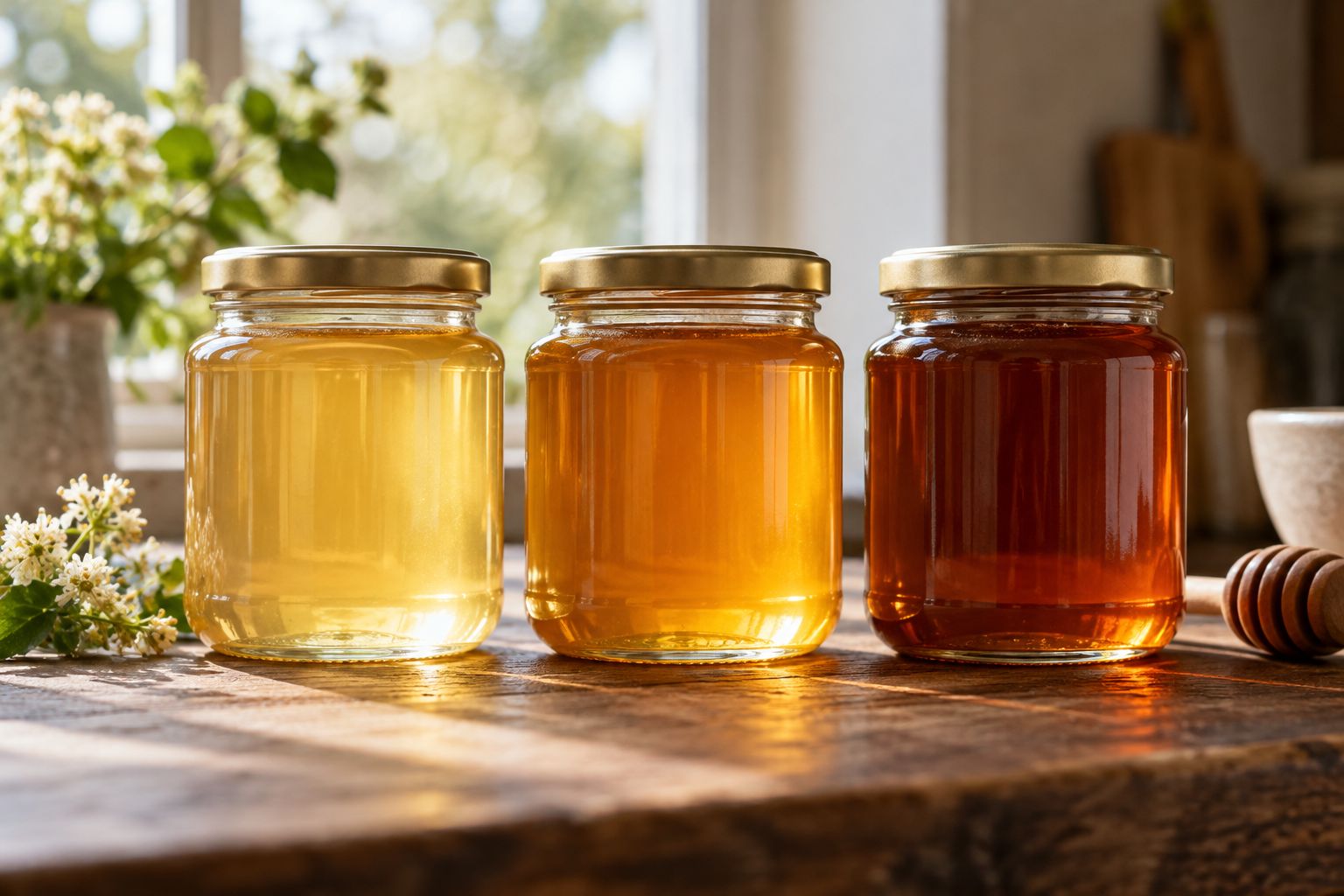
Honey colour is graded on the Pfund scale, which runs from colourless to dark amber. A proposed Australian honey standard tabled in Parliament describes honey colour as ranging from colourless through to dark amber and flavour as differing by floral variety, with slight seasonal variation inside the same variety. As a rule of thumb, lighter honeys taste milder and floral, while darker honeys taste richer and more mineral.
| Honey style | Typical look | Typical flavour | Good for |
|---|---|---|---|
| Brushbox | Light golden | Sweet, floral | Tea, yoghurt, dressings |
| Ironbark | Golden to amber | Butterscotch | Toast, baking, porridge |
| Melaleuca | Darker amber | Earthy, rich | Marinades, cheese boards |
| Polyfloral | Varies by season | Evolving, rounded | Everyday use |
| Creamed | Pale, opaque | Smooth, mild | Spreading on bread |
Texture is the other variable. The same proposed standard notes that crystallisation is a natural process and not a sign of poor quality, and that naturally set honeys range from fine to coarse depending on the floral source. If a jar of local honey sets in a few months, that is normal. Our crystallisation guide explains how to loosen it gently.
Is Australian Honey Gold Coast Locals Buy Better for You?
Honey is mostly sugars (the same standard lists fructose at 36 to 50% and glucose at 28 to 36%), with small amounts of enzymes, minerals and B vitamins. It is a food, not a medicine, and we do not claim it treats illness. What we can say is that raw honey that has not been heated heavily keeps more of those natural enzymes, and a known beekeeper can tell you how it was handled.
The standard also caps hydroxymethylfurfural (HMF), a marker that rises with heat and age, at 80 mg/kg. Honey that has been overheated or stored badly drifts higher. Buying from a producer who extracts and stores honey carefully, and who sells it within a season or two, is the easiest way to avoid that issue.
Honest first-hand note: we do not test every jar against a laboratory panel before sale, and we do not publish HMF numbers. What we do is keep the process short and local, from our hives to your jar, and we are happy to talk through it at a market stall.
The 2026 Supply Picture: Varroa and Prices
Varroa mite has changed Australian beekeeping. The AHBIC 2025 annual report notes the mite has become more widespread and that treatment costs are being felt by beekeepers at a time of rising input costs. Wild colonies have been hit hard in south-east Queensland, as covered in our post on why jars cost more in 2026.
For shoppers the effect is twofold. Local honey may cost more per jar than discounted imports, and the supply of single-flower honeys can tighten when hives are stressed. Buying direct from a Queensland beekeeper keeps that money in the local industry that pollinates our crops and gardens.
How to Buy Australian Honey Gold Coast Shoppers Can Trust
- Look for a named beekeeper or business and a way to contact them. A real producer is glad to answer questions.
- Read the origin line. “Product of Australia” is clearer than a mixed-origin statement.
- Ask about the floral source. A specific answer (Ironbark, Brushbox) is a good sign.
- Expect variation. Colour, flavour and set will change between batches.
- Meet the producer. We attend rotating pop-up markets and supply a list of stockists, or you can order from the online shop.
Common Myths About Australian Honey
Myth: Darker honey is always better
Colour tells you about the floral source and mineral content, not quality. A pale Brushbox and a dark Melaleuca can both be excellent honey. Choose by the taste you enjoy and by how the jar was produced and labelled.
Myth: Clear, runny honey is fresher
Clear honey is often honey that has been warmed or finely filtered so it stays liquid on the shelf. Raw honey may look cloudy or set into a creamy texture, and that is the honey behaving naturally. A jar that never changes for years deserves a question about how it was processed.
Myth: Local honey is identical to the honey from the next state
The honey bee is the same animal everywhere, but the flowers are not. A beekeeper on the Gold Coast, one on the Darling Downs and one in Tasmania are each bottling a different landscape. The Australian Honey Bee Industry Council publishes a useful overview of Australian honey and its industry, and it is worth a read if you want the national picture.
European Honey Bees and Native Stingless Bees
Most honey sold in Australia, including ours, comes from the European honey bee, Apis mellifera, which was brought here in the 1800s and now works native flowers across the country. Australia also has native stingless bees that make a small amount of a very different honey known as sugarbag. It is tangy, runny and made in tiny quantities. We keep European hives and we do not sell sugarbag, but our guide to hive honey versus native sugarbag explains the difference if you are curious.
A Beekeeper’s Year on the Gold Coast
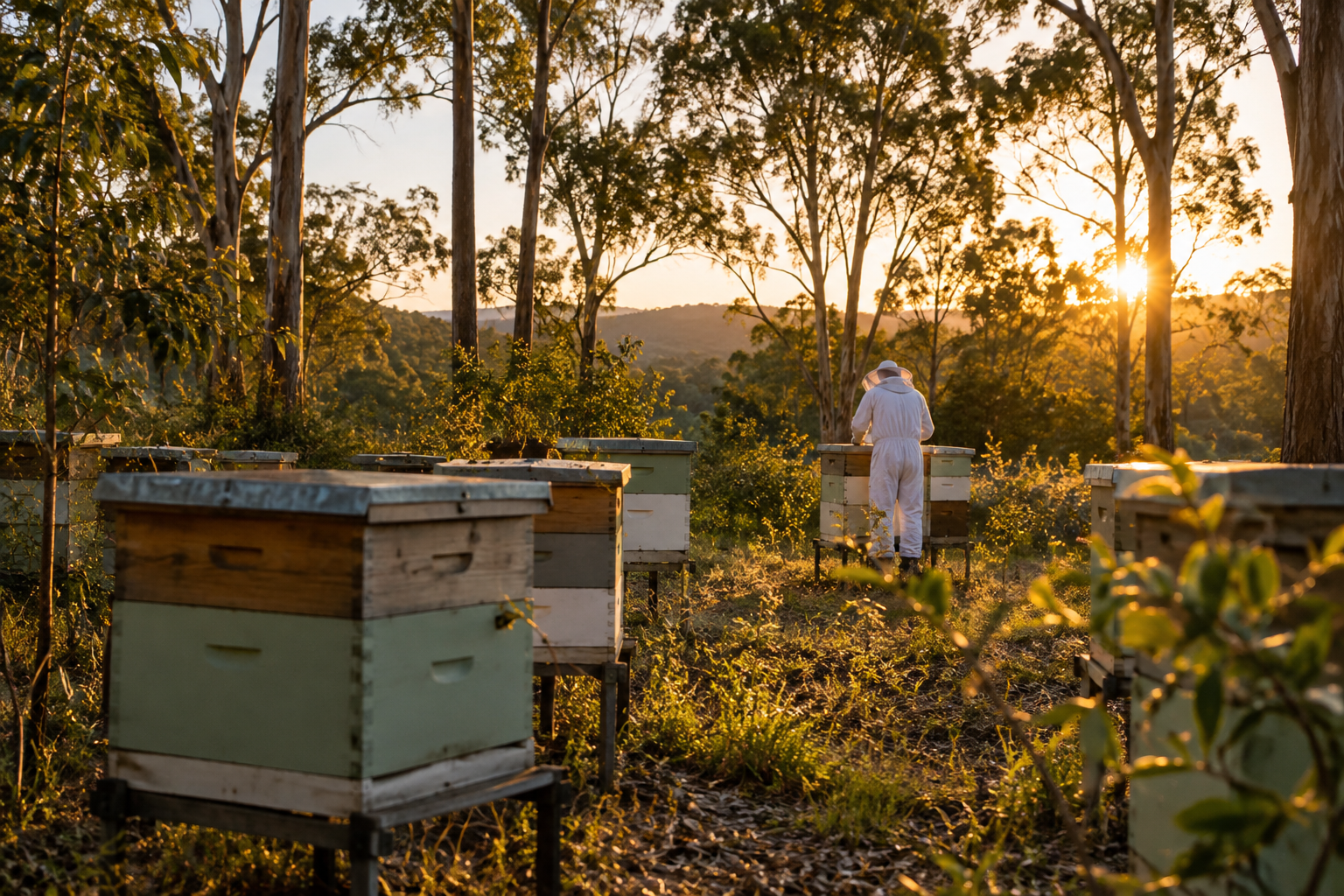
People often ask when the “honey season” is. The honest answer is that it depends on what flowers and how much rain has fallen. In general terms, hives are busiest when several tree species flower in succession, and a beekeeper spends much of the year watching the forest, moving or checking hives, and deciding when the frames are ready. Honey is only taken once the bees have ripened it and capped the cells, because uncapped honey can hold too much moisture and ferment.
That is why we resist promising a particular variety on a particular date. When a flow is strong we bottle it as a single-flower honey. When flowers overlap, the result goes into our polyfloral jars. Both are honest reflections of what the bees found that year.
Cooking and Everyday Ideas With Local Honey
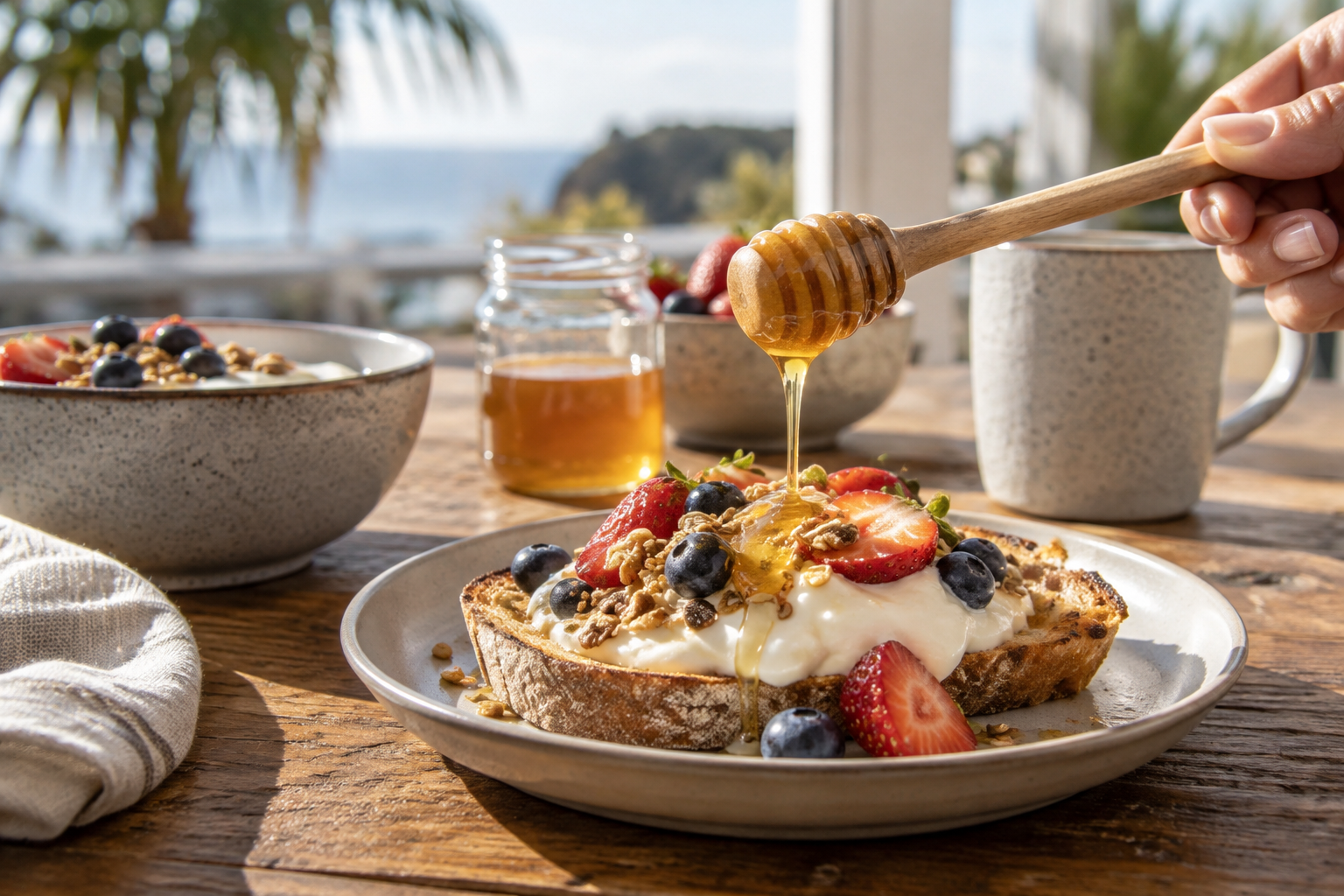
Different honeys suit different jobs. Mild, floral honeys are lovely stirred into tea or drizzled on yoghurt, because they do not overpower. Butterscotch Ironbark is a natural fit for porridge, baking and glazing roast vegetables. Darker, earthier honeys can stand up to cheese, roast meats and spicy marinades. A spoonful in a salad dressing balances acidity without needing refined sugar, and creamed honey is the easiest option for toast because it stays put.
Remember that heating honey for cooking will reduce some of its delicate aromas, so save your best single-flower jar for use at the table and use a polyfloral honey in the oven.
Why Buying Direct Matters in a Tough Year
Small Queensland producers carry the cost of varroa treatments, movement restrictions and unpredictable flowering. When you buy direct, you help a family business keep hives working through those pressures, and you get something a supermarket cannot offer: a person to ask. If you would like to talk honey, send us a message through our contact page or come and say hello at the next pop-up.
Storing and Using Your Honey
Keep honey sealed, in a cool cupboard away from direct sun, and use a clean dry spoon. Do not refrigerate it, as that speeds crystallisation. Never give honey to babies under 12 months. For gifts, our honey gift pack is a simple way to share a few varieties, and the creamed honey pot suits anyone who dislikes drippy jars.
Our family has kept bees for three generations, and Ian and Esther run the hives from Bahrs Scrub. You can read more on the About Us page.
Frequently Asked Questions
What is Australian honey Gold Coast beekeepers produce known for?
It is known for native flora flavours, especially eucalypts such as Ironbark, along with Brushbox and Melaleuca. Roughly 70% of Australian honey comes from native flora.
Is all honey in Australian supermarkets Australian?
No. Nearly 20% of Australia’s honey supply is imported, according to a Rabobank report, so check the origin statement on the label.
Why does honey from the same beekeeper taste different each year?
Eucalypts flower irregularly and nectar flow depends on rain, so the blend of flowers visited by the bees changes from season to season.
Is crystallised honey bad?
No. Crystallisation is a natural process and is not a reflection of quality. Warm the jar gently in a bowl of warm water to soften it.
Where can I buy local honey on the Gold Coast?
You can order from our online shop, visit a pop-up market or find us at a stockist on the Gold Coast and beyond.
Does Australian honey cost more than imported honey?
Often yes, because small-batch production and varroa treatment costs are higher. The AHBIC reports that imported honeys packed here are priced competitively, particularly for bulk buyers.
Can I give honey to my baby?
No. Honey should not be given to children under 12 months because of the risk of infant botulism.
Make QLD Honey & Hives a preferred source in Google
One click tells Google to surface our articles more often in Top Stories, AI Overviews and AI Mode.