Last updated:
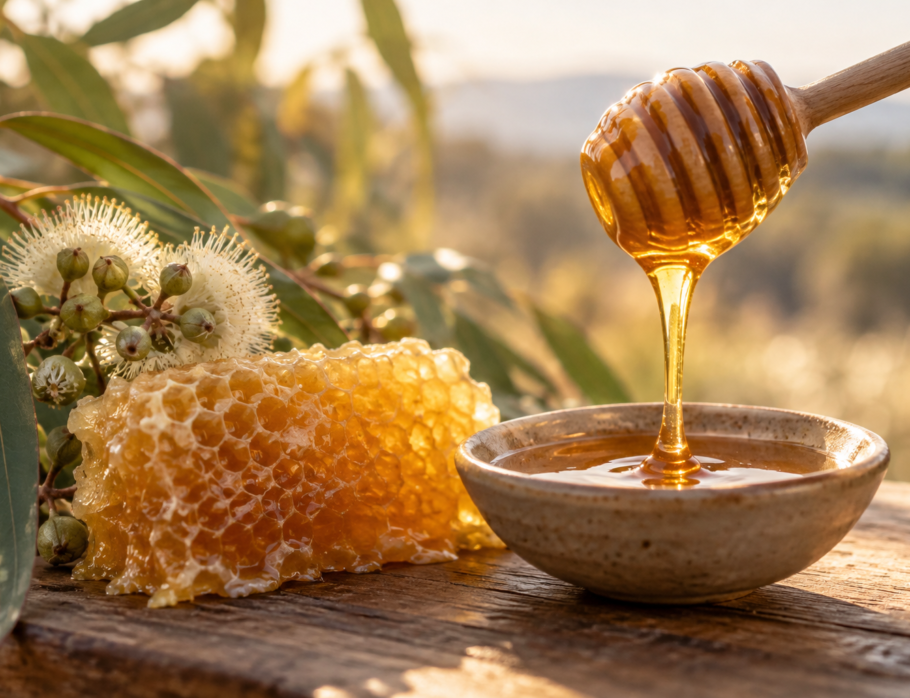
Pure honey Queensland beekeepers produce is simply honey that goes from comb to jar with nothing added and nothing taken out except wax and debris. It starts with bees working eucalypt, brush box and melaleuca blossom, is capped by the bees once the moisture is low enough, then is uncapped, spun, strained and jarred. Spring is the busiest part of that cycle. QLD Honey & Hives is a family beekeeping business at Bahrs Scrub, and this guide walks through each step so you can judge any jar.
Key Takeaways
- Pure honey is made by bees from nectar; the beekeeper’s job is to extract, strain and jar it without additives.
- Around 70% of Australian honey comes from native flora, so what is flowering in Queensland shapes flavour and colour.
- Bees cap each cell only when the honey is ripe, which is why waiting for capped frames matters for quality.
- Spring flows are strong, but varroa mite pressure in 2026 is making every Queensland harvest harder and costlier.
- Strained is not the same as filtered: coarse straining leaves pollen and character that fine filtration removes.
About 90 per cent of south-east Queensland’s wild honey bee colonies have collapsed in the year since varroa mite arrived, according to ABC News, June 2026. Every jar of local honey now carries more beekeeper effort than it did two years ago.
What Makes Pure Honey Queensland Shoppers Can Trust?
Pure honey is a one-ingredient food. The bees collect nectar, add enzymes, and fan the moisture down until the honey keeps on its own. A beekeeper then removes the wax cappings, spins the frames, strains out wax and bee parts, and jars it. No syrup, no flavouring, no blending with sugars.
That sounds simple, but the word “pure” is not tightly defined on a label, so it helps to know the process behind it. If you want the label side of the story, our guide on how to read a honey label covers origin statements and wording. This article covers what happens in the apiary and the shed.
Where Pure Honey Queensland Flavour Comes From: The Flora
The Department of Agriculture notes that around 70% of Australian honey is produced from native flora. In south-east Queensland that means eucalypts, ironbarks, brush box and paperbarks. A Queensland Museum paper on melliferous flora in the state names grey ironbark and brush box as two of the most important species for beekeepers, both producing copious quantities of choice honey (Memoirs of the Queensland Museum).
Different trees flower at different times, and bees will favour whatever is yielding. This is why one batch of honey tastes different from the next, and why a pure jar from a small beekeeper should never be identical year to year.
| Honey | Tasting note | Where to see it |
|---|---|---|
| Ironbark | Butterscotch, rich and mellow | Ironbark 1kg jar |
| Brushbox | Sweet and floral | Brushbox 1kg jar |
| Melaleuca (tea tree) | Earthy and distinctive | Melaleuca 1kg jar |
| Swamp turpentine | Fruity | Swamp Turpentine 1kg jar |
| Polyfloral (mixed gum) | Balanced, everyday | Polyfloral squeeze bottle |
How Does a Spring Honey Flow Work?
As the weather warms, hives build quickly and the bees bring in nectar faster than the colony eats it. The Australian Honey Bee Industry Council’s August 2026 chair report described spring as “go time” for beekeepers, noting that most of the country had decent winter rain (AHBIC Chair Report, August 2026). Good rain means good flowering, but it does not guarantee a good harvest.
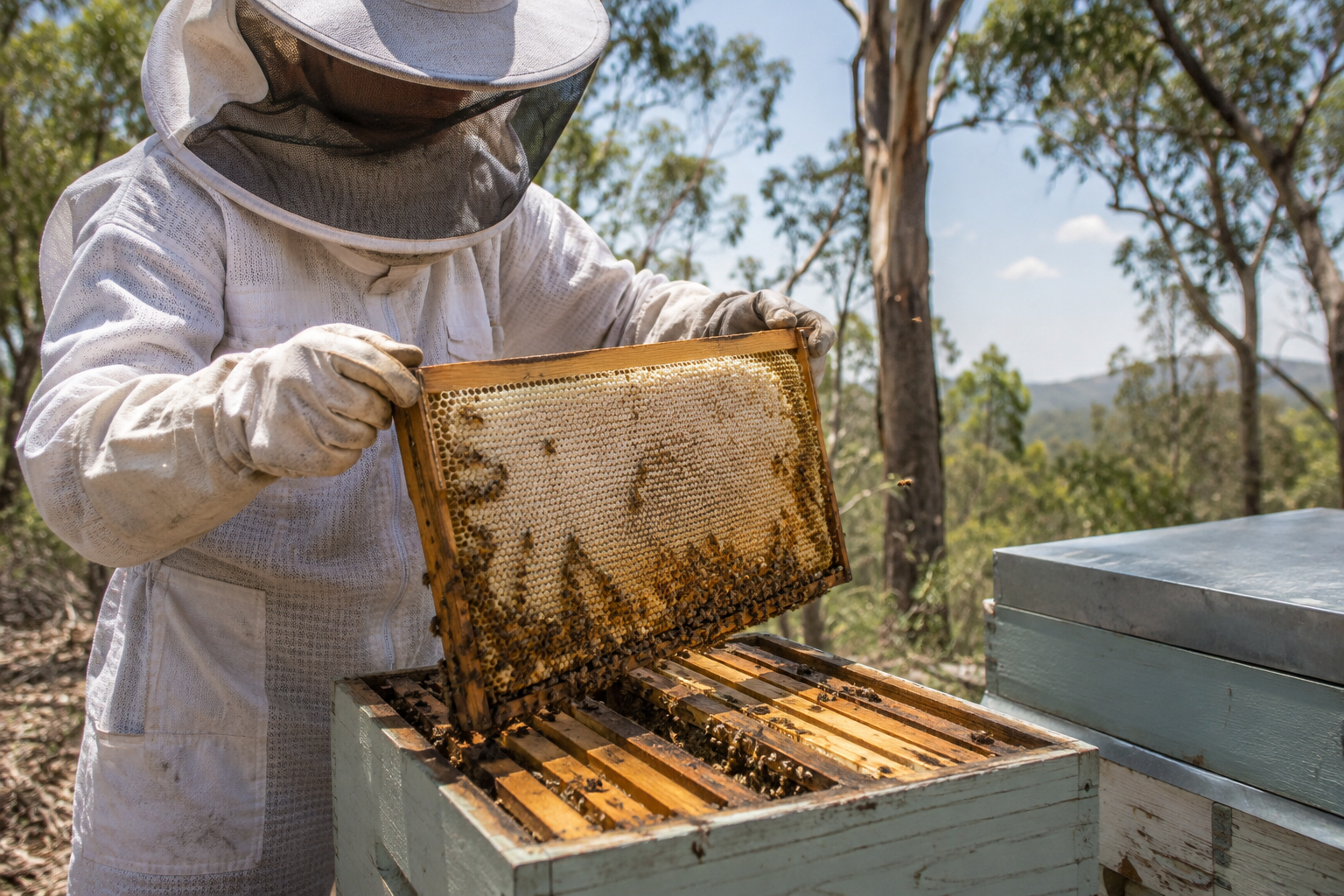
Beekeepers add boxes called supers above the brood. Bees fill the frames with nectar and evaporate it. When a frame is mostly capped with white wax, the honey is ripe. Taking honey early, before capping, risks high moisture and honey that can ferment.
Why Capped Frames Matter
Honey with too much water can ferment. Ripe, capped honey has low enough moisture to keep without refrigeration or additives. This is the quiet quality check that happens in the apiary, long before a jar is filled.
From Hive to Jar: The Extraction Steps
Once ripe supers come off the hive, the process in a small shed is straightforward and repeatable.
- Clear the bees. Bees are brushed or encouraged out of the super, so the honey is not contaminated.
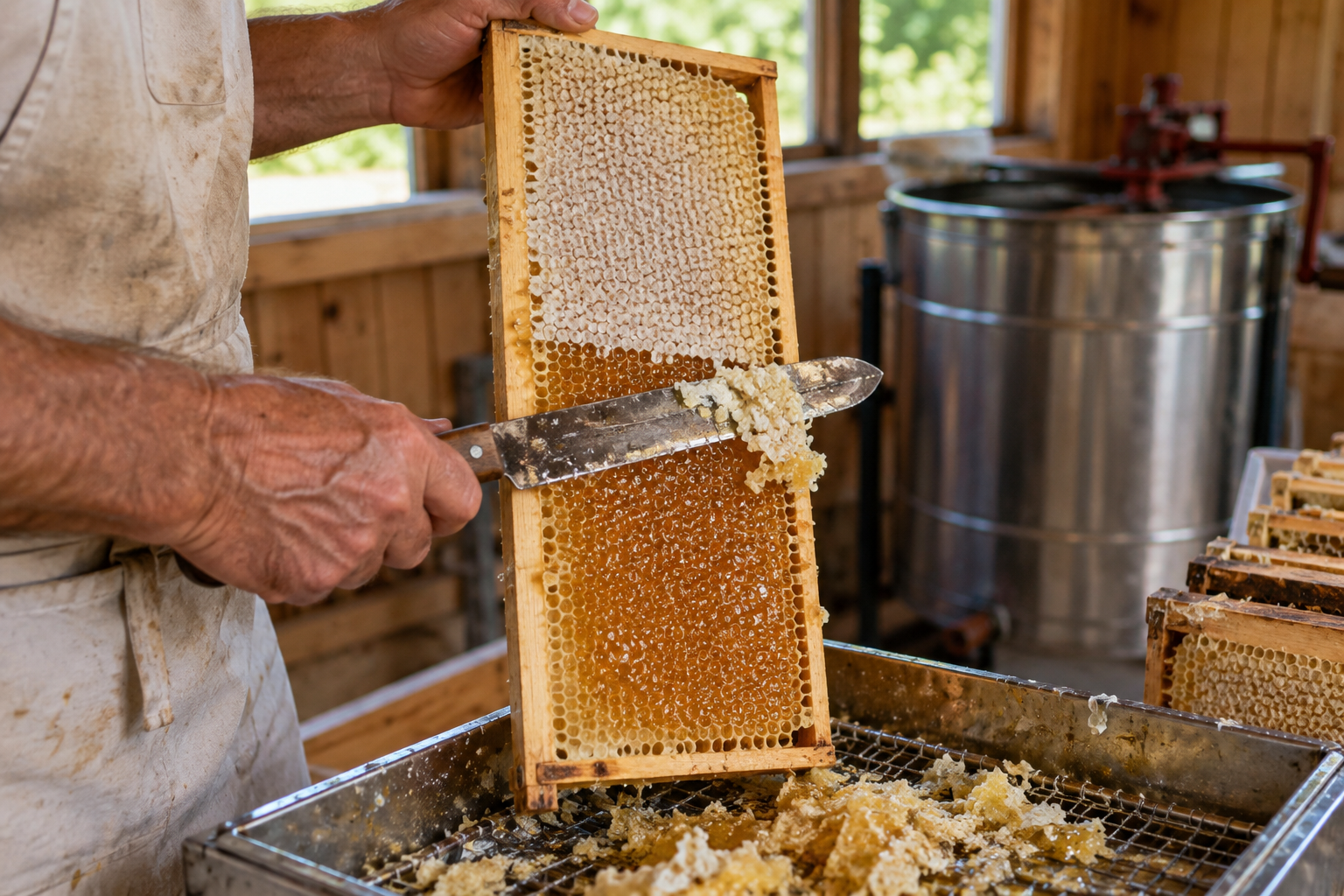
- Uncap. A heated knife or fork removes the thin wax layer sealing each cell.
- Spin. A centrifugal extractor flings the honey from the comb, which can be returned to the hive intact.
- Strain. Honey passes through mesh to remove wax and bee fragments.
- Settle. Air bubbles and fine wax rise for a day or two so the jar looks clear.
- Jar. The honey is poured warm from the settling tank into clean jars, ideally without added heat.
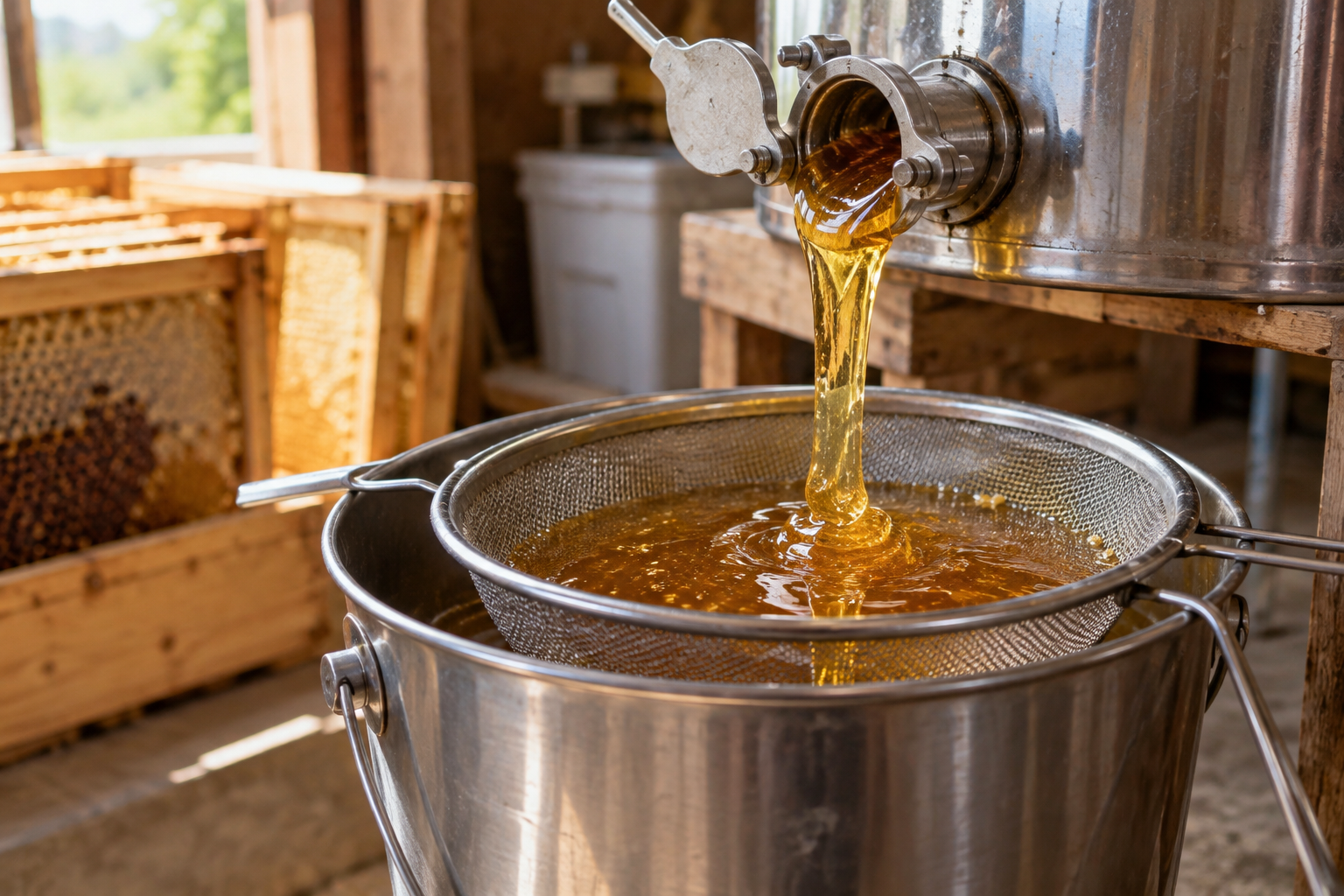
Strained or Filtered: Does It Affect Pure Honey Queensland Shoppers Buy?
Yes. Straining uses a coarse mesh and leaves natural pollen in the honey. Fine filtration, often used by large packers, pushes honey under pressure through very small pores and strips out pollen. Some packers also heat honey to keep it liquid on the shelf. Neither practice makes honey impure, but they change what is left in the jar.
Raw honey is typically strained only. It can crystallise faster, which is natural. If your jar sets, our post on why honey crystallises explains how to loosen it gently. For who should and should not eat unprocessed honey, see our raw honey safety guide.
What Is Different About a Queensland Harvest in 2026?
Varroa mite has been in Queensland since early 2025, and the effects keep building. The Queensland Fruit and Vegetable Growers association notes that overseas, losses of 90 to 95 per cent of feral bees over two to three years were seen after varroa arrived (QFVG, July 2026). Beekeepers are paying for monitoring and treatment every month, while honey prices have stayed low.
For a family operation, that means more checks, more treatments and fewer bees foraging. It also means a spring flow can be strong while hive numbers are not. We cover the cost side in our post on why jars cost more in 2026.
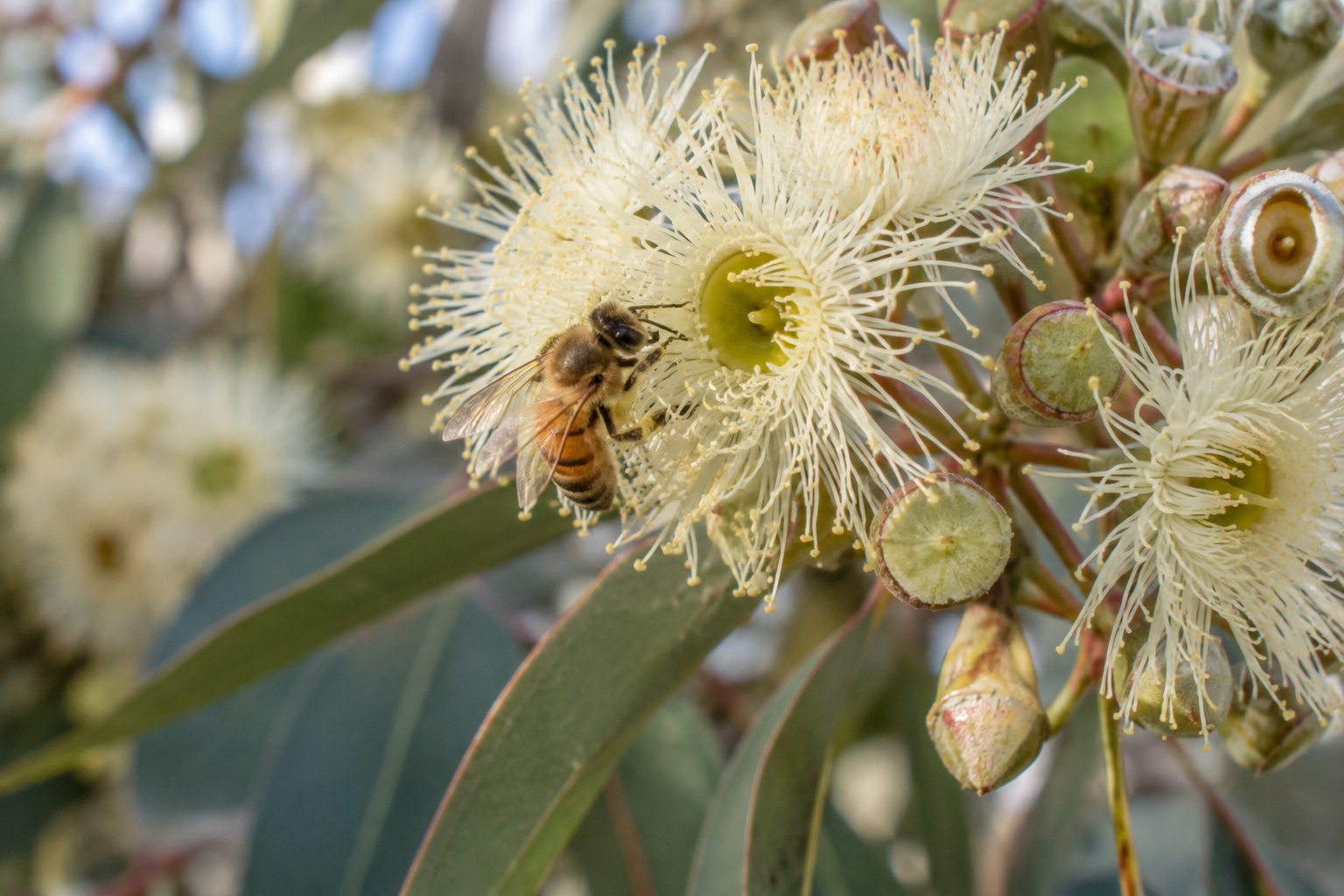
Seasonal Calendar: What Pure Honey Queensland Beekeepers Harvest and When
There is no single harvest day. Flowering varies by species, rainfall and location, so beekeepers move between sites and take honey when frames are capped. In general terms for south-east Queensland:
- Winter to early spring: Ironbarks and spotted gums flower in the cooler months (spotted gum from roughly June to November, per the Private Forestry Southern Queensland species booklet). Hives build up on this pollen and nectar.
- Spring: Brush box and mixed eucalypt flowering drives the biggest nectar flows. Supers fill quickly, which is the busiest time in the shed.
- Summer: Blackbutt, melaleuca and swamp species can yield, though heat and storms limit foraging days.
- Autumn: A final flow is possible, but beekeepers leave enough honey for the bees to survive winter.
The rule that holds all year is that bees come first. A responsible beekeeper does not strip a hive bare, because the colony needs stores to stay healthy, especially while varroa pressure is high.
Why Small-Batch Pure Honey Queensland Jars Look Different
If you buy several jars across a year you will notice colour and texture changes. That is not a flaw. Light honey often comes from brush box or early blossom; darker honey tends to come from ironbark or melaleuca. Our Jacaranda honey is a limited release exactly because that flow does not happen every season.
Large packers blend to make every jar identical. Small beekeepers sell what the season gave them. If a jar is uniform in colour and flavour across years, it may have been blended, and that is worth asking about.
Signs of Good Handling
- Clean, clear honey with a few tiny air bubbles near the top, not a wall of foam.
- A fresh floral or caramel smell, not a burnt or fermented odour.
- A thick, slow-pouring texture at room temperature.
- No separation into a watery layer on top, which can signal excess moisture.
Storing Honey After You Bring It Home
Pure honey is stable, but it is not indestructible. Keep the lid tight, because honey absorbs moisture from humid Gold Coast air. Store it in the pantry rather than the fridge, which speeds crystallisation, and away from direct sun or hot cars. If it sets, stand the jar in warm, not boiling, water for a while. Overheating destroys delicate flavour and raises hydroxymethylfurfural, a heat marker.
Use a clean, dry spoon each time. Water or crumbs on a spoon bring in the moisture and microbes that honey otherwise resists. Used this way, a sealed jar will stay good for years, though flavour is best within the first year or two.
What Are Common Myths About Pure Honey?
- “Pure honey never crystallises.” False. Most raw honey sets eventually; it is a normal process.
- “Dark honey is more pure.” False. Colour reflects floral source, not purity.
- “A water or flame test proves it is genuine.” Unreliable. Home tests can be fooled and are not accepted as evidence; trust the producer and origin instead.
- “Organic or Product of Australia means pure.” Not automatically. These describe origin or farming rules, not whether honey was blended or heated.
The most dependable test is human: buy from someone who can tell you where the hives were, what was flowering and when it was extracted. That is the thread running from the flowering gum to your jar.
Can You Taste the Difference Between Pure and Blended Honey?
Often, yes, once you slow down. Put a small spoonful on your tongue and let it melt before swallowing. Pure single-origin honey tends to show a clear lead flavour first, such as butterscotch in ironbark, and then a distinct finish. Blended honey often tastes flat and sweet, with one note that fades quickly.
Try tasting two jars side by side, perhaps an ironbark and a melaleuca. The contrast in aroma, colour and aftertaste teaches you more about honey than any label can. It also makes you a more confident buyer the next time you stand at a market stall or supermarket shelf.
Texture offers clues too. Honey that has been heated and fine-filtered stays glassy and runny for months, while raw honey slowly thickens and may turn creamy. Neither is wrong, but the second is closer to how the honey left the hive.
How to Check a Jar of Pure Honey Is Genuine
You do not need a lab to make a good decision. Look for these signs when you shop:
- A named beekeeper or business with an address, not only a packer’s postcode.
- A region and ideally a floral source on the jar, such as ironbark or brush box.
- Honest comments about crystallisation rather than promises that it never sets.
- A chance to ask the producer questions, at a market or through a stockist.
You can meet us at our pop-up locations or find our jars at local stockists. Our about page tells the story of Ian and Esther and three generations of beekeeping.
Frequently Asked Questions
What does pure honey mean in Queensland?
It means honey with nothing added, made by bees from nectar and only strained to remove wax and debris. The word is not tightly regulated, so check the producer and origin.
Is pure honey the same as raw honey?
Not exactly. Raw usually means unheated and only strained. Pure means nothing added. A honey can be pure but heated or finely filtered.
When is the main honey harvest in Queensland?
It depends on flowering. Spring and summer flows are common in south-east Queensland, while some ironbark flows run through winter, as listed on local bee tree guides.
Why does pure honey crystallise?
Honey is a supersaturated sugar solution, and glucose naturally forms crystals over time. It is a sign of unprocessed honey, not spoilage.
Does pure honey taste different every year?
Yes. Weather, rainfall and which trees flower change the flavour and colour of each batch.
Where can I buy pure honey on the Gold Coast?
Browse our shop, visit a pop-up market, or ask at a local stockist. We are happy to answer questions on our contact page.
Does varroa mite make honey unsafe?
No. Varroa harms bees, not honey, but it makes beekeeping more difficult and expensive.
Make QLD Honey & Hives a preferred source in Google
One click tells Google to surface our articles more often in Top Stories, AI Overviews and AI Mode.