Last updated:
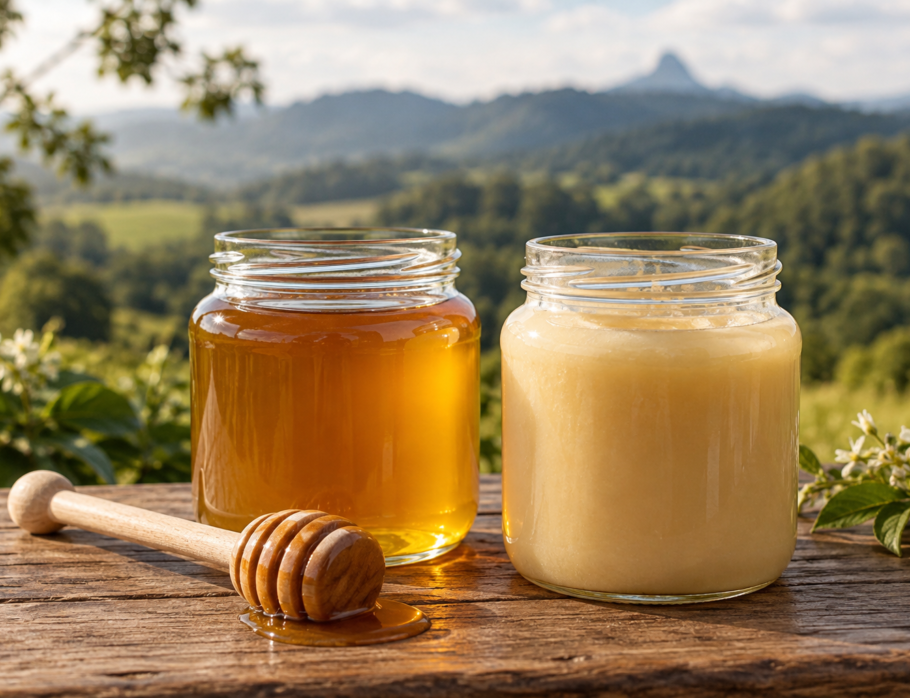
Hinterland honey that has turned thick, cloudy or grainy is not spoiled. It has crystallised, a natural process where the glucose in raw honey forms fine sugar crystals, and it is completely safe to eat. To return it to liquid, stand the sealed jar in warm (not hot) water below 45°C for 20 to 40 minutes, stirring gently. Or leave it set and spread it like a creamed honey.
At QLD Honey & Hives we sell raw, unfiltered Queensland honey, so we field this question constantly at our pop-up markets and by email. This guide answers it properly: why Hinterland honey sets, why some jars set faster than others, how to fix it safely, and how to store it so it stays the way you like it.
Key Takeaways
- Crystallisation is not a defect and does not mean spoilage. Raw honey is a supersaturated sugar solution, and it will eventually set if left long enough.
- Honey crystallises fastest at around 14°C, which is why a cool pantry or fridge can make a jar set sooner than a warm kitchen shelf.
- To re-liquefy, use a warm water bath below 45°C. Never microwave or boil raw honey, as heat damages its flavour and natural enzymes.
- Honey with more glucose and less water sets faster, so the flowering tree matters: Ironbark and Brushbox behave differently to Melaleuca.
- If honey smells sour, fizzes, or has a watery layer on top, that is fermentation, which is a different problem to crystallisation.
Why Does Hinterland Honey Crystallise?
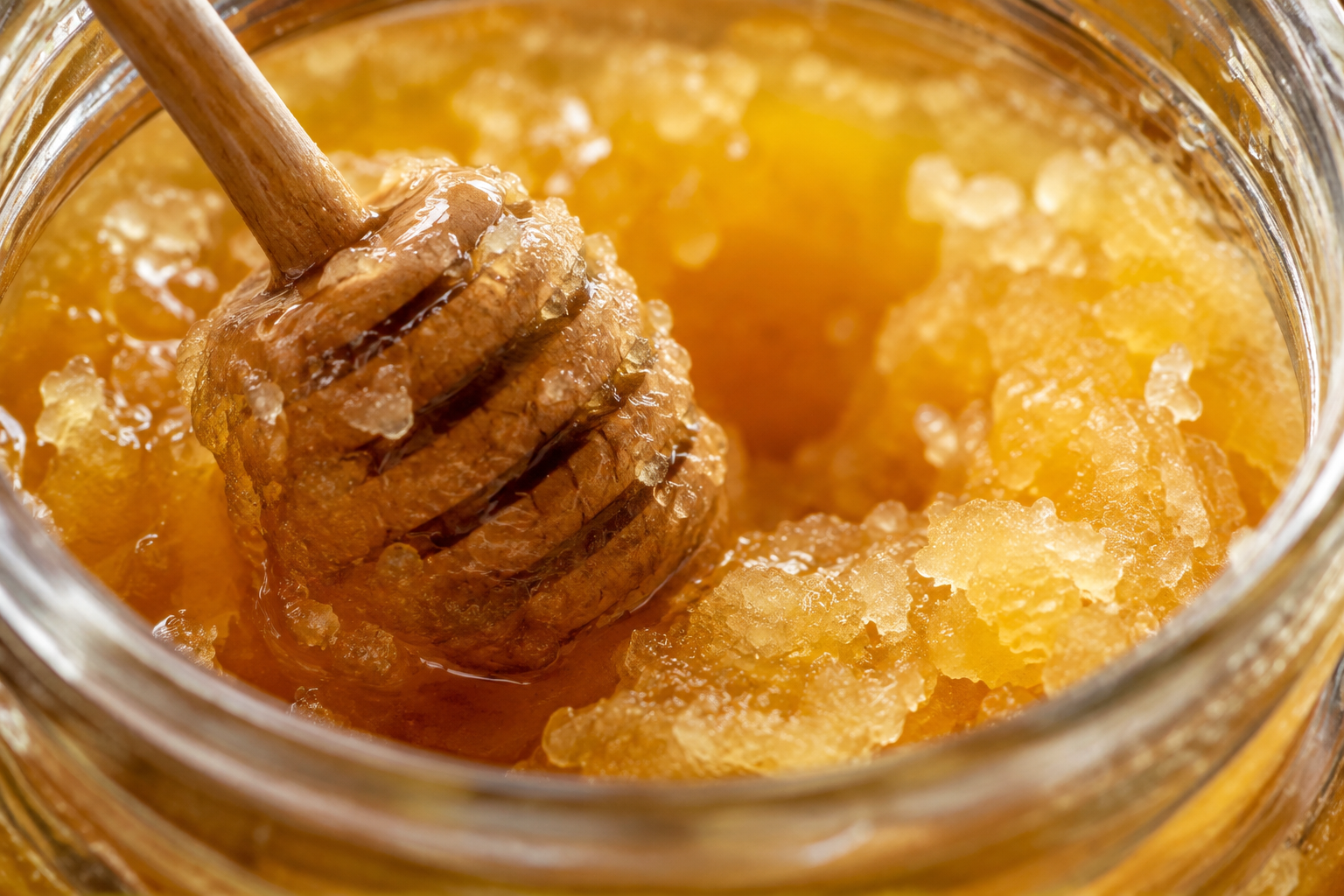
Hinterland honey crystallises because honey is mostly sugar and very little water. It is made up largely of two sugars, fructose and glucose, dissolved in roughly 17 to 20 per cent water. There is not enough water to keep all of the glucose dissolved forever, so over weeks or months, glucose slowly separates out as tiny crystals.
The Southern Cross University honey fact sheet puts it plainly: crystallisation does not spoil honey and it is safe to eat, and all natural raw honeys will eventually crystallise given enough time. Many shoppers assume liquid, clear honey is better quality. In fact, perfectly clear honey that never sets for years has usually been heated and finely filtered, which removes the pollen grains and tiny particles crystals like to form on.
That is why a jar of raw Hinterland honey from a local beekeeper is more likely to set than a supermarket squeeze bottle. It is a sign the honey has not been over-processed, not that something has gone wrong.
What Makes Some Hinterland Honey Set Faster?
Four things decide how quickly a jar sets: its sugar balance, its moisture, the particles in it and the temperature it is stored at. A study of how different multi-flower honeys crystallise lists composition, the fructose to glucose ratio, moisture, viscosity, the presence of pollen grains as seeds, age and storage temperature as the main drivers.
The flower the bees visited
Each tree produces a nectar with its own sugar profile. Honey with higher glucose and lower moisture sets quicker. A published analysis of Australian Apis mellifera honey found sugar composition depends on the floral source, and that some eucalypt nectars give lower-moisture honey. That matches what we see in our own range, described on the product pages and in the table below.
Particles and pollen
Raw honey contains microscopic pollen and wax particles that act as seeds for crystals. Our honey is raw and unfiltered, so it naturally has these. This is also why unfiltered, unheated honey is a good sign of authenticity, not a flaw.
Temperature
Temperature has a surprising effect. Very cold honey is thick and crystals form slowly. Warm honey above about 30°C resists setting but forms coarse crystals when it does. The sweet spot for fast crystal growth is cool room temperature.
14°C: the temperature at which honey crystallises fastest, according to Southern Cross University’s honey crystallisation fact sheet, which also advises that honey should never be heated above 45°C or on direct heat. Source: Southern Cross University, September 2024
Which Hinterland Honey Varieties Set Fastest?
Variety matters more than most people realise. The table below combines our own tasting notes for the Hinterland honey we sell with general behaviour reported for each type. Treat set times as a rough guide, because every season and every jar differs.
| Honey | Flavour note (our product pages) | Typical set behaviour |
|---|---|---|
| Ironbark | Butterscotch, rich | Moderate. Sets over a few months into a fine, smooth texture |
| Brushbox | Sweet, floral | Can set fairly smoothly with time, especially in cool weather |
| Melaleuca (tea tree) | Earthy, robust | Varies by season, may stay runny longer or set unevenly |
| Polyfloral (mixed gum) | Balanced, everyday | Unpredictable, because the blend changes with what was flowering |
| Creamed honey | Smooth, spreadable | Already set on purpose, so it stays soft and spreadable |
Ironbark is a good example. A public honey reference lists the glucose to fructose ratio of Ironbark honey as about 0.86 and says it granulates over a few months into a fine, smooth set. That fits what many of our customers describe: not a hard block, but a thick, spreadable texture.
How to Fix Crystallised Hinterland Honey
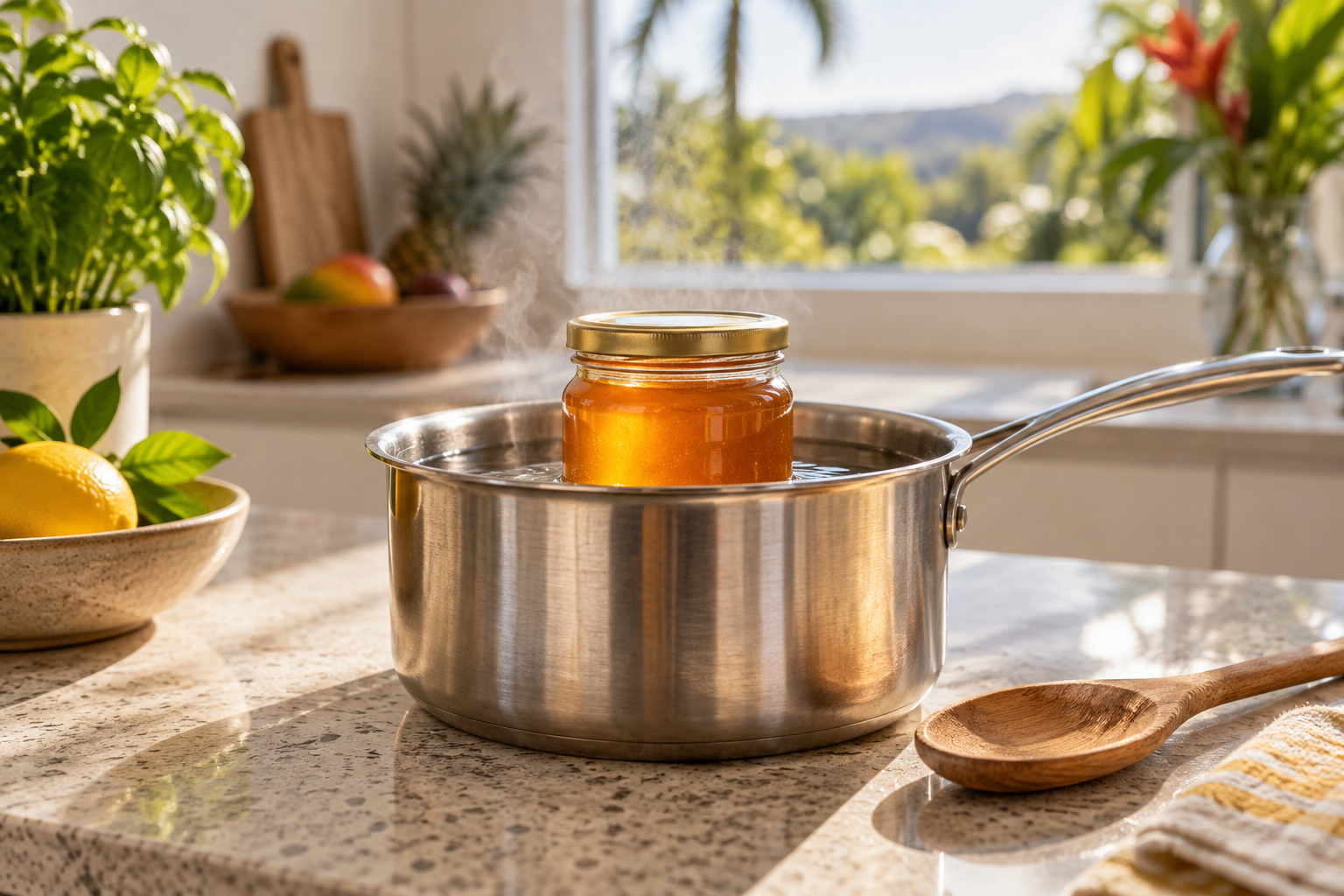
The best way to fix crystallised honey is a gentle warm water bath. You can restore the liquid texture in under an hour with nothing but a saucepan, and without damaging the honey.
- Loosen the lid slightly if it is a glass jar, or keep it on if it is plastic and rated for warm water. Never put a cold glass jar into hot water, as it may crack.
- Heat water to about 40°C, which feels comfortably warm, like a bath. Take the pot off the heat.
- Stand the jar in the water, with water reaching around the honey line, for 20 to 40 minutes.
- Stir gently every 10 minutes to help the crystals dissolve evenly.
- Refresh the water as it cools. Stop once the honey is smooth.
A larger 1 kg jar can take longer, and a thoroughly set jar may need two sessions. Be patient: the aim is to melt crystals, not to cook the honey.
What not to do
- Do not microwave it. Hot spots can scorch honey, damage the natural enzymes and change the flavour.
- Do not boil the jar or heat on direct flame. The Southern Cross University guidance recommends staying under 45°C and never using an open flame.
- Do not keep re-heating the same jar. Each heat cycle takes a little more flavour and freshness from the honey.
Or just enjoy it set
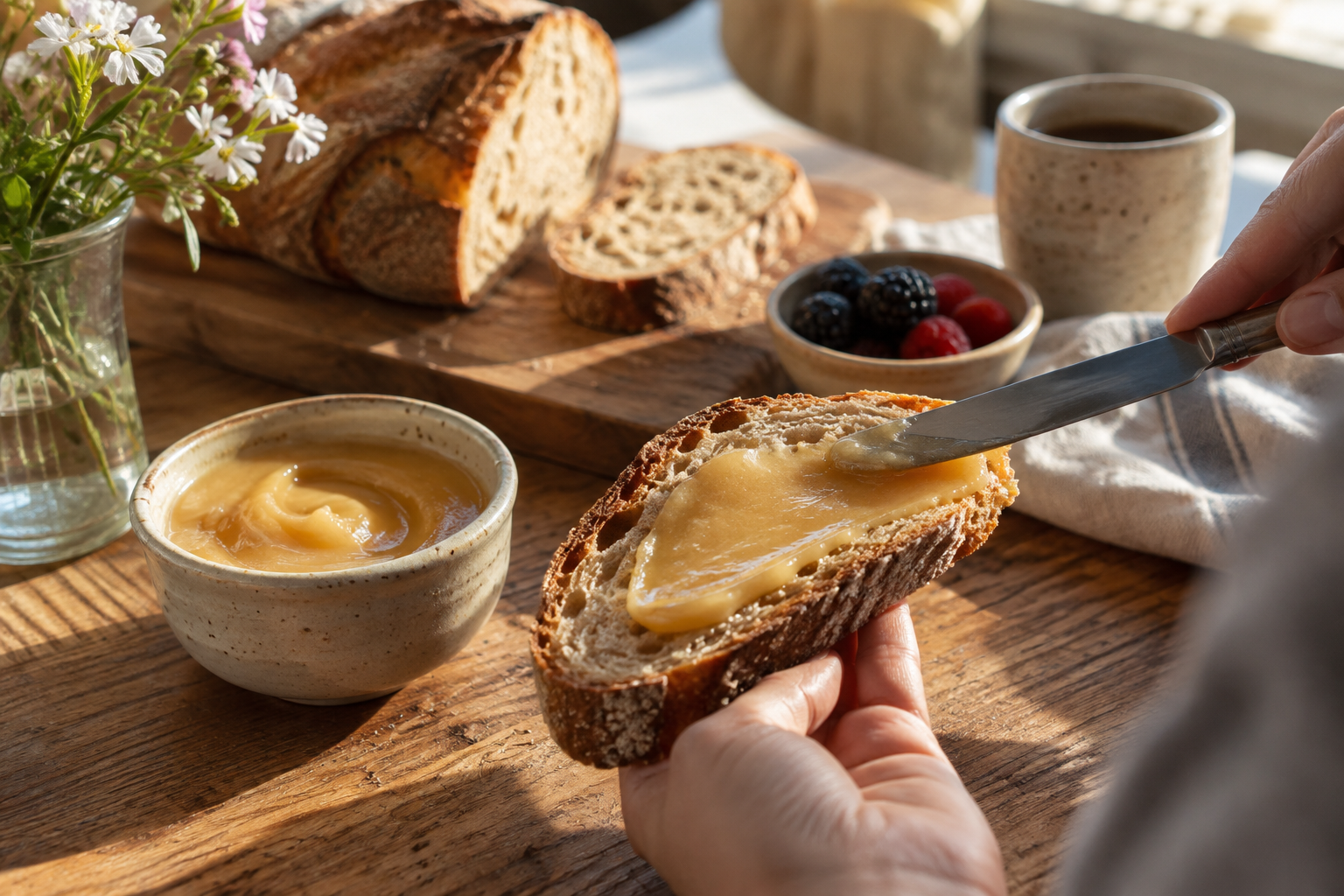
Many people prefer the texture. Set Hinterland honey spreads on toast without dripping, stirs neatly into porridge and does not run off a scone. If you like it that way, try our creamed honey, which is deliberately crystallised to a smooth, fine texture. We cover how to use it in our guide to creamed honey.
How to Store Hinterland Honey So It Stays Liquid Longer
Storage will not stop crystallisation forever, but it can slow it down considerably. Raw honey is also shelf-stable, so a sealed jar will keep for a long time in the pantry.
- Keep it in a warm, stable spot. A cupboard away from the stove, fridge and window sits above the 14°C crystal sweet spot in a Queensland kitchen for much of the year.
- Avoid the fridge. Cool storage can speed up the set and gives no benefit for sealed honey.
- Seal the lid tightly. Honey absorbs moisture from the air, and extra water can lead to fermentation.
- Use clean, dry spoons. Water and crumbs introduced on a spoon can seed crystals and spoil the jar.
- Choose a smaller jar if you use honey slowly. Honey in a squeeze bottle is quick to use and moves through the pantry before it sets.
On an unusually humid Gold Coast summer, you may see some surface changes in an open jar. That is worth knowing the signs of, which brings us to the next section.
Crystallised or Spoiled? How to Tell the Difference
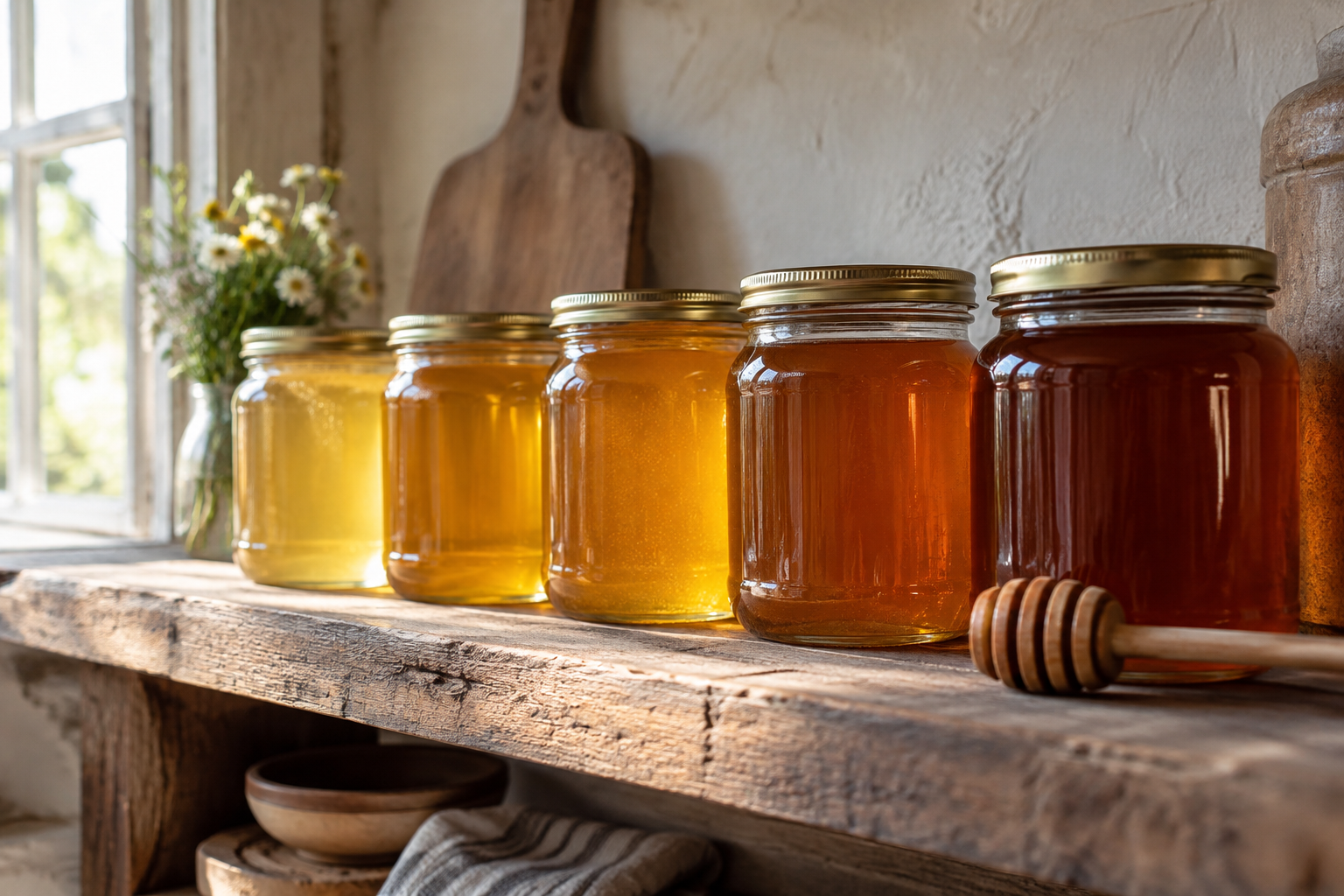
Crystallisation and fermentation are very different, and it helps to know which you are looking at.
| Sign | Crystallised (safe) | Fermented (discard or cook with) |
|---|---|---|
| Texture | Thick, grainy or solid | Foamy or bubbly |
| Smell | Normal honey aroma | Sour, yeasty or like alcohol |
| Appearance | Opaque, pale or cloudy | Watery layer on top, bubbles near the lid |
| Fix | Gentle warm water bath | Warming will not fix it |
Fermentation is uncommon in properly ripened, capped honey from a good beekeeper. It usually follows moisture getting into an open jar. If you are unsure, trust your nose. Never give honey of any kind to babies under 12 months.
Why We Leave Our Hinterland Honey Raw
We could heat and ultra-filter our honey so it stays clear for years. Instead, we keep it raw and unfiltered, which is the same approach described in our guides on raw honey on the Gold Coast and in the QLD Honey & Hives blog. Ian and Esther run the business as a family, with Ian continuing three generations of beekeeping. Their focus is pure, small-batch Queensland honey, and a jar that sets is part of that deal.
You can meet us at our pop-up locations across the Gold Coast, including Runaway Bay, Robina, Loganholme and Springfield Central, find us at local stockists, or browse the online shop. If a jar sets before you finish it, ask us how to bring it back and we are happy to help.
Hinterland Honey Crystallisation: Quick Practical Tips
- If you want it liquid, warm it gently and use it within a few weeks.
- If you want it smooth and spreadable, stir a set jar once or twice, or choose creamed honey from the start.
- Do not discard honey because it set. Keep it and enjoy it.
- Match the honey to the use: runny Hinterland honey for drizzling, set honey for toast and baking.
What Do Commercial Packers Do to Stop Honey Setting?
It helps to understand what a clear, never-setting jar has been through. Large packers commonly heat honey to melt every crystal and then filter it so no seed particles remain. Quality Services International, a honey testing laboratory, notes in its crystallisation fact sheet that melting existing crystals, cooling the honey rapidly to 0°C and holding it there for five weeks can keep it liquid for up to two years afterwards.
That is a laboratory-style technique, and it is not something we do or recommend at home. It shows the trade-off clearly. Keeping honey permanently liquid takes extra processing. A small-batch beekeeper who bottles raw honey close to harvest is choosing flavour and authenticity over a jar that never changes.
For shoppers, the practical takeaway is simple. If you buy raw Hinterland honey, plan for it to change texture, and decide whether you prefer to warm it or spread it. Either way you are getting the same honey. For more on spotting the real thing, see our guide on how to verify genuine, pure Queensland honey.
Frequently Asked Questions
Is crystallised Hinterland honey safe to eat?
Yes. Crystallisation is a natural change in texture, not spoilage. The honey has the same sugars, flavour and nutrition. Southern Cross University’s fact sheet states that crystallised honey is safe to eat.
Why did my honey crystallise so quickly?
Raw, unfiltered honey from nectar rich in glucose with low moisture sets sooner. Cool storage, around 14°C, speeds it up further, as do pollen and wax particles that act as seeds.
Can I put crystallised honey in the microwave?
We do not recommend it. Microwaves heat unevenly, can scorch the honey and damage its natural enzymes. A warm water bath below 45°C is gentler and just as effective.
Does crystallised honey mean it is not pure?
No, the opposite is often true. Honey that never crystallises can mean it has been heavily heated or filtered. Crystallisation is typical of genuine raw honey. Not every pure honey sets quickly though, so a runny jar is not automatically fake either.
Will warming honey make it set again?
Yes, eventually. Warming dissolves the crystals but does not remove the glucose that formed them, so the jar will crystallise again over time. It may set more coarsely each time.
How long does Hinterland honey last?
A tightly sealed jar of raw honey keeps for a very long time in the pantry. Quality gradually changes in flavour and colour, so we suggest enjoying it within a couple of years for the best taste.
Should I keep honey in the fridge?
No. The fridge sits near the temperature where honey crystallises fastest, and sealed honey does not need refrigeration.
Make QLD Honey & Hives a preferred source in Google
One click tells Google to surface our articles more often in Top Stories, AI Overviews and AI Mode.