Last updated:
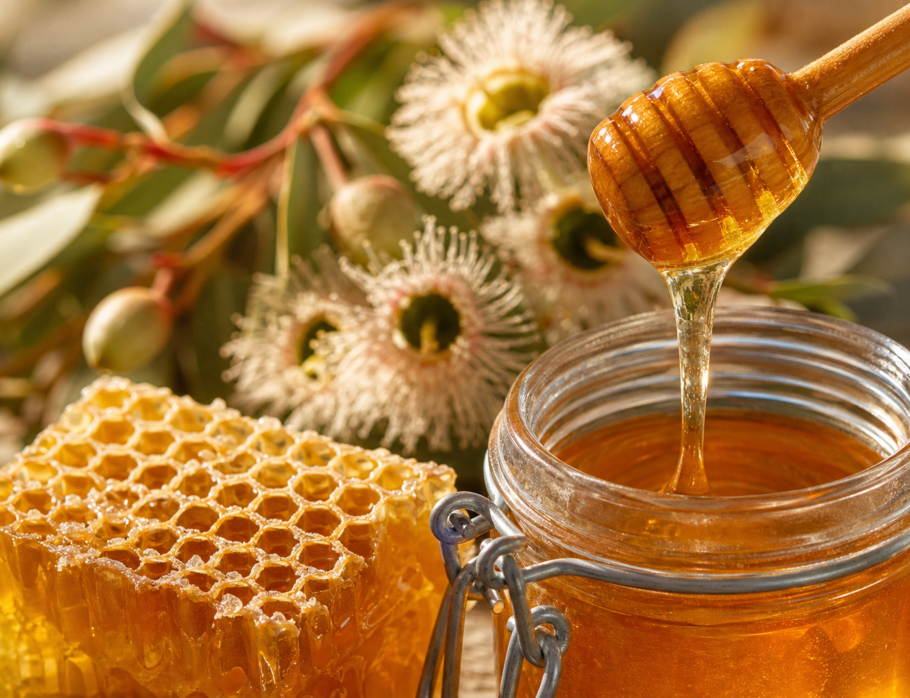
The health benefits of raw honey come from the enzymes, pollen, and plant compounds that survive because the honey is never heated above hive temperature or micro-filtered. Raw honey retains antioxidants such as flavonoids and phenolic acids, natural antibacterial compounds, trace pollen linked to seasonal allergy relief, and living enzymes like diastase and invertase that support digestion. Once honey is pasteurised and ultra-filtered, many of these compounds are reduced or destroyed, along with much of the flavour and aroma that comes from the source flora.
At QLD Honey & Hives, every jar is extracted cold, settled naturally, and never heated past the temperature of the hive, so the enzymes, pollen, and antioxidants that raw honey is prized for stay intact from our Gold Coast apiaries to your kitchen.
The Full List of Health Benefits of Raw Honey
Research over the last two decades, including recent 2026 studies on phenolic profiling and honey bioactivity, has confirmed several consistent health benefits of raw honey. None of these make honey a medicine, but together they explain why raw honey has stayed in kitchens and medicine cabinets for thousands of years.
- Antioxidant protection: raw honey contains flavonoids and phenolic acids such as quercetin, caffeic acid, and gallic acid that help neutralise free radicals in the body.
- Natural antibacterial activity: raw honey produces hydrogen peroxide as glucose breaks down, plus other compounds that inhibit bacterial growth, which is why it has a long history of use on minor wounds.
- Cough and sore throat relief: honey coats the throat and has been shown in clinical trials to reduce nighttime coughing in children over one year of age as effectively as some over-the-counter cough medicines.
- Gut and digestive support: the natural enzymes in raw honey, including diastase and invertase, assist with breaking down starches and sugars, and honey can act as a mild prebiotic feeding beneficial gut bacteria.
- Wound and skin healing: applied topically, raw honey’s antibacterial and moisture-drawing (osmotic) properties support the body’s own healing response on minor cuts, burns, and irritated skin.
- Cardiovascular support: emerging research on honey’s plant phytochemicals, including quercetin and kaempferol, points to a protective effect on blood vessels and heart tissue when honey replaces refined sugar in the diet.
- Possible seasonal allergy support: local raw honey contains trace amounts of the same pollen circulating in the air where it was collected, which some people use as a gentle, food-based introduction to local allergens.
This is exactly why we encourage customers to check the label before buying honey: if it has been heated and fine-filtered, it may still taste sweet, but it has likely lost much of what made it valuable in the first place.
Raw Honey vs Processed Honey: What Actually Changes
The difference between raw and processed honey comes down to heat and filtration. Commercial honey is typically heated to around 70°C and passed through fine filters to remove crystals, pollen, and wax particles, giving it a clear, shelf-stable appearance that never crystallises.
That processing comes at a cost. Studies comparing raw and heat-treated honey have found that pasteurisation and micro-filtration can reduce antioxidant content by up to a third, destroy heat-sensitive enzymes like diastase, and strip out the pollen that gives honey its regional identity and allergy-relief potential. A widely cited industry report on processed versus raw honey did find that mineral content stays broadly stable under heat, since minerals are heat-resistant, but the enzymes and antioxidants are far more fragile.
Raw honey, by contrast, is extracted from the comb, allowed to settle to remove wax fragments, and jarred without ever exceeding hive temperature (around 35°C). That is exactly how we produce every batch at QLD Honey & Hives: no pasteurisation, no fine filtration, no additives, just honey as the bees made it.
How to Tell If a Honey Is Genuinely Raw
- It crystallises over time in the jar. This is a sign of minimal processing, not a fault.
- The label states “raw” or “unheated” and, ideally, names the source flora (such as Ironbark, Brushbox, or Melaleuca).
- It is sourced from a known apiary or region rather than a blended, imported product.
- The flavour, colour, and aroma vary between batches, reflecting the season and the flowers the bees foraged.
Does Raw Honey Help With Allergies and Coughs?
Two of the most searched questions about honey and health are whether it helps with seasonal allergies and whether it soothes a cough. The evidence differs for each.
For coughs, the clinical evidence is genuinely strong. Honey has been studied in randomised trials for acute cough in children over twelve months old, with several trials showing it reduces cough frequency and severity, and improves sleep for both children and parents, comparably to some common over-the-counter remedies. Health authorities, including paediatric guidelines in several countries, now list honey as a first-line home remedy for cough in children over one, while noting it must never be given to infants under twelve months due to the small risk of infant botulism. For a plain-language summary of the wider clinical evidence on honey, Healthline’s review of honey’s health benefits is a useful independent reference.
For seasonal allergies, the evidence is more anecdotal than clinical. The theory is that trace pollen in local raw honey acts like a very mild, food-based exposure to the allergens circulating in your area, potentially building tolerance over time. Large controlled trials on this specific effect are limited, so it should be treated as a possible bonus rather than a guaranteed remedy. What is well established is that raw, local honey is far more likely to contain that regional pollen than a filtered, blended, or imported honey, simply because filtration removes pollen and blending mixes honey from multiple, often unknown, regions.
Is Raw Honey Good for Gut Health?
Raw honey’s natural enzymes and modest prebiotic effect are two of the more overlooked benefits of raw honey for digestion. Diastase and invertase, both naturally present in unheated honey, help break down starches and complex sugars, easing the digestive workload. Research has also looked at honey’s role in supporting gut bacteria balance and reducing inflammation associated with conditions like irritable bowel syndrome, though honey is a complement to medical care, not a replacement for it.
A simple way many of our Gold Coast customers use raw honey for digestion is a teaspoon dissolved in warm (not boiling) water in the morning, which also supports the gentle detox and hydration routines popular in Queensland’s warmer months.
Queensland Native Honey Varieties and Their Standout Benefits
Not all raw honey is equal, and this is where being a small, local Gold Coast producer matters. Different native flora produce honey with different antioxidant and antibacterial profiles.
- Ironbark Honey: a dark, mineral-rich honey with a bold, slightly malty flavour and higher levels of antioxidant compounds than lighter honeys.
- Melaleuca (Tea Tree) Honey: sourced from native tea tree blossom, this variety is prized for its antibacterial reputation, similar in principle to the antibacterial activity researched in Manuka honey.
- Brushbox Honey: a smooth, buttery honey from native brushbox trees, popular for everyday use in tea, on toast, and in cooking.
- Polyfloral (Mixed Gum) Honey: a blend of native gum blossoms, offering a broad spread of local pollen types, which makes it a favourite for anyone exploring local honey for seasonal wellness.
Because we harvest, settle, and jar every batch ourselves on the Gold Coast, our honey never travels through a large-scale industrial pasteurisation line before it reaches you. You can browse the full range and read variety notes in our online shop.
From Hive to Jar: How We Protect Raw Honey’s Health Benefits
Preserving raw honey’s health benefits is less about what you add and more about what you avoid doing to it. At QLD Honey & Hives, the process is deliberately simple, because every extra step in commercial processing is another chance to strip out the enzymes, pollen, and antioxidants that make raw honey worth choosing.
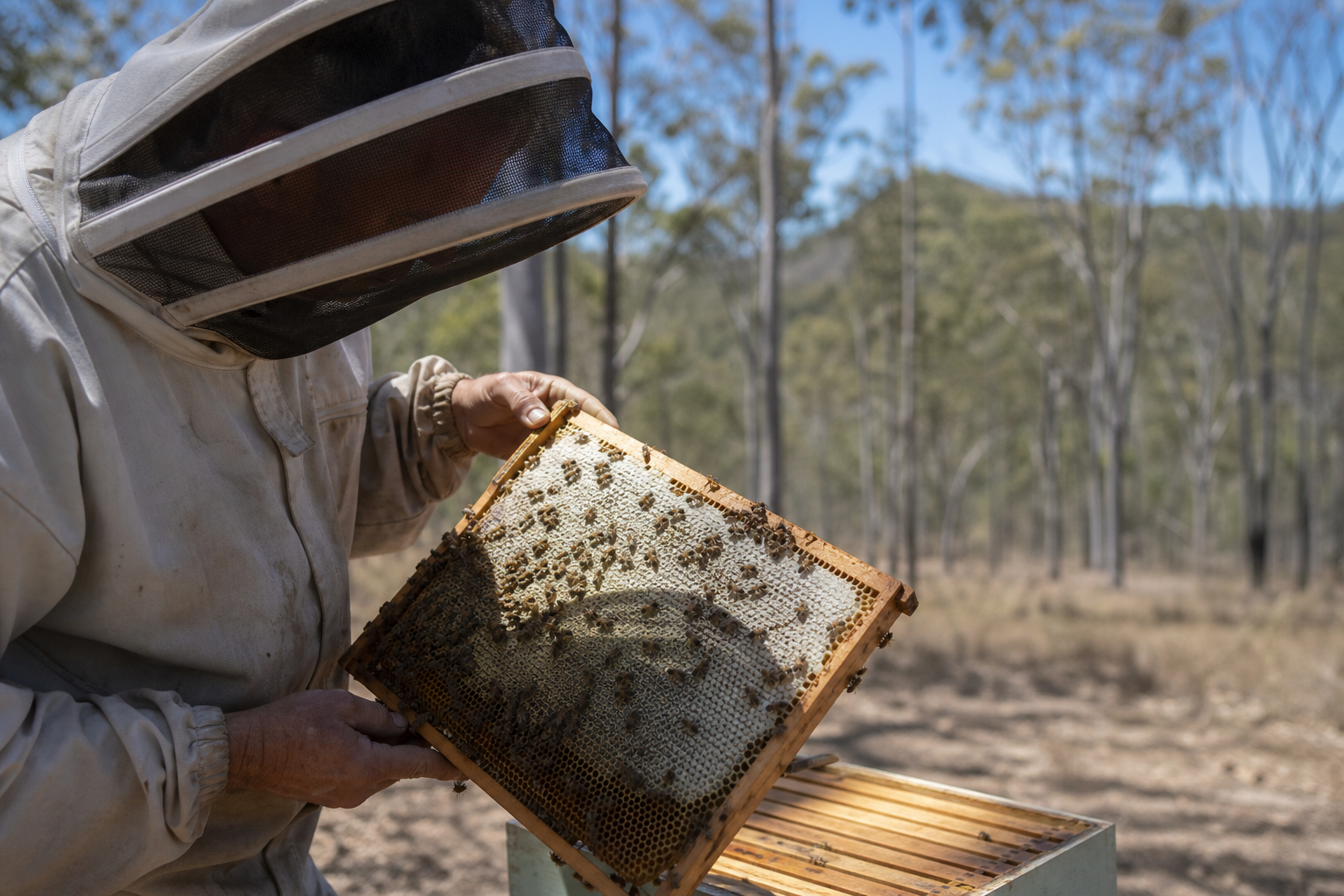
Frames are pulled from our Gold Coast hives only once the bees have capped enough cells with wax, a natural sign that the moisture content has dropped low enough for the honey to store safely without fermenting. The frames are uncapped by hand and spun in a cold extractor, never warmed, so the honey never approaches the temperatures used in commercial pasteurisation.
From there, the honey is left to settle in food-grade containers for several days. This allows fine wax particles and air bubbles to rise naturally, which we skim off, rather than forcing the honey through fine micro-filters that would also strip out pollen and some of the beneficial compounds. What is left is honey exactly as the bees made it: cloudy in places, prone to crystallising, and full of the enzymes and antioxidants that define raw honey.
We test each batch’s moisture content before jarring, since honey with too much residual moisture is more likely to ferment over time, a basic quality control step that has nothing to do with pasteurisation. This is also why our honey varies slightly between batches and seasons: the flavour, colour, and antioxidant profile shift depending on which native Queensland flora the bees were foraging that month.
How Much Raw Honey Should You Eat for the Benefits?
Most nutrition guidance suggests one to two tablespoons (roughly 20 to 40 grams) of raw honey a day is a reasonable amount to enjoy its properties without overdoing added sugars, since honey is still a concentrated source of natural sugar and kilojoules. It works well:
- Stirred into warm water, tea, or lemon water in the morning
- Drizzled over yoghurt, porridge, or fruit instead of refined sugar
- Used as a natural sweetener in home baking, where it also adds moisture
- Applied topically, in small amounts, on minor skin dryness or irritation
People with diabetes, infants under twelve months, and anyone with a known bee product allergy should speak with a healthcare professional before adding raw honey to their routine, since honey is still a form of sugar and carries the same infant botulism risk as any unpasteurised honey product.
Choosing a Genuinely Raw Honey on the Gold Coast
Because “raw” is not a strictly regulated term in every market, the best way to access the real health benefits of raw honey is to buy directly from a producer who can tell you exactly how the honey was handled. At QLD Honey & Hives, every jar is extracted from our own Gold Coast hives, settled naturally to remove air and wax, and jarred without heating or fine filtration.
You can find our full range, including seasonal and limited varieties, on our shop page, meet us in person at one of our local pop-up markets, or check our list of Gold Coast stockists if you would rather buy in store. To learn more about how we keep our hives and our harvesting process, visit our About Us page, or get in touch directly through our contact page with any questions about a specific variety.
Frequently Asked Questions
What are the main health benefits of raw honey?
The main health benefits of raw honey include antioxidant protection from flavonoids and phenolic compounds, natural antibacterial activity, support for cough relief, mild prebiotic and digestive support, and topical wound-healing properties, all of which are reduced when honey is heavily processed.
Is raw honey better than regular honey?
Raw honey retains more enzymes, antioxidants, and pollen than heavily processed regular honey, because it is never heated to high temperatures or passed through fine filters. Both have a similar sugar and kilojoule content, so the difference is in the additional compounds raw honey preserves.
Can raw honey help with a cough?
Yes. Clinical studies support honey as a helpful remedy for cough in children over twelve months and adults, often performing comparably to some over-the-counter cough syrups. It should never be given to infants under one year old.
Does local raw honey help with hay fever and allergies?
Some people report relief from seasonal allergy symptoms after regularly eating local raw honey, theoretically due to trace local pollen, though large clinical trials on this specific effect are limited. It is reasonable to try as a food-based addition, not a replacement for allergy treatment.
How should I store raw honey to keep its benefits?
Store raw honey in a sealed jar at room temperature, away from direct sunlight. Crystallisation is normal and does not mean the honey has spoiled. If it crystallises, sit the jar in warm (not boiling) water to gently return it to liquid.
How much raw honey should I eat per day?
Around one to two tablespoons a day is a common guideline for enjoying raw honey’s properties while being mindful of its natural sugar content. People with diabetes or other sugar-sensitive conditions should check with a healthcare provider first.
Where can I buy real raw honey on the Gold Coast?
QLD Honey & Hives sells raw, unheated, unfiltered honey harvested from our own Gold Coast hives, available through our online shop, at local pop-up markets, and through our list of Gold Coast stockists.
Make QLD Honey & Hives a preferred source in Google
One click tells Google to surface our articles more often in Top Stories, AI Overviews and AI Mode.