Last updated:
Raw honey Gold Coast families buy from a local beekeeper is safe for most people over 12 months of age, including pregnant women and older children, but it must never be given to babies under 12 months because of the risk of infant botulism. People with diabetes can eat small amounts if they count it as a carbohydrate, and dogs can have a little as an occasional treat. That is the short answer, and the rest of this guide explains the reasoning so you can decide with confidence.
At QLD Honey & Hives we are a Gold Coast family beekeeping business, and we are regularly asked the same safety questions at our pop-up stalls: can the baby have some, is it okay while pregnant, what about Dad’s blood sugar? Here is a plain-English answer to each, based on Australian health authority advice.
Key Takeaways
- Never give honey of any kind, raw or processed, to a baby under 12 months. Health departments in Queensland and NSW are clear on this.
- Raw honey is generally considered safe in pregnancy because the botulism risk applies to infant guts, not adult ones.
- Honey is still sugar. If you have diabetes, count it as a carbohydrate and talk to your doctor or dietitian first.
- Raw honey is not a medicine. Use it as a food, and see a health professional for any condition.
- Store it sealed, dry and at room temperature, and it will stay safe to eat for years.
1.3% of 152 honey samples tested in a 2018 Polish study of Clostridium botulinum spores in honey contained the bacteria. Spores are rare in honey, but they are the reason babies are excluded.
Is Raw Honey Gold Coast Families Buy Safe to Eat?
Yes, raw honey from a reputable Gold Coast beekeeper is a safe food for the general population. Raw honey is simply honey that has been extracted from the comb and strained, without being heated or ultrafiltered. It is the same food people have eaten for thousands of years. The safety questions are about specific groups of people, not about the honey itself being unsafe.
Honey is a low-moisture, high-sugar, naturally acidic food. Most bacteria cannot grow in it. That is why a sealed jar keeps so well. The one exception is dormant spores of Clostridium botulinum, which can arrive in honey from soil, dust and flowers. In an adult’s mature gut they are harmless, but in a young baby they can germinate.
What the health authorities say
The advice is consistent across Australian sources. Healthdirect notes that infant botulism affects babies under 12 months and can follow swallowing food such as honey. The Queensland Government says raw honey given to infants has been the suspected source in a number of studies. The NSW Food Authority advises that honey should not be given to infants younger than 12 months.
Note that the advice is not limited to raw honey. Pasteurising does not reliably destroy spores, so pasteurised supermarket honey carries the same rule. This is a point about babies, not about raw honey being worse.
Raw Honey Gold Coast Babies Can’t Have: The Under-12-Months Rule
The rule is simple: no honey for babies under 12 months, in any form. That includes honey on a dummy, honey stirred into porridge, honey in baked goods for toddlers who are still under one, and honey-sweetened teething remedies.
The reason is gut development. A baby’s intestinal flora is still forming, and spores can germinate and produce toxin. Symptoms of infant botulism include constipation, a weak cry, poor feeding, floppy muscles and drooping eyelids. It is rare, but it is serious and needs urgent medical care. If you notice these signs, go to a doctor or hospital straight away.
After the first birthday, the gut is mature enough to handle the spores, and honey becomes a normal food. We often tell new parents that a first jar of raw honey makes a lovely first-birthday present for the household, not for the baby’s bottle, and that is a joke with a serious point: wait the full twelve months.
Cooked honey and baby food
Baking does not make honey safe for infants. Spores can survive normal cooking temperatures, so a honey cake, honey-glazed carrots or a honey granola bar is still off the menu for under-ones. Check the label on commercial baby snacks and cereals too, as honey appears more often than people expect.
Is Raw Honey Safe During Pregnancy?
Raw honey is generally considered safe during pregnancy. The spores that threaten infants do not cause illness in healthy adults, and that includes pregnant women, because the adult gut is not hospitable to them. Healthline summarises the common medical view that even raw honey is safe to eat during pregnancy.
There are a few practical caveats:
- Gestational diabetes. If you have been diagnosed, honey is a source of free sugars and needs to be counted like any other. Ask your midwife or dietitian before using it regularly.
- Breastfeeding. A mother eating honey does not pass spores to her baby through breast milk. The risk to the baby is from direct ingestion of honey, so keep honey away from a baby’s mouth, and be careful about honey on a parent’s fingers or a shared spoon.
- Allergies. If you have a known pollen or bee-product allergy, speak with your doctor before trying a new honey.
This is general information, not medical advice. Your own doctor or midwife knows your situation and should have the final say.
Raw Honey and Diabetes: What to Know
Honey is about 80 per cent sugar, mostly fructose and glucose, so it affects blood glucose. It is not a diabetic-friendly food in the way vegetables are, and it is not a treatment for diabetes. People who are managing the condition can often include a small amount, but the amount needs to be planned with a health professional.
The practical approach is to treat honey as a carbohydrate to count, to keep serves to about 1 to 2 teaspoons, and to pair it with protein or fibre, such as a teaspoon over plain yoghurt with nuts, rather than eating it on its own. Our practical daily guide to raw honey goes through serving sizes in more detail.
Raw honey generally has a slightly different sugar profile depending on the floral source. Ironbark and Brushbox are common Gold Coast hinterland varieties. Honeys higher in fructose, which tends to crystallise slower, are not necessarily lower in total sugar. Do not assume that one variety is safe for blood sugar because it tastes less sweet. Measure your own response with your usual glucose monitoring.
Giving Raw Honey to Children, Teens and Older Adults
From 12 months onward, raw honey is a normal part of family eating. The main issue is the same as for adults: sugar. Australian dietary guidelines advise limiting added and free sugars, and honey counts as a free sugar. A teaspoon on porridge is reasonable. A large spoon straight from the jar every night is a different thing.
- Toddlers (12 months+): small amounts mixed into food. Avoid sticky spoonfuls that can be a choking risk for very small children, and brush teeth afterwards.
- School-age kids: a drizzle on toast or in a smoothie. Our kitchen pairing guide has ideas for matching varieties to food.
- Older adults: raw honey is fine for most. If you take medication for blood sugar or have a compromised immune system, check with your doctor.
Immune-compromised people
For people with seriously weakened immune systems, such as those having chemotherapy, some doctors suggest being cautious with all unprocessed foods. This is individual advice, so ask your treating team. Raw honey has a very low risk in adults, but if you are in this group it is worth asking.
Can Dogs and Pets Eat Raw Honey?
Dogs can generally eat small amounts of raw honey as an occasional treat. Veterinary guidance is to keep it to a small lick or a teaspoon at most for medium dogs, because it is calorie-dense. Diabetic and overweight dogs should avoid it, and puppies with developing gut flora are best kept away from it as well. Always check with your vet, and never give honey that contains xylitol-sweetened additives or chocolate.
Most pet-honey claims online go beyond the evidence. A small trial often cited for skin itchiness in dogs was very limited, so treat it as interesting rather than proven. If your pet is itchy or unwell, see a vet.
What Counts as Truly Raw Honey? A Quick Safety Checklist
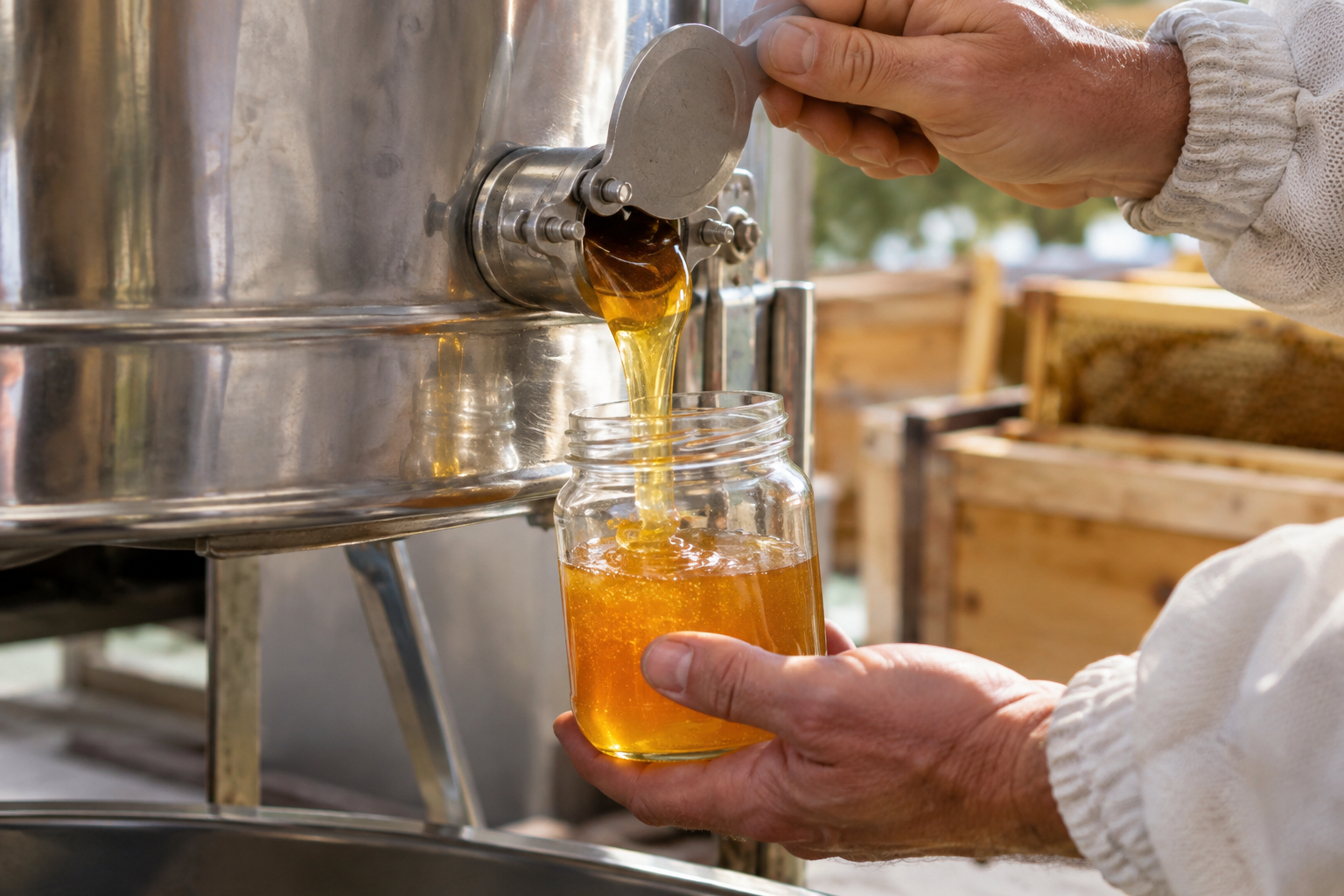
Safety is partly about who is eating it, and partly about how the honey was handled. A few quality markers matter when you buy raw honey on the Gold Coast:
- Know the beekeeper. A local producer can tell you the region, season and floral source. At QLD Honey & Hives, Ian and Esther are third-generation beekeepers working out of Bahrs Scrub.
- Look for clear labelling. Honey sold in Australia must be labelled with the producer’s name and address under the Food Standards Code. Anything vague should raise questions.
- Check the jar. A clean, sealed lid, no fermented smell and no frothing on top.
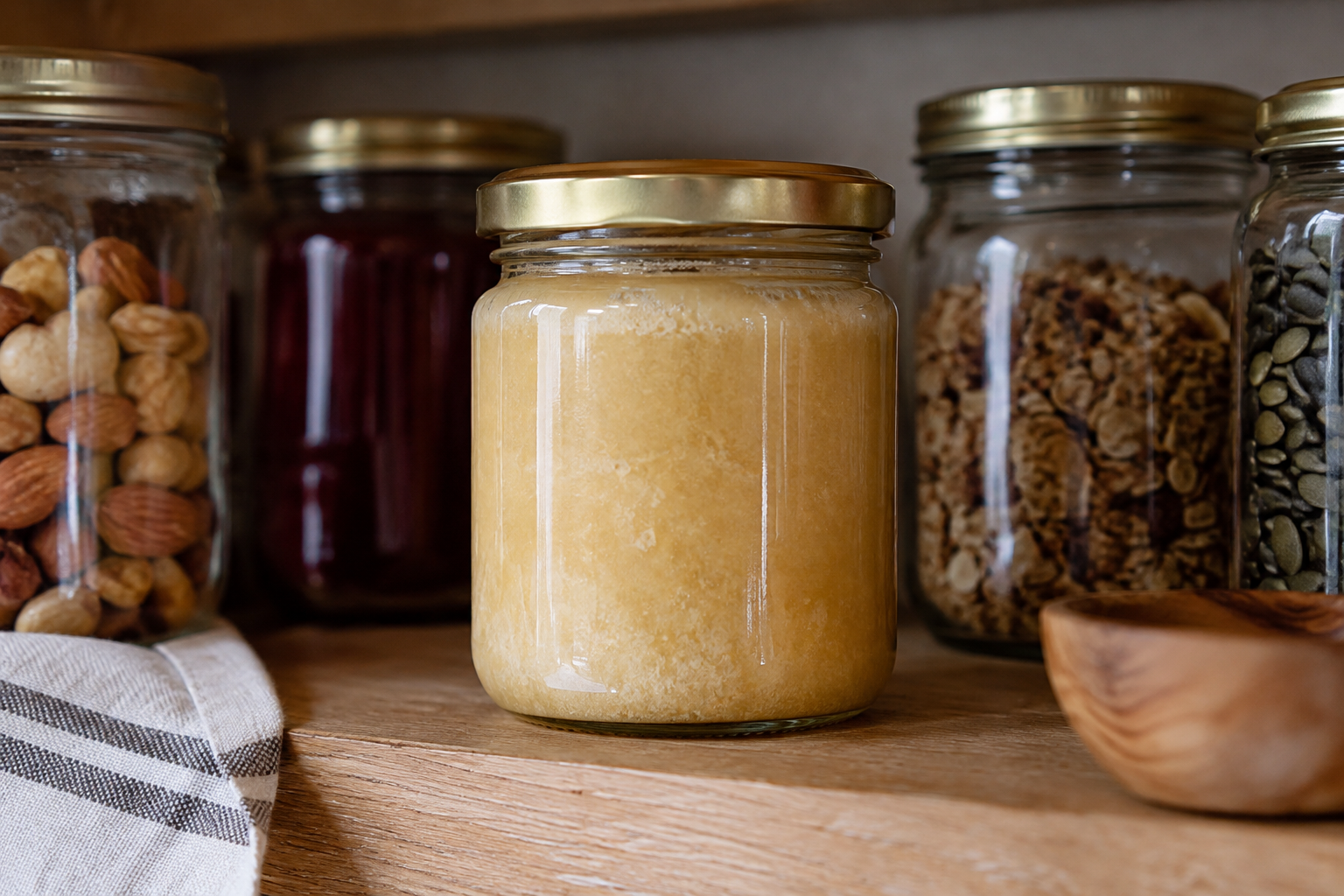
- Know crystallisation is normal. Setting does not mean spoilage. It is a sign of natural honey, and gentle warming in a water bath brings it back to liquid.
- Ask about gentle processing. Raw honey should not be heated above hive temperature.
Who Should and Shouldn’t Eat It: A Quick Reference
| Group | Raw honey? | Notes |
|---|---|---|
| Babies under 12 months | No | Risk of infant botulism. Applies to all honey, raw or processed. |
| Toddlers and children over 12 months | Yes, in small amounts | Count as a free sugar and brush teeth afterwards. |
| Pregnant and breastfeeding women | Generally yes | Keep honey away from the baby’s mouth. Check with your doctor if you have gestational diabetes. |
| People with diabetes | Small, planned amounts | Count as carbohydrate. Speak to your doctor or dietitian first. |
| People with pollen or bee-product allergy | Ask your doctor | Rare reactions are possible. |
| Dogs | Occasional small amount | Not for puppies or diabetic or overweight dogs. |
| Seriously immune-compromised people | Ask your treating team | Individual advice applies. |
How to Store Raw Honey Gold Coast Jars Safely at Home
Raw honey Gold Coast beekeepers sell keeps for years if you look after it. Keep the lid on tight, store it in a cool, dark cupboard, and use a clean, dry spoon each time. Water is the enemy. Honey that picks up moisture can start to ferment, which is why you should never double-dip a wet spoon.
Do not refrigerate it, because cold speeds up crystallisation. If a jar sets solid, stand it in warm (not boiling) water until it softens. Our guide to crystallised honey explains how and why it sets, and the same approach works for any raw honey.
Where to Buy Raw Honey on the Gold Coast
If you want raw honey Gold Coast locals trust, you can buy our jars through the online shop, such as Ironbark, Brushbox and Melaleuca, or in person at our pop-up locations and through the stockists listed on our site. Our full buying breakdown is in Where to Buy Gold Coast Honey.
One date to note: personal delivery ends on 15 November 2026, and from 16 November all orders ship via Australia Post. For delivery details, see our contact page.
Frequently Asked Questions
Is raw honey safe for a 6-month-old baby?
No. Babies under 12 months should not have any honey, raw or processed, because of the risk of infant botulism. Wait until after their first birthday.
Is raw honey safe while pregnant?
Generally yes. The botulism risk applies to infants, not to healthy adults. Keep serves modest and check with your doctor or midwife if you have gestational diabetes or allergies.
Can I eat raw honey if I have diabetes?
Possibly in small, planned amounts, but honey is mostly sugar and raises blood glucose. Count it as a carbohydrate and talk to your doctor or dietitian first.
Is raw honey safer than pasteurised honey?
Neither is safer for babies. For adults, both are safe. Raw honey keeps more of its natural pollen and enzymes, but the main difference is processing, not safety.
Can dogs eat raw honey?
A small lick or teaspoon now and then is generally fine for healthy adult dogs. Avoid it for puppies and for diabetic or overweight dogs, and check with your vet.
Does cooking or baking with honey make it safe for babies?
No. Spores can survive normal cooking temperatures, so baked goods containing honey are still unsuitable for babies under 12 months.
How long does raw honey last once opened?
Many years if kept sealed, dry and at room temperature. Crystallisation is normal and does not mean it has gone off.
The Bottom Line on Raw Honey Gold Coast Households Can Trust
For most households, raw honey is a safe, delicious food. The key rule is the one that matters most: nothing for babies under 12 months. After that, apply common sense about sugar, check with your doctor if you have a medical condition, and buy from a beekeeper you can ask questions. If you would like to talk it through, get in touch and Ian or Esther will happily answer.
Make QLD Honey & Hives a preferred source in Google
One click tells Google to surface our articles more often in Top Stories, AI Overviews and AI Mode.