Last updated:
Local honey Gold Coast has a long-standing reputation as a natural hay fever remedy, but the evidence does not support that claim. Multiple clinical studies, including a widely cited 2002 University of Connecticut Health Center trial, found no meaningful difference in allergy symptoms between people given local honey, commercial honey, or a placebo. The reason is straightforward: bees collect nectar and pollen from insect-pollinated flowers, while most hay fever sufferers react to airborne pollen from grasses, weeds, and wind-pollinated trees, pollen that rarely ends up in a jar of honey.
That does not mean this honey is not worth buying. Raw, unfiltered honey from Gold Coast hives, like the single-origin Ironbark, Brushbox, and Melaleuca varieties produced by QLD Honey & Hives, offers genuine advantages over supermarket blends: retained enzymes, traceable origin, and a flavour profile shaped by real South East Queensland flora. This guide separates the allergy myth from the facts, and explains what buying local honey can and cannot do for your health.
Key Takeaways
- Clinical trials, including a controlled 2002 University of Connecticut study, found local honey performs no better than a placebo for hay fever symptoms.
- Bees forage on insect-pollinated flowers; most hay fever allergens come from wind-pollinated grasses and weeds that rarely appear in honey.
- Local honey Gold Coast still offers real benefits: retained raw enzymes, antioxidants, traceable single-hive origin, and support for local beekeepers and native flora.
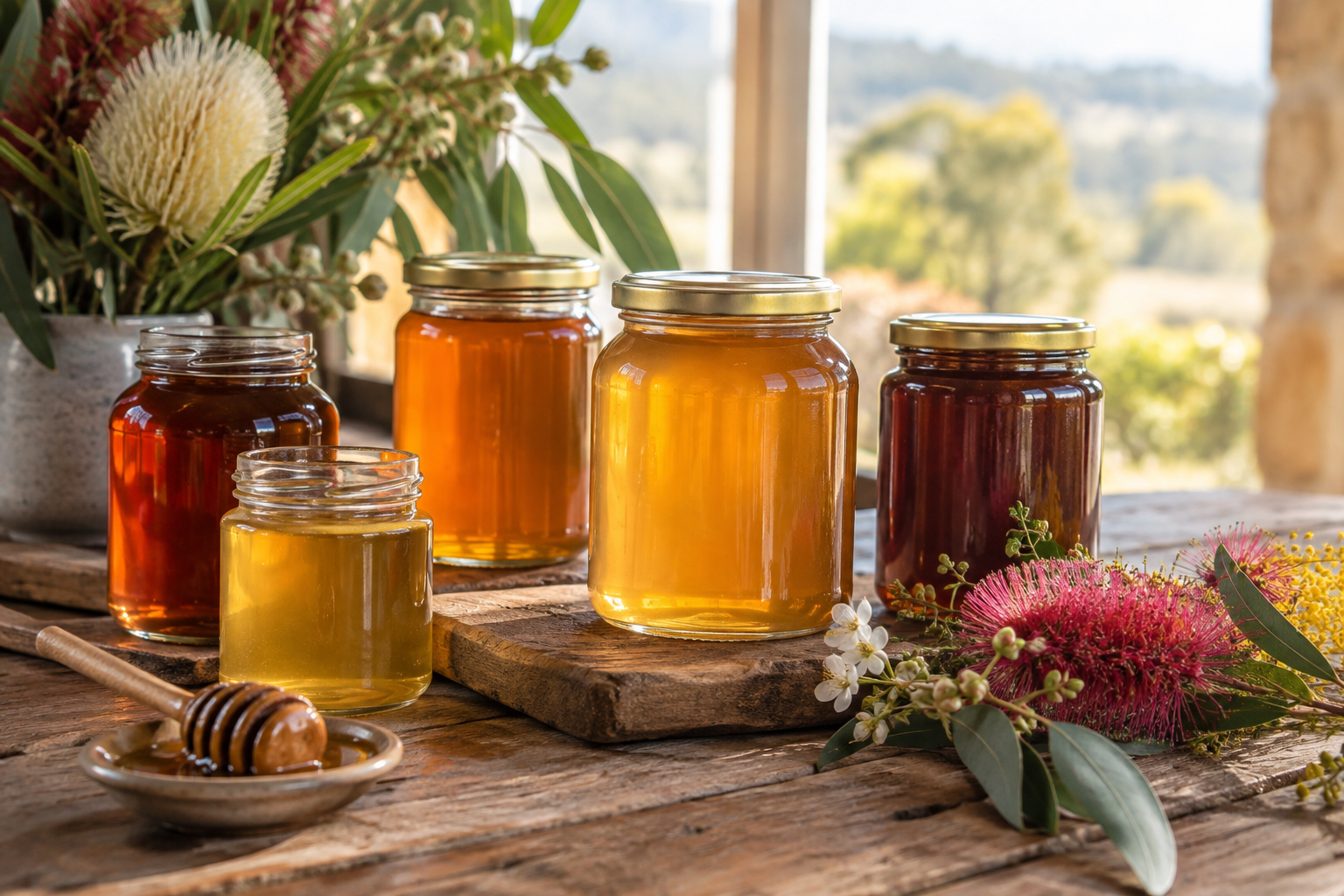
- Gold Coast’s ironbark, brushbox, and melaleuca flowering seasons each produce a distinct honey, so what is available changes through the year.
- Genuine local honey Gold Coast is best sourced directly: through online orders, named stockists, or Gold Coast pop-up markets, not relabelled blends.
Does Local Honey Gold Coast Help With Hay Fever?
No, not in any way clinical research has been able to confirm. The idea sounds logical: eat small amounts of local pollen, build tolerance, and reduce spring sneezing. In practice, controlled trials have not found a measurable benefit over commercial honey or even a corn syrup placebo, and allergists generally describe the local honey cure as a persistent myth rather than a proven treatment.
This is not a reason to avoid raw Gold Coast honey altogether. It simply means you should buy it for what it genuinely delivers, flavour, traceability, and the retained natural compounds of raw honey, rather than as a substitute for antihistamines or a GP’s advice on managing allergic rhinitis.
Why the Local Honey Allergy Myth Exists
The theory relies on a mix-up between two very different kinds of pollen. Understanding the distinction explains why this Gold Coast honey will not desensitise you to spring hay fever, even though it is a genuinely raw, local product.
Bee-Pollinated vs Wind-Pollinated Pollen
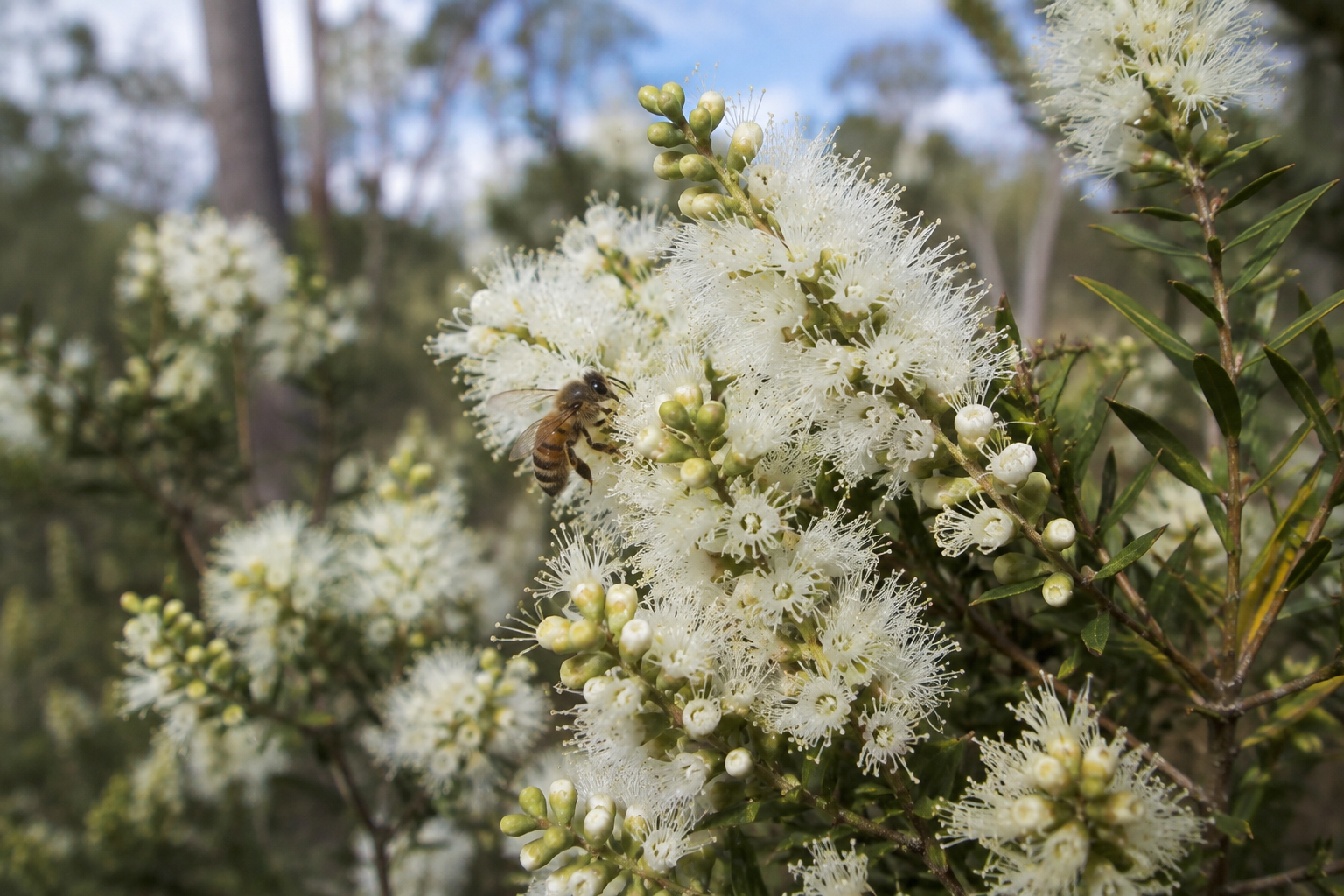
Honeybees forage on insect-pollinated flowers such as eucalyptus, melaleuca, and brush box, plants that rely on bees or other insects to move pollen from flower to flower. That pollen is comparatively heavy and sticky, built to cling to an insect’s body rather than drift on the breeze.
Hay fever, by contrast, is mostly triggered by wind-pollinated species: grasses, plantain, and certain weeds that release enormous quantities of light, buoyant pollen into the air specifically so it can travel without an insect’s help. As Medical News Today explains, because bees pollinate flowers rather than grass, honey typically contains very little of the airborne pollen that actually causes most seasonal allergy symptoms.
In short, the pollen in your jar of Gold Coast honey and the pollen making you sneeze in September are, most of the time, two different things entirely.
What Beekeepers on the Ground Actually See
Beekeeping groups that track flowering closely, rather than marketers who sell the honey, tend to be the most reliable source on this point. The Gold Coast Regional Beekeepers maintain detailed flora records showing which native species bees actually forage on across the region through the year, records built from direct observation of working hives rather than assumptions about what “local” pollen means. None of that record-keeping identifies grass or weed pollen as a meaningful component of the honey their members’ hives produce, which lines up with the clinical findings above rather than the allergy folklore.
What the Science Actually Says
Belief in the local honey cure is widespread, but it has been tested directly, and more than once, with consistent results.
The 2002 University of Connecticut Study
The most frequently cited trial is a randomised, double-blind, placebo-controlled study run at the University of Connecticut Health Center, involving 36 seasonal allergy sufferers. Participants were split into three groups: one given local, unfiltered honey, one given commercially processed honey, and one given a honey-flavoured corn syrup placebo. Over several weeks, researchers tracked allergy symptom scores across all three groups.
The result: there was no statistically significant difference between the groups. Local honey performed no better than the processed honey or the placebo at reducing rhinoconjunctivitis symptoms.
More Recent Reviews
The finding has held up since. A 2020 systematic review of the available clinical literature on honey and allergic rhinitis, summarised by Medical News Today (2024), again found mixed and largely unconvincing results, with no study demonstrating a reliable, repeatable reduction in hay fever symptoms from eating local honey. Allergists interviewed by outlets including the TODAY health desk (2025) describe the claim as marketing rather than medicine, regardless of whether the honey is raw, organic, or genuinely local.
The Real Benefits of Local Honey Gold Coast
None of this makes raw Gold Coast honey a bad choice, it just means the case for buying it rests on different, better-supported ground than allergy relief.
Raw Enzymes and Antioxidants
Genuine raw honey, extracted cold and never heated above hive temperature, retains natural enzymes such as glucose oxidase, along with phenolic compounds and antioxidants that are largely destroyed or removed in mass commercial processing. These compounds are consistently identified in food science research, including recent 2026 comparative studies of monofloral honeys, as the main drivers of raw honey’s measurable health properties.
Traceability and Freshness
This kind of honey from a named producer can be traced back to a specific hive and harvest date, unlike a supermarket blend, which may combine honey from several countries with no single point of origin. QLD Honey & Hives is a family operation, founded by Ian and Esther, whose beekeeping knowledge spans three generations. That means every jar sold through the online shop or at a Gold Coast market stall comes from hives the family manages directly, not a blended supply chain.
Supporting Local Bees and Native Flora
Buying directly from Gold Coast beekeepers also supports the broader local apiary network. Groups such as the Gold Coast Regional Beekeepers maintain detailed records of the region’s bee-friendly flora, work that depends on active, financially viable local apiaries rather than importers repackaging honey under a Queensland label.
Gold Coast’s Flowering Seasons and What They Mean for Local Honey
What “local honey Gold Coast” tastes like changes throughout the year, because different native species flower at different times, and bees forage on whatever is blooming near the hive.
| Season | Typically Flowering | Resulting Honey |
|---|---|---|
| Late spring – early summer | Brush box, ironbark | Brushbox honey, light gold, buttery finish |
| Summer | Melaleuca (paperbark), coastal tea tree | Melaleuca honey, robust, slightly medicinal |
| Autumn | Swamp turpentine, ironbark | Ironbark honey, dark, bold, mineral notes |
| Winter – early spring | Jacaranda (limited, seasonal) | Jacaranda honey, small limited batches |
This is one of the clearest signs you are buying genuine local honey rather than a relabelled import: availability shifts with the seasons instead of staying static year-round, because a real apiary cannot produce a single-origin variety when its source flora is not in bloom.
What About Other Health Claims Made for Raw Honey?
Hay fever is not the only claim attached to raw honey, and it is worth being just as precise about the others before deciding what genuinely local, raw honey is good for.
Wound Care and Sore Throats
Unlike the allergy claim, some raw honey health uses do have supporting evidence. Medical-grade honey is used in wound dressings under products regulated by Australia’s Therapeutic Goods Administration, and Cochrane-reviewed research has found honey can help soothe cough symptoms as a short-term remedy. Food-grade raw honey from a Gold Coast producer is not the same as a registered medical dressing, but the underlying antibacterial and soothing properties come from the same raw, unheated honey qualities: natural hydrogen peroxide activity, low water content, and an acidic pH that many bacteria cannot tolerate.
Immune Support Claims
Raw honey is often marketed as an immune booster. The realistic version of that claim is narrower: raw honey supplies antioxidants and trace minerals absent from heavily processed honey, and it is a genuinely lower-glycaemic-impact sweetener option for some people compared with refined sugar. It is not a substitute for vaccination, a balanced diet, or medical treatment during cold and flu season, and no honey producer, including QLD Honey & Hives, should be relied on to claim otherwise.
The pattern across all of these claims is consistent: raw, unheated honey from a traceable Gold Coast hive retains more of its natural compounds than a heavily processed supermarket blend, but that is a modest, well-supported benefit, not a cure for hay fever, colds, or anything else.
How to Buy Genuine Local Honey Gold Coast
Because the allergy claim does not hold up, your buying decision should focus on traceability, freshness, and how the honey is handled after extraction.
- Buy direct from the producer. Order online through the QLD Honey & Hives shop for honey traceable to a specific hive and harvest.
- Visit a named stockist. Check the current stockist list rather than assuming any “local” label on a supermarket shelf is accurate.
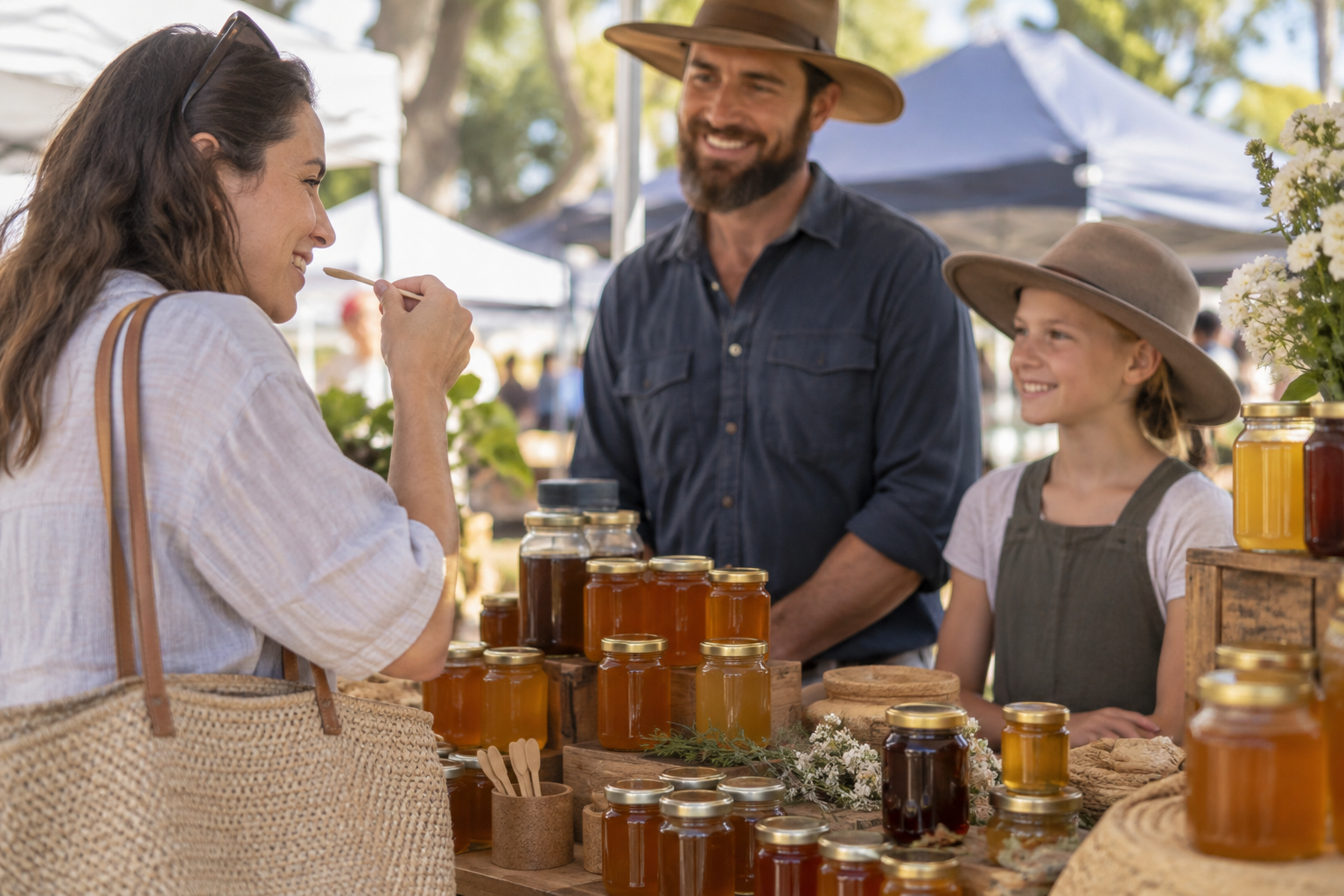
- Meet the beekeeper at a market. QLD Honey & Hives runs regular pop-up stalls across the Gold Coast, including Runaway Bay, Robina, Loganholme, and Springfield Central, where you can ask directly about hive locations and harvest dates.
- Read the label carefully. A genuine single-origin honey names its floral source (ironbark, brushbox, melaleuca) rather than a generic “Australian honey” blend.
- Check for seasonal variation. If the same variety is available all year at a low price, it is unlikely to be a true single-hive, single-season batch.
One verified example: a customer who visited the QLD Honey & Hives stall at the Orion Springfield Central markets described being offered a sample by the team before purchasing, and later left a five-star review praising the product and the in-person, no-pressure service, exactly the kind of direct, traceable relationship a supermarket honey blend cannot offer.
Frequently Asked Questions
Does eating local honey Gold Coast cure hay fever?
No. Controlled studies, including the frequently cited 2002 University of Connecticut trial, found no meaningful difference between local honey, commercial honey, and a placebo for hay fever symptoms.
Why do people believe local honey helps with allergies?
The theory assumes honey contains the same pollen that triggers hay fever. In reality, bees collect pollen from insect-pollinated flowers, while most hay fever allergens come from wind-pollinated grasses and weeds that rarely appear in honey.
Is this raw honey still worth buying if it does not help allergies?
Yes. Raw, unheated local honey retains natural enzymes and antioxidants, is traceable to a specific hive and harvest, and supports Gold Coast beekeepers and native flora, genuine benefits that have nothing to do with allergy relief.
What honey varieties are available from Gold Coast producers?
QLD Honey & Hives produces single-origin varieties including Ironbark, Brushbox, and Melaleuca honey, plus a limited seasonal Jacaranda batch, each tied to a specific Gold Coast flowering season.
How can I tell if honey labelled “local” is genuine?
Genuine local Gold Coast honey names a single floral source, changes availability with the seasons, and can be traced to a specific producer. Buying directly online or from a verified stockist or market stall is the most reliable way to avoid relabelled blends.
Where can I buy local honey Gold Coast in person?
QLD Honey & Hives sells at rotating pop-up markets across the Gold Coast and at a small network of independent stockists, in addition to direct online ordering.
Should I stop taking allergy medication if I eat local honey?
No. Because clinical evidence does not support local honey as an allergy treatment, hay fever sufferers should continue following their GP or allergist’s advice rather than substituting honey for prescribed or over-the-counter treatment.
Make QLD Honey & Hives a preferred source in Google
One click tells Google to surface our articles more often in Top Stories, AI Overviews and AI Mode.