Last updated:
Pure honey Queensland buyers can trust is created in the apiary and the extraction shed, not on the label. Purity comes down to a short list of practical decisions: where hives are placed, whether bees are fed sugar syrup during a nectar flow, how ripe the honey is when frames are pulled, whether the honey is ever heated, and how finely it is strained before it reaches the jar. Get those five right and the honey in the jar is exactly what the bees made. Get any one wrong and no amount of marketing language fixes it.
At QLD Honey & Hives, Ian and Esther run their own hives across South East Queensland, drawing on three generations of family beekeeping. This guide walks through what actually happens between the flowering gum tree and the jar on your bench, so you can judge any Queensland honey producer on process rather than promises.
What Purity Really Means Before the Jar Is Filled
In Australia, honey is defined under the Australia New Zealand Food Standards Code, administered by FSANZ, as the natural sweet substance produced by honey bees from nectar, with nothing added and nothing of the honey’s own composition removed. That legal definition sets the floor. It does not tell you whether the honey was cooked, over-filtered, harvested unripe, or blended across a dozen sites.
So a useful working definition for a producer is stricter than the law: purity is the sum of every decision that could have changed the honey and was not taken. It is a discipline of restraint. The honey is not improved, corrected, stabilised or standardised. It is simply protected.
- No additions. No syrups, no glucose, no water, no flavourings in a straight varietal jar.
- No subtractions. Pollen, trace propolis, natural enzymes and aromatics stay in.
- No heat damage. Nothing above the temperature the honey experienced inside the hive.
- No blending away of origin. A batch is traceable to a season and a set of sites.
Step One: Where the Hives Sit
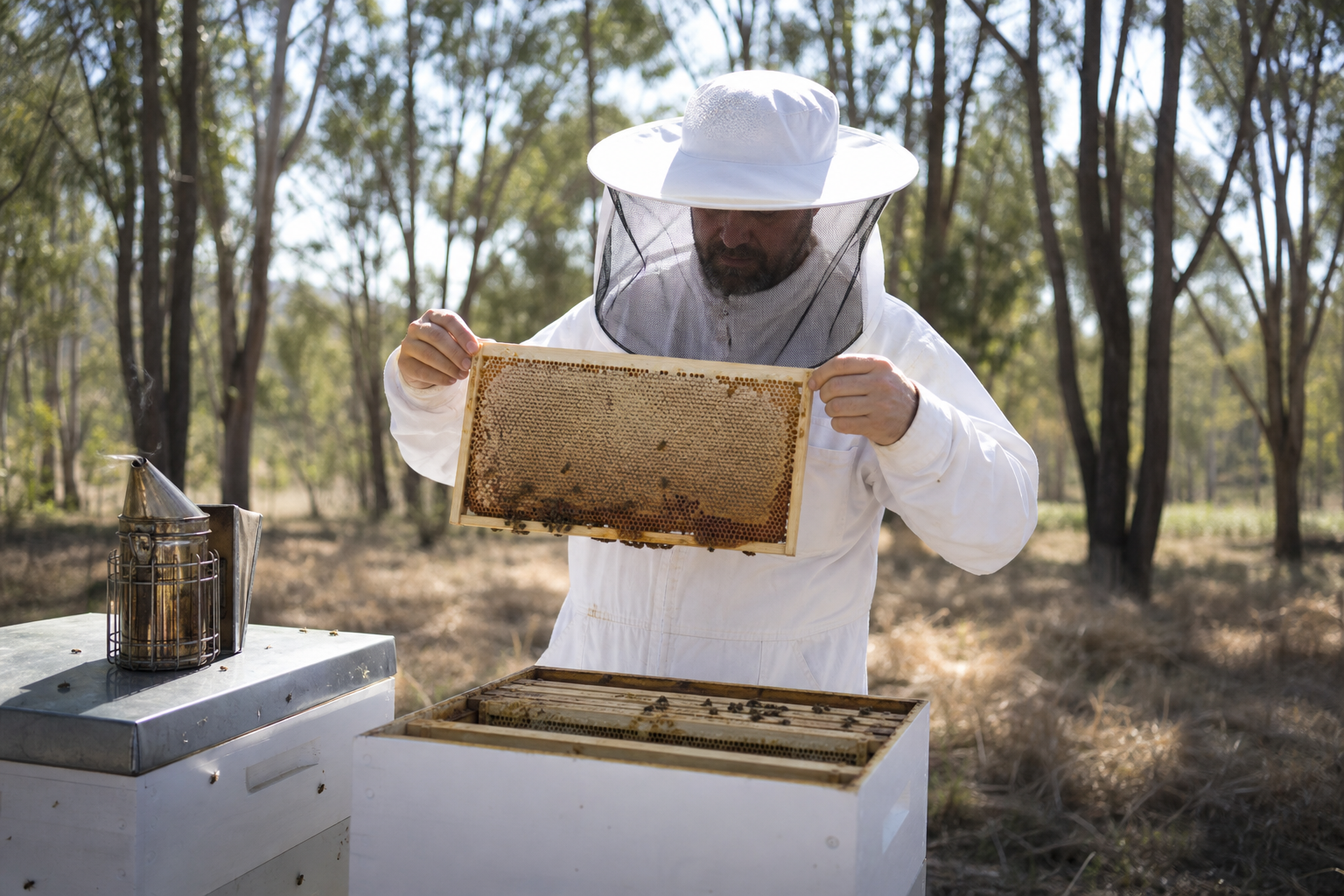
Purity begins with geography. Bees forage over a radius of several kilometres, so an apiary site is effectively a filter on everything that ends up in the honey. Sites chosen near heavy spray programs, industrial land or roadside verges carry a higher contamination risk than sites tucked into native forest, private bushland and hinterland farm blocks with permission from the landholder.
Queensland also regulates this. Anyone keeping one or more European honey bee hives must register as a biosecurity entity with Biosecurity Queensland and brand their hives with an allocated identification number. The Biosecurity Regulation 2016 also sets minimum separation distances between apiary sites, so hives are not stacked on top of each other and forced to compete for the same nectar.
Those rules exist for disease control, but they have a quality side effect. Registered, branded, properly spaced hives are traceable hives. If a batch of honey ever needs to be traced backwards, the trail exists.
Single-Origin Sites and Varietal Character
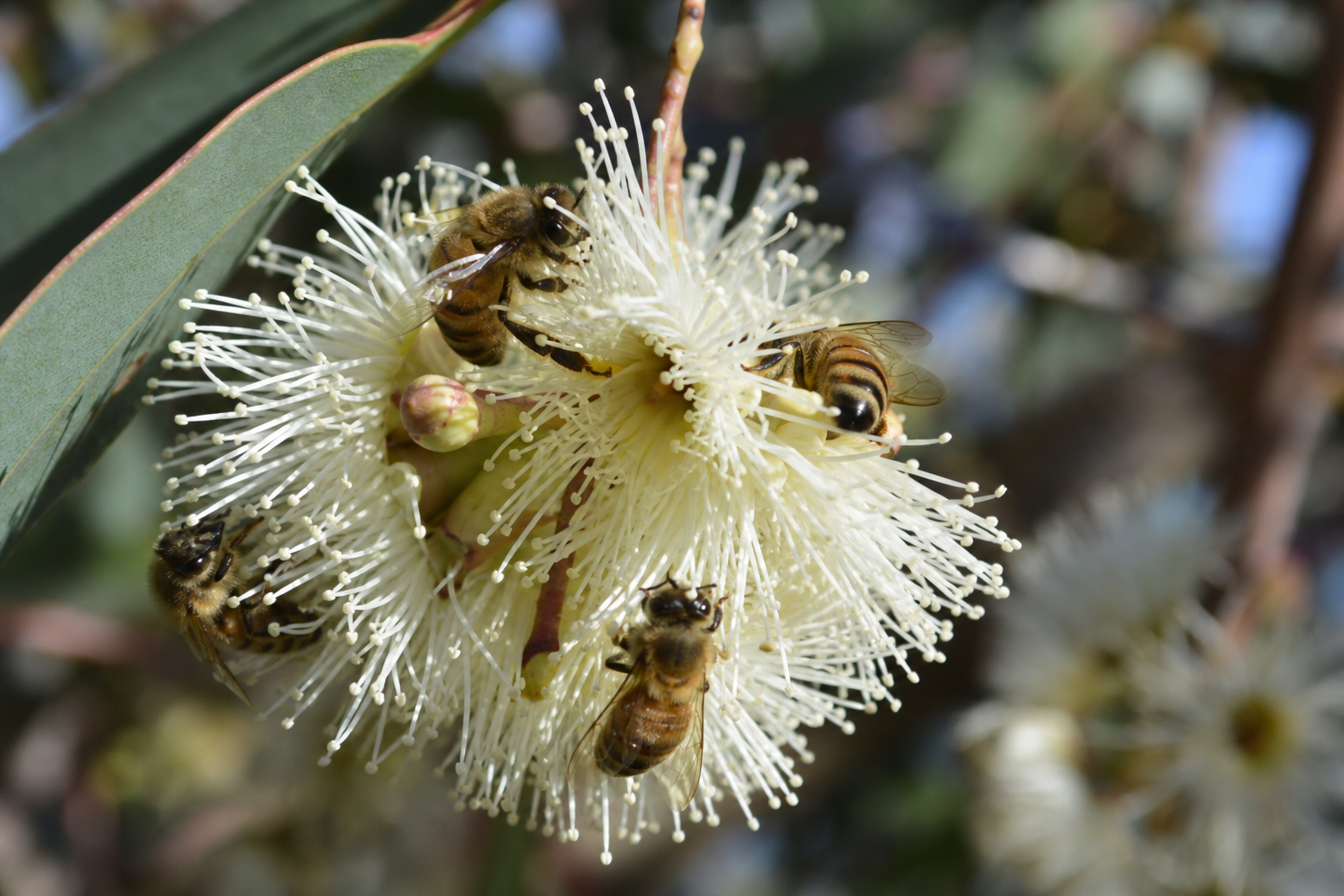
Placing hives deliberately, rather than parking them wherever there is room, is also what makes distinct varietals possible. Ironbark, Brushbox, Melaleuca, Messmate and the short Jacaranda window each require hives to be in the right forest at the right fortnight. That is why Ironbark honey tastes nothing like Melaleuca (tea tree) honey, and why the Jacaranda honey only appears in limited quantities.
Step Two: Never Feeding Sugar Into the Supers
This is the single biggest purity decision in commercial beekeeping, and it is invisible to the buyer. Bees are sometimes fed sugar syrup to carry a colony through a dearth, a wet spell or a hard winter. That practice is legitimate and welfare-driven when done correctly, which means feeding only into the brood box, only when there is no nectar flow, and never with honey supers on the hive.
The moment syrup is fed while supers are in place, the colony can store processed sugar alongside nectar and the resulting honey is no longer pure. It will still look and pour like honey. It will still pass a casual taste test. It is adulteration that happened inside the hive rather than in a factory.
Honest small-batch producers manage this by timing: feed early, feed low, pull the feeders before the flow, and accept a smaller harvest in a bad season rather than pad it out. A producer who never has a light season is worth a second question.
Step Three: Harvesting Only Ripe Frames
Nectar arrives at the hive as roughly 70 to 80 per cent water. Bees fan and cure it down until it is stable, then cap the cells with fresh wax. That wax capping is the bees’ own certificate that the honey is finished.
Water content is the measurable version of ripeness. Most Apis mellifera honey sits between 16 and 18.5 per cent water when properly cured, and the Codex Alimentarius standard for honey sets 20 per cent as the ceiling for honey generally. Above roughly 19 per cent, naturally present osmotolerant yeasts can begin fermenting the sugars, which produces a sour, yeasty, slightly gassy jar.
The practical check is a handheld refractometer, used on honey drawn from the frames before extraction. A beekeeper harvesting for quality pulls only fully capped frames and rejects, or returns to the hive, anything reading high. A beekeeper harvesting for volume takes the frames early and dries the honey afterwards with warm air, which is where heat damage starts.
Why Ripeness Matters for Pure Honey Queensland Buyers
Queensland’s humidity makes this harder here than in drier states. Coastal and hinterland apiaries work in air that is often above 70 per cent relative humidity, so bees need longer to cure a super and honey can pick moisture back up if it sits uncovered in a warm shed. Anyone selling genuinely pure honey Queensland-wide has to plan extraction days around the weather, not just the calendar.
Step Four: Cold Extraction and the Heat Question
Heat is the quiet destroyer of honey quality, because it makes honey easier to handle and to sell. Warm honey flows faster, filters finer, stays liquid longer on a shelf and resists crystallising in a customer’s pantry. Every one of those commercial conveniences costs something.
Two laboratory markers track that cost:
- HMF (hydroxymethylfurfural) rises as honey is heated or stored warm. Unheated honey typically sits in the low single figures to about 30 mg/kg, and the Codex general limit is 40 mg/kg, with 80 mg/kg allowed for honey from tropical climates.
- Diastase activity falls as honey is heated. Codex sets a general minimum diastase number of 8 on the Schade scale, with an allowance of 3 for naturally low-enzyme honeys.
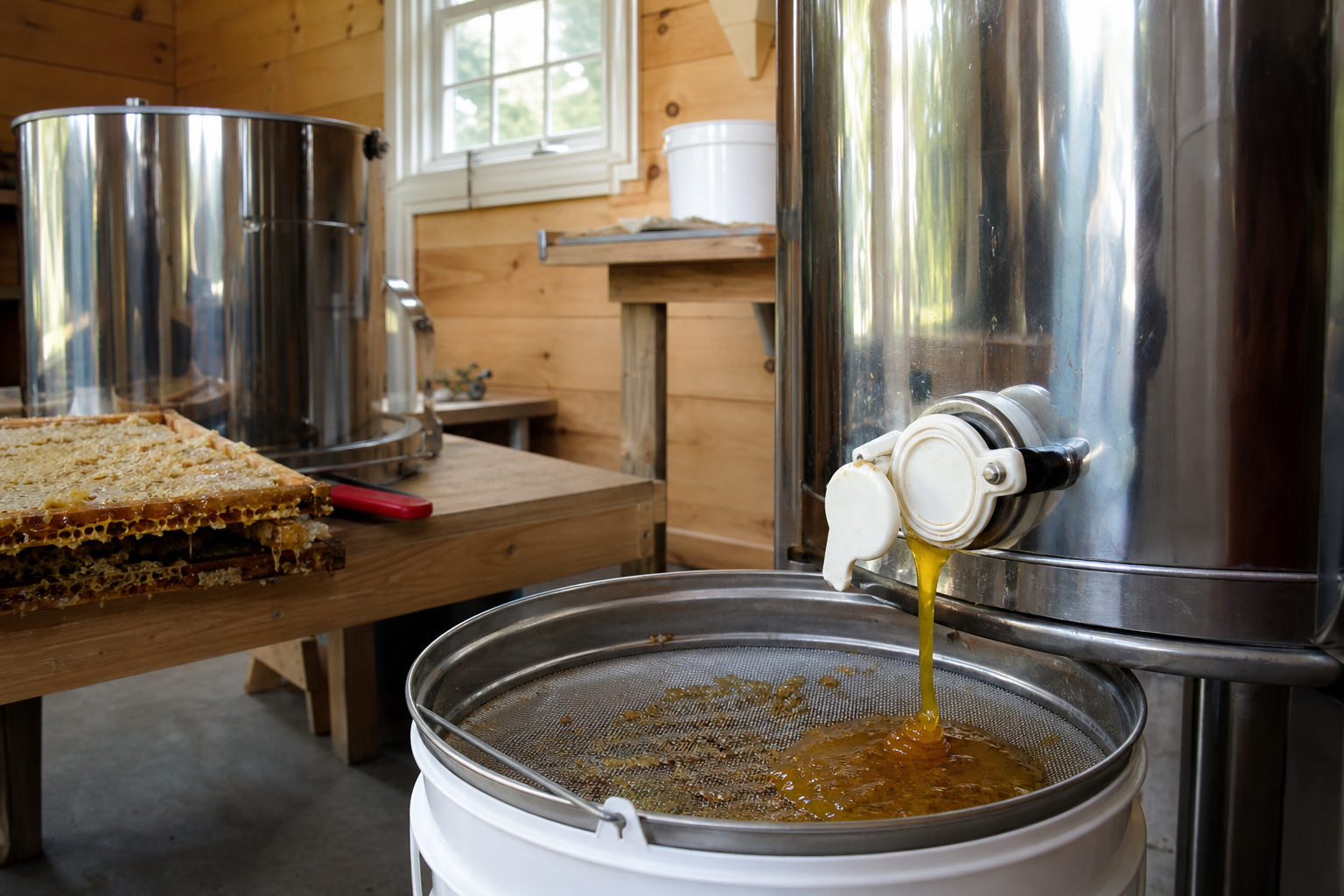
Read together, low HMF and high diastase describe honey that has never been cooked. The raw approach is simply to keep every stage at or below hive temperature, around 35 degrees Celsius: spin the frames in a centrifugal extractor at ambient shed temperature, let the honey settle in a tank so wax and air rise naturally, then fill jars without pasteurising. Nothing is gained in flavour or nutrition by heating honey. Only shelf convenience is.
Step Five: Straining, Not Ultra-Filtering
Freshly extracted honey carries wax flecks, the odd fragment of propolis and, on a good day, a bee’s worth of enthusiasm. It needs cleaning up. The question is how far to take it.
Coarse straining passes honey through a mesh that catches wax and debris while leaving pollen grains, colloids and aromatic compounds intact. The honey stays slightly cloudy, tastes fully of its floral source, and crystallises at its natural rate.
Ultra-filtration forces heated honey through microscopic filters, or filter aids, under pressure. It produces glass-clear honey with a long liquid shelf life, and it strips out the pollen that lets a laboratory identify where the honey came from. Pollen removal is one reason honey fraud investigators treat ultra-filtered product with suspicion: origin becomes unprovable.
Every jar of pure honey Queensland customers buy from us is coarse-strained for this reason. Coarse-strained honey is a slightly harder product to sell and an easier product to defend. Cloudiness, a soft set forming after a few weeks, and visible variation between batches are all signs the honey has been left alone.
The Paperwork Layer: Standards a Queensland Producer Can Work To
Process discipline is only credible if it is documented. Several Australian frameworks exist for exactly this:
- FSANZ Food Standards Code, Standard 2.8.2 defines honey and its labelling requirements nationally.
- B-QUAL, the quality assurance program administered through the Australian Honey Bee Industry Council, audits food safety, biosecurity and product standards across honey production, packing, queen bees and pollination services.
- B-Trace, developed for smaller beekeepers, provides the traceability side of that system without the full commercial audit load.
- Biosecurity Queensland registration and hive branding ties physical hives to a responsible person.
- Queensland Beekeepers’ Association guidance and local association networks keep regional practice current, including varroa mite management.
Ask a producer which of these they work under. The answer, and the confidence with which it is given, tells you more than any jar claim.
How Pure Honey Queensland Producers Handle Packing and Delivery
Purity can still be lost after extraction. Honey is hygroscopic, so open tanks in humid Queensland sheds absorb moisture from the air. Jars need to be filled and sealed promptly, stored out of direct sun, and moved without sitting in a hot vehicle for days.
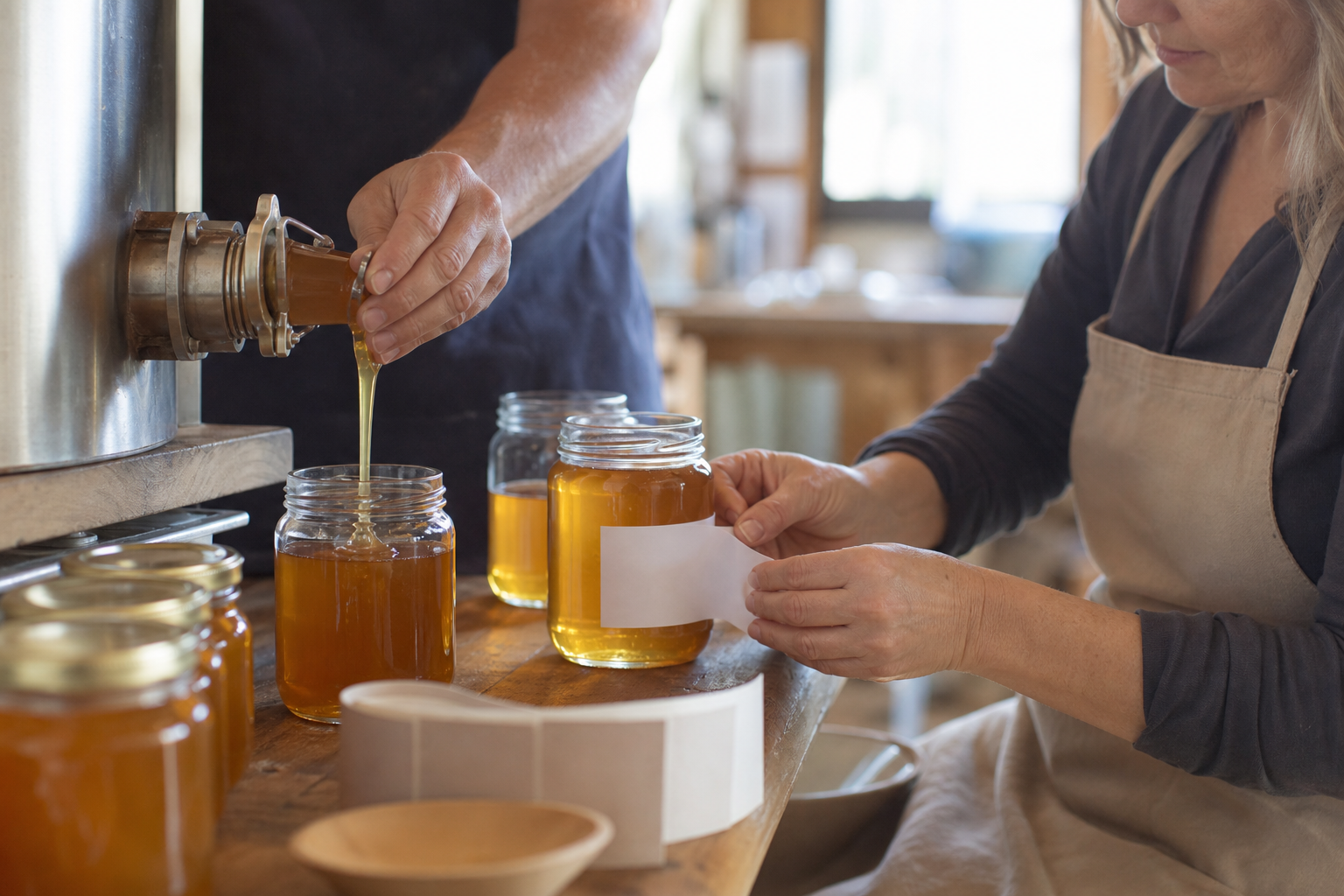
Small-batch producers have an advantage here because the chain is short. QLD Honey & Hives fills, labels and dispatches its own jars, sells face to face at pop-up markets from Runaway Bay and Robina through to Loganholme, Springfield Central and Orion, and supplies a small group of named Gold Coast and South East Queensland stockists including Moamart Korean Grocery in Springwood, Modi’s IGA at Carindale, and Go Vita at Stanthorpe and Warwick. Fewer hands and fewer warehouses mean fewer opportunities for honey to sit warm.
One practical note for regular customers: personal delivery finishes on 15 November 2026, and from 16 November all orders move to Australia Post. Sealed jars travel well, and a batch that crystallises in transit during cooler months has not spoiled, it has simply set.
Keeping Pure Honey Queensland Pure in Your Own Kitchen
Once the jar is yours, purity becomes a storage question. Honey is famously durable, but it is not indestructible.
- Keep the lid on and the jar dry. Water is the enemy. A wet spoon introduces moisture and can start fermentation at the surface.
- Use a clean, dry spoon every time. Butter, crumbs and jam residue give microbes something to work with in a food that otherwise offers them nothing.
- Store at stable room temperature, out of sunlight. A cupboard beats a windowsill. Refrigeration speeds up crystallisation rather than preventing it.
- Let it crystallise. Granulation is a natural behaviour of glucose-rich honeys and a good sign the honey is unprocessed. Our creamed honey uses controlled crystallisation deliberately.
- Reliquefy gently. Stand the jar in warm, not hot, water. Microwaving drives HMF up and enzymes down, undoing the care taken during extraction.
- Cook thoughtfully. Honey used raw on yoghurt, toast or in a dressing keeps its enzymes. Honey baked into a loaf is a delicious sweetener, and that is all it needs to be.
Questions Worth Asking Any Queensland Honey Producer
If you want a quick field test of purity claims, these five questions separate the producers from the packers:
- Are these your own hives, and where are they sited?
- Do you ever feed sugar syrup with supers on the hive?
- What moisture content do you harvest at, and do you test it?
- Is the honey heated at any point, and how is it strained?
- Can you tell me the season and district this batch came from?
Anyone producing honey properly will enjoy answering all five. You can put them to us directly through our contact page, at any pop-up stall, or read more about the family behind the hives on our about page. The full varietal range is in the online shop.
Frequently Asked Questions
Does pure honey Queensland need to be certified organic?
No. Certified organic status requires hives to be a set distance from any non-organic agriculture, which is very difficult to guarantee in South East Queensland’s mixed landscape because bees forage kilometres from home. Uncertified honey from carefully sited hives, harvested ripe and never heated, is typically purer in practice than certified honey that has been ultra-filtered and pasteurised.
What moisture content should raw Queensland honey have?
Between about 16 and 18.5 per cent is the target for stable, fully cured honey, with 20 per cent the Codex ceiling. Above roughly 19 per cent there is a real risk of fermentation, which is why fully capped frames and refractometer checks matter more in humid coastal Queensland than almost anywhere else in the country.
Can a lab prove honey is pure?
Largely, yes. C4 sugar testing detects cane and corn syrup adulteration, NMR profiling compares a sample against reference databases, pollen analysis indicates floral and geographic origin, and HMF plus diastase readings reveal heat exposure. The catch is that ultra-filtration removes the pollen evidence, so heavily filtered honey is harder to verify.
Is cloudy honey a defect?
Cloudiness usually means fine air bubbles, pollen and the beginnings of crystallisation, all of which are hallmarks of coarse-strained raw honey. Perfectly clear, permanently liquid honey generally indicates heating, fine filtration, or both.
Why does the same variety taste different from year to year?
Because nectar composition changes with rainfall, temperature and the intensity of each flowering event. An Ironbark flow after a wet spring produces a different jar to the same forest after a dry one. Batch variation is evidence of a genuine single-origin product, not a fault.
Does honey ever expire?
Sealed, dry and stored at room temperature, honey keeps almost indefinitely because its low water activity and natural acidity make it inhospitable to microbes. Flavour and aroma soften slowly over years, and HMF creeps up in warm storage, so buying recent-season honey from a local producer is still the better option.
Where can I buy pure honey Queensland families can trace to real hives?
Order directly from the QLD Honey & Hives shop for Australia-wide delivery, visit one of our pop-up market locations across the Gold Coast, Brisbane and Ipswich, or pick up a jar from one of our listed stockists. Every jar is filled from our own hives, extracted cold and coarse-strained.
Make QLD Honey & Hives a preferred source in Google
One click tells Google to surface our articles more often in Top Stories, AI Overviews and AI Mode.