Last updated:
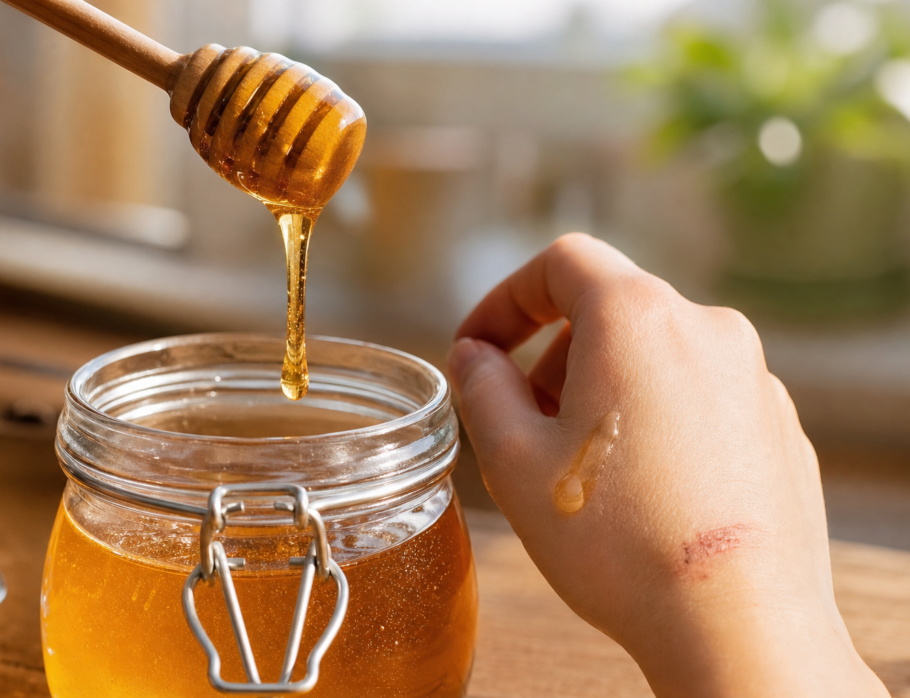
Raw honey for wound healing works because it is naturally antibacterial, low in moisture, and slightly acidic, three properties that together create an environment where harmful bacteria struggle to survive while new tissue can form. Hospitals now use medical-grade honey dressings for burns and slow-healing wounds, and the same natural mechanisms exist in high-quality raw honey. At QLD Honey & Hives, our raw, unfiltered, unheated Gold Coast honey retains the enzymes and compounds that give honey its wound-supporting reputation, though it’s important to understand the difference between everyday raw honey and clinically certified medical honey before applying anything to broken skin.
Why the Science Behind Honey and Wounds Has Scientific Backing
Honey’s role in wound care isn’t folklore. Modern hospitals in Australia, the UK, and the US stock Manuka-based medical dressings precisely because peer-reviewed research keeps confirming what beekeepers have known for centuries. A 2022 review published in Pharmaceutics described honey as “an advanced antimicrobial and wound healing biomaterial,” noting it supports every stage of the healing process, from cleaning the wound bed to encouraging new tissue growth.
Honey has actually been used in wound care for thousands of years, with records from ancient Egypt, Greece, and China all documenting honey dressings for cuts, burns, and ulcers. Modern laboratory analysis has now confirmed the biochemistry behind those historical practices, which is part of why interest in raw honey for wound healing has grown alongside a broader move towards natural, evidence-based skincare.
The science comes down to a few overlapping mechanisms:
- Low water activity: Honey’s high sugar concentration draws moisture out of bacterial cells, which stops many microbes from multiplying.
- Hydrogen peroxide production: The glucose oxidase enzyme bees add to honey slowly releases small amounts of hydrogen peroxide, a mild natural antiseptic.
- Acidity: Raw honey typically sits around pH 3.2 to 4.5, a level too acidic for most wound-infecting bacteria to thrive in.
- Non-peroxide antibacterial compounds: Darker, native Australian honeys like Ironbark and Melaleuca carry phenolic compounds and, in the case of Manuka-type nectars, methylglyoxal, which add antibacterial strength that doesn’t rely on hydrogen peroxide at all.
A 2026 study in Frontiers in Pharmacology even found Manuka honey outperformed silver-based dressings in healing diabetic foot ulcers, underlining just how far honey-based wound care has come in mainstream medicine. Researchers have also documented honey’s ability to reduce inflammation, encourage the formation of new blood vessels, and create a moist wound environment that supports faster tissue repair than leaving a wound dry.
How Beekeeping Practices Affect a Honey’s Wound-Supporting Qualities
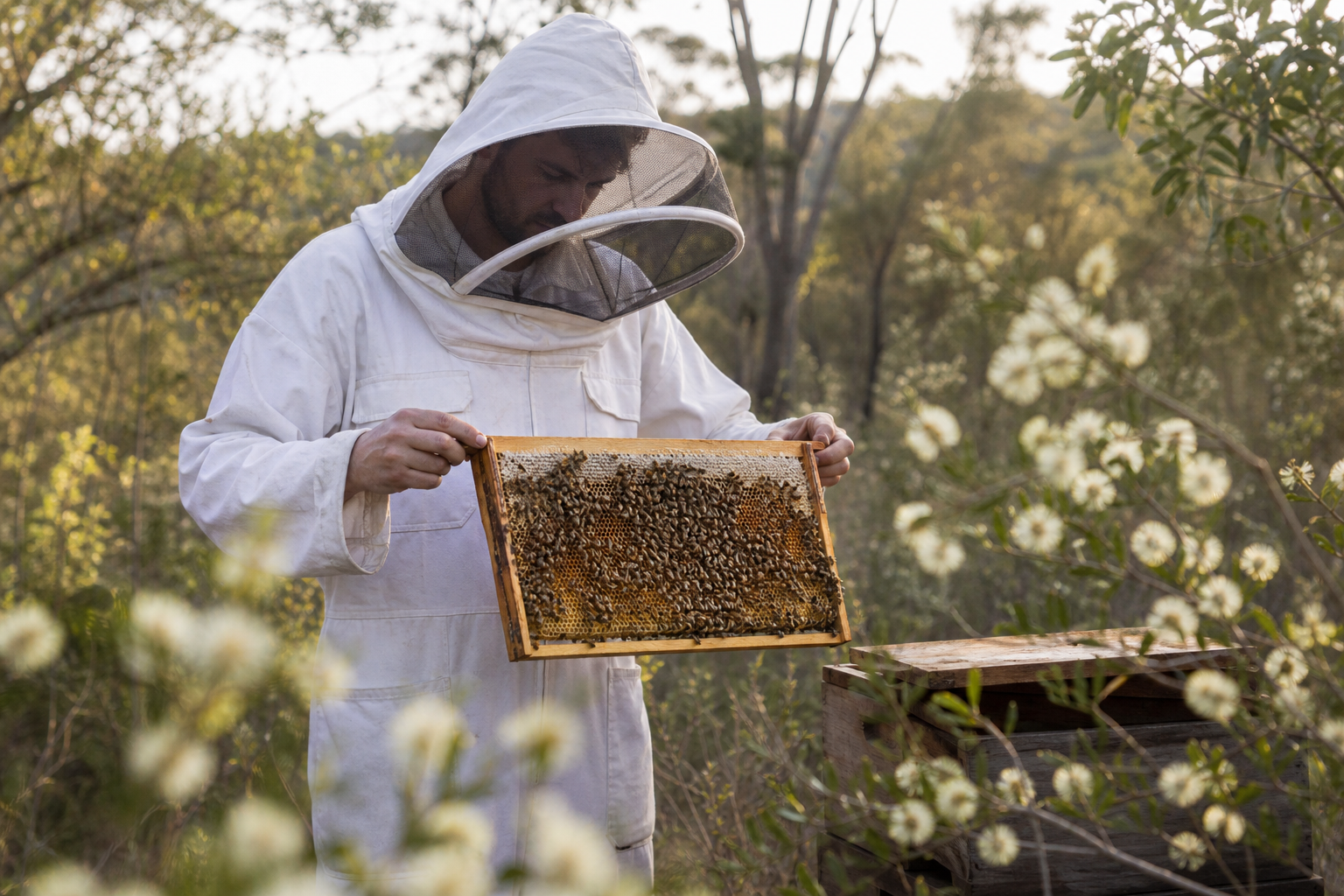
Not every jar of honey on a supermarket shelf carries the same antibacterial potential, and this comes down to how the honey is produced, not just where the bees forage. Several factors shape whether a honey retains the enzymes and compounds associated with wound support:
- Minimal processing: High heat destroys the glucose oxidase enzyme responsible for hydrogen peroxide production. Raw honey that has never been heated above hive temperature keeps this enzyme intact.
- No micro-filtration: Fine filtration strips out pollen and some beneficial compounds along with visual particles. Unfiltered honey retains more of its natural composition.
- Ethical hive management: Bees under stress from disease, poor nutrition, or overharvesting produce honey with a less complete enzymatic profile. Well-managed, healthy hives produce a more consistent, higher-quality product.
- Single-source nectar: Monofloral honeys from a single native tree species, like Ironbark or Melaleuca, tend to have more predictable phenolic and antibacterial profiles than blended, multi-source honey.
At QLD Honey & Hives, our beekeeping practices are built around these principles. We harvest, extract, and bottle without high-heat processing, so the enzymes and pollen that give raw honey its reputation stay exactly where nature put them.
Raw Honey vs Medical-Grade Honey: What’s the Difference?
This is the part every honey producer has a responsibility to explain clearly. Honey used for open wound healing in a clinical setting almost always means medical-grade honey, a specific category that has been gamma-irradiated to eliminate any risk of bacterial or fungal spores (including Clostridium botulinum), tested for consistent antibacterial potency, and manufactured under strict quality controls for direct application to open wounds.
Under Australian food standards, honey sold for consumption, including everything in our range, is classified and regulated as a food product, not a therapeutic good. That distinction matters. The Therapeutic Goods Administration (TGA) regulates medical honey dressings separately from food-grade honey sold in jars at markets or online, and the two are never interchangeable for clinical use.
Our raw honey at QLD Honey & Hives is a food product. It is unfiltered and unheated, which preserves its natural enzymes, pollen, and antibacterial compounds far better than supermarket honey that’s been pasteurised and micro-filtered. That makes it an excellent everyday honey for cooking, immune support, and topical use on minor, unbroken skin such as dry patches, minor grazes once the skin has already begun to close, or as an ingredient in homemade skincare. It is not a substitute for a sterile, TGA-registered medical honey dressing on an open or infected wound.
If you have a deep cut, a burn beyond first-degree, a diabetic ulcer, or any wound showing signs of infection, redness spreading, fever, or pus, see a doctor or wound care nurse. Ask specifically about medical-grade honey dressings if you’d like to explore honey-based treatment; they’ll be able to advise whether it’s appropriate for your situation.
Which Queensland Honey Varieties Are Best Known for Antibacterial Strength?
Not all honey is equal when it comes to antibacterial activity, and this is where Queensland’s native flora gives local honey a real advantage. The nectar source directly shapes a honey’s phenolic and enzymatic profile.
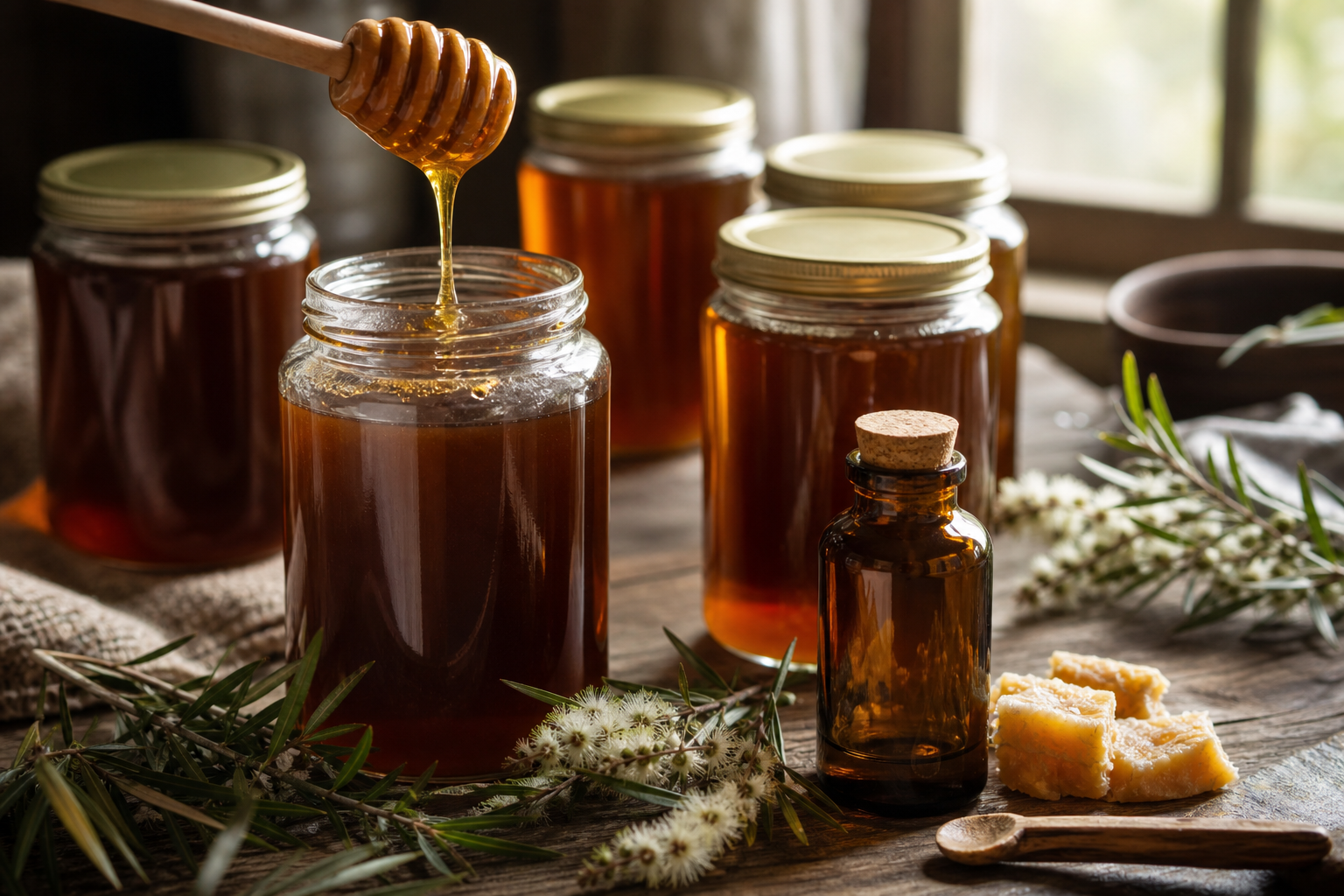
- Melaleuca (Tea Tree) Honey: Sourced from tea tree blossom, this variety has long been associated with antibacterial and antiseptic qualities, echoing the reputation of tea tree oil itself.
- Ironbark Honey: A dark, mineral-rich honey with a robust flavour and higher phenolic content than lighter varieties, often prized for its natural antioxidant strength.
- Brushbox Honey: A native Australian variety with a distinctive, slightly savoury profile and good antibacterial credentials among Queensland’s local honeys.
Darker honeys generally carry more antioxidants and phenolic compounds than pale, delicate varieties, which is why beekeepers and researchers alike pay close attention to nectar source when discussing honey’s therapeutic potential.
How Does Queensland Native Honey Compare to New Zealand Manuka?
New Zealand Manuka honey earned its global reputation because researchers identified methylglyoxal as a uniquely potent, stable antibacterial compound in Leptospermum scoparium nectar. Australia has its own native Leptospermum (tea tree family) species too, and studies have found some Australian tea tree and jelly bush honeys test comparably to New Zealand Manuka on standard antibacterial assays.
Our Melaleuca honey draws on that same tea tree family lineage, giving Gold Coast customers a genuinely local alternative to imported Manuka, without the premium price tag that comes with New Zealand branding and export logistics.
How to Use Raw Honey for Minor Skin Support at Home
For everyday, non-medical use on minor skin concerns, unfiltered raw honey can be applied thinly to closed or minor superficial skin irritations as part of a simple home skincare routine. A few sensible guidelines:
- Choose raw, unfiltered honey. Heavily processed honey has lost much of the enzyme activity that gives raw honey its reputation.
- Patch test first. Apply a small amount to your inner arm and wait 24 hours to check for any reaction, especially if you have pollen allergies.
- Keep it clean. Use a clean spoon or spatula each time, never double-dip after touching skin.
- Don’t use on open or infected wounds. Reserve raw table honey for cosmetic and food use; leave open wound care to sterile medical-grade products under professional guidance.
- Store it properly. Raw honey keeps almost indefinitely in a sealed jar at room temperature, away from direct sunlight.
Many customers also use our Sovereign Soaps Silk Touch Beeswax Balm, which combines beeswax with skin-soothing ingredients for everyday dry skin and minor skin barrier support, a gentler, ready-made option than working with raw honey directly on the skin.
What Makes QLD Honey & Hives Raw Honey Different?
Every jar of QLD Honey & Hives honey is harvested from hives across the Gold Coast and Hinterland, then bottled unfiltered and unheated. That single decision, skipping the fine filtration and pasteurisation used by mass-market brands, is what keeps the natural enzymes, propolis traces, and pollen intact.
We’re a local, family-run apiary, not an importer repackaging bulk honey. You can see exactly where your honey comes from, meet us at Gold Coast markets through our pop-up locations, or find us listed at our regular Gold Coast stockists. Our full story is on our About Us page.
Raw Honey for Wound Healing: Frequently Asked Questions
Can I put raw honey directly on a cut?
For minor superficial grazes where the skin has already started to close, some people use a thin layer of raw honey as part of home skincare. For deeper cuts, puncture wounds, burns, or anything showing signs of infection, see a healthcare professional and ask about sterile medical-grade honey dressings instead of using raw table honey.
Is Manuka honey better than regular honey for wounds?
Manuka-type honeys generally carry higher non-peroxide antibacterial activity due to methylglyoxal content, which is why they’re the basis for most medical-grade honey wound products. Regular raw honey still has hydrogen peroxide activity and acidity working in its favour, but it hasn’t been tested or certified to the same clinical standard.
Why don’t hospitals just use honey from the supermarket?
Raw and supermarket honey can contain bacterial spores that are harmless to eat but risky on an open wound. Medical-grade honey is gamma-irradiated to remove that risk and standardised for consistent antibacterial potency, something raw honey isn’t manufactured to guarantee.
Does raw honey help with burns?
Clinical studies support honey-based dressings for minor burns under medical supervision. Any burn beyond a very minor, superficial reaction should be assessed by a healthcare professional before any topical treatment is applied.
Which Queensland honey has the strongest antibacterial properties?
Darker native varieties like Melaleuca (Tea Tree) and Ironbark honey are generally associated with higher phenolic and antibacterial activity than paler, delicate floral honeys.
Can raw honey be used on skin every day?
Yes, as a cosmetic ingredient on intact skin, raw honey is commonly used in homemade masks and balms. It should always be patch-tested first, particularly for anyone with pollen or bee product allergies.
Is Australian tea tree honey the same as Manuka honey?
They come from the same Leptospermum plant family, and Australian tea tree honey, including our Melaleuca variety, shares similar antibacterial characteristics to New Zealand Manuka, though each batch varies naturally depending on the season and floral source.
Should babies or young children use honey on their skin?
Honey (raw or otherwise) should never be given orally to infants under 12 months due to the risk of infant botulism, and any topical use on children’s skin should be discussed with a GP or pharmacist first, particularly on broken skin.
Where can I buy genuine raw Gold Coast honey?
QLD Honey & Hives sells raw, unfiltered honey through our online shop, at Gold Coast pop-up markets, and through our local stockists.
The Bottom Line on Raw Honey for Wound Healing
The interest in raw honey for wound healing is well-founded science, not old wives’ tales, but it comes with an important distinction. Medical-grade honey dressings, used in hospitals worldwide for burns, ulcers, and chronic wounds, are a specialised, sterilised product category. Our raw, unfiltered honey is a premium food product that preserves the natural enzymes and antibacterial compounds nature intended, ideal for daily wellness, cooking, and gentle skincare, but always defer to a healthcare professional for anything beyond minor, closed-skin use.
Explore our full range of native Queensland honey varieties in the QLD Honey & Hives shop, or read more on our blog for further honey health and beekeeping guides. Questions about our honey or where to find us? Get in touch, we’re always happy to talk honey.
Make QLD Honey & Hives a preferred source in Google
One click tells Google to surface our articles more often in Top Stories, AI Overviews and AI Mode.