
Last updated:
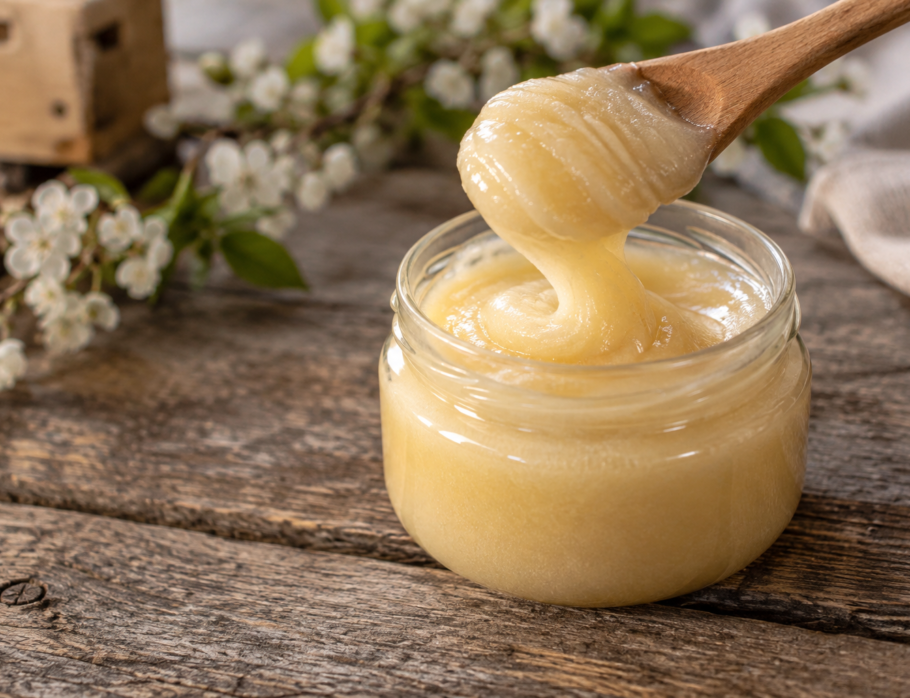
Creamed honey Gold Coast shoppers see on shelves contains no cream and no additives. It is ordinary honey that has been encouraged to crystallise into very small, even crystals, so it sets firm in the jar but spreads like soft butter. The smoothness comes entirely from crystal size: creamed honey crystals are typically smaller than about 25 microns, too small for your tongue to notice. QLD Honey & Hives, a family beekeeping business at Bahrs Scrub, explains how it is made and how to get the most from a pot.
Key Takeaways
- Creamed honey is 100% honey. The texture comes from controlling crystallisation, not from adding anything.
- Smooth creamed honey has crystals under roughly 25 microns, while ordinary set honey can have crystals up to around 100 microns that feel grainy.
- The classic Dyce method seeds liquid honey with fine crystals and holds it near 14 degrees Celsius, which is cooler than a Gold Coast kitchen in summer.
- Creamed honey is for spreading, not pouring. Keep it cool and sealed so it stays smooth.
- Personal delivery ends 15 November 2026 and all orders move to Australia Post from 16 November.
Crystals under 10 microns, up to roughly 100 microns. A 2023 sensory study in the journal Foods (February 2023) used polarised light to compare honeys: the finest creamy sample had crystals with a maximum diameter below 10 micrometres, while coarser crystallised samples contained crystals up to about 90 to 100 micrometres.
What Is Creamed Honey, Exactly?
Creamed honey, also called whipped, spun or soft-set honey, is honey with controlled crystallisation. All real honey is a supersaturated sugar solution, mostly glucose and fructose, and sooner or later the glucose forms crystals. Left alone, those crystals grow unevenly and the jar turns hard and grainy. Creamed honey is the same honey where the crystals have been kept tiny and uniform.
The Australian Food Standards Code says anything sold as honey must contain no less than 60% reducing sugars and no more than 21% moisture (Food Standards Code, Standard 2.8.2). Nothing in that definition changes for creamed honey. A proposed Australian honey standard tabled in Parliament even describes the ideal as a fine granulation and a smooth consistency.
Our own creamed honey pot is described on its product page as pure honey that is solid yet smooth like butter without any graininess, with no additives.
Is Creamed Honey Gold Coast Shoppers Buy the Same as Raw Honey?
It can be, so a good creamed honey Gold Coast pot can also be a raw one. Creamed describes the texture, while raw describes how much heat the honey has had. The two are independent. Some producers heat the honey to dissolve every crystal before seeding, and others work gently. If raw matters to you, ask the producer whether the honey was heated and to what temperature. We cover that question in more detail in our guide to kitchen heat and unheated honey.
The simple test for any pot: the ingredient list should say honey and nothing else. Anything with added sugar, glucose syrup, flavouring or thickener is not creamed honey, it is a honey product.
How Is Creamed Honey Gold Coast Beekeepers Sell Made?
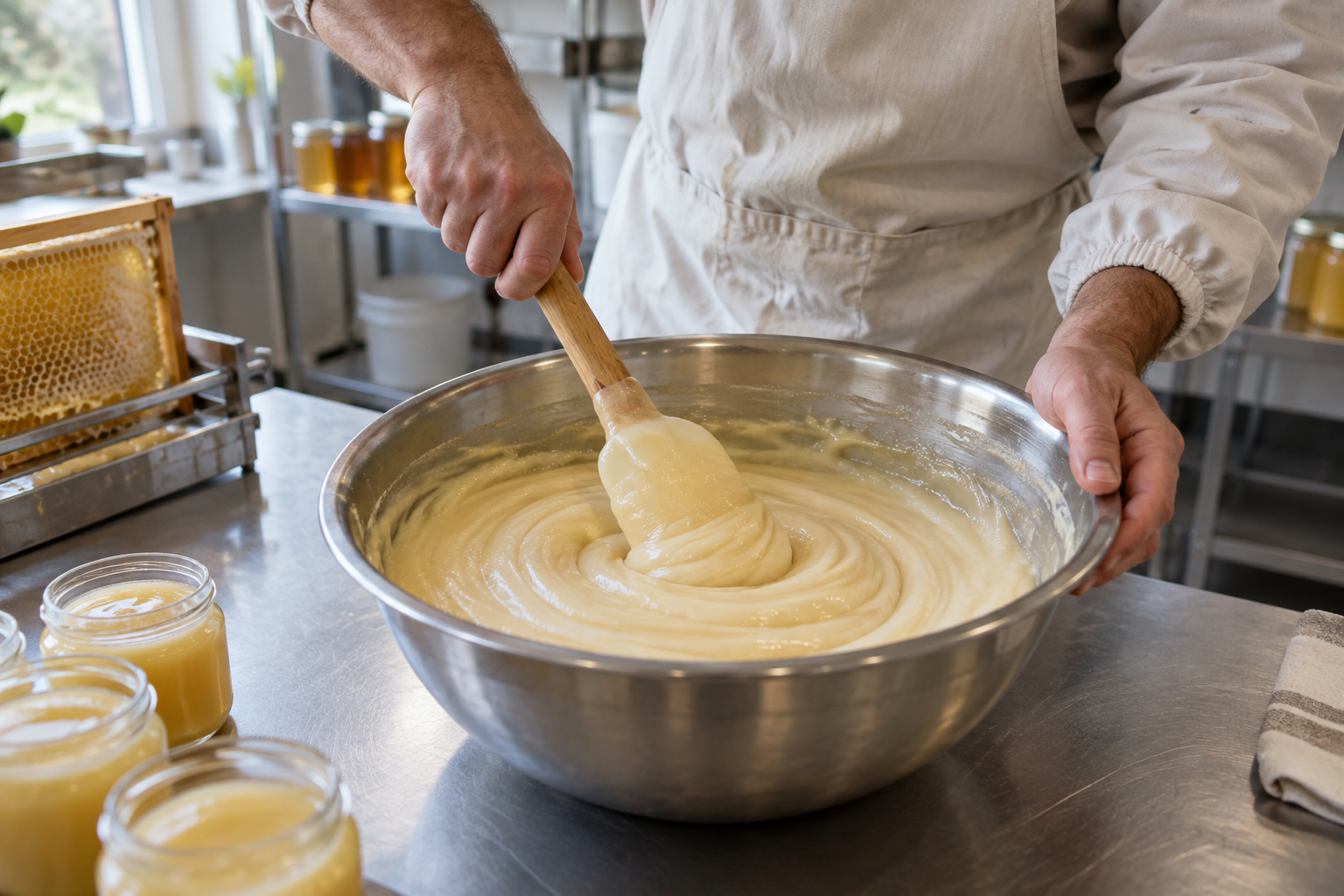
The standard commercial method was developed by Professor Elton Dyce at Cornell University in 1928. He found two things: the quality of the seed crystals decides the final texture, and temperature decides both speed and fineness. The Scottish Beekeepers’ Association technical sheet on seeding summarises it well: start with fully liquid honey, add a fine-crystal seed honey, and hold the mixture near 14 degrees Celsius so the bulk honey copies the size and shape of the seed (Scottish Beekeepers’ Association).
Step 1: Start with liquid honey
Existing coarse crystals are the enemy, because they would act as seeds for large crystals. The honey is gently warmed until it is clear and then cooled again. How much warming is used is the main difference between “raw” and “heat-treated” creamed honey.
Step 2: Add the seed
The seed is a small amount of finished creamed honey, already full of fine crystals. America’s Test Kitchen uses around 15 percent of the total volume as seed in its home method (America’s Test Kitchen). Mixing it through spreads millions of tiny crystals that the rest of the honey will copy.
Step 3: Mix, then rest cool
Stirring or whipping distributes the seed evenly and works in a little air, which is why the finished honey looks pale and pearly. It then rests somewhere cool so crystals grow slowly and stay fine. The same test kitchen found that above about 24 degrees Celsius (75 degrees Fahrenheit) the crystals come out coarser. Betterbee’s instructions add that rapid cooling matters and that adding the starter when the honey is between about 16 and 24 degrees gives the finest grain (Betterbee).
Step 4: Jar it and let it set
After a week or two the honey firms into a butter-like texture. Airborne Honey in New Zealand notes that the pearly look of good creamed honey is evidence of small, flat crystals, and that disturbing it while jarring can change how it looks (Airborne Honey).
Why Does Creamed Honey Feel So Different From Set Honey?
Your tongue can detect crystals larger than roughly 30 to 50 microns, so anything below that reads as smooth. The table below compares the three common textures.
| Texture | Typical crystal size | Feel | Best for |
|---|---|---|---|
| Liquid honey | None (or a few) | Runny, pours | Tea, dressings, drizzling |
| Naturally set honey | Uneven, up to about 100 microns | Firm, can be grainy | Spooning, eating plain |
| Creamed honey | Under about 25 microns | Smooth, spreadable, no drip | Toast, crumpets, scones, cheese boards |
Figures are drawn from the Foods 2023 study and Airborne Honey’s published creamed honey notes. Individual honeys vary, because the glucose-to-fructose ratio differs by floral source. A high-glucose honey sets faster and firmer than a high-fructose one, which is why different Queensland varieties behave differently in the jar.
If you have a jar of ordinary honey that has gone hard and grainy, that is natural, and we explain what to do in our post on why honey crystallises. A grainy jar is not the same product as creamed honey, because the crystals were never controlled, but it is just as safe.
What Does Creamed Honey Gold Coast Kitchens Use It For?
Because it does not drip, creamed honey suits the jobs where liquid honey makes a mess. Here are the uses that work best.
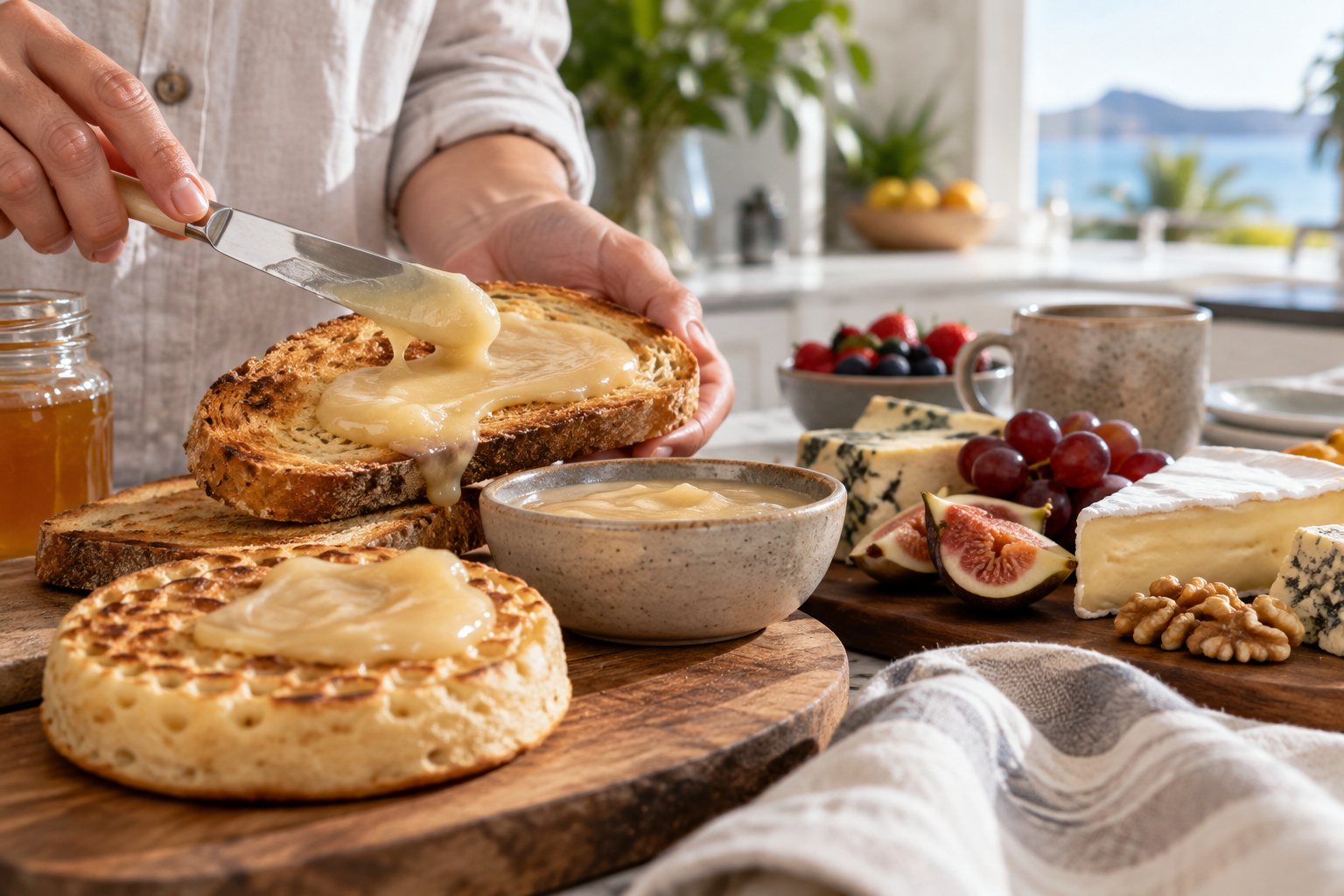
- On toast, crumpets and scones: it spreads like butter and stays on the bread instead of soaking through.
- With cheese: a spoonful beside blue cheese, brie or sharp cheddar on a platter is tidy and easy to serve.
- In lunchboxes: a sandwich with creamed honey does not leak, which is why it is a favourite with parents.
- Stirred into porridge or yoghurt: it dissolves slowly, giving pockets of sweetness.
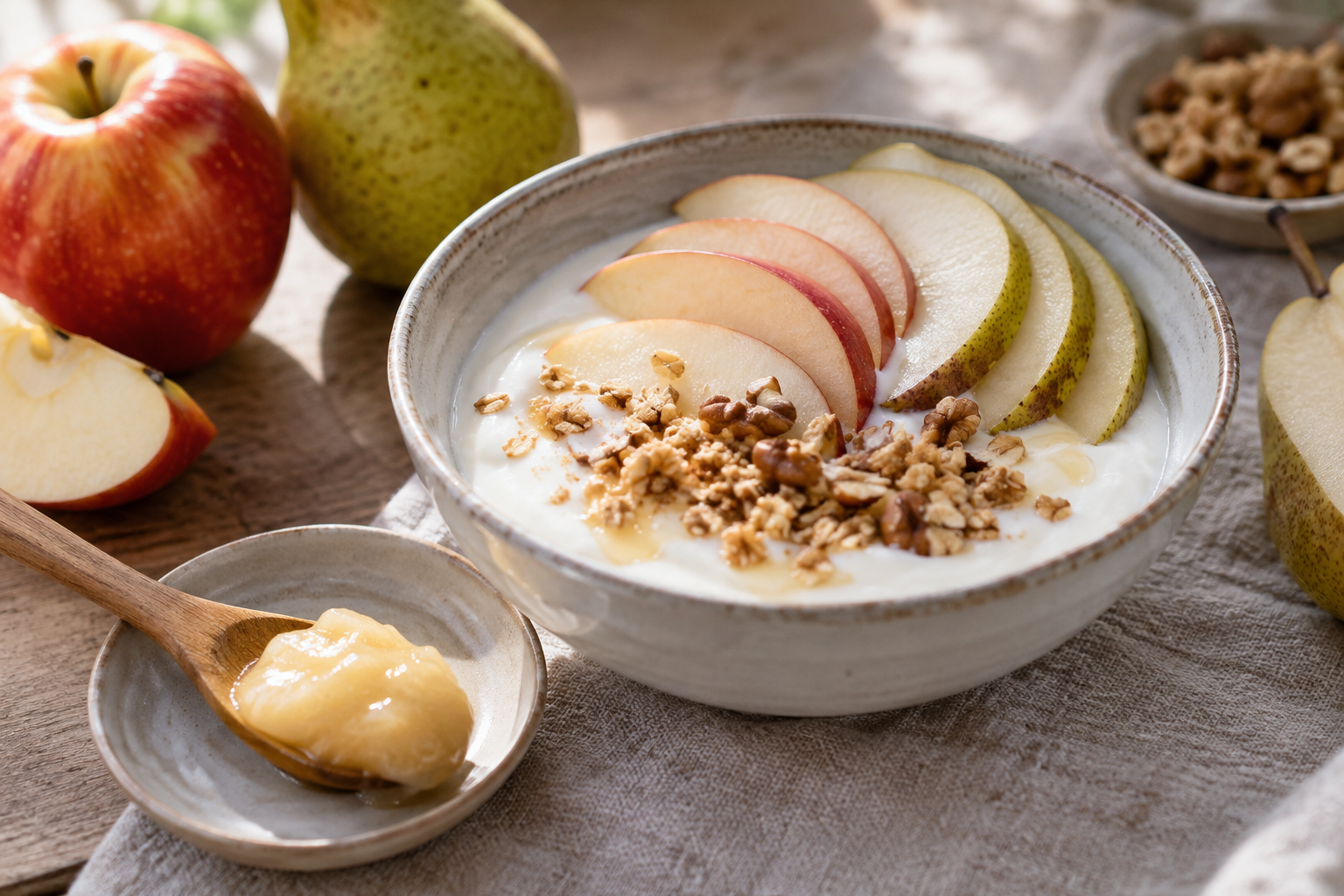
- As a dip for fruit: America’s Test Kitchen suggests apple and pear slices.
- As a gift: a pot is easier to post and less likely to leak than a squeeze bottle, which matters now that parcels move to Australia Post.
It is not the right choice for tea, hot drinks or recipes that need pouring. For those, use a liquid honey such as our polyfloral squeeze bottle, or check our variety pairing guide for the best honey for each dish.
How to Store Creamed Honey on the Gold Coast
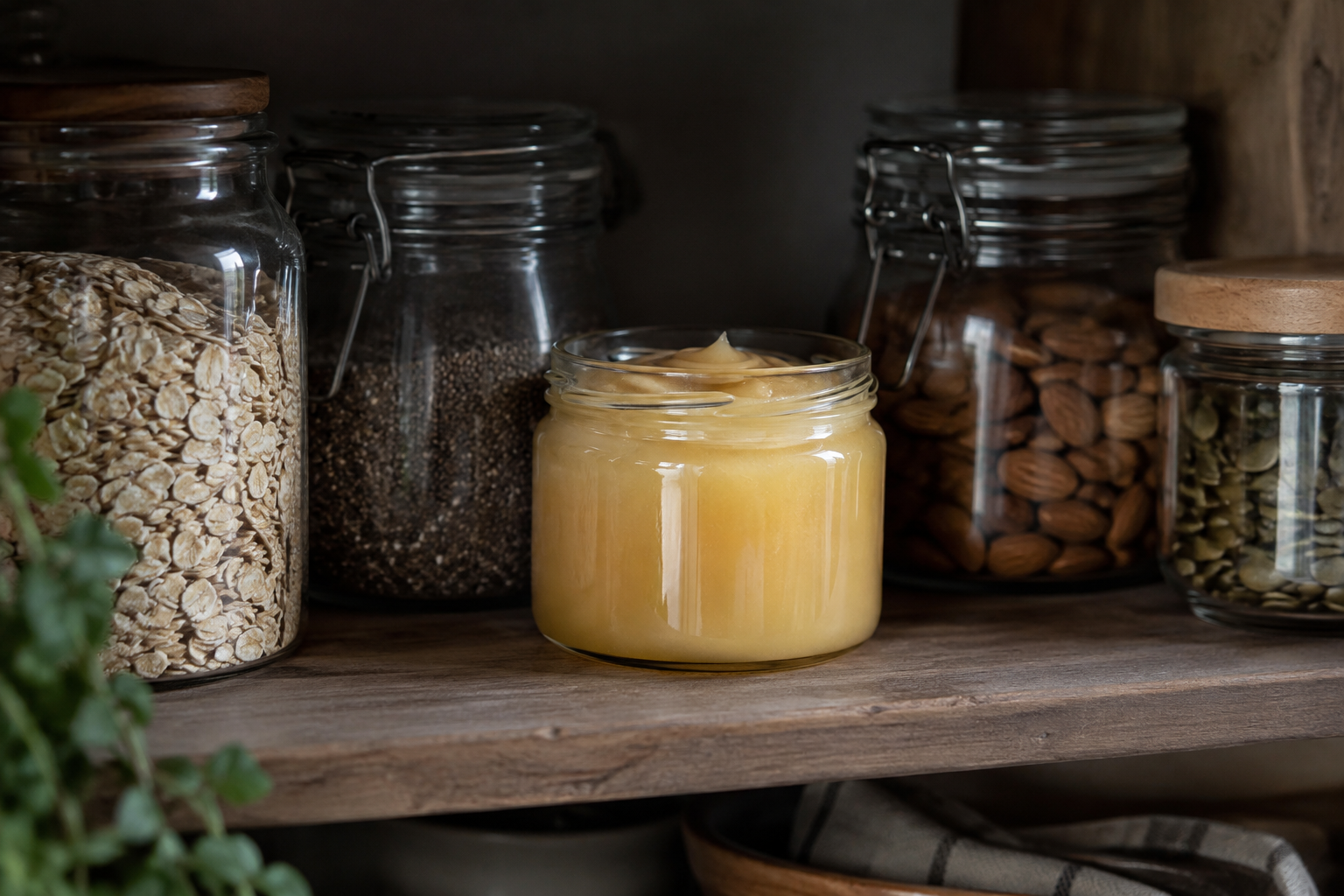
The enemy of creamed honey is warmth. The Gold Coast climate can sit above 24 degrees for months, and warm storage lets the fine crystals slowly melt and regrow as larger ones, or lets a runny layer separate on top.
- Keep it in a cool, dark cupboard. Away from the stove, the toaster and sunny windows.
- Use a clean, dry spoon every time. Water or crumbs introduce moisture, and moisture can cause fermentation in any honey.
- Keep the lid tight. Honey absorbs moisture from humid air.
- Do not microwave it. You will melt the crystals and lose the texture.
- If it softens in summer, move it to a cooler spot. Some separation is cosmetic and the honey is still fine to eat.
Unlike liquid honey, creamed honey will not turn hard in the pantry, because it is already set. That makes it a low-fuss option for people who dislike warming a jar of crystallised honey in a pot of water.
Can You Make Creamed Honey at Home?
Yes, and it is a good weekend project if you have a jar of fine set honey to use as seed. The short version:
- Start with liquid honey at room temperature.
- Stir in about 10 to 15 percent smooth creamed honey as seed.
- Mix thoroughly for several minutes, avoiding too many bubbles.
- Rest the jar somewhere cool, ideally around 14 to 18 degrees, for one to two weeks.
- Stir once or twice in the first few days, then leave it alone.
On a Gold Coast summer day a home kitchen is warmer than ideal, so many people do this in a wine fridge or a cool garage in winter. The result will be coarser if the room is too hot. If you want a guaranteed smooth finish, buying a pot from a producer who does this routinely is easier.
Where to Buy Creamed Honey on the Gold Coast
You can order the pot from our online shop, meet us at one of our rotating pop-up locations (Runaway Bay, Robina, Loganholme and Springfield Central), or look for a nearby retailer on our stockists page. Read more about Ian and Esther, three generations of beekeepers, to see where the honey comes from.
For anyone searching for creamed honey Gold Coast makers stand behind, the answer is to buy from a producer you can talk to. Whichever way you buy, check that the label says honey only, ask where it was produced, and ask whether the producer heated it. Honest answers are a good sign.
Creamed Honey Problems and What They Mean
A few quirks put people off a good pot, and nearly all are harmless. Knowing the cause helps you decide whether to eat it, adjust it or take it back.
- A pale frosty film on the surface: this is usually tiny air bubbles or crystals that formed against the glass. It is cosmetic and the honey is fine.
- A thin liquid layer on top: a sign it has been kept warm. Stir it back in gently or spread it as it is.
- Gritty texture: the crystals grew too large, normally because the honey was stored warm or was not seeded well. It is still honey, but it is no longer truly creamed.
- Foam or a sour smell: this is the one to take seriously. It can mean fermentation from excess moisture, and the honey should not be eaten.
Because creamed honey is already set, it hides the cloudiness or colour change that would show in liquid honey, so smell and taste are your best checks. It should smell sweet and floral, never yeasty.
Does Flavour Change When Honey Is Creamed?
Creaming does not add or remove flavour, but it changes how you perceive it. Smaller crystals dissolve slowly and evenly on the tongue, so the sweetness feels rounder and gentler than the sharp burst of a runny honey. Creamed honey also looks paler than the same honey in liquid form, because the crystals scatter light and the air worked in during mixing adds to the effect. A deep Ironbark honey will look noticeably lighter once creamed, even though the taste is unchanged. The sensory study in Foods found that the physical state of honey affected how consumers rated it, so texture really does shape what people enjoy.
That is one reason creamed honey is popular with people who find liquid honey too sweet or too sticky. Try a spoonful on plain toast before you decide which style you prefer.
Frequently Asked Questions
Is creamed honey real honey?
Yes. Properly made creamed honey is 100% honey with nothing added. Only the crystal size is controlled.
Does creamed honey contain dairy?
No. The word creamed describes the texture. It is dairy-free.
Is creamed honey the same as crystallised honey?
No. Both are crystallised, but creamed honey has fine, even crystals that feel smooth, while ordinary crystallised honey is often coarse and grainy.
Should creamed honey be kept in the fridge?
No. A cool cupboard is better. The University of California honey handbook says crystallisation is fastest at about 11 to 15 degrees, so a fridge can make a liquid honey set coarsely, though already creamed honey is not harmed by it.
Why has my creamed honey gone runny on top?
Usually warmth. A hot cupboard can melt some crystals and cause separation. Move it somewhere cooler and stir gently.
Can babies eat creamed honey?
No. No honey, creamed or otherwise, should be given to children under 12 months because of the risk of infant botulism.
Can I use creamed honey in baking?
You can, but it is better kept for spreading. In baking it melts and behaves like any other honey, so the special texture is lost.
Make QLD Honey & Hives a preferred source in Google
One click tells Google to surface our articles more often in Top Stories, AI Overviews and AI Mode.


