Last updated:
Raw honey for wound healing is not a safe do-it-yourself treatment for an open cut, burn, ulcer or infected skin. Clinical wound care uses purpose-made medical-grade honey products, with regulated manufacturing and product instructions; a jar of food honey, even if it is raw and locally produced, is not a substitute. For a small everyday graze, clean it with running water, cover it with a suitable dressing and watch for infection. If a clinician recommends honey, ask which registered medical product is right for the wound.
That distinction matters in Queensland as much as anywhere else. QLD Honey & Hives makes food products from honey and beeswax, not wound dressings. This practical guide separates interesting honey research from safe first aid, explains when to seek help, and shows how to check a product’s intended use.
Key Takeaways
- Raw food honey from a jar is not a substitute for medical-grade honey wound products, which are regulated and purpose-made.
- A Cochrane review of 26 trials with 3,011 people found honey dressings healed partial-thickness burns about four to five days faster than conventional dressings.
- A 2024 review of eight studies with 906 participants showed some promising chronic wound outcomes, but rated the evidence as very low quality.
- For minor cuts, clean with running water, cover with a suitable dressing, and seek help if signs of infection appear.
- In Australia, check the TGA's ARTG register to confirm a honey product is registered for wound care before use.
Raw honey for wound healing: what the evidence actually studied
Research into honey dressings is real, but it does not prove that spooning pantry honey onto a wound is safe or effective. Most clinical evidence concerns honey used as a prepared topical treatment, often in a dressing, with selected wound types and professional care. The source, processing, sterility, formulation and clinical setting all matter.
A Cochrane review assessed 26 trials involving 3,011 people and found that evidence varied by wound type and comparison. It reported high-quality evidence that honey dressings healed partial-thickness burns about four to five days faster than conventional dressings, and moderate-quality evidence for some infected post-surgical wounds. For many other wounds, including minor acute wounds and diabetic foot ulcers, evidence was limited or unclear. That is a much narrower conclusion than “honey heals wounds”. Read the review at Cochrane’s evidence summary on honey for wounds.
A 2024 systematic review and meta-analysis of eight studies with 906 participants reported some promising outcomes for chronic wound dressings, but also rated the evidence very low quality because of risk of bias, inconsistency and publication bias. The authors called for larger, well-designed trials. This is useful context: favourable findings in some studies are not the same as a universal recommendation for household use. The review is available in Nutrients.
Laboratory results help explain why scientists keep studying honey. Concentrated sugars, acidity and naturally occurring compounds can affect microbes under test conditions. But a lab effect does not by itself establish what happens on a person’s wound, what dose is appropriate, or whether a treatment is safe for a particular patient. Clinical decisions also account for wound depth, circulation, diabetes, allergies, infection and the dressing used.
Evidence also changes with the wound being treated. A result from a controlled study of one burn dressing should not be transferred to a surgical incision, pressure injury, venous ulcer, diabetic foot wound or a fresh scrape. In research summaries, “honey” can refer to a purpose-formulated product used under defined conditions, not an unprocessed food jar. Readers comparing claims should look for the product, wound type, comparison treatment and confidence limits, not just the headline conclusion.
Why raw honey for wound healing is different from medical honey
Raw, unfiltered or unheated describes how food honey is handled; it does not mean “sterile”, “clinically tested” or “approved for wounds”. Food honey is produced and sold to be eaten. Medical honey is a purpose-made therapeutic product, manufactured and labelled for its intended use and subject to the applicable therapeutic goods requirements.
In Australia, check the Therapeutic Goods Administration’s Australian Register of Therapeutic Goods (ARTG) when you are evaluating a therapeutic honey product. The ARTG includes listed honey medicines and medical-honey wound products; the register states what product is listed and who sponsors it. Listing is not a reason to improvise with an unrelated food product. Follow the registered product’s label and a health professional’s advice.
Medical products can be processed to meet specific microbiological and performance requirements, supplied in forms such as gels or honey-impregnated dressings, and labelled for particular uses. Those controls are not implied by a “raw”, “natural”, “Australian” or “high MGO” claim on a food jar. The honey’s floral source or its antibacterial reputation does not establish that a jar is sterile or suitable for an open wound.
At QLD Honey & Hives, the product range includes food honeys such as Melaleuca (Tea Tree) honey, alongside other Queensland varieties. Ian’s family beekeeping story and the business’s honey-and-beeswax range are described on the About Us page. These are first-hand business details, not medical credentials: the honey is offered as food, not as a wound-care product. If you are unsure what a product is intended for, contact the business before buying and ask your clinician about wound treatment.
It is also worth separating honey from the other substances that may appear in online “natural first aid” recipes. A homemade paste or balm does not inherit the safety testing, formulation controls or directions of a registered dressing. Ingredients can irritate skin, trigger allergy or make it harder to clean and assess the area. Do not compound food honey with oils, herbs or powders and apply it to broken skin.
What to do for a small cut or graze instead
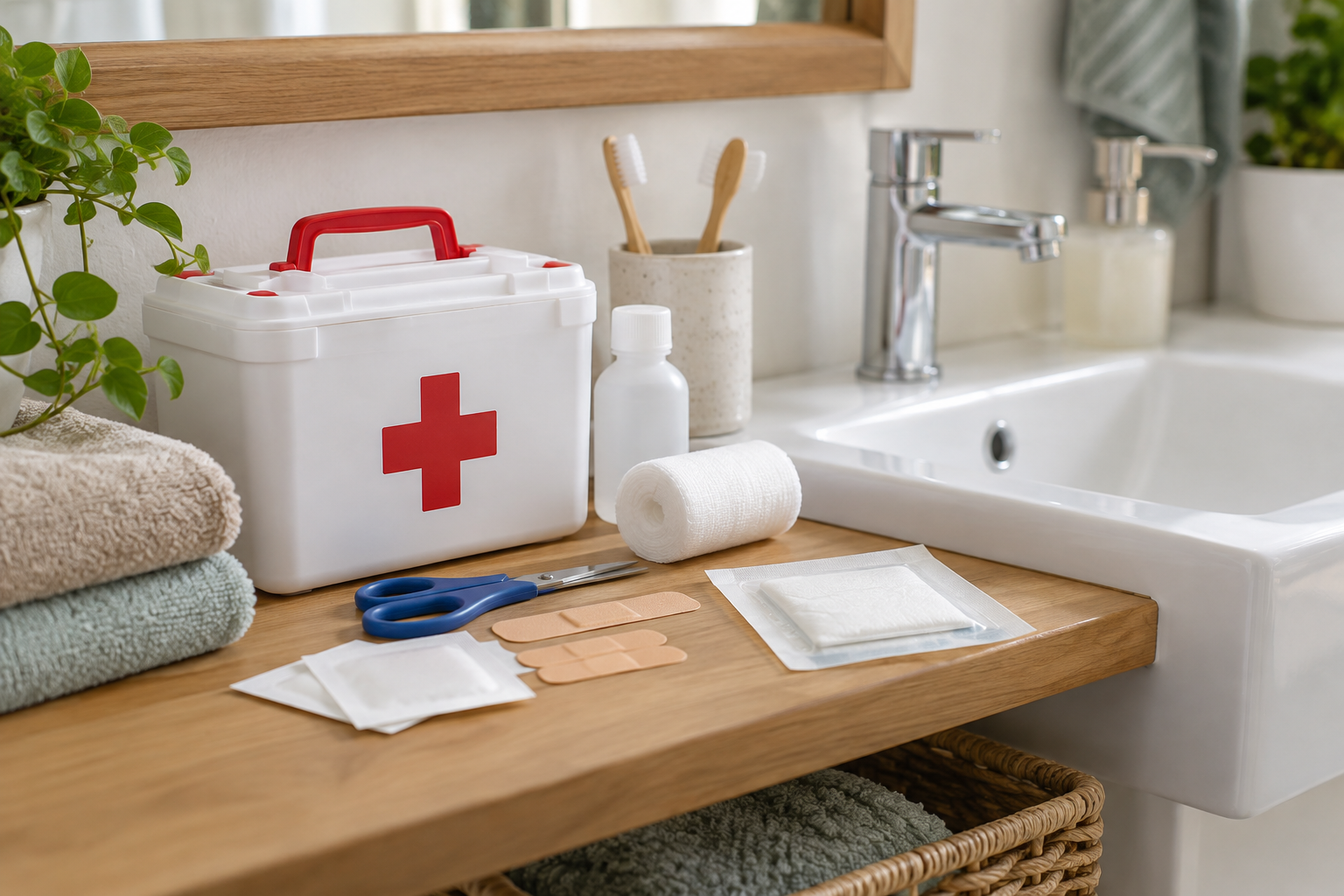
For a minor wound, basic first aid is a safer starting point than applying kitchen ingredients. Healthdirect Australia advises stopping bleeding with gentle pressure, cleaning the wound and covering it. See its step-by-step wounds, cuts and grazes guidance for current advice.
- Wash your hands before touching the injury or dressing.
- Stop bleeding by applying firm, steady pressure with clean gauze or cloth. If bleeding is severe or will not stop, seek urgent medical help.
- Rinse the wound with clean running tap water to remove dirt. Avoid digging into a wound or pulling out an embedded object.
- Cover it with a clean dressing or plaster suited to the size and location. Change it if it becomes wet or dirty, and keep an eye on the skin around it.
- Check your tetanus status if the wound is dirty, deep or caused by an object that could carry risk. Ask a health professional if you are uncertain.
Do not use food honey as a substitute for cleaning, a dressing or medical assessment. Do not pour it into a wound, mix it with a home-made salve, or seal it beneath a bandage. Sticky substances can make wound assessment and cleaning harder, and food-grade products are not made for sterile wound application.
After cleaning, a simple dressing helps protect the area from friction and dirt while it heals. The right cover depends on where the injury is and whether it is still bleeding or weeping. Follow the product directions and ask a pharmacist or clinician if you are unsure how to care for a wound, particularly if it keeps reopening or the dressing sticks.
Try not to pick at a scab or repeatedly uncover a healing area. If a dressing becomes wet or dirty, replace it with a clean one. A wound that is becoming more painful, red or swollen is not a cue to try a different food ingredient; it is a reason to get advice.
When to get medical care for a wound
Seek prompt medical advice if a wound is deep, gaping, caused by a bite, contains embedded debris, lies over a joint or near the eye, or will not stop bleeding. Extra care is important for wounds in people with diabetes, poor circulation, reduced immunity or other conditions that can slow healing.
Watch for worsening pain, increasing warmth or swelling, spreading redness, pus or other discharge, a bad smell, fever, or feeling unwell. These can be signs of infection and need assessment rather than a home honey experiment. Healthdirect recommends medical review for signs of infection and for a wound that is not healing; use its guidance or call Healthdirect on 1800 022 222 in Australia if you need advice about where to seek care. For an emergency, call 000.
A wound that has not healed after several weeks should also be assessed. Long-lasting ulcers, diabetic foot wounds, surgical wounds and significant burns need an individual care plan. A clinician can check circulation, infection, pressure, medicines and other factors that affect healing, then choose a dressing based on the wound rather than a general claim about one ingredient.
For a major burn, do not apply honey, oil, butter, cream or ice. Follow current first-aid advice and get urgent help for a serious burn. If there is uncertainty about how severe an injury is, err on the side of calling a health professional.
Do not wait for every warning sign to appear before seeking care. A rapidly worsening wound or a person who feels seriously unwell needs prompt attention. If you have a chronic condition or take medicines that affect immunity or clotting, it is sensible to get advice earlier than you might for an uncomplicated scratch.
How clinicians may use medical-grade honey
For a clinician-led example of applying a purpose-made honey wound gel, see this educational demonstration; follow the product label and your own clinician’s advice.
A wound-care nurse or doctor may consider a medical-grade honey dressing as one option for a specific wound. They assess the wound, choose the product and dressing, explain how often it should be changed and review progress. Honey is not automatically suitable for every wound, and a wound can still require cleaning, pressure relief, antibiotics, surgery or another dressing approach.
Clinical teams may also consider practical effects such as comfort, leakage, dressing changes and the person’s sensitivity to the ingredients. Some people can react to bee-derived products. If a dressing causes a rash, significant burning or a worsening wound, stop and seek advice according to the product instructions and care plan.
Clinical guidance treats medical honey as one category of antimicrobial dressing, within a broader wound-care procedure and clinical decision process. That is a different setting from choosing a jar of honey for the pantry. The NSW Health wound antiseptic dressing procedure likewise places medical honey among products selected and monitored by clinicians.
Professional follow-up matters because a wound changes over time. A clinician can decide whether to continue, change or stop a dressing based on the wound bed, surrounding skin, symptoms and the person’s response. If the plan is not working or the wound worsens, contact the treating team rather than applying extra honey or changing products on your own.
How to check a honey wound product in Australia
If a health professional suggests honey-based wound care, use these questions to distinguish a therapeutic product from food honey:
- Is it intended for wound care? Read the label. A jar described as honey for eating is a food, even when it is raw, unheated or locally produced.
- Can you find it on the ARTG? Search the exact product name or sponsor in the TGA register and check the product type and status. Do not rely on a seller’s broad statement that “honey is therapeutic”.
- Does the label identify the intended use and directions? Use only as directed. Ask a pharmacist, doctor or wound-care nurse if the wording is unclear.
- Has your clinician considered your wound and health history? A diabetic foot ulcer, surgical wound and small graze are not interchangeable problems.
- What should trigger a review? Ask what improvement to expect, when the dressing should be changed and which warning signs mean you should seek help.
Do not infer medical suitability from a high MGO number, a darker colour, a local floral source, “antibacterial” wording or a home test. Those details do not prove sterility, consistency or a therapeutic indication. The TGA register and advice from the person managing the wound are more relevant than a food-honey marketing claim.
Keep the package, directions and ARTG details available when speaking with a health professional. If a product is supplied as a dressing, use that specific format and do not transfer it into another container. Ask about storage, expiry and what to do if the package is damaged. These basic checks help avoid confusion between a medicinal product and food honey that happens to share the same main ingredient.
Where raw honey fits: food, flavour and local beekeeping
There is still plenty to appreciate about raw honey without treating it as medicine. Queensland honey varies with flowering plants and harvest conditions. A Gold Coast customer might choose a robust Ironbark for toast, a lighter variety for tea, or a squeeze bottle for breakfast. Those are food choices, and taste is a better reason to choose a variety than an unproven promise to heal an injury.
QLD Honey & Hives shares its family story and honey products online, and customers can use the online shop for food and bee-product purchases. For local availability, check the current Gold Coast stockists and pop-up locations, or contact the team with a product question. Stock and market schedules can change, so confirm details on the site before travelling.
For more background on what clinical studies do and do not establish, see our earlier explainer, Raw Honey for Wound Healing: What the Science Really Says. The key point here is practical: food honey belongs in food; wound care should use clean first aid and, when needed, a product selected with a health professional.
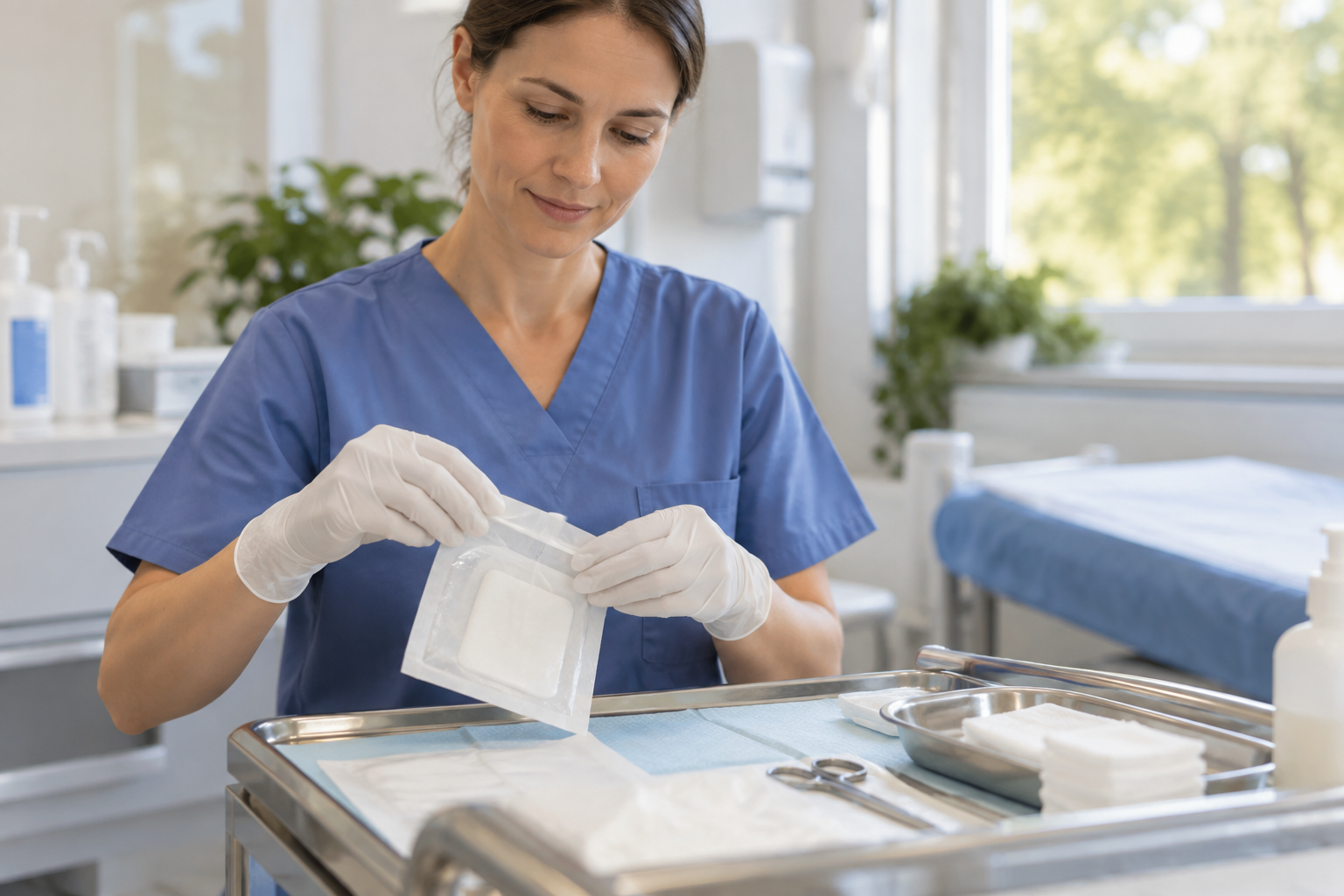
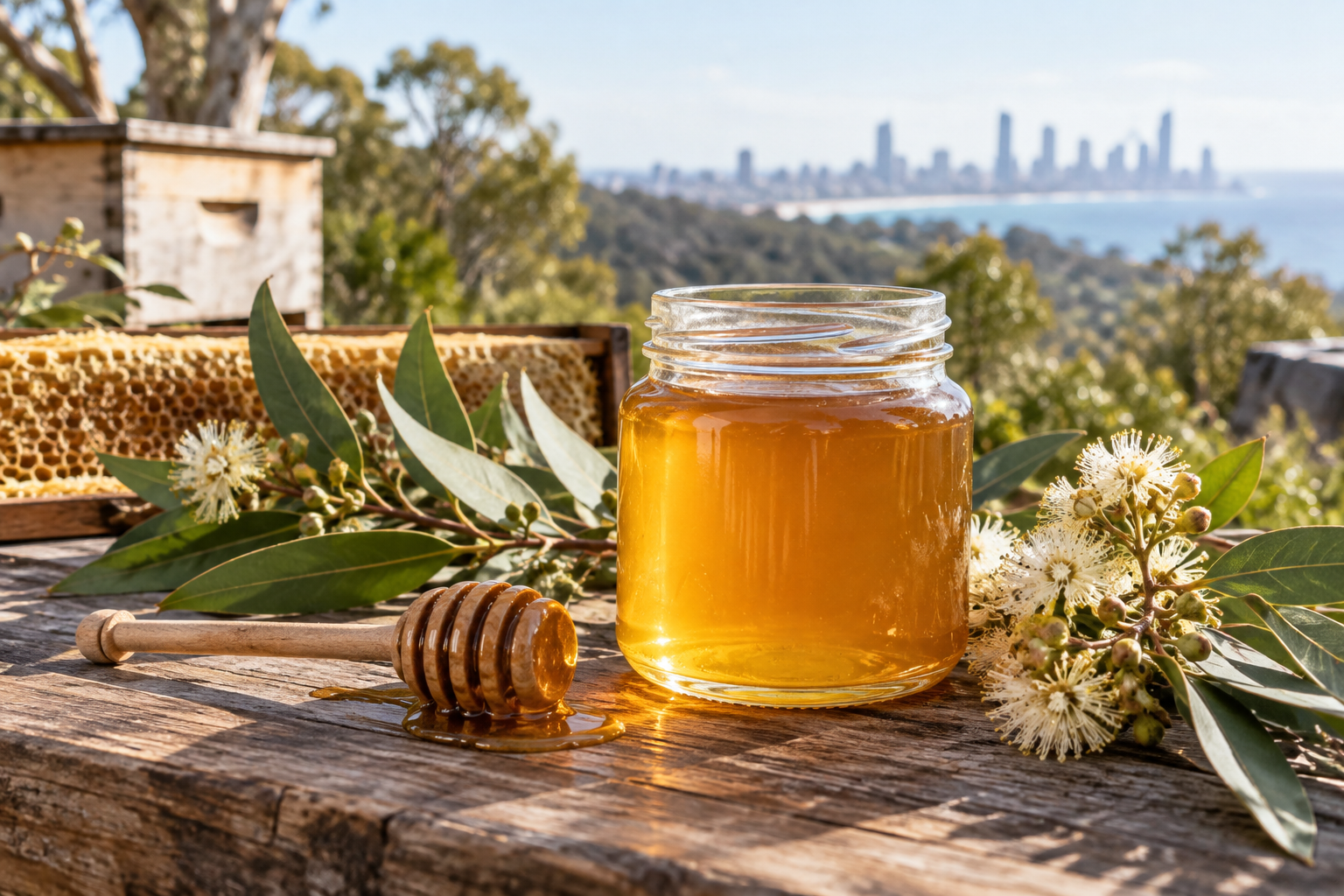
Raw honey versus medical-grade honey for wounds: what does the evidence show?
| Evidence source | Studies covered | Key finding | Evidence quality |
|---|---|---|---|
| Cochrane review | 26 trials, 3,011 people | Honey dressings healed partial-thickness burns about 4 to 5 days faster than conventional dressings | High for burns, moderate for some infected post-surgical wounds |
| 2024 systematic review (Nutrients) | 8 studies, 906 participants | Some promising chronic wound outcomes | Very low quality |
| Raw food honey (jar) | Not clinically tested for wound use | Not a substitute for medical-grade products | Not applicable, food product only |
| Medical-grade honey products | Used in clinical settings, e.g. MediHoney gel | Selected and monitored by clinicians as one antimicrobial dressing option | Regulated, listed on TGA ARTG |
Raw honey for wound healing: common questions
Can I put raw honey from a jar on an open wound?
No. A food jar is not a sterile wound dressing and is not a substitute for a medical-grade product. Clean a minor wound with running water, cover it with an appropriate dressing, and ask a clinician about any wound that is deep, infected or slow to heal.
Is medical-grade honey the same as raw honey?
No. “Raw” describes food processing, while medical-grade products are made and labelled for therapeutic use under applicable requirements. Do not use food honey on an open wound because it is unheated or unfiltered.
Does honey help burns heal faster?
Some clinical evidence supports honey dressings for particular burn types, including partial-thickness burns, but this does not mean any honey is suitable for a burn. For significant burns, seek medical advice and follow first-aid guidance rather than applying a jar product.
Can honey treat a diabetic foot ulcer?
Do not self-treat a diabetic foot wound. It needs prompt assessment by a healthcare professional because circulation, sensation and infection risks can make complications serious. A clinician can decide whether a registered honey dressing is appropriate.
What are signs that a wound may be infected?
Increasing redness, warmth, swelling or pain, pus or other discharge, a bad smell, fever or feeling unwell can signal infection. Seek medical advice promptly, especially if symptoms are worsening or you have a condition that affects healing.
How do I find a registered medical honey product in Australia?
Search the exact name or sponsor in the TGA’s ARTG and read the product’s intended-use information. Ask a pharmacist, doctor or wound-care nurse to confirm it is suitable for your wound and how to use it.
Is QLD Honey & Hives raw honey sold for wound care?
No. QLD Honey & Hives sells honey as food and offers bee-related products, not registered wound dressings. For wound treatment, ask a health professional about the right therapeutic product; for honey to eat, see the QHH shop.
Bottom line
Honey has a place in wound-care research and in some purpose-made clinical dressings, but that evidence should not be stretched to cover raw food honey from a jar. For minor injuries, follow reliable first aid. For a deeper, infected, persistent or high-risk wound, get medical advice and use a therapeutic product only when it is appropriate and directed by a health professional.
Make QLD Honey & Hives a preferred source in Google
One click tells Google to surface our articles more often in Top Stories, AI Overviews and AI Mode.