
If you want creamed honey Gold Coast wide, the fastest route is straight from a small-batch local producer such as QLD Honey & Hives, either through their online shop, at a Gold Coast pop-up market, or through one of their stockist partners. Beyond that, the buying decision comes down to three things: how it was made, how fresh it is, and how you plan to store and use it once it’s in your pantry. This guide walks through all three so you can buy with confidence.
Where to Buy Creamed Honey Gold Coast Wide
Gold Coast shoppers looking for genuine creamed honey Gold Coast producers make have three realistic options: direct online ordering, in-person pop-up markets, or a handful of local retail stockists.
- Online, direct from the producer. Ordering through the Creamed Honey product page at QLD Honey & Hives guarantees you’re getting jars produced and packed by the same small team that manages the hives, not honey that has passed through several distributors first.
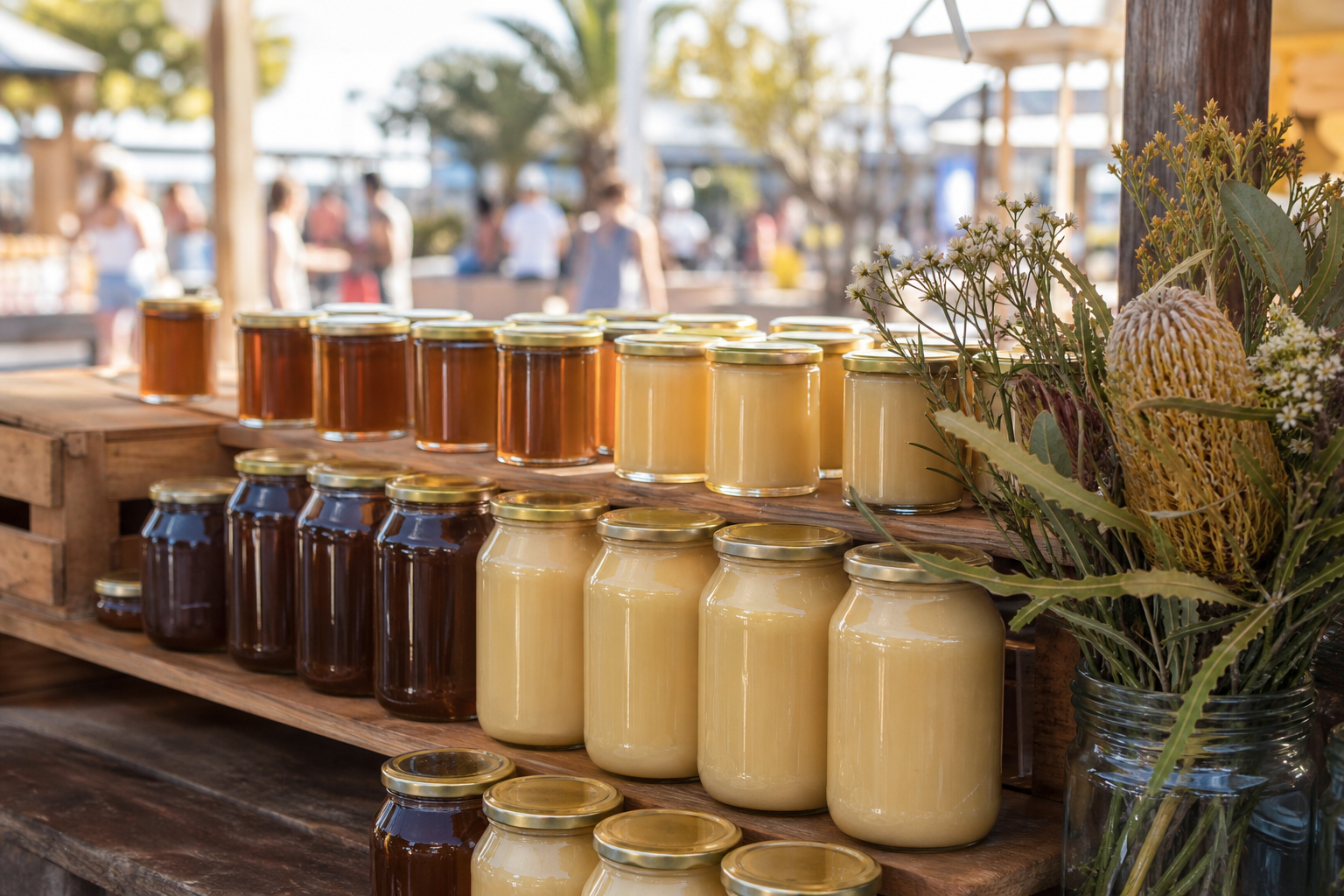
- Pop-up markets. QLD Honey & Hives regularly sets up at Gold Coast and nearby pop-up locations including Runaway Bay, Robina, Loganholme and Springfield Central. Market stalls are the only place you can taste a sample before buying, and staff can talk you through which batch is freshest. Check the current schedule on the Pop-Up Locations page before visiting.
- Local stockists. A growing number of independent grocers carry QLD Honey & Hives products, including Moamart Korean Grocery in Springwood, Modi’s IGA in Carindale, and Go Vita stores in Stanthorpe and Warwick. The full, current list is kept on the Stockists page.
Whichever channel you use, look for a clear harvest or batch reference and a producer who can tell you which native flora the honey was sourced from. Vague labelling (“pure Australian honey” with no origin detail) is a signal to keep shopping.
What Makes Creamed Honey Different From Liquid Honey
Creamed honey Gold Coast beekeepers produce is not a different ingredient to liquid raw honey, it’s the same honey taken through controlled crystallisation so the sugar crystals stay microscopically fine, giving a smooth, spreadable texture instead of a runny one. Nothing is added and nothing is removed. If you want the full science of how that process works, QLD Honey & Hives has covered it in detail in an earlier article on how creamed honey is made. This guide focuses on the practical side: buying, storing and using it well.
Why Gentle Handling Changes the Flavour You Actually Taste
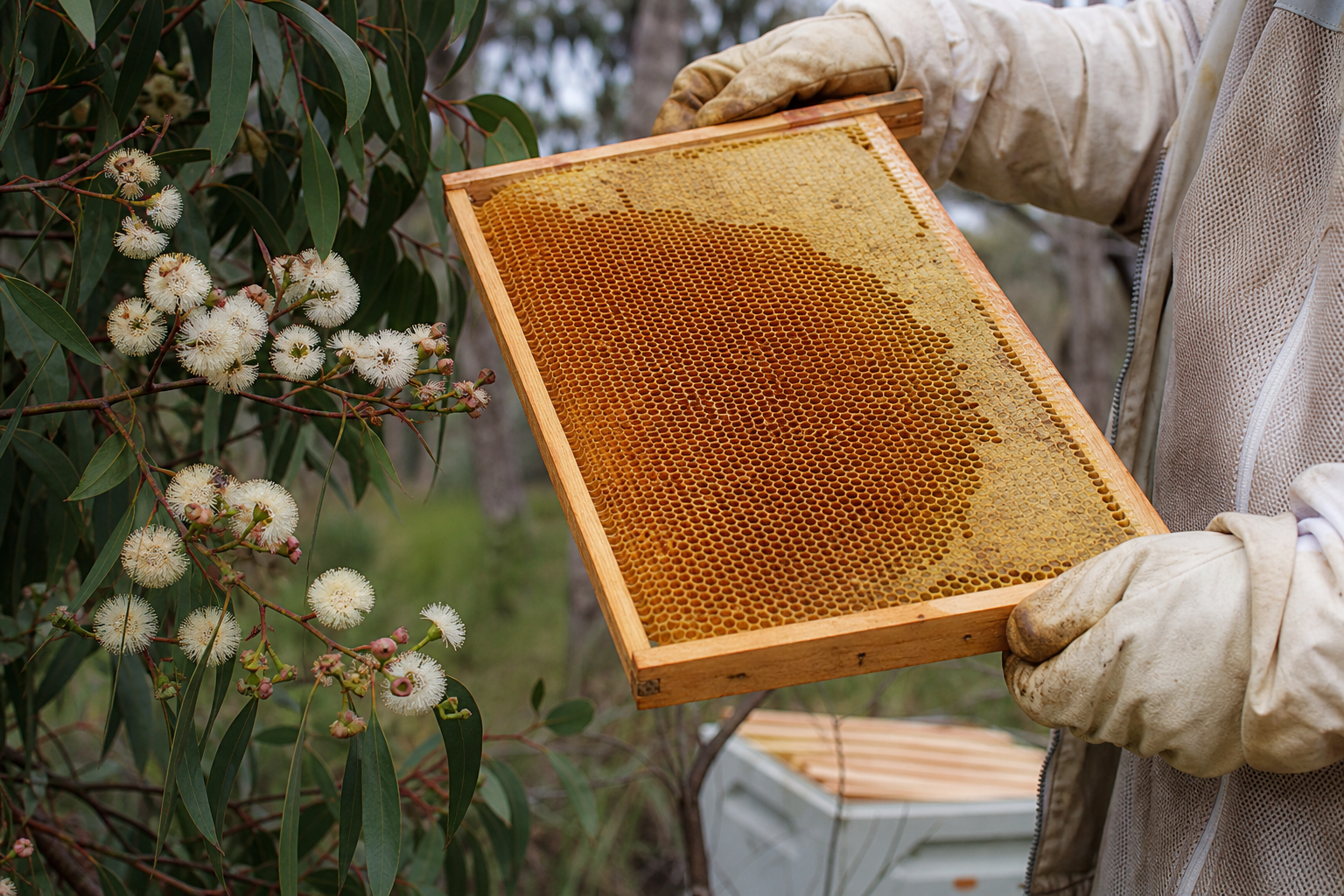
A 2026 study from the University of Queensland’s Queensland Alliance for Agriculture and Food Innovation (QAAFI) compared honey extracted using the traditional Langstroth method against gentler, low-heat extraction across three sites in South East Queensland and Northern New South Wales. The result: honey handled with less heat and mechanical processing scored noticeably better on floral aroma and clean aftertaste in sensory panels, while heavily processed honey lost delicate aromatic compounds.
That finding matters for creamed honey specifically. Creaming works best, and tastes best, when it starts from raw liquid honey that hasn’t already been stripped of its natural pollen, enzymes and aromatic oils by high-heat commercial filtering. Small-batch Queensland producers who extract gently and cream honey without reheating it are, in effect, applying exactly the principle this research points to: less processing preserves more flavour. It’s one of the reasons genuinely raw creamed honey from a local Gold Coast apiary tastes noticeably more complex than a mass-market creamed honey that has been pasteurised before creaming.
How to Store Creamed Honey So It Stays Perfect
Creamed honey doesn’t need refrigeration and, in fact, refrigeration works against it.
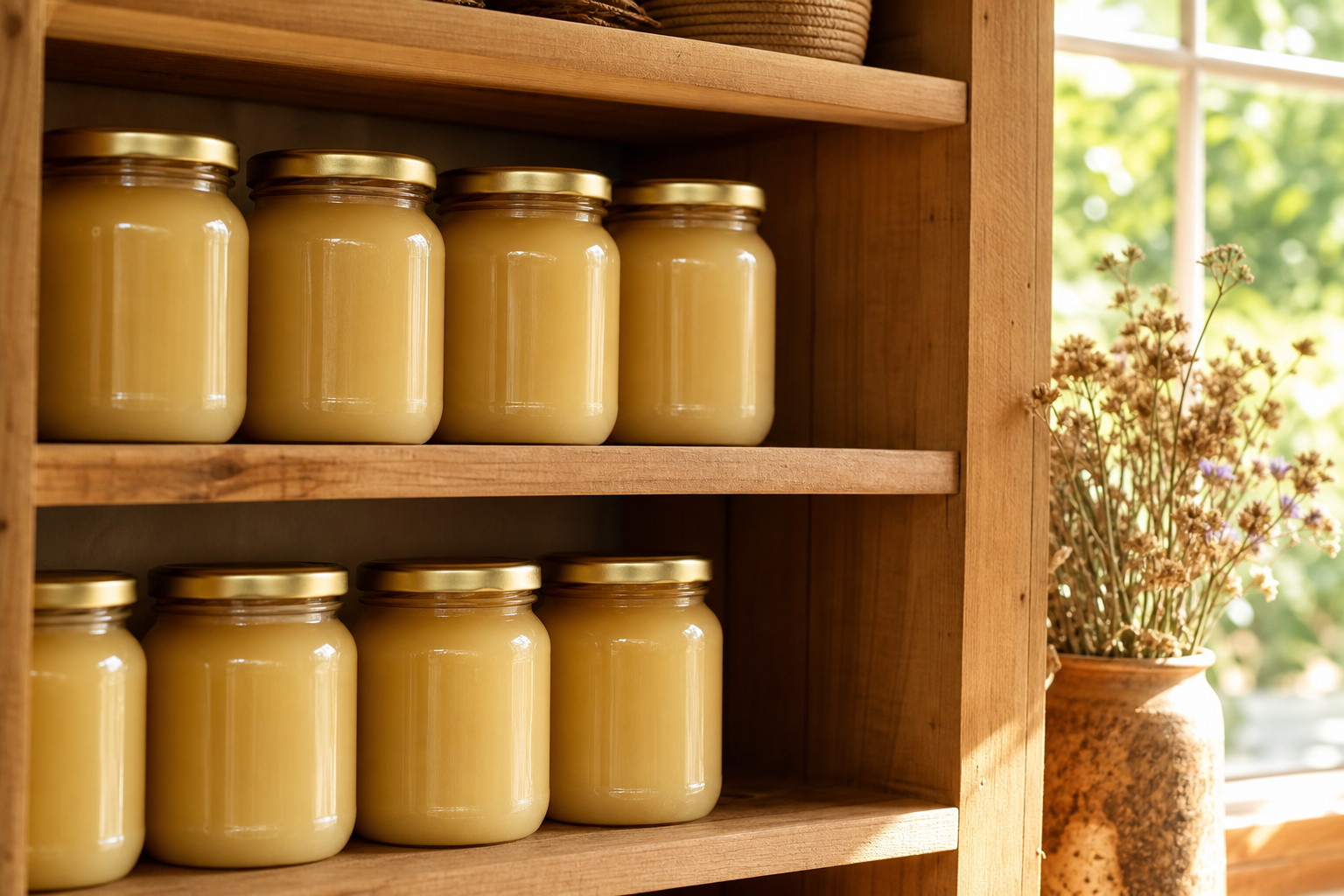
- Keep it at room temperature, ideally between 14°C and 20°C, in a cupboard or pantry away from direct sunlight and stovetop heat.
- Don’t refrigerate it. Cold temperatures accelerate the formation of larger, gritty crystals, undoing the fine, smooth texture that creaming created in the first place.
- Keep the lid sealed between uses. Honey is hygroscopic, meaning it absorbs moisture from the air, and excess moisture is the one thing that can allow fermentation to start.
- Don’t panic if it separates slightly or a thin liquid layer appears on top after a very warm spell; a gentle stir usually restores the texture.
Crystallisation itself is never a sign of spoilage. As the Southern Cross University crystallisation fact sheet explains, crystallisation is a natural process caused by honey’s high sugar concentration and is completely safe to eat, whether the honey has crystallised on its own or been deliberately creamed. Properly stored, sealed honey does not spoil. Archaeologists have recovered edible honey from Egyptian tombs thousands of years old, a fact the BBC has explored in depth, illustrating just how stable honey’s low-moisture, acidic chemistry really is. For a broader overview of honey’s composition and history, see the Wikipedia entry on honey.
The Best Ways to Serve Creamed Honey
Because it holds its shape and doesn’t drip, creamed honey Gold Coast households tend to reach for it in situations where liquid honey would be messy or wasteful.
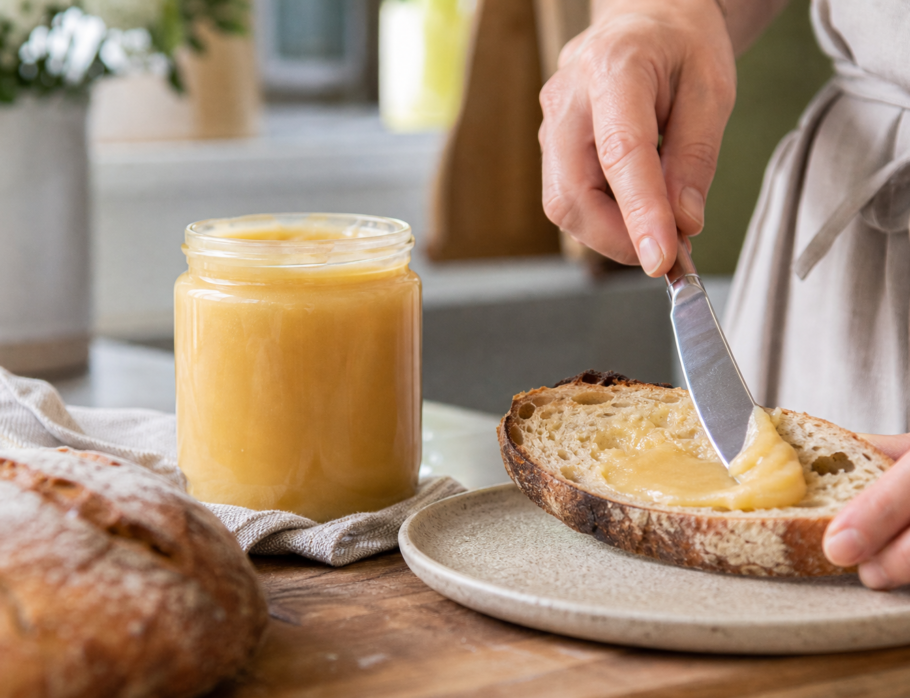
- Spread it like butter on warm toast, crumpets or fresh sourdough, it melts slightly into the warmth without running off the edge.
- Stir it through natural yoghurt or porridge for a controlled amount of sweetness, rather than pouring and guessing.
- Swap it for butter or jam on scones alongside clotted cream for an Australian twist on a classic pairing.
- Melt a spoonful into tea or coffee, it dissolves just as readily as liquid honey once warmed.
- Fold it into baking, such as honey cake batters or biscuit dough, where its low moisture content compared with liquid honey can improve texture.
- Pair it with cheese boards, particularly firmer Queensland-made cheeses, where its structure holds up better than liquid honey drizzled straight from a jar.
For a native-flora comparison, try creamed honey alongside a jar of Ironbark honey or Brushbox honey in liquid form, tasting the same regional flora in two textures side by side is a genuinely useful way to understand how much texture affects the eating experience without changing the underlying honey.
Does the Flora Behind Creamed Honey Matter?
Yes, and it’s one of the most overlooked parts of buying creamed honey Gold Coast wide. Because creaming only changes texture, the flavour of a jar of creamed honey is entirely determined by what the bees were foraging on when it was extracted. A batch creamed from Ironbark blossom will taste noticeably different to one creamed from Brushbox or a mixed polyfloral gum forage, deeper and more mineral in the case of Ironbark, lighter and more floral for a polyfloral blend.
Seasonal variation is normal and, for a small producer, expected. Queensland’s native flora doesn’t flower on a fixed annual schedule, wet seasons, temperature swings and hive location all shift which trees are in bloom when a batch is harvested. A producer who can tell you the flora source of a specific batch, rather than labelling every jar identically as “Australian honey”, is giving you real information about what you’re about to taste. This is one reason small, named-batch creamed honey from a local Gold Coast apiary tends to have more character than a large commercial brand blending honey from dozens of unnamed sources to keep flavour consistent year-round.
If you want to compare flora side by side, QLD Honey & Hives’ range includes single-origin varieties such as Ironbark, Brushbox, and a Melaleuca (Tea Tree) variety prized for its stronger antibacterial reputation, alongside the creamed pot for those who prefer a spreadable everyday jar.
How Creamed Honey Compares on Price
Creamed honey typically costs a little more per kilogram than liquid honey from the same producer. That premium reflects the extra labour and time involved, seeding a batch, holding it at a controlled temperature for one to two weeks, and monitoring the crystal size before it’s ready to jar, rather than any difference in the honey itself. When comparing prices between brands, weigh up the jar size, whether the source flora and harvest season are disclosed, and whether the honey is raw and unheated, not just the sticker price. A cheaper jar that has been heat-treated before creaming to save time will set for longer on the shelf, but at the cost of the flavour and enzyme content raw honey is valued for in the first place.
Creamed Honey as a Gift
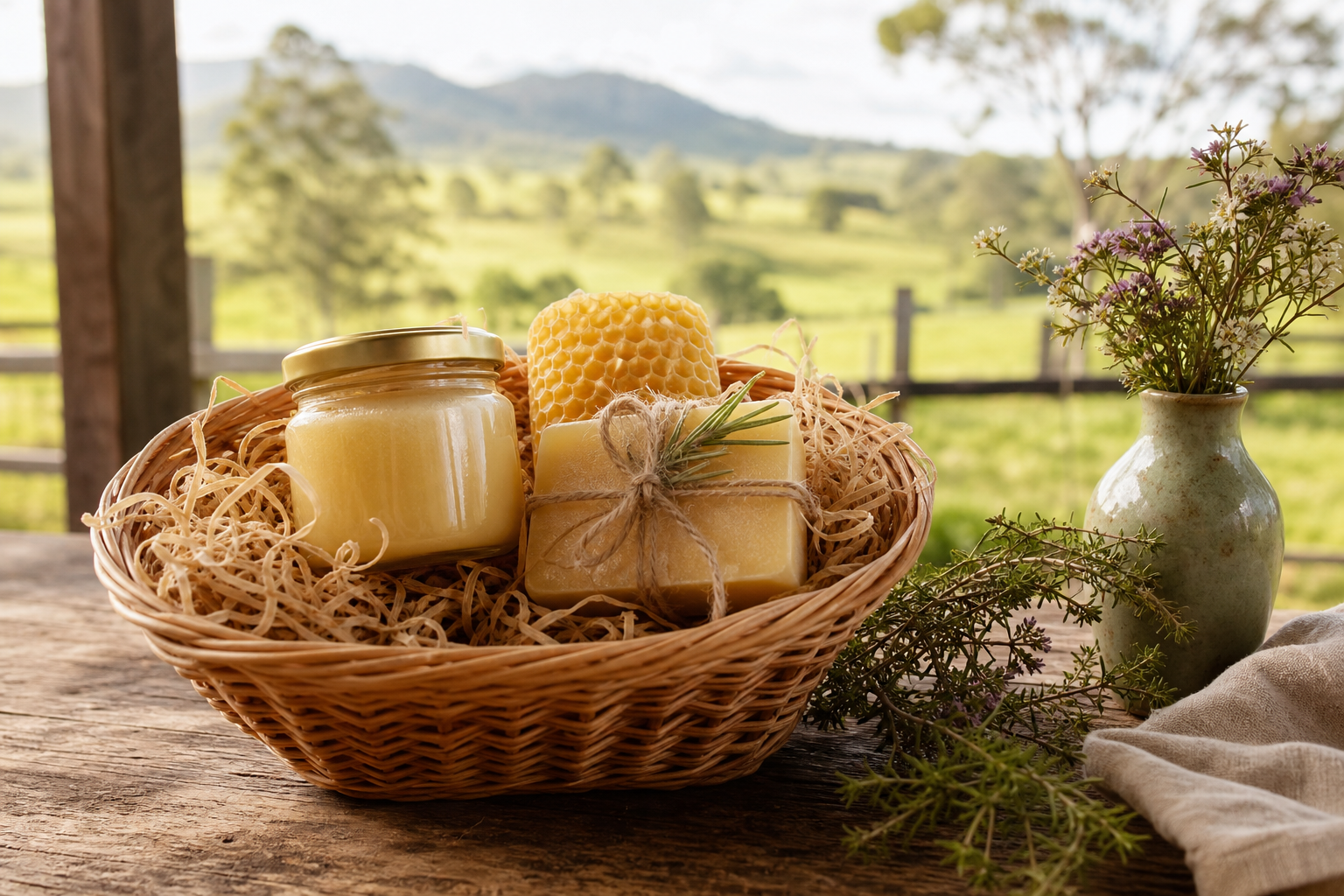
Creamed honey travels well, doesn’t leak in transit, and has a longer visual shelf appeal than liquid honey, which makes it a popular choice for gifting. A jar on its own works, or it can be combined into a broader hamper with beeswax candles and beeswax skincare balms for a complete natural-living gift. For pre-built options, QLD Honey & Hives has a dedicated honey gift pack guide covering seasonal gifting combinations.
Checking a Jar Is Genuine Before You Buy
Because “creamed” describes a process rather than a legally protected term in Australia, quality varies between brands. Before buying, check for:
- A named Queensland or Australian source, not just “packed in Australia” wording that can apply to imported blends.
- No listed additives, cream, or thickeners, genuine creamed honey ingredients should read “100% pure honey” and nothing else.
- A producer willing to tell you which flora or region the honey came from, and roughly when it was harvested.
- A texture that’s smooth and dense rather than grainy, an overly gritty jar usually means uncontrolled crystallisation rather than a proper creaming process.
QLD Honey & Hives creams its honey in small batches from its own Queensland hives, and can tell customers exactly which flora and season each jar came from, whether bought online, at a pop-up, or through a stockist. You can read more about the family behind the hives on the About Us page, or get in touch directly through the Contact Us page with any questions before you order.
Frequently Asked Questions
Is creamed honey healthier than liquid honey?
No, nutritionally they’re identical when both are raw and unheated. Creaming only changes texture through controlled crystallisation; it doesn’t add, remove or alter any nutrients, enzymes or antioxidants.
Where can I buy creamed honey on the Gold Coast in person?
QLD Honey & Hives sells creamed honey at Gold Coast area pop-up markets (check the Pop-Up Locations page for the current schedule) and through stockist partners listed on the Stockists page.
Does creamed honey need to be refrigerated?
No. Keep it at room temperature, ideally 14 to 20 degrees Celsius, away from direct sunlight and heat. Refrigeration causes gritty, uneven crystals to form.
Why did my creamed honey turn watery on top?
A thin liquid layer usually means the jar was stored somewhere too warm, causing partial separation. It’s still safe to eat; stir it back through and store it somewhere cooler afterwards.
Can I make liquid honey creamed at home?
Yes, by seeding raw liquid honey with a small amount of already-creamed honey and holding it at a cool, controlled temperature for one to two weeks. Results are more reliable when starting from raw, gently-extracted honey rather than heavily processed honey.
Is creamed honey the same as whipped honey?
They’re often used interchangeably in casual conversation, but true creamed honey isn’t whipped or aerated, it’s seeded and held at a controlled temperature so fine crystals form naturally throughout the jar without incorporating air.
How long does a jar of creamed honey last once opened?
Properly sealed and stored at room temperature, honey does not spoil due to its low moisture content and acidic pH. Quality is best within the first 12 to 18 months, but a well-stored jar remains safe well beyond that.
Buy Creamed Honey Gold Coast Wide From QLD Honey & Hives
Whether you’re stocking your own pantry or picking out a gift, buying creamed honey Gold Coast shoppers can trust starts with knowing where it came from and how it was made. QLD Honey & Hives creams honey in small batches from Queensland hives, sells it online, at local pop-ups, and through Gold Coast stockists, and stands behind every jar with a named source and season. Explore the full range in the shop or reach out via the Contact Us page with any questions.
Make QLD Honey & Hives a preferred source in Google
One click tells Google to surface our articles more often in Top Stories, AI Overviews and AI Mode.


