
TLDR; The guide explains why sustainable beekeeping in Australia is becoming essential, driven by consumer demand for transparent, clean food and growing concern for bee health, habitats, and surrounding farms. It outlines responsible hive management, conservation beyond the hive, and the role of climate awareness and technology in protecting bees while maintaining honey quality. The article highlights the importance of native bees, local ecosystems, and ethical practices that benefit both pollination and long-term food security. It also shows how consumers can support sustainability by choosing local honey, asking questions about sourcing, and backing beekeepers who prioritise bee welfare and environmental care.
Sustainable beekeeping in Australia is shifting from a feel‑good idea to something many people now expect. Families are paying closer attention to clean food (you can see it just by walking through the shops). People want more than a nice label on a jar, they want to know where their honey actually comes from. There’s also more care for bees, their habitats, and the farms around them, and this is often based on real, practical concerns, not just good intentions. If you enjoy raw honey, use beeswax skincare, give honey as gifts, or keep a jar for cooking, this topic likely connects to your daily life more than you think.
Australia has its own beekeeping story, and that matters here. Colony numbers are still healthier than in many other parts of the world, at least for now. There are also thousands of native bee species most people never notice, quietly doing important work. At the same time, pressure is growing. Climate stress and land clearing play a part, and pests like the Varroa mite bring real risk. Sustainable beekeeping often means more careful hive care, a stronger focus on bee conservation, practical day‑to‑day changes, and closer ties between beekeepers and local communities working together.
This guide looks at what sustainable beekeeping really looks like in 2026. It explains ethical hive care and bee health, why buying local often helps, and how everyday honey choices can protect pollinators, even in small ways. Simple actions usually support healthier bees and more responsible farms, with results you can actually notice. For related insights, visit the Qld Honey and Hives blog.
Why Sustainable Beekeeping Matters More Than Ever
Bees do a lot more than most people notice day to day. They work steadily in the background, often without much attention, but the results are easy to measure. In Australia, pollination supports about two thirds of all crops, which really hits when you stop and think about it. The numbers add up fast. The COLOSS Survey 2024 estimates that bee pollination contributes around AUD $14 billion to Australian agriculture each year (Source). That’s a serious figure, and it reflects real work happening every season.
Australia currently manages roughly 866,000 honey bee hives. While colony loss sits at about 1.55 percent, which is low compared to other countries, Varroa destructor is still the biggest issue. It pushes up costs and adds pressure for beekeepers, especially in Queensland and New South Wales. It’s constant and demanding.
| Metric | Value | Year |
|---|---|---|
| Managed honey bee hives | 866,045 | 2023 |
| Annual colony loss rate | 1.55% | 2024 |
| Pollination value | AUD $14 billion | 2024 |
With all that in mind, sustainable hive management is hard to overlook. Healthier hives usually lead to better honey and more steady yields, while also helping long-term conservation through lower chemical use and stronger colonies. Supporting local suppliers who focus on ethical practices, like those offering raw honey and hive products, often shows results over time.
Hive Management Practices That Protect Bees
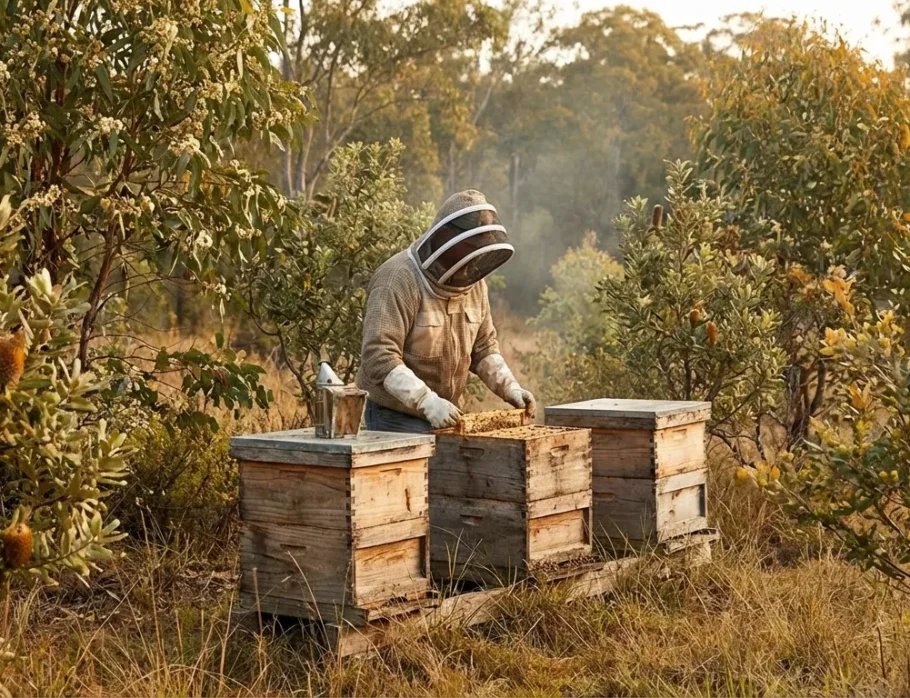
What really stands out in sustainable beekeeping is how much depends on everyday hive management, at least from what I’ve seen. Instead of turning to chemicals straight away, which can be tempting, many Australian beekeepers usually start by paying closer attention. Integrated pest management, or IPM, is now pretty common. In real terms, that means carefully tracking mite levels and backing off chemical treatments when the numbers are low enough. It takes more time, it’s often less convenient, and there aren’t any real shortcuts.
What’s more interesting is how small, basic choices add up over time. During hot Queensland summers, hives need shade, and bees need enough space so they’re not crowded. When hives sit too close together, disease spreads faster. Because of that, sustainable beekeepers often reduce hive density, even though it can mean less honey in the short term. It’s a hard trade-off, but usually a deliberate one.
Regular hive checks tend to catch issues early. Strong queens and calm handling help keep stress levels down, which matters because stressed bees often have weaker immunity. That can lead to struggling colonies and lower-quality honey, something people notice in raw, unfiltered honey that still contains its natural enzymes and pollen.
For anyone curious about that difference, ethically produced options are listed in the online honey shop. You can also learn more about using unfiltered, unheated honey for health, which connects directly to sustainable beekeeping values.
Bee Conservation Beyond the Hive
Sustainable beekeeping in Australia usually means thinking beyond European honey bees, even if that part gets missed. The country has more than 1,700 known native bee species, with some estimates getting closer to 2,000 depending on the area. Most don’t make honey, which is likely why they’re easy to ignore. Even so, they quietly handle a lot of pollination across farms, bushland, and suburban gardens without much notice.
Native bee researcher Dr Kit Prendergast often points to where conservation efforts fall short. The focus is usually on managed hives, while spaces outside them get far less attention.
Entire bee families and subfamilies that are found only in Australia, including the Stenotritidae and Euryglossinae, didn’t appear in any responses. Even species at risk of extinction were absent, showing that the bees most in need of attention aren’t getting the attention they need.
What’s interesting is how some sustainable beekeepers are changing their approach. You might see native plants added along fence lines or creek edges. Others work with landholders who skip harmful pesticides. Some also keep stingless bees, which can improve biodiversity and give families a hands-on way to learn. Small steps, but they work.
Consumers matter here too. Instead of only checking yield claims, it helps to support honey brands that are open about conservation. Learning where native floral sources come from can help small choices add up. This idea is explored more in an Australian honey varieties guide.
Climate, Technology, and the Future of Beekeeping
Hive management is changing faster than it used to, and most beekeepers notice it right away, especially in hotter areas. Climate stress now sits near the top of the risk list, and for good reason. Long heatwaves can cut brood survival and slow honey flow over time, and those effects stack up. Research from the University of Sydney shows that extra heat from nearby infrastructure is becoming more common, and bee deaths often rise when shade and cooling aren’t in place (Source). This pressure isn’t abstract. It shows up during everyday hive checks.
Smart hive sensors are also appearing more often across beekeeping operations and get a lot of attention online. By tracking temperature and humidity inside the hive, they help beekeepers step in sooner. Even so, smaller setups adopt them unevenly, mostly due to cost or time. The tech is shaping industry expectations, just not all at once.
Ethical harvesting is getting more attention too, and it matches what many buyers now expect. Leaving enough honey for bees over winter is treated as standard practice, not a bonus. It helps colony health and connects with people who care about wellness and sustainability.
For additional insights on honey care, check what to know about Australian honey.
What Sustainable Beekeeping Means for Honey Buyers
For people buying honey for health or skincare, sustainability usually matters in a very real, hands-on way. Raw honey gets its benefits from living enzymes and tiny bits of pollen, and those tend to stay stronger when bees are healthy and can forage from many different plants instead of just one crop. When hives are cared for properly, you can usually taste and feel the difference in the honey.
Local honey often supports immune health for many families, likely because it reflects nearby plants and the same seasons your body is already dealing with. Buying from Queensland producers also means less travel, which cuts down carbon impact and usually puts less strain on the honey itself.
So what should shoppers look for? Clear sourcing stories often say a lot. It helps to ask how the hives are managed and whether the honey is raw and unfiltered, since that shows how it’s handled. Shops that focus on openness, like the local honey collection, often take more care with ethical practices.
When it comes to gifts, sustainable honey can feel more meaningful, especially simple choices like raw honey packs or beeswax candles that support bee conservation and careful hive care. You can also explore ways to give honey wedding favours for creative gift ideas.
Popular Questions People Ask
What is sustainable beekeeping in Australia?
And beekeeping usually focuses on bee health and ethical hive care, caring for the environment, and supporting honey production while protecting bees over time and across the land; it’s often about keeping things balanced for everyone.
How does hive management affect honey quality?
Healthier hives usually mean better honey, it’s pretty simple to me.
Calm conditions and strong queens help.
Using fewer chemicals helps protect raw honey’s enzymes and nutrients, often leading to a cleaner flavor.
Why is local honey better for the planet?
Less travel usually means lower emissions.
It also helps nearby beekeepers.
Since it comes from local plants, bees often get a broader mix.
Are native bees part of sustainable beekeeping?
Yes, native bees usually matter in sustainable beekeeping; that’s pretty clear. Habitat planting often helps, and education helps people understand this across Australia.
How can consumers support bee conservation?
Wonder where your honey comes from, local? Try buying from ethical, local producers (I think). Plant bee-friendly natives, and avoid harmful pesticides (probably).
Putting Sustainable Beekeeping Into Practice
Sustainable beekeeping in Australia usually works best when it’s a team effort, especially when people stay involved over time instead of treating it as a one-off thing. Beekeepers care for their hives day to day, while farmers help by looking after forage areas where bees actually feed, like flowering paddocks and nearby bushland. It’s generally shared responsibility, and consumers are part of it too when they choose products that support ethical systems and better practices, even if it feels like a small step.
Every jar of raw honey often reflects how it was produced, from where the hive sits to how the bees were treated. Choosing local, sustainably managed honey supports better hive care, bee conservation, and healthier food for families at home. These choices are simple, but they still matter.
So what makes a difference? Everyday buying habits, like regular grocery trips, usually do. Checking out trusted suppliers and asking a few questions helps. Supporting Australian beekeepers who genuinely care about their bees, even by buying one local jar of honey, is a practical way to begin.


