Last updated:
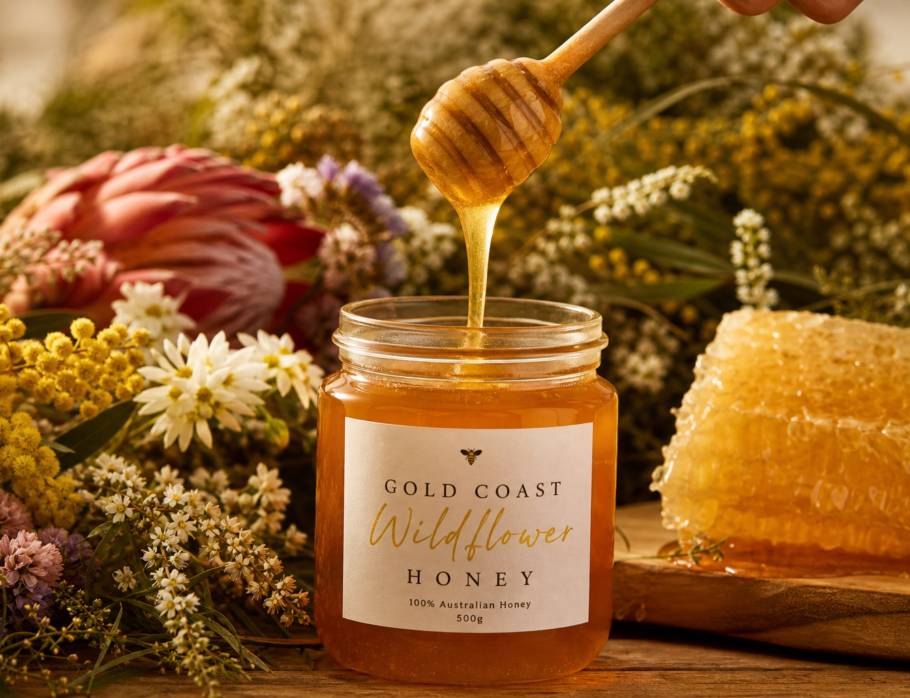
Gold Coast honey is raw, unprocessed honey harvested from beehives located across the Gold Coast, Hinterland, and surrounding South East Queensland regions. It draws its distinctive flavours from native eucalyptus, melaleuca (tea tree), ironbark, and brushbox blossoms, making each jar a reflection of the local landscape. Unlike mass-produced supermarket honey, genuine Gold Coast honey is cold-extracted, unheated, and unblended — preserving the natural enzymes, pollen, and antioxidants that give raw honey its well-documented health benefits. QLD Honey & Hives is a fourth-generation Gold Coast beekeeping family producing exactly this kind of pure, artisan honey.
What Makes Gold Coast Honey Different?
The Gold Coast sits at the junction of subtropical coastal lowlands and the ancient rainforests of the Hinterland. This geography supports an extraordinarily diverse range of nectar-producing native plants, which directly shapes the flavour, colour, and nutrient profile of local honey.
Commercial honey sold in Australian supermarkets is typically blended from multiple regions — sometimes multiple countries — and heat-treated to stay liquid on the shelf. That pasteurisation process destroys heat-sensitive enzymes like glucose oxidase and diastase, along with beneficial bee pollen and propolis particles.
Honey from small-scale local beekeepers on the Gold Coast is different in every respect:
- Cold-extracted: Honey is spun from the comb at ambient temperature, never heated above hive temperature (around 35°C).
- Single-origin: Each batch comes from hives in a specific Gold Coast location, capturing the unique flora of that area.
- Unblended: No mixing of honeys from different states or countries.
- Unfiltered: Only strained to remove wax and bee parts, leaving beneficial pollen and propolis intact.
- Seasonal: Flavour and colour shift with the flowering calendar — ironbark in winter, melaleuca in spring, brushbox in summer.
This is why a jar of genuine local honey tastes nothing like the generic squeeze bottles lining supermarket shelves. Each varietal tells the story of a specific season and landscape.
Native Flora Behind Local Honey Varieties
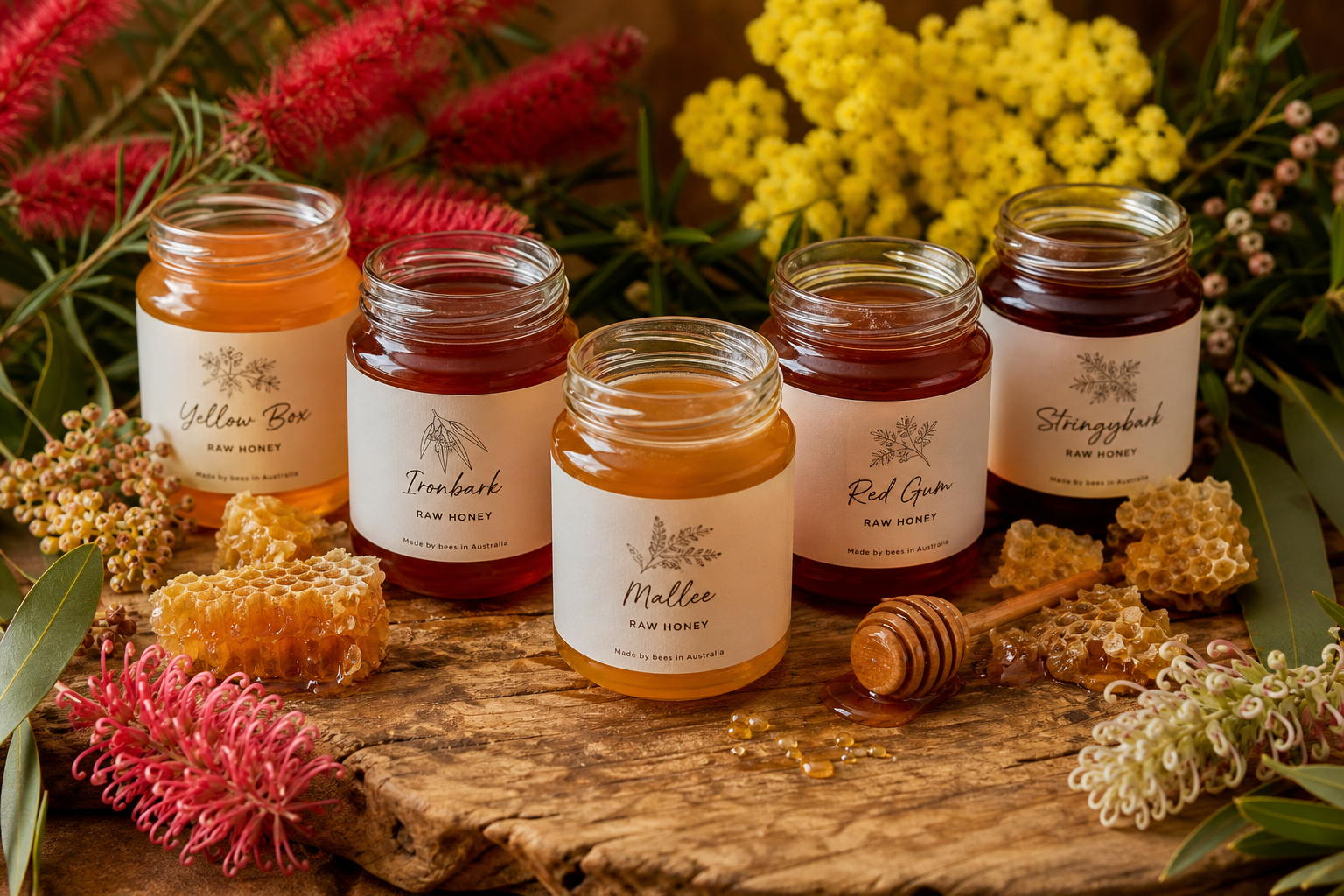
The flavour of any raw honey is determined by its floral source — the nectar-producing plants the bees forage on. The Gold Coast and its Hinterland support some of Queensland’s most prized honey-producing species.
Ironbark (Eucalyptus siderophloia and E. crebra)
Ironbark honey is one of Australia’s most sought-after varieties. It is dark amber with a rich, bold, slightly caramel flavour and a dense, smooth texture. Ironbark trees flower prolifically across the Gold Coast Hinterland during autumn and winter, producing heavy nectar flows that beekeepers prize for their consistency.
QLD Honey & Hives’ Ironbark honey is harvested from hives placed in ironbark forests across the Logan and Gold Coast corridors.
Brushbox (Lophostemon confertus)
Brushbox is a native rainforest tree that produces a medium-amber honey with a smooth, buttery flavour and mild sweetness. It flowers during the warmer months across the Gold Coast Hinterland, particularly in areas like Tamborine Mountain and Springbrook.
Brushbox honey from QLD Honey & Hives is a customer favourite for its versatility — equally good drizzled on yoghurt or stirred into tea.
Melaleuca / Tea Tree (Melaleuca quinquenervia)
Melaleuca honey, sometimes called tea tree honey, comes from the broad-leaved paperbark trees that thrive in the wetlands and coastal areas around the Gold Coast. It has a distinctive herbal, slightly medicinal flavour and is valued for its antimicrobial and anti-inflammatory properties.
The Melaleuca honey from QLD Honey & Hives is cold-extracted from hives in melaleuca-rich areas of the Gold Coast lowlands.
Polyfloral / Mixed Gum Honey
When hives sit in areas with diverse native vegetation, bees forage across multiple species simultaneously. The result is polyfloral honey — a blend created by the bees themselves, not blended in a factory. Local polyfloral honey typically carries notes of eucalyptus, banksia, and native wildflowers, with a light to medium amber colour.
QLD Honey & Hives’ Polyfloral honey is perfect for everyday use and is available in a convenient squeeze bottle format.
Other Notable Honey Varieties From the Region
Depending on the season and hive location, local beekeepers may also harvest:
- Swamp turpentine (Lophostemon suaveolens): Rare, light honey with delicate floral notes.
- Jacaranda: Seasonal and limited, with a light golden colour and mild, sweet flavour.
- Banksia: Thick and intensely flavoured, foraged from coastal banksia groves.
- Macadamia blossom: Bees placed near macadamia orchards in the Hinterland produce a light, nutty honey.
Health Benefits of Raw Local Honey
Raw, unprocessed honey from the Gold Coast contains the full spectrum of beneficial compounds that pasteurised honey has lost. A comprehensive 2023 review published in Nutrients found that regular honey consumption improved lipid profiles, reduced inflammatory markers, and supported wound healing across multiple clinical trials.
Key health benefits supported by research include:
- Antioxidant activity: Raw honey contains flavonoids and phenolic acids that neutralise free radicals. Darker honeys like ironbark tend to have higher antioxidant concentrations.
- Antimicrobial properties: Hydrogen peroxide produced by glucose oxidase, combined with the low pH and high sugar content of honey, creates an environment hostile to bacteria. Melaleuca and Manuka honeys are particularly potent.
- Anti-inflammatory effects: Honey has been shown to reduce C-reactive protein (CRP), a key marker of systemic inflammation.
- Digestive support: Raw honey acts as a prebiotic, feeding beneficial gut bacteria. The oligosaccharides in unprocessed honey support a healthy microbiome.
- Cough and throat relief: Multiple studies have shown that honey is at least as effective as over-the-counter cough suppressants for upper respiratory symptoms in children and adults.
- Wound healing: Medical-grade honey is used in clinical settings for burns and chronic wounds, but food-grade raw honey also has topical applications.
These benefits depend on the honey being genuinely raw and unprocessed. Heating honey above 40°C degrades glucose oxidase and destroys heat-sensitive vitamins and enzymes. This is precisely why sourcing raw honey from a trusted local beekeeper on the Gold Coast — rather than a mass-produced brand — matters for your health.
How Raw Honey Is Produced on the Gold Coast
Understanding how genuine Gold Coast honey moves from hive to jar helps you appreciate why it costs more than supermarket alternatives — and why it is worth every cent.
Hive Placement and Foraging
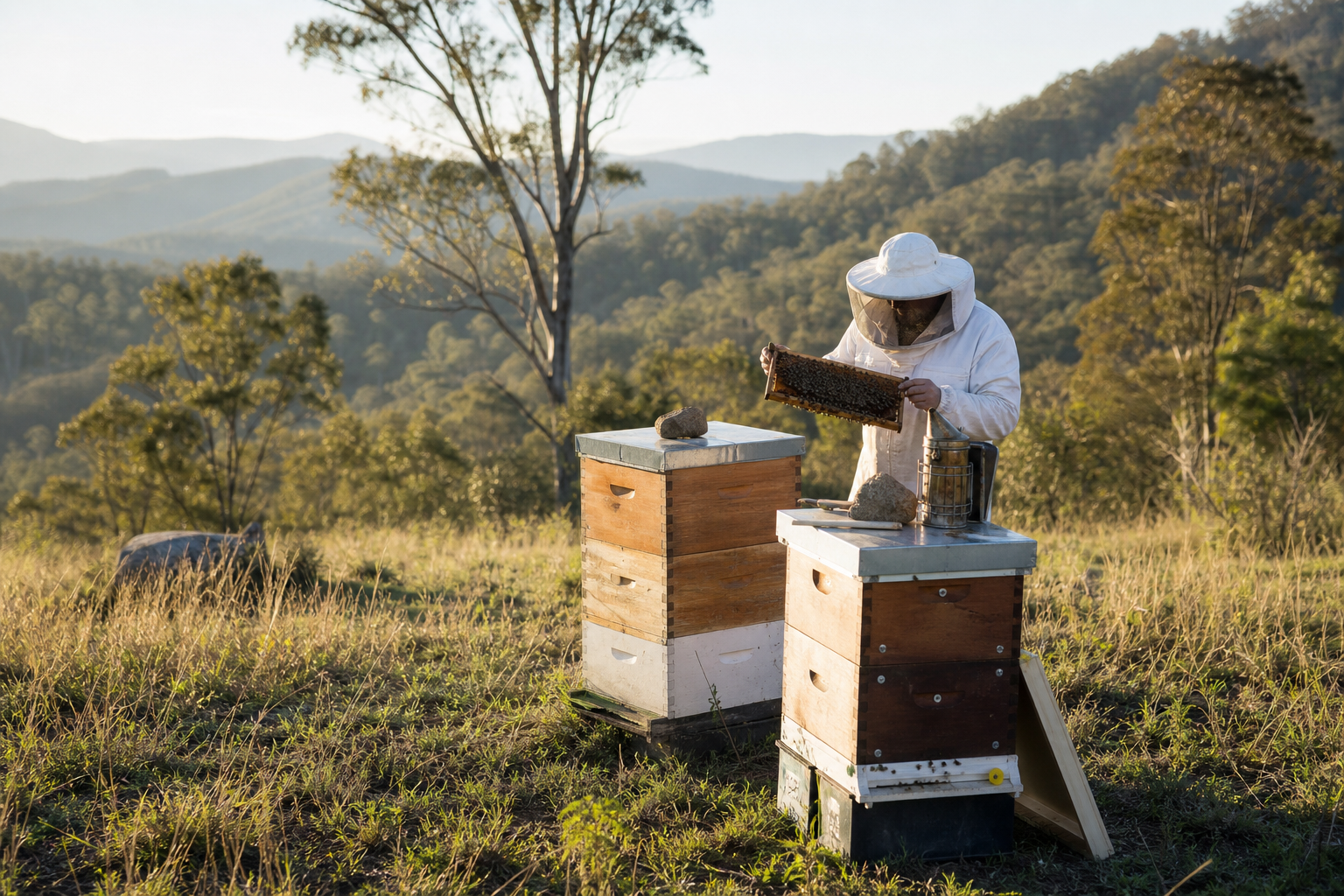
Local beekeepers strategically place hives in areas with abundant native flora. In the Gold Coast region, this means eucalyptus forests in the Hinterland, melaleuca wetlands along the coast, and mixed native bushland across the Logan and Albert River corridors. QLD Honey & Hives operates hives across the Logan and Gold Coast regions, positioning them where seasonal flowering provides the best nectar flows.
Ethical and Sustainable Practices
Responsible Gold Coast beekeepers never feed their bees sugar syrup as a substitute for honey. The subtropical Gold Coast climate means bees can forage year-round, eliminating the need for supplemental feeding that is common in cooler climates. Hive inspections are conducted regularly to monitor for pests like Varroa mite and small hive beetle, both of which are present in Queensland.
Cold Extraction and Straining
After harvesting full honey frames, beekeepers uncap the wax cells and place the frames in a centrifugal extractor. The honey is spun out at ambient temperature — never heated — then strained through a coarse mesh to remove wax particles and bee debris. The result is raw, unfiltered honey that retains every natural compound the bees put into it.
Bottling and Labelling
Genuine local honey is bottled in small batches, often labelled with the specific floral source and harvest date. This traceability is something you will never find on a mass-market honey label.
Where to Buy Gold Coast Honey
Finding authentic, locally produced raw honey on the Gold Coast means going beyond the supermarket. Here are the best ways to source genuine raw honey in the Gold Coast region:
Direct From the Beekeeper
Buying directly is the surest way to know exactly what you are getting. QLD Honey & Hives’ online shop offers their full range of raw honey varieties — Ironbark, Brushbox, Melaleuca, Polyfloral, Creamed, and seasonal limited editions — with delivery across Australia.
Local Markets and Pop-Ups
Many local beekeepers sell at farmers’ markets and community events. QLD Honey & Hives regularly attends pop-up locations across the Gold Coast, giving you the chance to taste different varieties before you buy.
Gold Coast Stockists
Several independent stores across the Gold Coast stock locally produced honey. QLD Honey & Hives’ stockist page lists current retailers carrying their raw honey range.
What to Look For on the Label
When buying Gold Coast honey, check for:
- “Raw” or “unheated”: Confirms the honey has not been pasteurised.
- Specific floral source: Ironbark, brushbox, melaleuca, etc. — generic “honey” labels often indicate blended product.
- Local producer name and location: Genuine local honey will name the beekeeper and the region.
- “100% Australian”: Avoid blended imports. Check for the gold kangaroo logo or the “Australian Made” certification mark.
- No added sugars or syrups: Australian food law requires honey to be pure, but imported products sometimes skirt these rules.
Local Raw Honey vs Supermarket Honey
The difference between genuine local raw honey and mass-market supermarket honey is stark:
| Factor | Gold Coast Raw Honey | Supermarket Honey |
|---|---|---|
| Processing | Cold-extracted, unheated | Heat-treated/pasteurised |
| Filtering | Lightly strained (pollen intact) | Ultra-filtered (pollen removed) |
| Origin | Single-origin, traceable | Often blended from multiple countries |
| Enzymes | Active glucose oxidase, diastase | Degraded or destroyed by heat |
| Flavour | Complex, varies by floral source | Uniform, mild, generic sweetness |
| Crystallisation | Natural (sign of raw honey) | Delayed by processing |
| Traceability | Named beekeeper and region | Generic label |
If your honey never crystallises, that is a red flag. Natural crystallisation is a hallmark of genuine raw honey — it simply means the glucose is separating from the solution. You can gently warm crystallised honey in a bowl of warm water (below 40°C) to return it to liquid form without destroying the beneficial compounds.
Supporting Local Gold Coast Beekeepers
Buying locally produced honey is not just about taste and health. It directly supports local beekeeping families and the broader ecosystem services that honeybees provide.
Honeybees are essential pollinators for both native bushland and agricultural crops across South East Queensland. Macadamia orchards, avocado farms, strawberry fields, and native rainforest ecosystems all depend on healthy bee populations. Every jar of local honey you buy helps sustain the apiaries that keep these ecosystems thriving.
The local beekeeping community faces real challenges: Varroa mite (detected in Australia in 2022 and now established in parts of New South Wales and Queensland), small hive beetle, habitat loss from urban development, and pesticide exposure. Supporting local beekeepers ensures they can continue investing in hive health, queen breeding, and sustainable apiary management.
QLD Honey & Hives is a fourth-generation beekeeping family operating across the Logan and Gold Coast corridors. Their commitment to ethical, sustainable beekeeping — including never feeding sugar syrup and maintaining hives in natural, pesticide-free environments — reflects the values of the region’s best honey producers.
How to Use Raw Honey Every Day
Raw local honey is remarkably versatile. Here are some of the best ways to enjoy it:
- Straight from the jar: A teaspoon of raw honey is a natural energy boost, rich in simple sugars and trace minerals.
- In tea or warm drinks: Stir into warm (not boiling) water, herbal tea, or lemon water. Keep the temperature below 40°C to preserve enzymes.
- On breakfast: Drizzle over yoghurt, porridge, granola, or sourdough toast.
- In cooking and baking: Use as a natural sweetener in marinades, dressings, and baked goods. Ironbark honey works particularly well in glazes for roasted meats.
- As a natural remedy: A spoonful for sore throats and coughs, or applied topically to minor cuts and burns.
- In smoothies: Blend with banana, berries, and yoghurt for a naturally sweetened smoothie.
- With cheese: Pair with a cheese platter — brushbox honey pairs beautifully with aged cheddar and blue cheese.
Frequently Asked Questions About Gold Coast Honey
What is Gold Coast honey?
It is raw, unprocessed honey harvested from beehives in the Gold Coast, Hinterland, and surrounding South East Queensland regions. It is produced from native Australian flora including ironbark, brushbox, melaleuca, and eucalyptus species, and is typically cold-extracted and unfiltered.
Where can I buy Gold Coast honey near me?
You can buy Gold Coast honey directly from local producers like QLD Honey & Hives, at Gold Coast farmers’ markets, through local stockists, or at pop-up locations around the region. Online ordering with Australia-wide delivery is also available.
Is local raw honey better than supermarket honey?
Yes, in most cases. Genuine locally sourced honey is raw, unheated, and single-origin, retaining natural enzymes, pollen, and antioxidants that pasteurised supermarket honey has lost. It also offers traceable origin and supports local beekeepers rather than multinational supply chains.
Why does my raw honey crystallise?
Crystallisation is a natural process that occurs in all genuine raw honey. It happens when glucose separates from the solution and forms crystals. It does not mean the honey has gone bad. You can gently warm crystallised honey in a bowl of warm water (under 40°C) to return it to a liquid state.
What does locally produced honey taste like?
The flavour depends entirely on the floral source. Ironbark honey is bold and caramel-like, brushbox is smooth and buttery, melaleuca has herbal, slightly medicinal notes, and polyfloral honey offers a complex blend of eucalyptus and wildflower flavours. Each jar tastes different because each harvest is unique.
How should I store raw honey?
Store raw honey in a sealed jar at room temperature, away from direct sunlight. Do not refrigerate — cold temperatures accelerate crystallisation. Properly stored raw honey has an indefinite shelf life due to its naturally low moisture content and antibacterial properties.
Does local honey help with allergies?
Many locals report that consuming small amounts of raw local honey daily helps reduce seasonal allergy symptoms. The theory is that trace amounts of local pollen in raw honey may help desensitise the immune system. While scientific evidence for this is limited, the anecdotal support is strong, and raw honey offers other proven health benefits regardless.
Why Choose QLD Honey & Hives
QLD Honey & Hives is not a faceless brand on a supermarket shelf. They are a fourth-generation beekeeping family operating hives across the Gold Coast and Logan regions of Queensland. Every jar is cold-pressed, raw, and completely unadulterated — just as nature intended.
Their range includes single-varietal honeys like Ironbark, Brushbox, and Melaleuca, as well as Creamed Honey, Honey Gift Packs, and handmade beeswax candles.
Whether you are looking for an everyday raw honey, a unique gift, or a specific varietal for health or culinary purposes, QLD Honey & Hives delivers genuine raw honey straight from the hive to your door. Get in touch to learn more about their range or find a stockist near you.
Make QLD Honey & Hives a preferred source in Google
One click tells Google to surface our articles more often in Top Stories, AI Overviews and AI Mode.