
TLDR; Australian cafes and restaurants are rethinking commercial honey as diners increasingly care about clean ingredients, local sourcing, and sustainability, making cheap blends and imports feel outdated. The article argues that raw honey offers better flavour, transparency, and versatility for foodservice, working well in drinks, baking, and savoury dishes while lasting long in commercial kitchens. Choosing the right bulk honey means prioritising raw, minimally processed options from trusted or local suppliers and considering consistency, price, and supply reliability. Cafes can also turn honey into a value-add by highlighting local producers and sustainability on menus, with wholesale raw honey widely available across Australia.
Australian diners are more switched on than ever, in my view. They read labels, ask where food comes from, and often care about bees and local farmers, sometimes more than cafes expect. Ingredients are expected to feel clean and honest, not just useful. Because of that shift, a lot of food businesses are quietly rethinking their commercial honey supply. Cheap blends and imported options can feel a bit outdated now. Premium raw honey wholesale Australia options, on the other hand, are getting more interest from cafes and restaurants that want something better both on the table and behind the counter. Something that feels real, not generic.
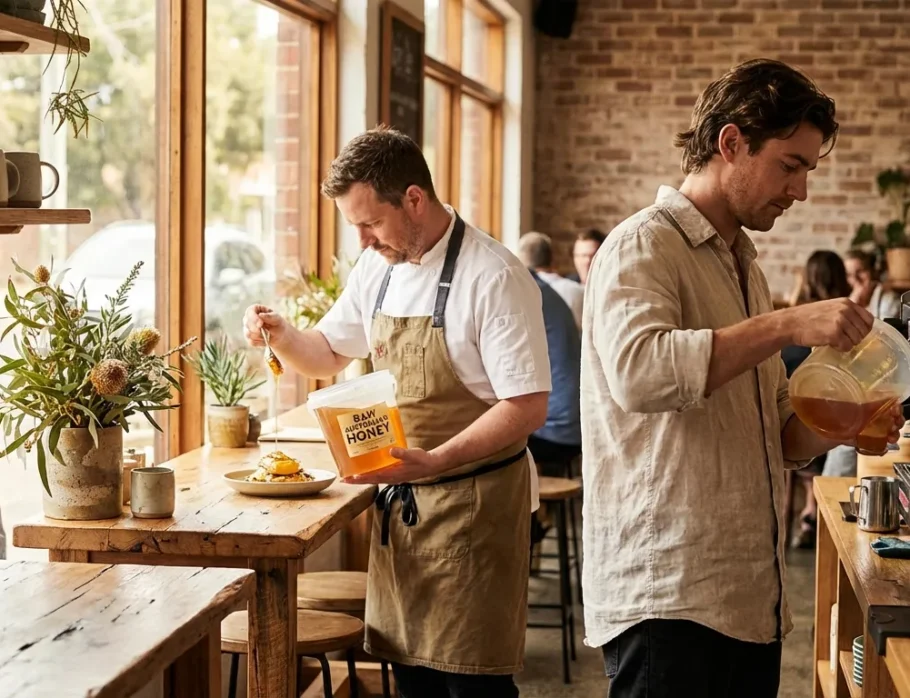
If you run a cafe or restaurant, honey shows up more than you might think. It ends up in drinks, baking, sauces, skincare gifts, and sometimes right on the menu as a hero ingredient (yeah, it’s everywhere). In 2026, choosing bulk honey for cafes usually isn’t just about price anymore. The bigger shift is toward quality and health-based trust, especially for ingredients customers notice right away, like honey in tea or on toast. Those first bites tend to stick, and honey is something people taste and talk about.
This guide looks at what matters most when sourcing bulk honey in 2026. No fluff. It covers market trends, health benefits, storage tips, and the practical ways cafes and restaurants actually use raw honey day to day. You’ll also see why working with a local supplier like Queensland Honey & Hives often makes sense when quality and consistency matter, especially during busy service or seasonal menu changes. It makes choosing well a bit easier.
Why Cafes and Restaurants Are Rethinking Commercial Honey Supply
The Australian honey market has been changing faster than it used to, and food businesses are starting to pay attention. A big reason is health‑focused customers, along with cafes that want natural sweeteners they can use every day, nothing fancy, just reliable. Expert Market Research estimates the market reached AUD 252.47 million in 2025 and will keep growing through 2035, which usually points to a longer‑term change, not a short spike (Source). That kind of growth often shifts how people buy.
| Metric | Value | Year |
|---|---|---|
| Australian honey market value | AUD 252.47 million | 2025 |
| Projected market value | AUD 465.10 million | 2035 |
| National beehives | 823,291 hives | 2024 |
For cafes, this shows up in practical ways. Customers now expect better honey, raw or unfiltered instead of the standard squeeze bottle, and supply can tighten when weather issues or hive pressure come up. The Australian Honey Bee Industry Council often points to these production challenges, which helps explain why supply isn’t always predictable (Source).
Because of this, many cafes are rethinking last‑minute buying. Moving toward steady commercial honey supply partners makes sense. Bulk options usually keep prices more stable, and raw or unfiltered honey gives staff something clear to talk about on menus, like origin and processing. Small details, but they help.
For more insights, see What to Know About Australian Honey and Buying Raw Honey Online, which expand on sourcing and storage tips relevant for bulk honey for cafes.
What Makes Raw Honey the Better Choice for Foodservice
Raw honey is honey in its most natural form. It isn’t heated or heavily filtered, and you can usually taste the difference. Flavour and nutrition stay closer to how they are in the hive. Enzymes and antioxidants often remain instead of being lost during heavy processing. Pollen usually stays in as well, rather than being removed, which some customers care about more than you might think. There are no shortcuts involved. It’s simply honey as it comes from the hive, and that kind of simplicity often matters in real kitchens.
Market research from IMARC Group shows growing demand for organic and raw honey as more people lean toward minimally processed foods (Source). IMARC is generally reliable for big-picture demand trends, and this fits with clean-label menus and how people like to eat now, especially in cafés. Clear ingredients tend to feel easier to trust.
Choosing raw honey wholesale Australia options offers more than just health appeal. The flavour is stronger, so less is needed to get the same result, which often helps with portion control. Bakers often notice deeper caramel notes after baking, while baristas find drinks feel more balanced, with less sharp sweetness and more depth.
Explaining the difference to customers usually starts with processing. This guide on raw vs pasteurized honey explains it clearly and works well for staff training, without extra fluff.
Choosing the Right Bulk Honey for Cafes and Restaurants
Buying bulk honey isn’t all the same, honestly, and you usually notice that more once you start ordering bigger volumes. One clear difference comes down to origin. Australian honey is tightly regulated and traceable, which often makes it easier to trust, especially if you care about knowing where your ingredients come from. Imported blends are everywhere, but their standards and sourcing details can be harder to track at scale. It’s pretty simple, and it often affects flavour more than people expect.
The floral source matters more than it might seem at first. Ironbark and Jarrah honeys work well in foodservice because they’re rich, consistent, and easy to use across menus, from coffee to baking. You can find a breakdown of flavour profiles here: Ironbark, Jarrah & Leatherwood. It’s worth a read so you know what you’re actually using.
Packaging also makes a difference. Larger options like 15kg pails or drums usually cut down waste and lower the cost per kilo. A good commercial supplier will often share storage tips too, which helps keep honey fresh and less messy day to day.
Common mistakes? Buying only on price and ignoring harvest dates. Older honey can lose aroma over time, and blended batches can shift in flavour, which customers notice when they come back expecting the same taste.
For additional guidance, visit the Queensland Honey & Hives Blog for insights on bulk honey for cafes and foodservice handling.
Sustainability and Local Sourcing Matter More Than Ever
Sustainability isn’t really a nice-to-have anymore. It’s something people usually expect, and cafes and restaurants feel that pressure every day. Regular customers often notice ethical supply chains first, and they’ll ask questions once they start caring. Local honey fits easily into that space. It’s simple to explain and doesn’t need extra spin.
Australia had around 823,291 managed beehives in late 2024, based on industry data (Source). Supporting local beekeepers helps keep those hives active and healthy, which often matters more than broad sustainability claims. There’s also a practical upside: fewer food miles and less packaging waste, which adds up over time.
Working with a Queensland-based supplier offers clearer transparency. Customers can be told exactly where the honey comes from, and some cafes even list it on menus. Others connect it to nearby farms or bee conservation, which usually makes the choice easier to support.
Queensland Honey & Hives focuses on pure, raw, unfiltered honey that supports sustainable beekeeping. Their honey and hive range suits both home users and food businesses that need something consistent and reliable.
Practical Uses for Bulk Honey in Cafes and Kitchens
Honey is a flexible option, which helps explain why it works so well in cafes and restaurants, especially busy ones. In drinks, it mixes in easily and adds a bit of depth, something I usually notice right away. Baking is another area where it proves useful. It helps keep things moist and can extend shelf life a little, which matters in fast-moving kitchens. This guide on honey for baking is especially helpful for bulk users, in my view, and worth a quick look.
Outside the kitchen, honey can also work as a simple retail add-on. Gift packs or skincare items near the counter are often easy wins, with no big setup needed. They appeal to wellness-focused customers and can lift the average order with very little effort.
Storage is simple when honey is sealed and kept at room temperature. Crystallisation is normal and doesn’t mean it’s gone bad. Gentle warming will usually turn it liquid again, like placing a jar near a warm prep area.
Common questions people ask
Is bulk honey for cafes different from retail honey?
Yes. You’ll usually see a lower per‑kilo price right away. Bulk honey is packed for foodservice, often in larger containers for busy kitchens. It focuses on steady quality and easier handling.
How long does raw honey last in a commercial kitchen?
Raw honey keeps for a long time if stored properly, sealed at room temp, like most kitchens do. It can stay good for years, so there’s no real rush.
Does raw honey work well in coffee and tea?
Yes, it melts easily in warm drinks. It adds natural sweetness and a fuller flavor, so it usually tastes good in both.
Can cafes promote local honey on menus?
Yeah, cafes often mention local sourcing to build trust (I think it works), and this usually supports Australian beekeepers, at least in most cases.
Where can I buy raw honey wholesale Australia wide?
Bulk orders are common and often the easiest option across Australia. Trusted local suppliers like Queensland Honey & Hives sell through their online shop, and they also offer retail‑ready products.
Putting Better Honey Choices Into Practice
The honey sitting on a café bench does more than fill a jar. It shapes flavour and supports health‑focused menus in ways customers notice pretty quickly, especially regulars. In my view, it also points to what a business cares about, which in 2026 matters more than many people think.
A useful first step is to look at the commercial honey you’re already using and examine what it’s actually doing. Ask where it comes from and how it’s processed, and you’ll often learn more than expected. Does it pour easily during a busy rush? Does the texture stay consistent? Tasting flavours side by side can tell you a lot. From there, it makes sense to consider local raw honey wholesale Australia options with clear sourcing and real support for sustainable beekeeping, not just broad promises.
Queensland Honey & Hives offers pure, raw honeys that are left unfiltered. They work well for cafés and restaurants, and some varieties also suit retail gifting, especially in seasonal displays that tend to sell better than expected. Local sourcing often brings flavour you can taste and a story customers usually trust.
Ready to make the swap? You can check out their shop for bulk honey options. Small changes like this often show up fast, on the menu and in how people see the brand. For even more insights on sustainable sourcing, visit Using Unfiltered Unheated Honey for Health.


