Last updated:
Brisbane honey costs more in 2026 because varroa mite has devastated south-east Queensland hives, and Australian honey prices have risen by an estimated 15 to 25 per cent as beekeepers pay more to keep colonies alive. A higher price is not a sign of a rip-off. It reflects real treatment costs and smaller harvests. The best way to buy is direct from a local beekeeper, who can tell you where and when the jar was harvested.
At QLD Honey & Hives we are a Gold Coast family beekeeping business, and many of our regular customers live in Brisbane and Logan. This guide explains what is pushing Brisbane honey prices up, what you should expect to pay, which jars are good value, and how to spot a price that is too good to be true.
Key Takeaways
- Australian honey prices are up an estimated 15 to 25 per cent because varroa mite has raised beekeepers’ production costs.
- Brisbane’s suburban hives have been hit by a treatment-resistant strain of the mite, so fewer local colonies are producing surplus honey.
- A very cheap jar of “local” honey in 2026 deserves questions: blended imports and heavily processed honey are the usual explanation.
- Buying 1 kg jars of a single variety direct from a beekeeper is usually the best value per gram.
- Ask for the variety, the harvest region and whether the honey is raw and unheated before you pay.
15 to 25% is the estimated rise in Australian honey prices as varroa mite pushes up beekeepers’ costs, according to Nine.com.au reporting in April 2026.
Why Is Brisbane Honey More Expensive in 2026?
Brisbane honey is more expensive because producing it now costs far more than it did before varroa arrived. Varroa mite was first detected in Australia at the Port of Newcastle in 2022, and south-east Queensland was one of the last regions affected. Just a year later, ABC News reported that an estimated 90 per cent of the region’s wild honey bee colonies had collapsed, and almost all managed colonies were in a battle for survival.
Beekeepers who keep their hives alive now treat them more often, move them more carefully, and lose more of them. Those costs reach the shelf in four ways:
- Treatment costs. Miticide strips and organic treatments are bought repeatedly through the year, and some Queensland beekeepers report paying thousands of dollars every month.
- Hive losses. Every lost colony has to be replaced with a purchased nucleus or a split, which takes a season to build back up.
- Smaller crops. A colony fighting mites forages less, so it stores less surplus honey.
- Labour and fuel. Checking hives more often, and driving further to find clean floral sources, adds to every jar.
The Australian Honey Bee Industry Council has described the pressure on the sector in its March 2026 industry update, noting that yields have been average at best across New South Wales and Queensland.
What Is Happening to Brisbane Honey Bees Right Now?
Brisbane honey bees are being hit by a more aggressive form of the mite. Biosecurity Queensland has confirmed the first detection of varroa mite with resistance to the chemical amitraz in south-east Queensland, confirmed by laboratory testing on 30 March 2026. Amitraz is one of the main treatments beekeepers rely on.
Local reporting from August 2026 describes the effect on suburban hives. Village Voice reported Brisbane beekeepers watching a treatment-resistant strain wipe out colonies, while a Carina beekeeper saw hundreds of mites drop from a single hive, as covered by Camp Hill Today. The Brisbane branch of the Queensland Beekeepers Association has reported numerous complete hive losses across the eastern suburbs.
For shoppers, the practical result is simple. There is less genuine, locally produced honey in the Brisbane area than there was three years ago, and demand for it has not fallen.
What Should Brisbane Honey Cost Per Jar?
A fair price for raw, single-variety honey in 2026 sits well above the supermarket blend price, because the two products are not the same. Supermarket honey is often a blend, sometimes including imported honey, that has been heated and finely filtered. Raw local honey comes from one beekeeper, one region and one flowering season.
Rather than quote a figure that will date quickly, here is how to judge value across common buying options in Brisbane:
| Where you buy | What you usually get | Value check |
|---|---|---|
| Supermarket squeeze bottle | Blended, often heat-treated honey; origin can be mixed | Cheapest upfront, least traceable |
| Farmers market stall | Local honey, varied handling; origin depends on the stallholder | Ask who harvested it and where |
| Independent grocer or health store | Small-batch honey from named producers | Good traceability, retail margin included |
| Direct from the beekeeper | Raw, unheated, single-variety jars with harvest details | Usually the best value per gram for quality |
Our own range works this way. A 1 kg jar of Ironbark honey or Brushbox honey costs less per gram than a small specialty pot, and the price is on each product page for you to check before you buy.
How Can You Tell If Cheap Brisbane Honey Is Genuine?
If a jar of Brisbane honey is far cheaper than every other local option, treat that as a warning. Australia’s honey industry has long raised concerns about adulterated imports, and the ABC has investigated whether some jars on shelves are really honey or sugar syrup. Four quick checks help:
- Read the label for origin. “Product of Australia” is different to “blend of local and imported honeys”.
- Ask for the variety and the region. A genuine beekeeper can name the trees the bees worked.
- Look for natural crystallisation. Raw honey eventually sets. Honey that stays perfectly clear for years has usually been heated and filtered.
- Check the seller. A named beekeeper with a website, stockists and a market presence is easier to hold to account.
We cover the full set of purity checks in our guide to verifying genuine Queensland honey, so you do not have to rely on a label alone.
Where Can You Buy Honey in Brisbane Without Overpaying?
You can buy our honey in Brisbane in three ways, and each avoids the extra handling that adds to price.
In-store on the Brisbane side
Our stockists page lists Moamart Korean Grocery at Springwood Mall and Modi’s IGA Local Grocer at 742 Creek Road, Carindale. Both are on Brisbane’s south side, so you can pick up a jar without crossing the Gold Coast border.
At a pop-up market
We rotate through pop-up sites including Loganholme and Springfield Central, with Runaway Bay and Robina on the Gold Coast. Check the pop-up locations page for the current week. One Springfield Central customer wrote that the “customer service I received today was amazing” and that “they knew their products, but they weren’t uncomfortably trying to hard sell”. That is the standard we aim for.
Online, delivered to your door
Our online shop delivers to Brisbane addresses. Personal delivery ends on 15 November 2026, and from 16 November all orders move to Australia Post, so Brisbane customers who prefer hand delivery should order before then. Our delivery update has the details.
Which Types of Honey Are Best Value for Brisbane Households?
The best value depends on how you use honey. Because we harvest from the Gold Coast hinterland and the surrounding bushland, our varieties reflect local Queensland forests rather than imported blends.
- Everyday toast and tea: Ironbark has a rich, butterscotch-like depth and is a good all-round jar.
- Baking and sauces: Polyfloral honey in a squeeze bottle is practical and cost-effective.
- Sore throats and cold-season mugs: Melaleuca has an earthy, medicinal note many families prefer.
- Gifts: The honey gift pack avoids supermarket gift-set mark-ups.
How Do You Store Brisbane Honey So Nothing Is Wasted?
Store honey in a sealed jar at room temperature, away from direct sun and moisture. Brisbane’s humid summers can encourage fermentation in honey with a high water content, so always close the lid tightly and use a dry spoon. If your jar crystallises, that is natural and not a fault: stand it in warm water below 45°C and stir gently. Wasting less honey is one of the easiest ways to offset higher prices.
How Does Varroa Affect the Honey You Actually Taste?
Varroa does not change how honey tastes, but it changes how much of each variety reaches the jar. A colony weakened by mites often cannot work a short flowering window such as a Brushbox or Ironbark flow, so the single-variety jars many people love become harder to produce in volume. That is why some varieties sell out earlier in the year than they once did.
Honey from a healthy colony stays the same natural food it has always been: nectar gathered by bees, reduced by the colony and capped in the comb. The difference is in the beekeeper’s workload. Careful hive management, regular mite counts and early treatment are now part of everyday beekeeping, and the cost of that effort is one reason a trustworthy jar is not the cheapest one on the shelf.
What Does Buying Direct Mean for Brisbane Honey Shoppers?
Buying direct means fewer hands between the hive and your pantry. When you buy Brisbane honey from a beekeeper at a market or online, you can ask exactly which trees the bees visited, when the honey was extracted, and whether it was warmed. Those answers are rarely printed on a supermarket label.
Direct buying also helps you plan. Because we know how many hives are producing, we can tell you honestly when a variety is running low, instead of leaving you to find an empty shelf. If you cook with honey weekly, a 1 kg jar bought direct is usually the more economical choice than repeated small purchases.
A simple buying checklist
- Decide how much honey your household uses in a month, and buy a jar size to match.
- Choose a variety for your main use, such as toast, tea or baking.
- Ask whether the honey is raw and unheated.
- Check the origin: a named beekeeper and a named region.
- Compare the price per 100 grams, not the price per jar.
What Else Can Brisbane Households Do While Honey Prices Are High?
A little care stretches every jar further. Use a clean, dry spoon so moisture does not get in. Keep the lid closed to protect the aroma. Measure honey with a warm spoon for baking so none is left behind. Swap it in for refined sugar in tea and dressings where the flavour suits it, rather than layering it on top.
You can also help local bees directly. Even a balcony pot of lavender or native basil gives foraging bees somewhere to feed, and suburban plantings across Brisbane add up. Backyard flowers will not solve varroa, but they support the pollinators that remain.
Will Brisbane Honey Prices Come Down?
Brisbane honey prices are unlikely to fall quickly. Varroa is now established, treatment-resistant mites are spreading, and colonies take a full season or more to rebuild. Industry reporting expects costs to stay elevated while beekeepers adapt. Locking in a few jars of a variety you like, while stock lasts, is a sensible response. Buying direct from beekeepers who are managing their hives carefully also supports the pollination that Queensland growers depend on.
Frequently Asked Questions
Why is Brisbane honey so expensive right now?
Varroa mite has increased treatment costs, destroyed colonies and cut harvests, which has pushed Australian honey prices up by an estimated 15 to 25 per cent in 2026.
Is local Brisbane honey worth the extra cost?
Yes, if it is raw, single-variety and traceable to a named beekeeper. You are paying for provenance, minimal processing and support for a local producer rather than a blended jar of unknown origin.
Is very cheap honey fake?
Not always, but it deserves scrutiny. Cheap jars are often blends or heavily processed honey. Check the origin on the label and ask who produced it.
Where can I buy QLD Honey & Hives honey in Brisbane?
You can find it at Moamart Korean Grocery in Springwood and Modi’s IGA in Carindale, at our pop-up markets such as Loganholme and Springfield Central, or through our online shop.
What happens to delivery after 15 November 2026?
Personal delivery ends on 15 November 2026. From 16 November, all orders are sent by Australia Post.
Is the varroa mite harmful to people?
No. Varroa mite affects bees, not humans, and honey from affected hives is still safe to eat. The impact is on bee health, honey supply and pollination.
How can I support Brisbane bees at home?
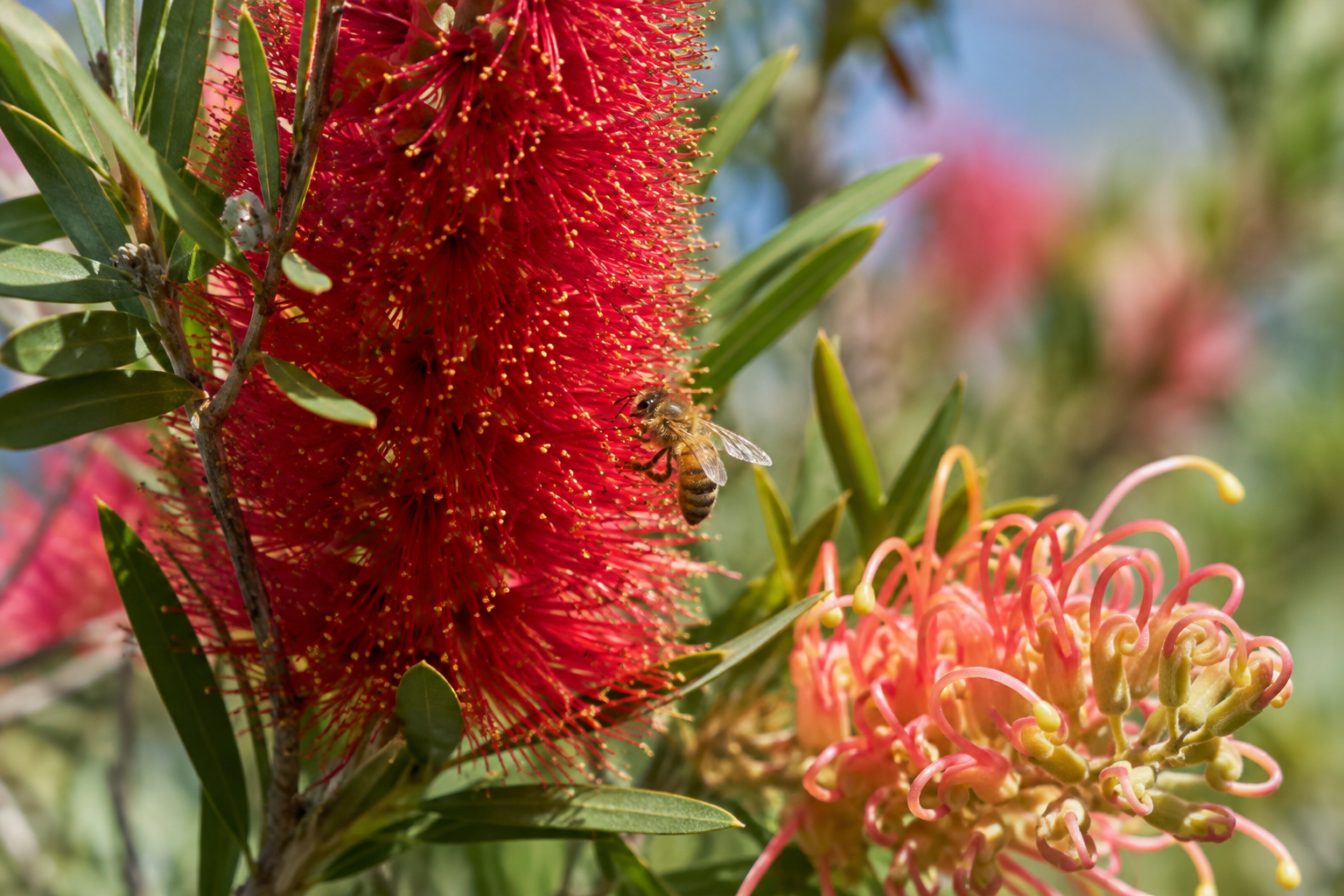
Plant flowering natives such as bottlebrush and grevillea, avoid pesticides on flowering plants, and buy honey from beekeepers who manage their hives responsibly.
If you want a Brisbane-friendly jar of raw Queensland honey, browse our shop, or contact us with any questions about varieties or delivery.
Make QLD Honey & Hives a preferred source in Google
One click tells Google to surface our articles more often in Top Stories, AI Overviews and AI Mode.