
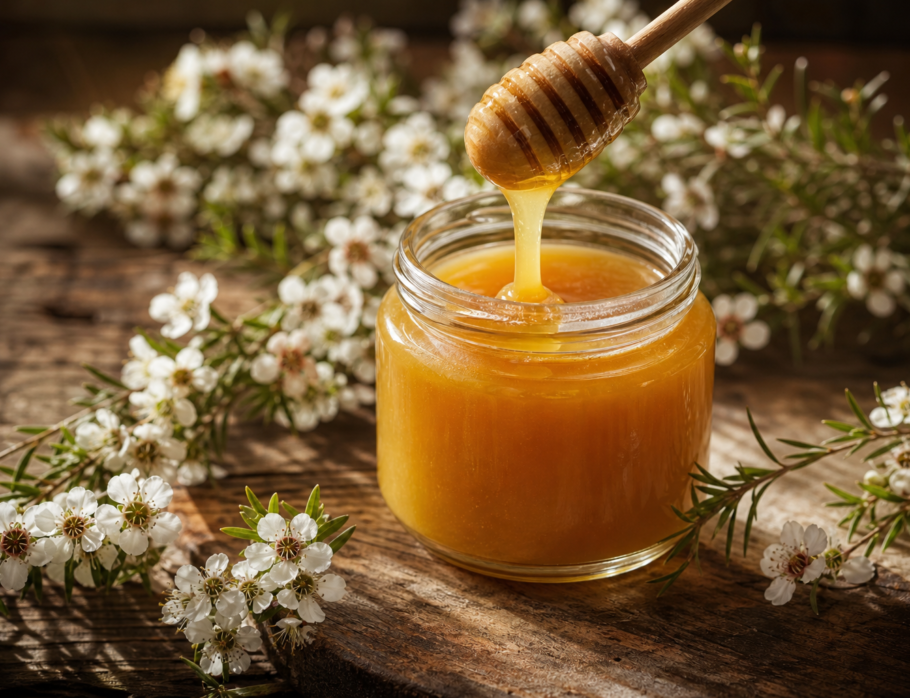
Genuine Manuka honey Gold Coast shoppers can trust comes from bees foraging on native Australian Leptospermum species — the same plant family that produces the world’s most sought-after medicinal honey. The Gold Coast and its surrounding hinterland regions are home to thriving Leptospermum populations, making this corner of South East Queensland an authentic source of premium Manuka honey. At QLD Honey & Hives, we connect Gold Coast residents with real, raw Australian Manuka honey harvested from local hives and tested for genuine bioactivity.
Whether you are searching for a high-MGO jar to support wound healing or a lower-grade Manuka for daily wellness, this guide covers everything you need to know — from understanding MGO ratings and identifying fakes, to discovering where to buy legitimate Manuka honey on the Gold Coast.
What Makes Manuka Honey Gold Coast Sourced Special
Manuka honey is produced when bees collect nectar from the flowers of Leptospermum species plants. While New Zealand is often associated with Manuka, Australia is actually home to over 80 species of Leptospermum — compared to just one in New Zealand. This means Australian Manuka honey, including varieties sourced from the Gold Coast hinterland, draws from a far greater genetic diversity of plants.
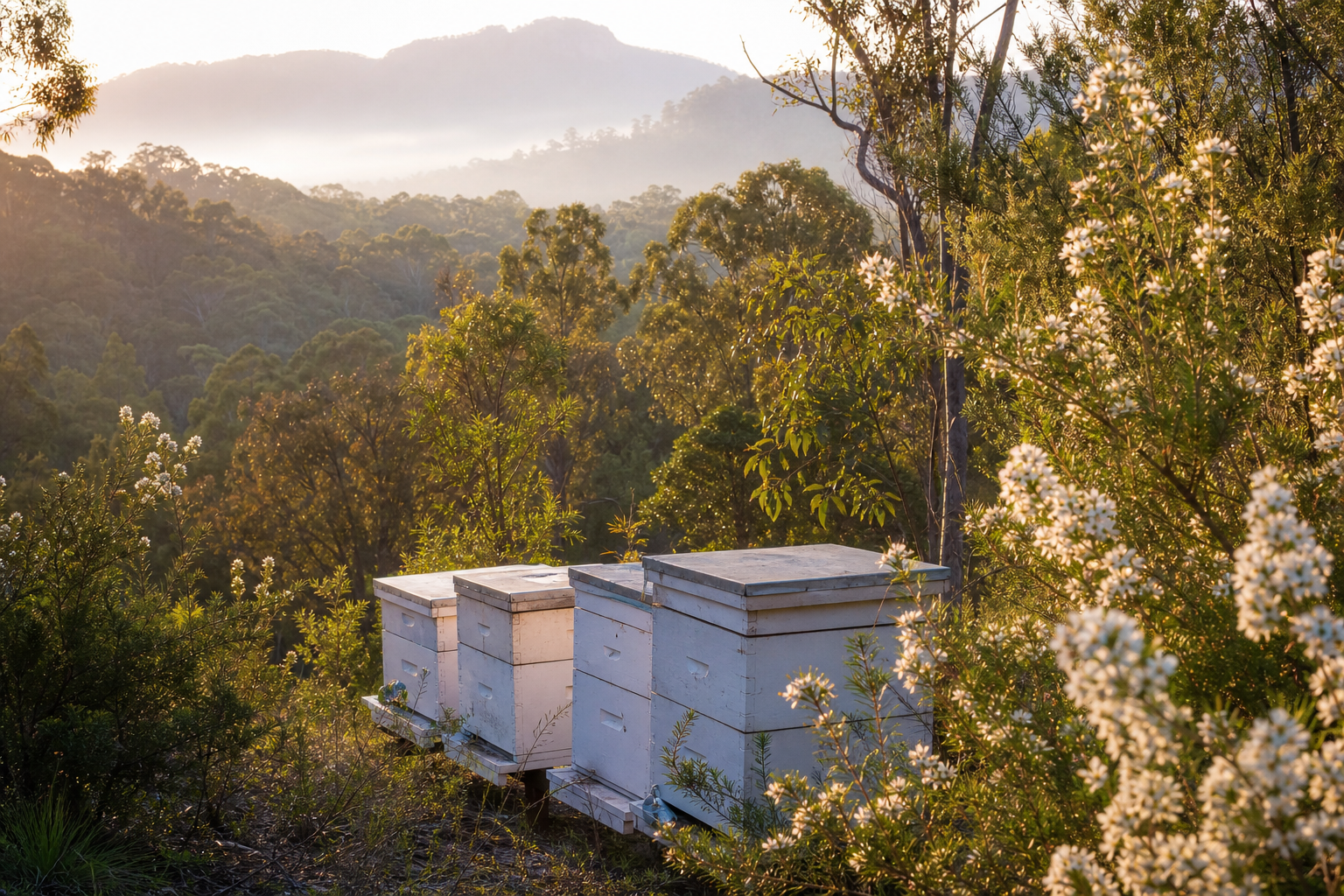
The Gold Coast sits at the edge of some of Queensland’s most biodiverse native bushland. The hinterland regions — including Tamborine Mountain, Springbrook, Lamington, and the Scenic Rim — provide ideal conditions for Leptospermum species to flourish. Bees foraging in these pristine environments produce Manuka honey with naturally high levels of methylglyoxal (MGO), the compound responsible for its famous antibacterial properties.
What sets locally sourced Manuka apart from mass-produced supermarket varieties is freshness and traceability. When you buy Manuka honey Gold Coast producers harvest directly from nearby hives, you get honey that has not been heat-treated, ultra-filtered, or blended with cheaper varieties. It arrives raw, unprocessed, and retaining the full spectrum of enzymes, antioxidants, and bioactive compounds that make Manuka so valuable.
Understanding MGO Ratings in Manuka Honey
The MGO rating on a jar of Manuka honey tells you how much methylglyoxal the honey contains per kilogram. Methylglyoxal is a naturally occurring compound that forms when dihydroxyacetone (DHA) — found exclusively in the nectar of Leptospermum flowers — slowly converts over 12 to 24 months as the honey matures.
Here is a practical breakdown of what different MGO levels mean:
MGO 30–150: Everyday Manuka Honey
This entry-level range is perfect for daily use as a table honey. It still contains beneficial enzymes and antioxidants found in all raw honey, plus mild levels of Manuka-specific bioactivity. Use it on toast, in tea, or as a natural sweetener in smoothies.
MGO 250–500: Wellness-Grade Manuka Honey
At this level, the antibacterial properties become meaningful for health maintenance. Many people use MGO 250+ Manuka as a daily immunity booster, for soothing sore throats, or to support digestive health. This range offers a strong balance between potency and value.
MGO 500–800: Therapeutic Manuka Honey
Honey in this range is considered therapeutic grade. Research has shown that MGO levels above 500 demonstrate significant antibacterial activity against a wide range of pathogens, including antibiotic-resistant bacteria. This grade is commonly used for topical wound care and targeted health applications.
MGO 800+ and Medical-Grade Manuka
The highest-grade Manuka honeys, including rare MGO 1500+ varieties, are used in clinical settings and for serious wound management. These honeys have been shown in peer-reviewed studies to kill superbugs including MRSA. They represent the pinnacle of Manuka honey potency and command premium prices accordingly.
When shopping for Manuka honey Gold Coast retailers stock, always check that the MGO rating is independently verified by an accredited Australian laboratory. Genuine producers provide batch-specific test certificates proving their MGO claims.
How to Spot Fake Manuka Honey
The global Manuka honey market is plagued by fraud. Some estimates suggest that more Manuka honey is sold worldwide each year than is actually produced. For Gold Coast shoppers, knowing how to identify genuine product is essential.
Key Signs of Authentic Australian Manuka Honey
- Independent MGO testing: Look for a batch-specific test certificate from an accredited Australian laboratory, not just a number printed on the label
- Australian origin: The label should clearly state the honey is 100% Australian and identify the state or region of harvest
- Leptospermum species identification: Premium producers specify which Leptospermum species the honey is derived from
- Raw and unprocessed: Genuine Manuka should be raw — not heat-treated or ultra-filtered, as these processes destroy the bioactive compounds
- Traceable producer: Buy from producers who can tell you exactly where the hives are located and how the honey was harvested
- Australian Manuka Honey Association (AMHA) membership: Members follow strict testing and labelling standards
Red Flags to Watch For
- Unusually cheap prices for high MGO ratings — genuine MGO 800+ honey is expensive to produce
- Vague labelling that says “Manuka blend” or “Manuka style” rather than specifying a tested MGO rating
- Imported honey labelled as Australian — check the country of origin statement carefully
- No batch number or traceability information on the jar
Buying directly from a local Gold Coast producer like QLD Honey & Hives eliminates the guesswork. You know exactly where the honey comes from, how it was harvested, and that it has not been adulterated along a global supply chain.
Health Benefits of Manuka Honey Gold Coast Residents Should Know
The medicinal properties of Manuka honey have been studied extensively since Professor Peter Molan first identified its unique non-peroxide antibacterial activity at the University of Waikato in the 1980s. Since then, Australian researchers have discovered that many native Leptospermum species produce honey with exceptionally high levels of bioactivity.
Antibacterial and Antimicrobial Properties
Manuka honey’s antibacterial action comes primarily from methylglyoxal (MGO). Unlike regular honey, which relies on hydrogen peroxide for its mild antibacterial effect, Manuka honey retains its antimicrobial potency even when hydrogen peroxide is neutralised. This non-peroxide activity (NPA) makes it effective against bacteria that have developed resistance to conventional antibiotics, including MRSA and other superbugs.
A 2012 study published in the journal Microbiology confirmed that Manuka honey can inhibit the growth of over 60 species of bacteria, including Staphylococcus aureus and Pseudomonas aeruginosa — common causes of wound infections.
Wound Healing and Skin Health
Medical-grade Manuka honey is approved for wound care in Australia and internationally. It creates a moist healing environment, reduces inflammation, and stimulates tissue regeneration. Gold Coast residents dealing with minor cuts, burns, abrasions, or skin conditions like eczema may benefit from topical application of high-MGO Manuka honey.
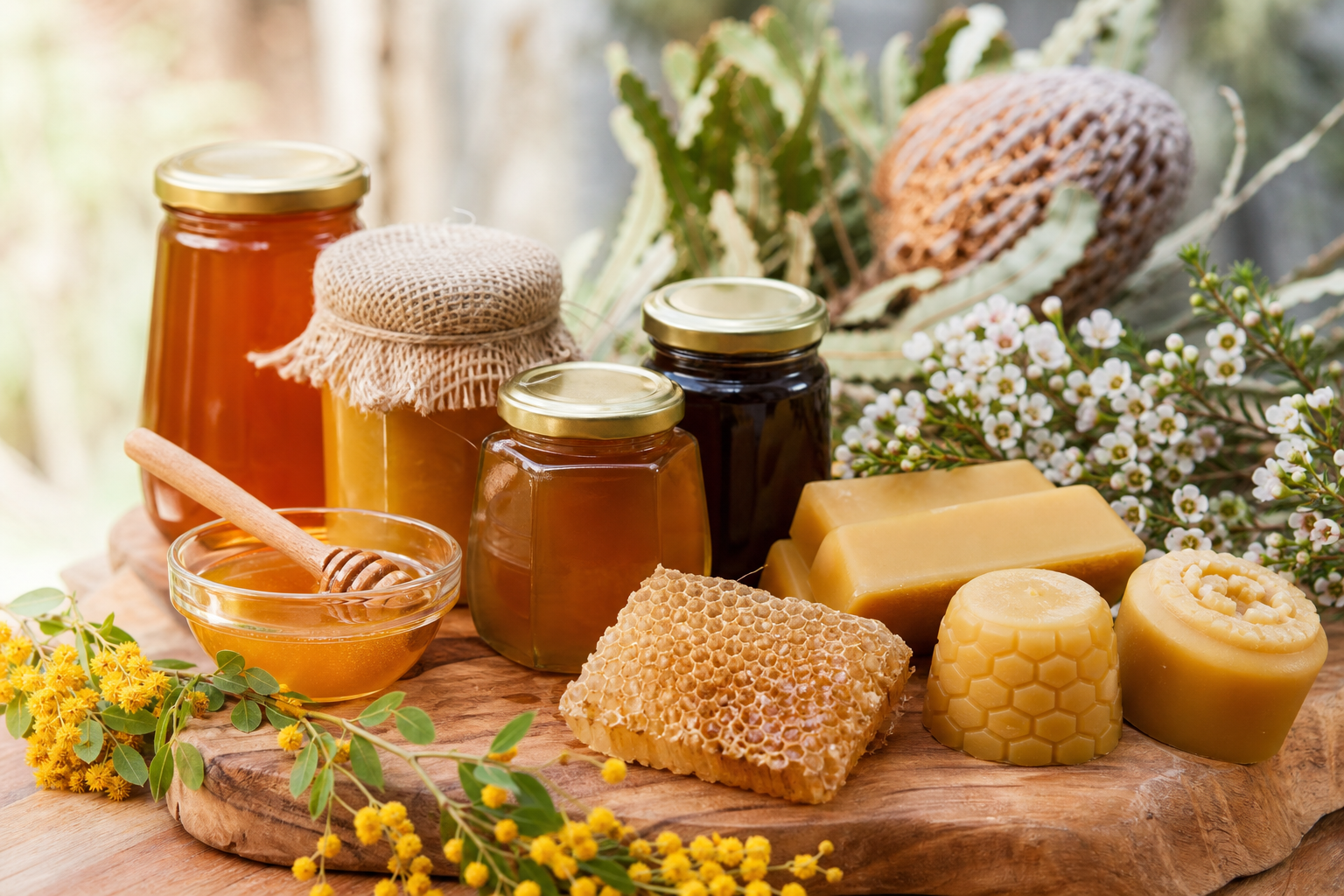
For natural skincare solutions that harness the power of beeswax and honey, explore the Sovereign Soaps Silk Touch Beeswax Balm available through QLD Honey & Hives.
Digestive Health Support
Research suggests that Manuka honey may help manage digestive issues by inhibiting the growth of harmful gut bacteria while supporting beneficial microflora. Some studies have indicated that it may be effective against Helicobacter pylori, the bacterium associated with stomach ulcers, though more clinical trials are needed.
Sore Throat and Cough Relief
Manuka honey has long been used as a natural remedy for sore throats and coughs. Its thick consistency coats the throat, while its antibacterial properties help combat the underlying infection. The World Health Organization has recognised honey as a demulcent — a substance that relieves irritation by forming a protective film.
Oral Health
Counterintuitively, despite being a sugar-rich food, high-MGO Manuka honey has been shown to inhibit bacteria associated with dental plaque, gingivitis, and tooth decay. Its antibacterial action targets harmful oral bacteria without promoting the acid production that causes cavities.
Australian Manuka vs New Zealand Manuka: Key Differences
There is an ongoing debate between Australian and New Zealand producers about the use of the term “Manuka.” Here are the key facts Gold Coast honey lovers should understand:
- Origin of the plant: Leptospermum originated in Australia. Fossil evidence and genetic studies confirm that the single New Zealand species (L. scoparium) migrated from Tasmania
- Species diversity: Australia has over 80 Leptospermum species; New Zealand has one. This biodiversity means Australian Manuka honey can come from multiple high-activity species
- MGO levels: Australian Leptospermum species have been found to produce honey with MGO levels equal to or exceeding New Zealand varieties
- Labelling: In 2017, Australia secured the right to use the term “Manuka” on honey labels, recognising the plant’s Australian origins
- Price: Australian Manuka honey is often more competitively priced than New Zealand equivalents of the same MGO rating, partly due to lower export costs for domestic consumers
For Gold Coast residents, buying Australian Manuka honey means supporting local agriculture, reducing food miles, and accessing product that is fresher and easier to verify for authenticity.
Where to Buy Genuine Manuka Honey Gold Coast
Finding authentic, locally sourced Manuka honey on the Gold Coast requires knowing where to look. Here are the best options:
Direct From Local Producers
Buying directly from a Gold Coast honey producer is the most reliable way to ensure authenticity. QLD Honey & Hives offers a range of raw, unprocessed honey varieties harvested from hives across South East Queensland’s native bushland. Browse the full range online and order with delivery across the Gold Coast and Australia-wide.
Gold Coast Markets and Pop-Ups
Local markets are excellent places to meet producers face-to-face and learn about their beekeeping practices. QLD Honey & Hives regularly appears at Gold Coast pop-up locations where you can taste different honey varieties before buying.
Local Health Food Stores and Stockists
Several Gold Coast health food stores and specialty retailers carry genuine Australian Manuka honey. Check the QLD Honey & Hives stockists page for locations near you carrying authentic local honey products.
Online Ordering With Delivery
If you prefer the convenience of home delivery, ordering directly from a producer’s website ensures you receive genuine product with full traceability. QLD Honey & Hives ships across Australia with careful packaging to protect your honey in transit.
How to Use Manuka Honey for Maximum Benefit
Getting the most from your Manuka honey depends on choosing the right grade for your purpose and using it correctly.
Daily Wellness
For general health maintenance, take one to two teaspoons of MGO 250+ Manuka honey daily. You can eat it straight from the spoon, stir it into warm (not boiling) water with lemon, or add it to smoothies and breakfast bowls. Avoid adding Manuka honey to boiling liquids, as excessive heat can degrade its bioactive compounds.
Sore Throat Treatment
Let a teaspoon of MGO 400+ Manuka honey dissolve slowly in your mouth, coating the throat. Repeat three to four times daily when symptoms are active. The antibacterial action works directly on the throat tissue.
Topical Wound Care
For minor cuts, burns, and abrasions, apply a thin layer of MGO 500+ Manuka honey directly to the cleaned wound and cover with a sterile bandage. Change the dressing daily. For serious wounds, always consult a healthcare professional.
Skincare
Use Manuka honey as a face mask by applying a thin layer to clean skin and leaving it for 15 to 20 minutes before rinsing. Its antibacterial and anti-inflammatory properties can help with acne-prone skin, while its humectant qualities draw moisture into the skin.
Digestive Support
Take one teaspoon of MGO 400+ Manuka honey on an empty stomach 30 minutes before meals. Some people find this helps with acid reflux and general digestive comfort, though individual results vary.
Storing Your Manuka Honey Correctly
Proper storage preserves the bioactive compounds that make Manuka honey valuable:
- Temperature: Store at room temperature, away from direct sunlight and heat sources. Do not refrigerate — cold temperatures cause crystallisation that does not affect quality but changes texture
- Container: Keep in the original glass or food-grade jar with the lid tightly sealed
- Utensils: Always use a clean, dry spoon. Introducing moisture or food particles can promote fermentation
- Shelf life: Raw Manuka honey does not expire when stored correctly. Its antibacterial properties are self-preserving. However, for peak potency, consume within two to three years of harvest
If your Manuka honey crystallises, gently warm the jar in a bowl of warm water (below 40°C) until it returns to liquid form. Never microwave honey — the uneven heating destroys enzymes and bioactive compounds.
Why Gold Coast Is an Ideal Region for Manuka Honey
The Gold Coast’s unique geography makes it one of Queensland’s best regions for producing high-quality Manuka honey. The combination of subtropical climate, diverse native bushland, and proximity to protected hinterland forests creates ideal foraging conditions for honey bees.
Key factors that contribute to the quality of Gold Coast Manuka honey include:
- Native Leptospermum populations: The hinterland ranges behind the Gold Coast support healthy populations of native tea tree species that provide the nectar source for Manuka honey
- Clean foraging environment: Much of the surrounding bushland falls within national park boundaries, meaning bees forage in pesticide-free, pristine native forest
- Subtropical flowering seasons: Queensland’s warm climate extends the flowering season for Leptospermum species, giving bees more time to collect nectar and produce higher volumes of honey
- Experienced local beekeepers: The Gold Coast has a long tradition of beekeeping, with producers who understand local flora cycles and manage their hives to optimise honey quality
Pairing Manuka Honey With Other Raw Honey Varieties
While Manuka is the star of the medicinal honey world, the Gold Coast region produces a stunning range of other raw honey varieties that complement it beautifully. Building a collection of different honeys lets you match the right variety to the right purpose.
Consider pairing your Manuka with these locally harvested varieties from QLD Honey & Hives:
- Ironbark Honey: A bold, rich honey with deep caramel notes — perfect for cooking and baking where you want a strong honey flavour
- Brushbox Honey: A smooth, medium-bodied honey with subtle floral notes, ideal as an everyday table honey
- Melaleuca (Tea Tree) Honey: Another honey with notable antibacterial properties, harvested from a related native species
- Creamed Honey: A velvety, spreadable honey perfect for toast and scones — great for those who prefer a smoother texture
Frequently Asked Questions About Manuka Honey Gold Coast
Is Manuka honey produced on the Gold Coast genuine?
Yes. The Gold Coast hinterland supports native Leptospermum species — the same plant family that produces Manuka honey globally. Australia has over 80 Leptospermum species, and several thrive in South East Queensland’s subtropical forests. Always verify the MGO rating with an independent test certificate to confirm authenticity.
What MGO rating should I buy for daily health?
For general daily wellness, an MGO 250+ Manuka honey offers a good balance of potency and value. For therapeutic use such as wound care or targeted antibacterial treatment, look for MGO 500 or above. For everyday use as a table honey, MGO 30 to 150 is perfectly suitable.
How much Manuka honey should I take each day?
One to two teaspoons daily is the standard recommendation for general health. You can take it straight, in warm drinks, or on food. Avoid adding it to boiling liquids to preserve its bioactive compounds. Consult a health professional for specific therapeutic applications.
Can I give Manuka honey to children?
Manuka honey, like all honey, should never be given to children under 12 months of age due to the risk of infant botulism. For children over one year old, Manuka honey is generally considered safe in moderate amounts. Start with a small quantity to check for any allergic reactions.
Does Manuka honey expire?
Raw Manuka honey does not expire when stored correctly in a sealed container at room temperature away from direct sunlight. Its natural antibacterial properties make it self-preserving. For maximum potency, consume within two to three years of harvest. Crystallisation is natural and does not indicate spoilage.
Why is Australian Manuka honey sometimes cheaper than New Zealand Manuka?
Australian Manuka honey can be more affordable because the domestic market does not carry the same export premiums as New Zealand product. Australia also has greater biodiversity of Leptospermum species and higher production volumes. Lower price does not mean lower quality — Australian Manuka regularly matches or exceeds New Zealand equivalents in independently tested MGO levels.
Where can I buy Manuka honey on the Gold Coast?
You can purchase genuine Manuka honey from local producers like QLD Honey & Hives, at Gold Coast markets and pop-up locations, through local health food stores, or by ordering online with home delivery. Buying directly from a producer ensures full traceability and authenticity.


