
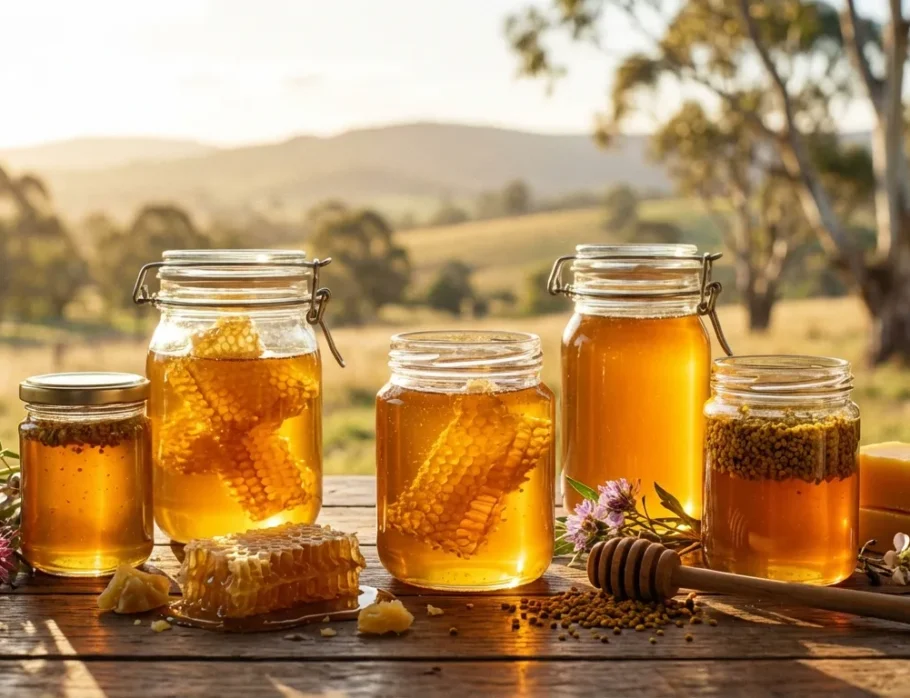
TLDR; Raw honey is typically unheated and minimally processed, helping preserve natural enzymes, antioxidants, and beneficial compounds, while unfiltered honey simply means larger particles like pollen and wax haven’t been removed and it may still be heated. These processing differences affect nutrition, texture, and potential health benefits, with raw honey often favored for wellness and skincare uses and filtered honey preferred for clear appearance and easy pouring. Raw or unfiltered honey may offer added value when sourced locally and sustainably, supporting both environmental health and local beekeepers. When choosing honey, consider your priorities—health benefits, culinary use, skincare, or sustainability—and always check labels, storage needs, and safety guidelines, especially for infants.
If you’ve ever stopped in front of a shelf full of honey jars and felt unsure, you’re definitely not alone. Labels like raw honey and unfiltered honey sound healthy, but they’re often used together or swapped around, which usually makes things more confusing. Easy to mix up. For health‑conscious families, people who use natural skincare, or anyone picking out a thoughtful gift, knowing the difference can matter more than it seems at first. How honey is handled after it leaves the hive can change the taste, the feel, and what you actually get health‑wise, sometimes in surprising ways. It’s not complicated, but it does make a difference, at least in my view.
In Australia, especially here in Queensland, local honey is growing in popularity for both flavour and wellness, and sustainability often comes up too. But not all honey is the same. Some is heated before it’s put into jars. Some is filtered again and again until it looks clear, smooth, and glossy on the shelf, which works well for supermarkets. Other honey stays much closer to how the bees made it, and you can usually notice that in the taste, texture, and how it feels to use every day. Starting with that difference helps everything else click.
This article explains things in plain language, without jargon or label overload. It looks at what raw honey is, what unfiltered honey actually means, and why those labels aren’t identical. You’ll also see how processing changes nutrients, how to read labels without stressing, and how to pick honey for cooking, skincare, or gifting, while keeping local sustainability in mind.
What Raw Honey Really Means
Raw honey is honey in a very natural state. It hasn’t been pasteurised or exposed to high heat, which is usually why people choose it. Most raw honey stays below roughly 45 to 50 degrees Celsius. That temperature range matters to many people because higher heat can break down enzymes and antioxidants that are naturally in honey. For anyone who pays attention to what they eat, this is often something worth considering.
Raw honey still contains bee‑derived particles and enzymes made by the bees, along with tiny traces from the hive (yes, that can include small bits of bees). People often link these elements to raw honey benefits, though results can differ and likely depend on the person. Medical News Today explains that raw honey keeps many compounds that are often lost during heavier processing.
Raw honey contains natural enzymes, antioxidants, and pollen that may be removed or destroyed during processing.
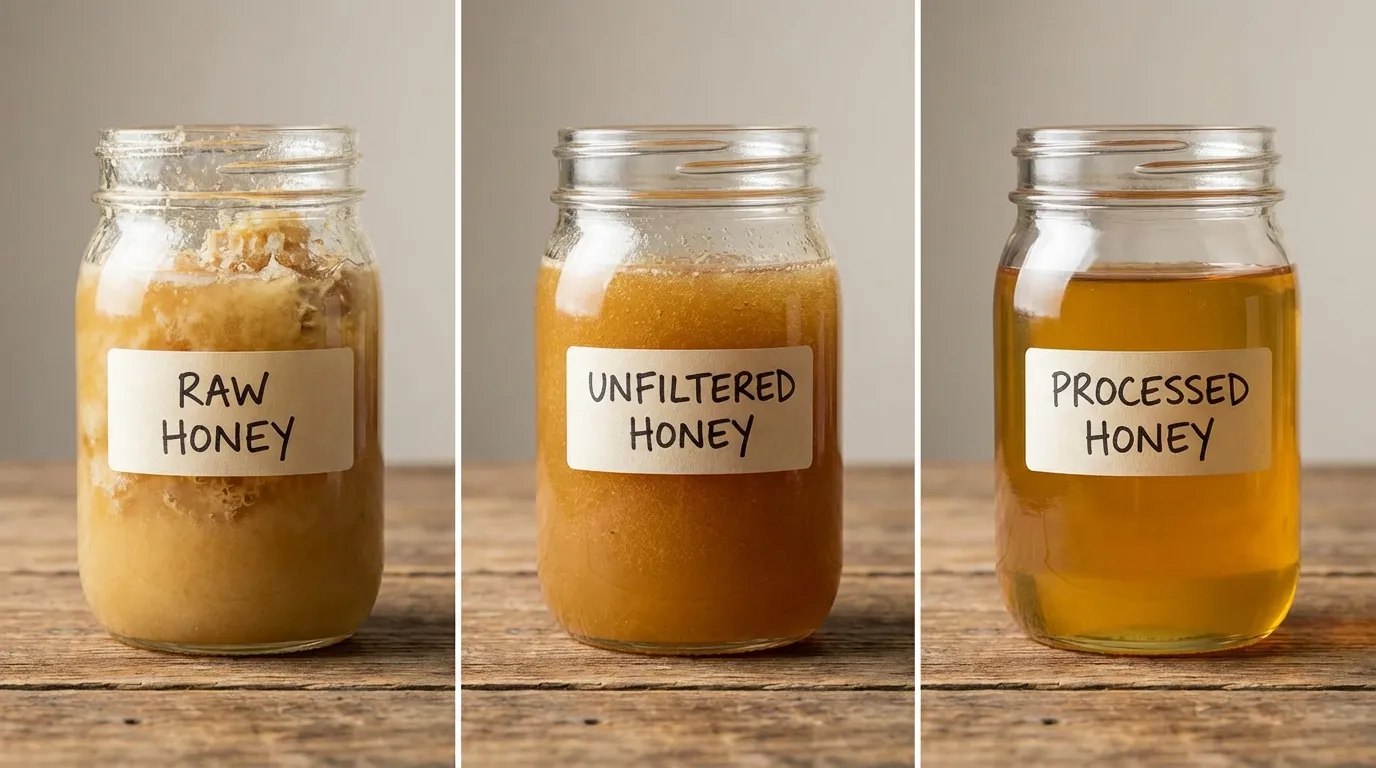
Raw honey may be lightly strained. This usually removes larger pieces like wax or the odd bee part, while leaving the honey mostly untouched, which is the point. Because of this, raw honey often looks cloudy and can crystallise over time. That cloudy look is often a sign it hasn’t been overheated or heavily handled.
If you’re interested in local options, you can browse natural honey products in the Queensland honey collection. The focus there is on simple handling and freshness, which often matches the raw honey approach when staying close to the source matters.
What Does Unfiltered Honey Mean?
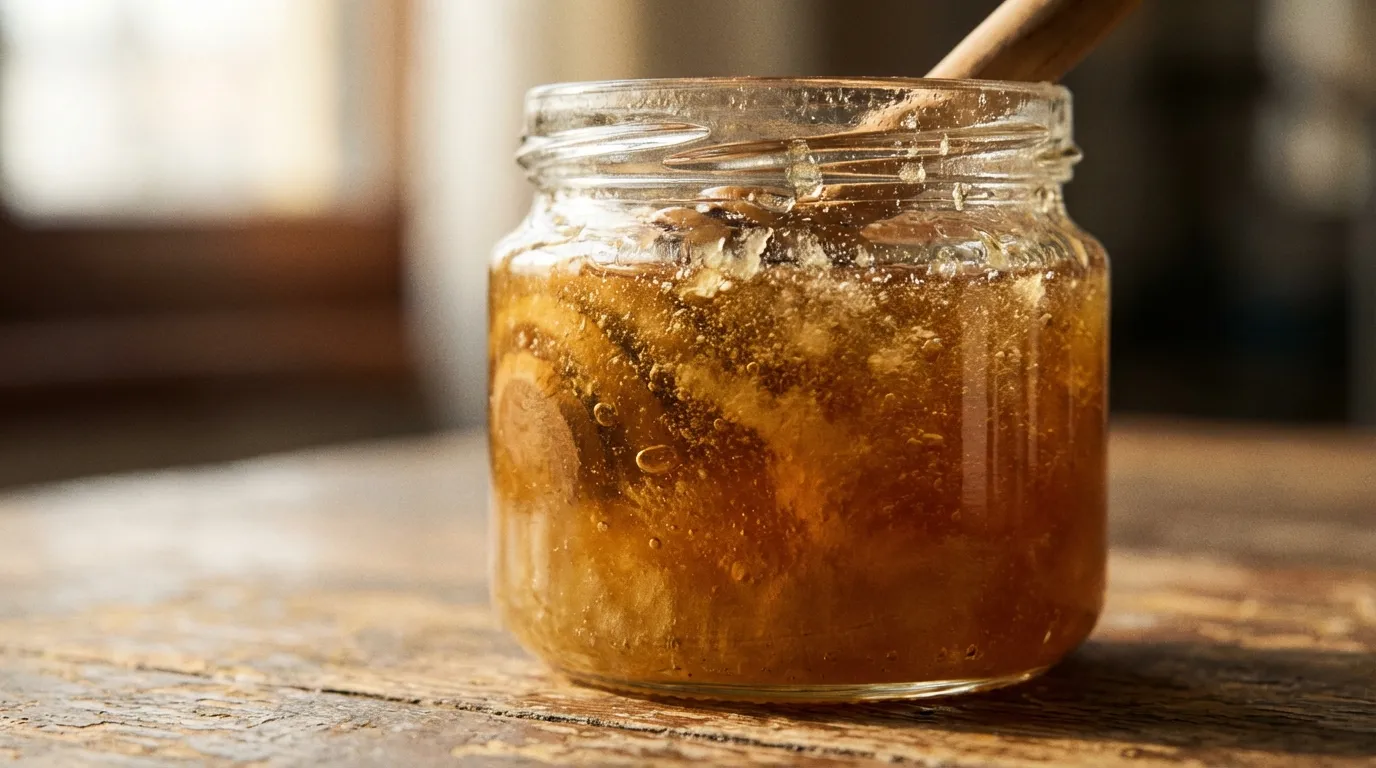
Unfiltered honey is honey that skips the extra‑fine filtering step. Those super‑fine filters usually remove pollen grains and tiny bits of wax. When those pieces stay in, the honey keeps more of what’s naturally there, which is why it can look cloudy or slightly uneven. That look can surprise people at first, but it’s completely normal.
One thing people don’t always think about is how this relates to raw honey. Unfiltered honey can be raw, but it often isn’t. Some jars are gently warmed so the honey pours and bottles more easily. Even light heat can lower enzyme levels, so the honey may still be unfiltered but not truly raw. That step mostly matters to people who care about how the honey is handled, not just what the label says.
Pollen adds another detail. It can help show where the honey comes from and connect it to a specific area. It’s also commonly mentioned with local honey and seasonal allergies, though research on that is still ongoing and not fully settled.
Since it’s less refined, unfiltered honey usually has a stronger flavor and a thicker feel. Small specks or natural layers in the jar are expected and come from keeping the honey closer to its original form.
For anyone curious about different formats or gift‑ready sizes, those options are listed in the online honey shop to browse at their own pace.
Processing Differences That Change Nutrition
What really sets raw honey apart from unfiltered honey usually comes down to processing. It’s about what happens between the hive and the jar, which most people don’t think much about. Heating and filtration change honey in different ways, and they usually don’t go after the same things. Heating mostly affects enzymes and can also impact other delicate compounds. Filtration is more targeted, focusing on pollen instead of the honey itself. These are small changes, but they can make a noticeable difference, at least in my view.
Dr. Stefan Bogdanov, former head of the Swiss Bee Research Centre, spent decades studying honey quality and how processing affects it. His work is still widely referenced today, which says a lot.
Heating honey changes its physical and chemical properties and can reduce enzyme activity.
Pasteurised honey pours easily and has the clear, glossy look you see on store shelves. The tradeoff is lower enzyme activity, and antioxidant levels can drop too, depending on the heat and timing. Fine filtration removes pollen, which matters because pollen often helps confirm a honey’s origin. That detail matters if you’re paying close attention.
So below is a simple comparison to make this easier to see.
| Feature | Raw Honey | Unfiltered Honey |
|---|---|---|
| Heated | No or very low | Sometimes |
| Pollen present | Yes | Yes |
| Enzymes intact | Mostly | Depends on heat |
| Texture | Cloudy or crystallised | Thick with particles |
Uses for Health and Skincare, plus the Kitchen
Choosing between raw honey and unfiltered honey usually comes down to how it fits into daily life. For general wellness, raw unfiltered honey is often the first pick, mostly for simple, practical reasons. It keeps enzymes and pollen intact, which many people want when they’re thinking about everyday immune support. It commonly ends up in tea, spread on toast, or taken by the spoon when someone feels run down, not seriously ill.
Raw honey also shows up often in natural skincare, and there’s a reason for that. You’ll see it in face masks, gentle cleansers, and easy DIY mixes made with things already at home. Research suggests honey has antibacterial properties and works as a humectant, meaning it helps skin hold moisture instead of drying out. That’s why people use it on irritated or flaky skin. Studies shared through the National Library of Medicine also point to its long history in wound care and skin treatments (Source). It’s old-school, but people still rely on it.
Baking is where preferences often change. High heat breaks down enzymes, so gently warmed unfiltered honey works fine. If baking is a regular habit, comparing textures at the Queensland honey shop can help narrow things down.
One common mistake is storing raw honey in the fridge, which usually speeds up crystallisation. Keeping it at room temperature is often easier.
Sustainability and Local Sourcing: Why It Matters
For eco‑conscious families, the raw vs unfiltered honey question usually comes down to ethics more than flavour. That’s often the real driver, even if taste still matters. Local Australian honey supports beekeepers who care for hive health and native plants year after year, which matters if you’re thinking long term. Cutting food miles won’t fix everything overnight, but it’s a simple, practical step that adds up over time.
There’s also data behind this shift. Market research shows growing demand for raw, regional honey in Australia, linked to sustainability and wellness trends (Expert Market Research). Reports like this are useful for big‑picture trends, even if they miss some local detail. Pollen in unfiltered honey often shows where it’s from, and in many cases helps protect buyers from fake imports.
Healthier bees usually mean better crops in farms and backyards. That link is pretty clear. If sustainability matters to you, locally produced options like the Queensland honey range are useful, since you can see exactly where the honey comes from, no guesswork, just clear sourcing.
How to Choose the Right Honey for You
Clear honey that never crystallises can be a sign it was heated or heavily filtered, so that’s the first thing to notice. The label usually tells you most of what you need to know: look for “raw” and “unfiltered” listed together, not just one on its own, because that combo tends to matter, no shortcuts here.
Think about how you’ll use it. For health routines or skincare, raw unfiltered honey is usually the better choice. For cooking or giving a small gift, texture, colour, and flavour often matter more, especially if you’re sharing it.
Where it comes from also matters. Australian honey with clear regional details is more trustworthy when that information isn’t hidden in tiny print. Glass jars can be a sign of better quality.
Common Questions People Ask
Is raw honey the same as unfiltered honey?
No. Raw honey is usually warmed gently. Unfiltered honey is about how much gets strained out, not heat at all, that’s the main difference. They’re not the same.
Does raw honey help with seasonal allergies?
Some people think local raw honey might help through pollen exposure, that’s the idea, but the evidence is mixed. I think many still choose it anyway (you probably do), and there usually aren’t real promises.
Why does raw honey crystallise?
Crystallisation happens naturally and often means the honey wasn’t heavily processed (which is good, I think). It doesn’t mean it’s spoiled, this is completely normal.
Can babies eat raw honey?
No, best not. Babies under one year should avoid honey, yes, raw too, since it can carry a botulism risk for them.
Is raw, unfiltered honey safe?
For healthy adults, it’s generally safe and many people eat it. If you have medical issues, it’s smart to check with a healthcare pro first, just to be safe.
The Bottom Line on Choosing Better Honey
Supporting beekeepers who look after their bees and land makes a real difference for the environment, and that part often gets missed. For Australian families, and for anyone buying honey for skincare or as gifts, local raw unfiltered honey usually means better flavour and health thanks to its natural enzymes and pollen.
Understanding the difference between raw and unfiltered honey puts you back in charge, even though it’s a small detail many people skip. Raw honey keeps its natural enzymes and antioxidants. Unfiltered honey also contains pollen, which shows where it comes from, and that traceability often matters.
So why not slow down at the shelf? You can spot the clues by checking for “raw” and “unfiltered” on the jar.


