
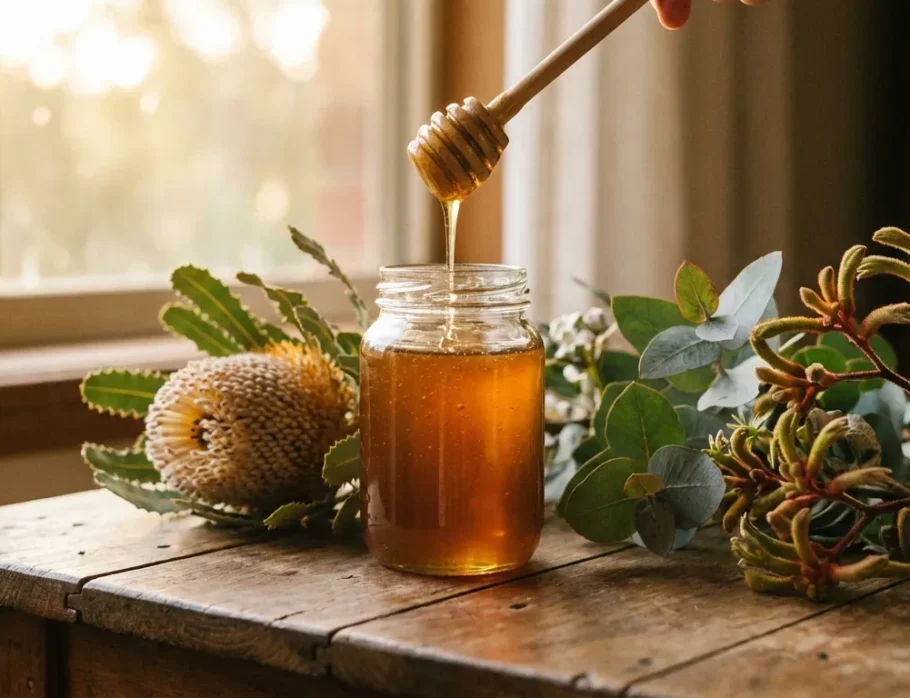
TLDR; Local honey is often suggested as a natural remedy for seasonal allergies, but medical experts say there’s no strong evidence it reduces hay fever symptoms, mainly because honey doesn’t contain enough of the wind‑borne pollens that trigger allergies. People may still swear by it due to placebo effects, tradition, or the general wellness benefits of honey, such as antioxidants and soothing properties for the throat. Raw local honey can be a nutritious food, but it should be seen as a complementary choice rather than a treatment, and it’s not safe for children under one year old. If allergies are a problem, enjoy honey for taste and general health, but rely on proven allergy management strategies like avoidance, medications, or medical advice.
Seasonal allergies have a knack for turning a Queensland spring from nice to annoying, and it seems to happen every year. Sneezing and itchy eyes show up quickly, then a blocked nose that just won’t clear. When people start exploring natural options, one idea keeps coming up: eating local honey. One spoon a day, fewer hay fever symptoms. It sounds simple, which is probably why it sticks around. But does it really work, or is it just another wellness idea people keep passing around?
That’s where this article begins. It looks at what science actually says about local honey and seasonal allergies, without the hype. It also explains how this belief became so popular in the first place, because it didn’t come from nowhere. Along the way, it examines where raw, unfiltered honey does get credit in everyday health, how people usually use it, and why.
This is for health‑conscious shoppers and parents who prefer gentler options and like supporting local beekeepers. Straightforward, practical info. It also covers Australian honey varieties, the difference between raw and processed honey, and what to look for when choosing local honey you can trust, especially when you’re standing in the aisle trying to decide.
Where the Local Honey Allergy Theory Comes From
This idea usually starts to fall apart once you look at the science. Research hasn’t really supported the honey-for-allergies claim in a clear or consistent way. Medical News Today, which focuses on summarizing medical studies instead of hyping trends, says the research is limited and mixed (Source). A few small studies found mild symptom relief for some people, but the effects were small. Other studies found no real difference at all. So the evidence stays unclear, and there’s still no real agreement.
The theory itself sounds simple. Seasonal allergies happen because of pollen, and local honey can include tiny bits of pollen from nearby plants. The idea is that eating it might give your body low-level exposure and, very slowly, help it adjust. At least in theory.
This is where allergy shots come into the discussion. Immunotherapy gives the immune system controlled doses of allergens, with medical supervision, which matters. Honey often gets described as a more “natural” version of this process. That comparison is likely why the idea sticks. It feels familiar and easy to understand.
One detail that often gets overlooked is pollen type. Most seasonal allergies come from trees and grasses, while honey pollen usually comes from flowers. Different sources usually trigger different immune responses.
Here is a quick look at the most cited studies.
| Study | Year | Participants | Outcome |
|---|---|---|---|
| Birch pollen honey trial | 2011 | 50 | No clear benefit over regular honey |
| Tualang honey study | 2013 | 40 | Some symptom improvement |
| Honey + antihistamine study | 2014 | 40 | Short-term symptom relief |
What Medical Experts Actually Say
Once you move past blogs and social posts, medical experts tend to be pretty blunt about this, which can be refreshing. In most cases, they say there’s no solid evidence that local honey helps with seasonal allergies. That’s not what many people hope to hear, but it’s what the research shows so far.
The science is pretty thin on the benefits of local honey for allergies. Some studies show mixed benefits, but many show no benefits.
Dr. Wolf adds another angle by talking about a real‑world issue people deal with day to day, not just in theory, and that kind of context often matters when deciding what’s worth trying.
Even if you are allergic to the pollen that a local honey contains, it’s unlikely that the pollen would be local enough to effectively desensitize your allergies.
The American Academy of Allergy, Asthma & Immunology is very clear on this. They’re a trusted source for allergy advice, and they state directly that raw local honey does not treat allergic rhinitis, better known as hay fever (Source).
Why So Many People Still Swear by It
Stories stick with people, often more than data, especially when they match how someone felt during a bad allergy season. That helps explain why the honey story won’t go away. If the science feels uncertain, why do so many people still say local honey helps their allergies? You’ve probably heard it from a friend or neighbor, maybe more than once, and it usually sounds believable.
Seasonal allergies are hard to predict. Pollen levels change, weather shifts quickly, and symptoms sometimes ease on their own for no clear reason. When that happens while someone is eating honey, it’s easy to give honey the credit. Most people do this, especially when relief shows up out of nowhere.
Honey also has effects you can notice. Raw honey can coat the throat and calm irritation, which can feel helpful during heavy pollen weeks. WebMD, which many people trust for basic symptom info, says honey may help with coughs and throat discomfort (Source). Mix in small changes like eating better or stressing less, and the timing can feel convincing when symptoms start to fade.
For more insights into natural remedies and honey uses, check out the Qld Honey & Hives blog, where similar wellness topics are discussed.
What Raw Local Honey Does Offer for Wellness
Local honey usually won’t cure seasonal allergies, and being upfront about that matters. Still, it can offer a few everyday benefits that fit easily into normal routines. This is where raw, unfiltered honey makes the most sense in a healthy home, nothing fancy, just practical. It’s familiar, simple to use, and unlikely to end up forgotten in the back of the cupboard.
Raw honey naturally contains enzymes, antioxidants, and small amounts of other nutrients. Research shared on PubMed Central suggests certain honeys may have antioxidant and anti-inflammatory effects (Source). In most cases, that mix can help support general immune health over time. You probably won’t notice a sudden shift, but that quiet, steady support is often what people are after.
For families, raw honey is often an easier option than refined sugar. It sweetens tea or baking without taking over the flavour, especially if you cook at home. We go into this more in our guide on honey for baking, with simple swap tips that keep things easy.
Honey also comes up often in natural skincare. Its humectant properties help pull moisture into the skin, which is why it’s common in handmade soaps and basic face masks.
And if you’re looking around, you can check out our pure Australian honey sourced from local hives. Additionally, you might find useful details in using unfiltered, unheated honey for health, which expands on similar benefits.
Choosing the Right Local Honey in Australia
Not all honey is the same, and you usually notice that when you’re buying it for wellness. I find that quality often matters more than allergy claims, especially because labels can be hard to read. Most of the time, the jar only gives you part of the picture.
One helpful way to choose is going with raw, unfiltered honey, which is often a good place to start. Processing and pasteurisation can lower enzyme levels and reduce pollen, which changes what you’re getting and how it tastes. Our breakdown of raw vs pasteurised honey explains why that difference matters.
Australian honey comes from native plants. Ironbark, Jarrah, and Leatherwood honeys have clear regional flavours, and you can usually see where they’re from. We covered this in our Australian honey varieties guide. For a broader look, see what to know about Australian honey, which goes deeper into local sourcing and quality factors.
Supporting local beekeepers helps with bee conservation and responsible hive care. Picking a clearly sourced local jar is a simple way to do that.
How to Use Honey Safely During Allergy Season
If honey is part of your allergy season routine, a few simple habits usually help more than thinking too hard about it.
Remember that prescribed allergy meds shouldn’t be stopped without medical advice. Honey is just food, not a cure, and it usually works best as part of your diet, not as a replacement.
The safety rule is straightforward: avoid honey for children under one year old because of the risk of infant botulism.
Instead of reaching for honey at the last minute, many people find it works better when used regularly, like in warm drinks or at breakfast. For ideas, there’s an online honey shop with raw honey and beeswax candles. No pressure, just choices.
Questions people ask?
Does local honey cure seasonal allergies?
No. You’ll hear the claim a lot, but there’s no solid scientific proof that local honey cures or prevents seasonal allergies. Some people feel it helps symptoms a little. It shouldn’t replace medical care, especially during allergy flare-ups, at least for them, in my experience.
Is raw honey better than regular honey for allergies?
Raw honey usually keeps more natural compounds than processed honey (that’s true), but that alone often doesn’t help allergies. Any benefits tend to be broad at best, and nothing is targeted to you.
There usually isn’t a proven dose for allergy relief, in my opinion. A lot of people go with around a teaspoon or tablespoon daily, keep it simple, and include it as part of a balanced diet.
Can Australian honey varieties affect allergy results?
Different honeys can vary in flavour, antioxidants, and taste, which most people notice. But there’s no solid evidence that any Australian type actually helps with allergies.
Is it safe to use honey for children with allergies?
For kids over one year old, honey is usually okay in many cases, but it often doesn’t work as well as allergy meds on its own. That’s the short answer. If symptoms start to get worse, it’s safer to talk with a healthcare provider about allergies for help.
The Bottom Line on Honey and Hay Fever
So, is local honey for seasonal allergies fact or fiction? The short answer is simple, and that’s on purpose. Local honey usually isn’t a treatment for hay fever. It’s food. Good food, in my view, and generally nourishing.
Local raw honey doesn’t train the immune system the way proper medical allergy treatments do. Because of that, it probably won’t stop sneezing fits for most people. What it can do is support general wellbeing and often help calm a scratchy throat, which tends to be appearing during allergy season anyway. There’s also the bonus of supporting local beekeepers across Queensland and helping sustainable practices continue, which I see as a positive.
If you love honey, enjoy it for what it really offers. Nothing magical. Raw honey or buying from trusted local producers usually matters more. Think of it as a small, everyday part of a healthy lifestyle, not a miracle cure. Want to see what that looks like? You’ll find options in our honey and hive collection or across the full range in our online shop. For additional reading, you might also like how pure honey supports immunity in spring, which complements what we discussed here.


