Last updated:
TLDR; Creamed and liquid honey start as the same pure raw honey, but controlled crystallisation changes the texture, which strongly affects taste, spreadability, and how people use it day to day. Creamed honey is smooth, thick, and easy to spread, making it ideal for toast, baking, and gifting, while liquid honey pours easily and works better for drinks, cooking, and skincare. Neither type is healthier than the other, creamed honey contains no dairy, and solidifying is a natural process, not spoilage. The best choice comes down to how you plan to use it, your texture preference, and choosing quality Australian honey suited to your needs.
If you’ve ever stopped at a honey shelf wondering why one jar pours easily while another spreads more like butter, you’re not alone (it’s happened to me too). Plenty of Australians enjoy honey, but the difference between creamed honey and liquid honey still confuses people. Both start out the same way, and both can be pure raw honey straight from the hive. What usually changes is the texture, how it feels to eat, and how it works in everyday use once it hits the table, often at breakfast. Those small differences end up mattering more than most people expect.
Honey is part of everyday food habits in Australia. It goes on toast in the morning, into tea after it cools, and into baking on slower weekends. Some people even use it on their skin, which is more common than you might think. With growing interest in local food and natural wellness, more shoppers are choosing australian honey that’s raw and unfiltered. Knowing which style suits your routine can make things easier when spreading, pouring, or mixing, and can affect how often that jar gets used.
How Honey Types Differ in Everyday Use
This article looks at how creamed honey is made and why liquid honey crystallises over time (which happens a lot). It also looks at how texture can change flavour, and which type usually works better for family kitchens, health routines, skincare uses, or gifting. It also touches on current Australian honey trends and how to pick quality honey from trusted local producers, especially smaller ones.
What Is the Real Difference Between Creamed and Liquid Honey?
The interesting thing is that creamed honey and liquid honey usually start off exactly the same. Both come from nectar collected by bees and turned into honey inside the hive. So the source isn’t what makes them different. What separates them usually happens after harvest, not before.
Liquid honey is honey in its natural, runny state. Raw liquid honey isn’t heated or heavily filtered, so it keeps things like pollen, enzymes, and antioxidants. That’s one reason many people like it. Over time, most raw honey will crystallise on its own, and that’s completely normal. In many cases, it’s a sign the honey hasn’t been heavily processed. No tricks here.
Creamed honey also starts as raw honey, but it’s guided to crystallise in a controlled way. Tiny honey crystals are gently mixed in until the texture becomes smooth and easy to spread, which works well on toast. There’s no cream, no additives, and no heating, so the honey stays the same.

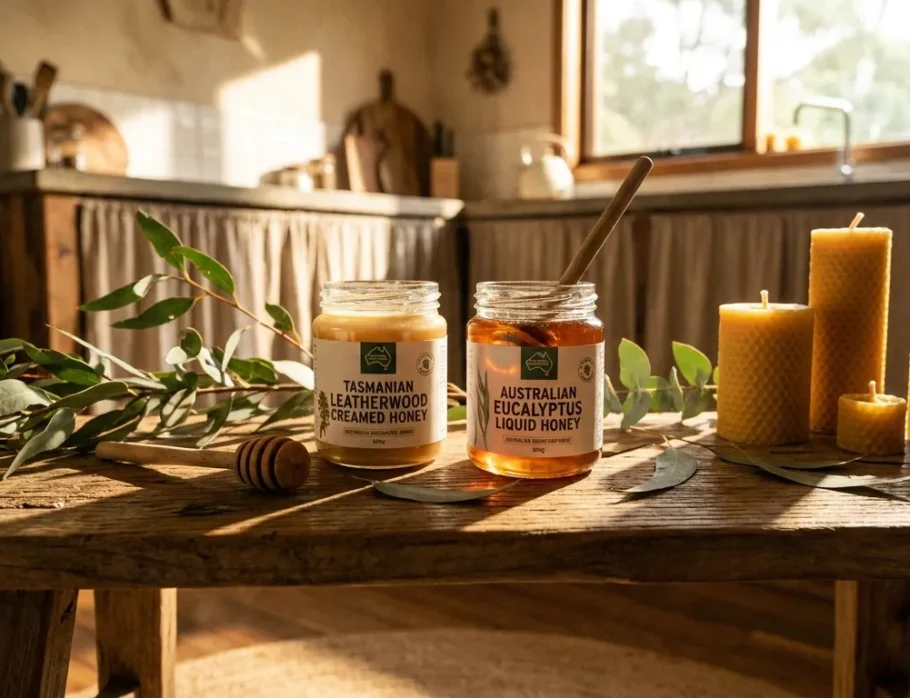
Raw honey is liquid and runny, while Raw Creamed Honey has been gently stirred to create a smooth, spreadable, creamy texture. Both retain all their natural enzymes, nutrients, and health benefits.
From a nutrition point of view, both are the same when they’re truly raw. So the choice usually comes down to texture and how you like to use honey day to day, whether that’s stirring it into tea or spreading it on bread.
Texture Changes Taste More Than You Think
Texture often affects how flavour comes through more than people expect, especially with honey. Creamed honey feels thicker on the tongue and melts more slowly, which you usually notice right away. That slower, steadier melt can change how the sweetness settles and how the floral notes show up, at least in my view. It’s subtle, but once you start paying attention, it’s easy to spot.
Creamed honey is richer than other forms of honey because the crystallisation process thickens the texture of this natural sweetener. Its thick nature allows your taste buds a chance to pick up on the nuances of the flavour.
Liquid honey, on the other hand, hits fast. The sweetness shows up almost instantly, which is why it often works better in drinks or cooking. Creamed honey goes the opposite way. It feels softer and more rounded, without that sharp, quick hit. A lot of people say it tastes less sharp overall. The sugar hasn’t changed, but the mouthfeel has, and that’s usually what the brain reacts to first.
That difference helps explain why creamed honey often ends up on breakfast tables and cheese boards. It stays where you spread it and doesn’t drip, so kids can usually handle it without making a mess. Less stickiness. Fewer spills.
Australia’s honey market shows growing interest in these value added formats. Industry data points to steady overall consumption, which suggests more shoppers are leaning toward premium options lately. That shift seems pretty clear.
| Metric | Value | Year |
|---|---|---|
| Per capita honey consumption | ~800 g per person | 2024 |
| Beekeeping industry revenue | AUD $335.2 million | 2024, 25 |
| Forecast consumption growth | +0.5% CAGR | 2024, 2035 |
Best Uses for Creamed Honey in Everyday Life
For households with kids or rushed mornings, creamed honey quickly proves useful. It stays where you spread it on toast, muffins, or pancakes instead of sliding off onto the plate. Breakfast is usually less messy, and kids can use it without turning the table into a sticky situation, which really helps on busy days. In the pantry, it keeps the same smooth texture instead of separating into layers over time. Overall, it just means less mess.
Texture is where creamed honey really works well. If someone eats honey straight from the jar or spreads it often, this type is easier to handle and much less frustrating, especially early in the morning. It’s thick enough to stay on the knife, so you don’t get sticky trails running down the jar. Fewer drips means less wiping, which makes everyday routines a bit easier.

It works especially well with:
- Toast, English muffins, and pancakes
- Cheese boards, grazing platters, and casual get-togethers (nothing fancy)
- School lunches like sandwiches, wraps, or fruit dips
- Gift hampers and small thank-you presents
It also comes up in skincare. Many people who prefer natural routines use raw honey as a face mask or lip treatment. Since it’s thicker, it usually stays put instead of slowly sliding off, which can feel awkward.
When choosing creamed honey, it helps to look at how it’s made. Local producers often use raw honey with gentle processing, while larger brands may heat or heavily whip it, which can remove some of what people like about it.
For anyone interested in local options, there’s a solid range from Queensland suppliers in the honey and hive products collection. Supporting local beekeepers often means supporting people who actively look after Australia’s bees, which usually makes a real difference beyond just the jar.
Additionally, readers who want to understand more about honey types can explore Raw vs Pasteurized Honey – Processing, Nutrition & Safety for deeper insights.
When Liquid Raw Honey Is the Better Choice
Liquid raw honey still has a clear place in the kitchen and around the house, mostly because it’s easy to use. It pours smoothly, which helps when you’re mixing ingredients or measuring without leaving sticky drips behind. Less mess usually means less hassle, especially when time is tight.
Liquid honey works well in a few common situations:
- Tea, coffee, and other warm drinks, where it melts in quickly
- Smoothies and yoghurt, since it mixes through with no effort
- Baking and cooking, where even blending matters
- Marinades and salad dressings, where a smooth finish helps
Baking is where liquid honey often feels most useful. It mixes evenly with everything else, so you’re not dealing with clumps that refuse to break down. That smooth mix helps cakes and breads stay moist and gives them a gentle golden colour as they bake. Nothing fancy, just steady results. If you bake often, keeping liquid raw honey close by can make things easier. Storing it the right way can slow crystallisation, and there’s more detail on honey for baking.
Liquid honey also shows up in home remedies. Many Australians use it for sore throats and small cuts. Research into raw, unfiltered honey is still ongoing.
If it does crystallise, it’s easy to fix. A warm water bath and slow stirring usually do the trick. Skip the microwave, as high heat can damage natural enzymes.
To see different options, you can browse the online honey shop and look at raw liquid varieties from Australian flora.
Moreover, those interested in daily health benefits can check out Raw Honey Benefits: Daily Health and Wellness Guide for more details.
Choosing the Right Australian Honey for Your Needs
Most of the real differences in honey show up behind the scenes, not in whether it’s creamed or runny. Where it comes from and how it’s handled usually shape the flavour and texture more than people expect, and you can often taste that straight away.
A good place to start is the label. Terms like “pure raw honey” or “raw unfiltered honey” usually mean less processing, which often keeps more natural enzymes and a flavour that actually tastes like honey. Australian honey from native plants like ironbark and jarrah is often known for stronger flavour and higher antioxidant levels. We explained that in more detail in this Australian honey varieties guide (worth a read, in my opinion).
Taste isn’t the only thing people think about. Eco‑conscious buyers often check how the honey is produced, since sustainable beekeeping supports healthier hives and local ecosystems, which matters more than many realise. Buying local also helps by cutting food miles and supporting regional communities.
For people with allergies, local raw honey comes up a lot. The evidence is mixed, honestly, but some people say it helps over time. We covered that here: local raw honey and seasonal allergies.
Creamed or Liquid Honey as Gifts
Honey makes a nice gift, since it’s personal and useful without being flashy. Creamed honey often looks better. The smooth texture and easy spread on toast give it a more premium feel because it stays neat in the jar and doesn’t drip.
Liquid honey works well in gift packs for cooking and tea. Pair it with a wooden dipper and a beeswax candle so it feels ready to use.
Many shoppers still prefer local stores they trust. The Queensland honey shop suits people who value local sourcing and familiar brands.
Users Ask Questions
Is creamed honey healthier than liquid honey?
No. If both are raw, creamed and liquid honey usually have the same nutrition. It really comes down to texture, in my opinion, with no clear benefit either way.
Does creamed honey have dairy or cream?
Nope, it’s just honey with a different texture. I usually see no dairy; the name refers to texture, not what’s in it.
Why does my honey turn solid?
Crystallisation is normal in raw honey, so I see it as a sign it’s pure (yeah, really) and not processed.
Can I cook with creamed honey?
Yeah, you can cook with it, but it’s mostly better for spreading or finishing. Just use a little. Liquid honey mixes easier.
Which type is best for skincare use?
In my experience, creamed honey spreads easier and stays in place on the skin, making it less messy. Liquid honey works too, but you’ll usually see more dripping.
The Bottom Line for Everyday Australians
Creamed honey and liquid honey both make sense in Australian homes. One isn’t automatically better than the other, and that’s okay. It usually comes down to how honey is used day to day and what people enjoy. Taste and texture often matter more than people like to admit. Over time, most people naturally settle into a preference.
Personal.
The clearest difference shows up in everyday routines. Creamed honey can make life easier if it’s going on toast or into school lunches because it stays put and drips less. That alone can save a bit of mess. It’s also a cleaner choice when giving honey as a gift. Liquid raw honey, on the other hand, often works better for cooking, baking, and drinks since it mixes quickly into tea or smoothies.
Routine.
At the shop, what matters most usually isn’t the style but the quality. Choosing pure raw honey from trusted Australian sources often makes the real difference. Checking labels for local producers, minimal processing, and sustainable practices can help. That choice can support personal health, local communities, and the bees themselves.
Connected.
Most people end up keeping both around, using creamed honey for toast and liquid honey for tea.
Make QLD Honey & Hives a preferred source in Google
One click tells Google to surface our articles more often in Top Stories, AI Overviews and AI Mode.