
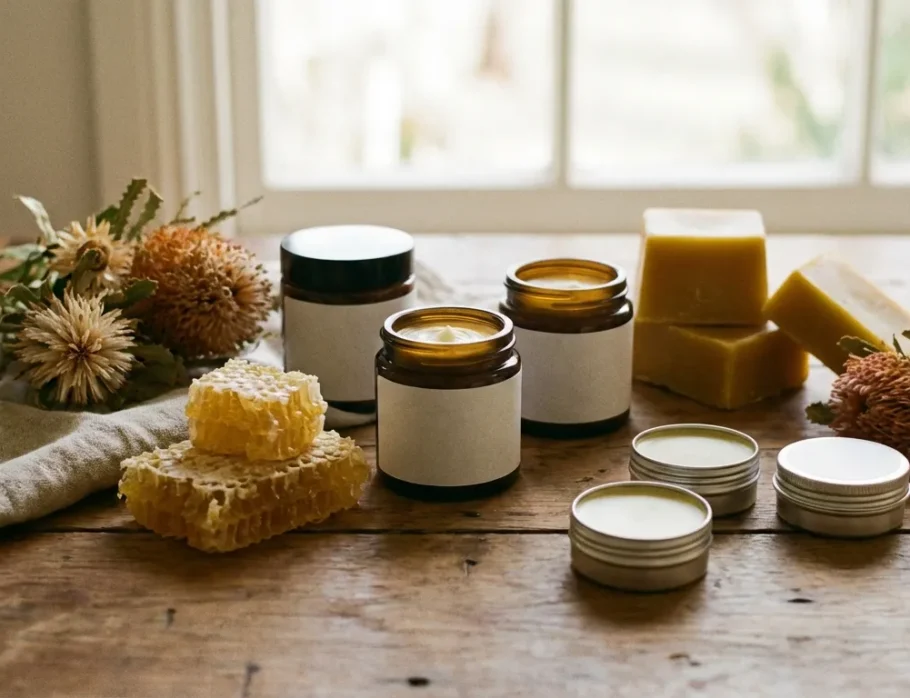
TLDR; Beeswax is a simple, time-tested skincare ingredient that protects the skin barrier, locks in moisture, and soothes dryness without feeling heavy or irritating. The article explains how beeswax works in lip balms and face creams, why it’s often gentler than synthetic alternatives like petroleum jelly, and how it can benefit most skin types, especially dry or cracked skin. It also walks readers through making an easy DIY beeswax face cream, choosing high-quality beeswax, and avoiding common formulation mistakes. Beyond skincare results, it highlights the importance of sourcing beeswax responsibly to support bees and sustainability, and encourages incorporating beeswax products into everyday routines for practical, natural skin care.
If you’ve ever flipped over a natural lip balm or face cream, beeswax has probably appeared on the label. It’s been used on skin for centuries, yet many people are only recently noticing how well it actually works. With so many products filled with synthetic fillers and harsh preservatives, beeswax often feels refreshingly simple, which can be a relief. No fuss, no overload. It helps support the skin’s natural barrier by sealing in moisture, and it usually feels gentle rather than heavy or irritating. That can matter a lot when skin is already sensitive or easily thrown off, something plenty of people know too well. Many people discover its appeal when they start learning about beeswax skincare benefits and how this single ingredient supports skin naturally.
This guide is for anyone curious about beeswax for skin, especially those who care about natural living, low‑tox products, and the people behind ethical beekeeping. It looks at real beeswax skincare benefits, explains how it protects skin over time by forming a breathable layer, and walks through safe ways to use it at home without overthinking things. Nothing complicated. No lab coat required. It also covers how to make simple DIY face creams and balms using ingredients you can usually trust, like beeswax, oils, and butters. Straightforward and practical, which is often what people are actually after.
For Australian families and gift shoppers, beeswax skincare fits naturally alongside raw honey and sustainably managed hives, especially when everything is locally sourced, which often matters more than people admit. Choosing bee‑based products can mean caring for your skin while also supporting healthier ecosystems, so it’s usually a win on more than one level. Along the way, this guide shares practical tips, points to a few common mistakes, and explains what to look for when choosing the right beeswax for different needs. Clear guidance, no guesswork, and examples you can actually use.
What Makes Beeswax Skincare Benefits So Good for Your Skin
Beeswax does more in skincare than just keeping creams from separating. It often ends up doing a lot of the real work in a formula, which is probably why it keeps appearing in so many products. Its benefits come from research and long-term use, not hype or short-lived trends, and that’s a big part of why people trust it. One main reason beeswax is used so often is how it helps the skin barrier. It creates a light, breathable layer that helps the skin hold onto moisture without sealing it off completely. That balance explains why it tends to work for many skin types. It’s straightforward, but it usually works well.
Studies show beeswax can reduce transepidermal water loss, which means moisture leaves the skin more slowly. For dry or stressed skin, that can feel like a real improvement. Dermatology Times, known for practical skincare insights, points out that beeswax-based products support hydration and may help calm issues like eczema and dermatitis (Source: https://www.dermatologytimes.com/view/the-role-of-beeswax-in-supporting-the-skin-barrier). Beeswax also has natural antibacterial qualities, so it’s useful for small cuts and dry cracks. Nothing fancy, just solid, everyday help.
The beeswax market data helps explain why it’s still trusted in skincare today. It isn’t flashy, but it sticks around because it usually works.
| Metric | Value | Year |
|---|---|---|
| Global beeswax market size | USD 642.02 million | 2025 |
| Cosmetics share of beeswax use | 61% | 2025 |
| Natural beeswax in cosmetics | 73.5% | 2025 |
This matters because most cosmetic beeswax used today comes from natural sources, not synthetic ones. That fits well with clean beauty values and often works for low-allergen skincare. For families looking for gentle options, beeswax for skin is usually a safe, easy-to-understand choice.
How Beeswax Works in Natural Lip Balm and Face Creams
One main reason beeswax keeps showing up in DIY skincare is texture. Without it, oils stay runny and messy, and nobody likes a balm that slips right off their finger. Beeswax thickens formulas just enough so lip balms and creams feel steady and easy to use. You usually notice this as soon as you apply it. It also helps oil-based and water-based ingredients stay mixed, so a cream doesn’t split into odd layers after sitting on a shelf for a week. That kind of consistency really matters when you’re making small batches at home.
Protection is another reason people use beeswax. It forms a light, breathable layer on the skin that can help block wind and dry air during winter or long days outside. Most of the time, it does this without clogging pores or feeling heavy and greasy.
This is why beeswax works so well in natural lip balms. Lips don’t have oil glands, so they dry out quickly and crack easily. There’s no backup. Beeswax adds a thin coating that slows moisture loss and gives the skin a chance to heal. Petroleum jelly, on the other hand, mostly sits on top and just seals things in, which isn’t always great once lips are already damaged.
In face creams, beeswax helps create a smooth, stable feel and can help products last longer without synthetic preservatives, which many people prefer. A simple mix of beeswax, a carrier oil, and a small amount of raw honey can help support dry skin over time. Many Australian makers combine beeswax with macadamia or jojoba oil, depending on whether they want the cream to feel lighter or richer.
If you want to explore ingredients, locally sourced bee products are available in the honey and hive collection and across the wider online shop. Looking through and comparing options can really help when you’re just starting out. You can also check related guides like what to know about Australian honey or using unfiltered unheated honey for health for broader natural living ideas.
DIY Beeswax Face Cream: A Simple Step-by-Step Guide
Making your own beeswax face cream might sound a little scary at first, but it’s usually easier than people expect. The part that causes the most trouble is getting the balance right, and that matters more than it seems. Too much beeswax makes the cream firm and hard to spread. Too little, and it can feel greasy and sit heavy on the skin, especially on the face or hands. Finding that sweet spot is often the difference between a cream you actually use and one that gets pushed to the back of the shelf.
A simple place to begin is with a basic ratio: one part beeswax to four parts oil. Melt the beeswax slowly using a double boiler, then add the oil and stir until everything is fully mixed. This stage goes better if you take your time. After removing it from the heat, think about the texture you want. If you prefer something closer to a soft cream instead of a solid balm, slowly whisk in a small amount of warm distilled water or a floral hydrosol. Keep stirring as it cools, since this step often decides how the final cream turns out.
Separation is a common issue for beginners, and it usually happens when things move too fast. Letting the mixture cool slowly gives it time to settle properly. Once it’s cooled, spoon it into a clean glass jar and keep it away from direct heat, like sunny windowsills.
Research published in the Journal of Cosmetic Dermatology found that beeswax blends supported faster wound healing and helped reduce irritation in human trials (Source: https://pubmed.ncbi.nlm.nih.gov/36999457/). This helps explain why these creams are often used on dry patches or mild sun-related rashes.
Keeping essential oils to a minimum also helps. A small amount is usually enough, especially since many people have sensitive skin. If you’re giving the cream as a gift, a simple recipe with clearly labeled ingredients makes it easier for others to know what they’re putting on their skin.
Choosing the Right Beeswax and Avoiding Common Mistakes
Not all beeswax is the same, and you usually notice that pretty fast once you start using it. Colour, purity, and even smell can tell you a lot. Raw, unfiltered beeswax often has a light honey scent and a warm golden colour, the kind you notice right after opening the jar. More processed wax is usually pale and almost scent-free, which often means natural compounds were removed along the way. That difference often affects how it performs, even if people don’t expect it at first.
For skincare, cosmetic-grade or food-grade beeswax from a trusted source is generally the safer pick. Local Australian beeswax also supports beekeepers and cuts down on transport, which usually makes sense. It’s the same idea as choosing local honey or hive products from the honey and hive range. Same values, just used in a different way.
Overheating beeswax is a common mistake people make without noticing. Too much heat can damage its natural qualities, so melting it slowly at a lower temperature usually works better. Patch testing is another step people skip. Even natural ingredients can cause reactions, especially for kids or sensitive skin. It’s a bit annoying, but often worth doing.
Another common mix-up is confusing skincare beeswax with beeswax wraps or candle wax. They’re related, but wax for skin needs to be clean and safe to use. Asking how it was filtered and stored usually clears things up quickly. Those details often matter more than people think.
Sustainability, Bees, and Why Beeswax Skincare Benefits Matter
Beeswax skincare isn’t just about a healthy glow. Most of the time, it’s about supporting healthy hives and making products in a smarter way, ones that don’t quietly cause problems. Because beeswax comes from honey harvesting, sourcing it the right way usually means bees aren’t harmed. That’s really the whole idea. Simple choices like this often hold up better over time.
So why are more people paying attention? Market research shows steady growth in natural and organic beeswax, mostly because people care more about how products are made (Source: https://www.futuremarketinsights.com/reports/beeswax-for-cosmetics-market). Families often choose plastic-free packaging, fewer chemicals, and brands that match what they believe in. That’s usually what makes the difference.
That’s also why beeswax skincare works well as a gift. A handmade balm with raw honey and a beeswax candle is an easy combo, or even a basic honey soap. If honey is already part of the kitchen, like in this guide on honey for baking, adding beeswax skincare feels like a natural next step.
Tools and Ingredients You Will Actually Use
Most people are surprised how little gear beeswax needs. A small saucepan and a heat-safe jar usually do the job. Add a spoon and a few clean containers for pouring, and you’re good to go. A kitchen scale can help if you like being precise, but for small batches at home, measuring spoons work fine, especially when you’re just testing things out.
The ingredient list is simple too. Beeswax is the base, mixed with one or two carrier oils. That’s it. Honey is optional and only makes sense if you want extra antibacterial help. Macadamia oil works well for dry skin. Jojoba oil suits oily or acne-prone skin and absorbs quickly, which you’ll notice right away. Raw honey adds mild antibacterial support and pairs well with beeswax when skin is healing.
Finished balms keep best in a cool, dark spot. Beeswax blends usually last longer than water-based creams. If the smell changes or the texture feels off, toss it and make a fresh batch. Using quality ingredients from a trusted online shop helps avoid wasted tries. You can learn more about buying raw honey online if you want to source complementary ingredients locally.
Common Questions People Ask
Is beeswax good for all skin types?
Beeswax usually works for most skin types, even sensitive skin, and it’s non-comedogenic, so pores often stay clear. It’s generally gentle, but doing a patch test still makes sense if allergies are a concern.
Can beeswax help with dry or cracked skin?
Yes, beeswax often forms a thin protective layer on skin, helping keep moisture in and help healing on dry or cracked hands, heels, elbows, and lips (pretty common). It’s helpful and protective.
Is beeswax better than petroleum jelly?
For everyday use, beeswax is a natural choice that lets skin breathe and helps protect you (I keep it simple). Petroleum jelly is synthetic and usually doesn’t have the skin-supporting compounds found in beeswax (in most cases).
How long do DIY beeswax balms last?
Water-based creams spoil faster, so timing matters. Beeswax balms usually last 6 to 12 months if stored well, lids tight and kept away from heat or moisture. I think they’re best used within weeks unless preserved.
Many families pick beeswax products for kids because they’re usually gentle (I think). They often use simple formulas, but strong essential oils can still appear, so doing a patch test first makes sense (to be safe).
Bringing Beeswax Into Your Everyday Routine
Beeswax skincare keeps things simple, and honestly, it usually works. It stays close to nature without trying too hard, which is a big part of the appeal (and yes, that’s why people stick with it). Beeswax helps protect the skin barrier and can calm irritation, especially on dry areas like lips, hands, and elbows. It’s usually gentle on sensitive skin and fits easily into a low-tox lifestyle without much thought. Whether it’s a natural lip balm, a basic face cream, or a small handmade gift that actually gets used, beeswax can help people feel better about what they’re putting on their skin and giving to others.
What really stands out is how little you need to get started. Instead of changing everything at once, start small. You’ll often notice more by choosing one recipe and using it for a week, then paying attention to how your skin feels each day. Why make it complicated when pairing beeswax with raw honey already works well for added moisture and soothing? Picking quality, locally sourced bee products also supports Australian beekeepers and often helps local ecosystems more than people realize.
Skin care usually doesn’t need complex formulas. A lot of the time, good results come from ingredients bees have been working with for thousands of years, like a simple beeswax balm that gets used up, not left in a drawer. Understanding beeswax skincare benefits helps you appreciate how this natural ingredient truly supports your skin’s health over time.


