
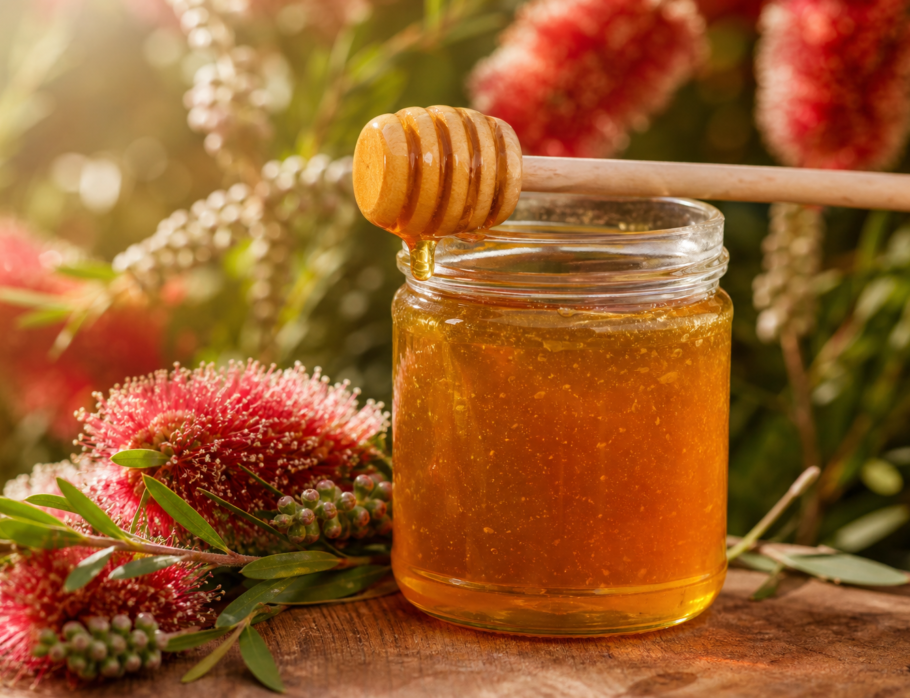
If you’re choosing honey for genuine health benefits, unfiltered unheated honey for health is the only form worth buying. Raw honey straight from the hive — never heated above hive temperature, never fine-filtered — retains a full spectrum of enzymes, antioxidants, pollen, propolis traces, and bioactive compounds. Commercial processing destroys most of these at temperatures above 40°C and strips the rest through micro-filtration. At QLD Honey & Hives, every jar we produce is kept exactly as the bees left it — unheated, unfiltered, and nutritionally intact.
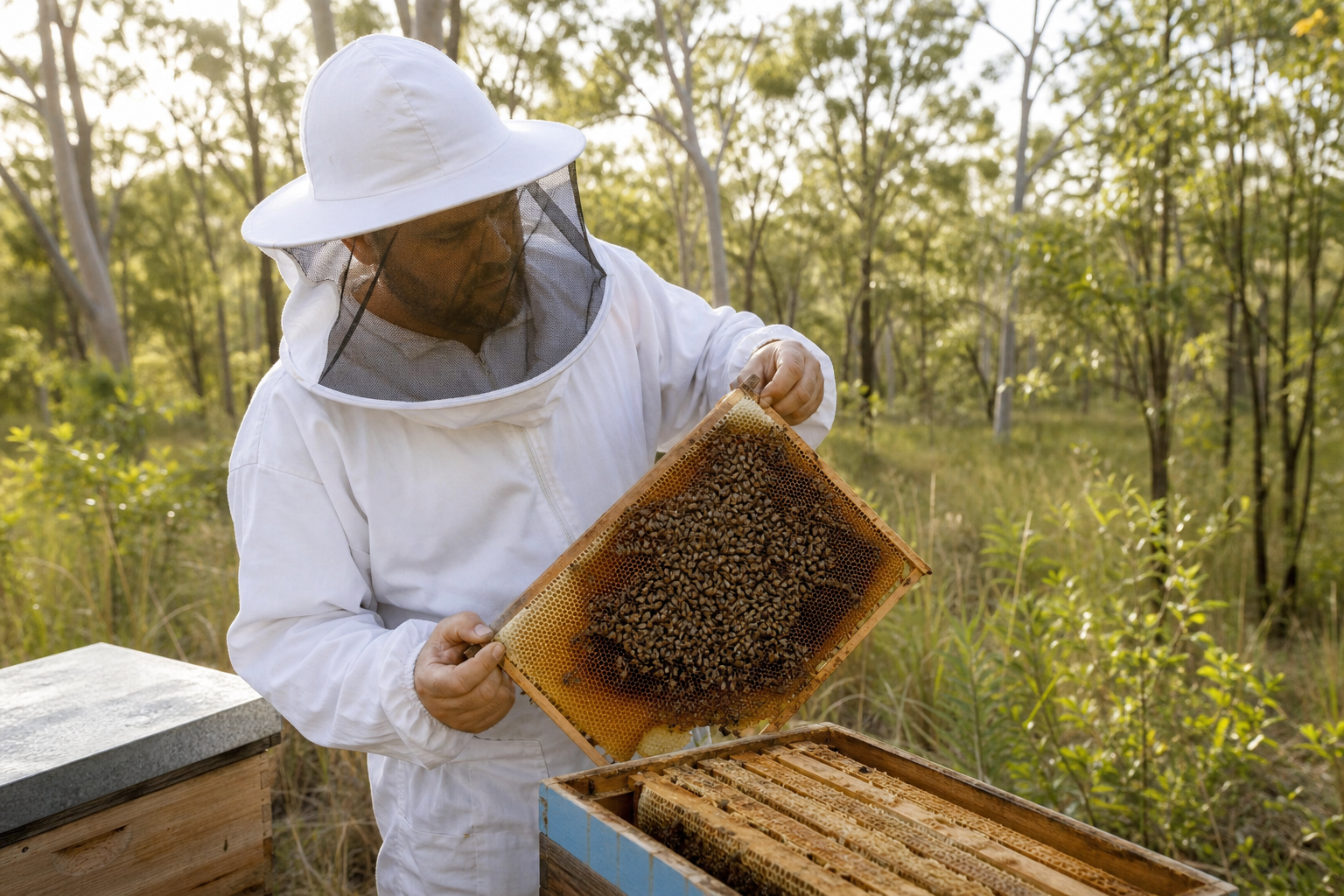
What Does “Unfiltered Unheated” Actually Mean?
These two terms are often used together, but they describe separate aspects of honey processing — and both matter enormously for health outcomes.
Unheated Honey
Unheated honey has never been exposed to temperatures above approximately 37–40°C, which is close to the natural temperature inside a beehive. Most commercial honey is heated to 60–80°C during processing to:
- Liquefy crystallised honey quickly for bottling
- Extend shelf life by destroying yeast cells
- Improve visual clarity in the jar
The problem? Heat is indiscriminate. Research published in Zemdirbyste-Agriculture found that glucose oxidase — one of honey’s most important antibacterial enzymes — begins to degrade above 55°C, with significant activity loss at processing temperatures above 60°C. Diastase (amylase) and invertase follow a similar pattern. By the time commercially processed honey reaches the shelf, its enzymatic activity is a fraction of what left the hive.
Unfiltered Honey
Unfiltered honey has not been passed through fine micro-filters that remove pollen, wax particles, and propolis traces. Standard commercial honey is pressure-filtered to produce that perfectly clear, bright appearance consumers have been conditioned to expect. What gets removed in this process? Bee pollen — one of the most nutritionally dense substances produced by the hive, containing proteins, flavonoids, and over 250 active compounds. Propolis particles, which carry powerful antimicrobial resins. And the natural wax micro-particles that help identify where and how honey was produced.
True unfiltered unheated honey for health preserves all of it. It may look slightly cloudier. It will crystallise faster. And it will deliver substantially more nutritional and functional value than its processed counterpart.
The Key Bioactive Compounds in Unfiltered Unheated Honey
Understanding what unprocessed honey contains helps explain why the distinction between raw and commercial honey matters so much. Here are the primary compounds preserved only in unfiltered unheated honey for health:
1. Enzymes
Bees secrete several enzymes into honey during production. These are the compounds most vulnerable to heat:
- Diastase (amylase) — Breaks down starches and helps honey resist microbial contamination. The Codex Alimentarius international food standard uses diastase activity as a marker of honey quality; heated honey often fails this test.
- Invertase — Converts sucrose into glucose and fructose during nectar ripening. Research in the Journal of the Science of Food and Agriculture confirmed that invertase activity drops rapidly above 50°C.
- Glucose oxidase — Produces hydrogen peroxide, giving honey its natural antibacterial properties. This enzyme is responsible for honey’s effectiveness against wound pathogens, and it is severely reduced by heat treatment.
- Catalase — Regulates the hydrogen peroxide level in honey, preventing excess accumulation.
2. Antioxidants
A comprehensive review published in Nutrients (2023) found honey contains significant concentrations of polyphenols, flavonoids, and phenolic acids including quercetin, kaempferol, and caffeic acid. These compounds are partially degraded by both heat and prolonged storage. Darker honeys — including many Australian native varieties like ironbark and melaleuca — tend to have higher antioxidant concentrations than light floral honeys.
3. Bee Pollen
Pollen grains suspended in unfiltered honey provide proteins, B-vitamins, amino acids, and flavonoids. A review published in Food and Chemical Toxicology identified bee pollen as one of the most nutritionally complete foods in nature. Fine-filtering removes it entirely. Unfiltered honey retains it in every spoonful.
4. Propolis Residues
Bees coat their hives with propolis — a resinous substance collected from tree buds and bark — as a natural antimicrobial barrier. Traces of propolis naturally find their way into unfiltered honey during extraction. Propolis is rich in biologically active flavonoids including pinocembrin, chrysin, and galangin, which have demonstrated antimicrobial, antifungal, and anti-inflammatory activity in multiple studies.
5. Natural Sugars in Balanced Form
Contrary to popular assumption, the sugar profile of unheated honey is not equivalent to table sugar or corn syrup. Honey’s glucose and fructose exist in a specific ratio shaped by the nectar source and enzymatic activity. In raw unheated honey, the natural moisture content, pH (typically 3.4–4.5), and osmotic properties combine to create an inhospitable environment for most pathogens — properties that are partially disrupted by heating and dilution during processing.
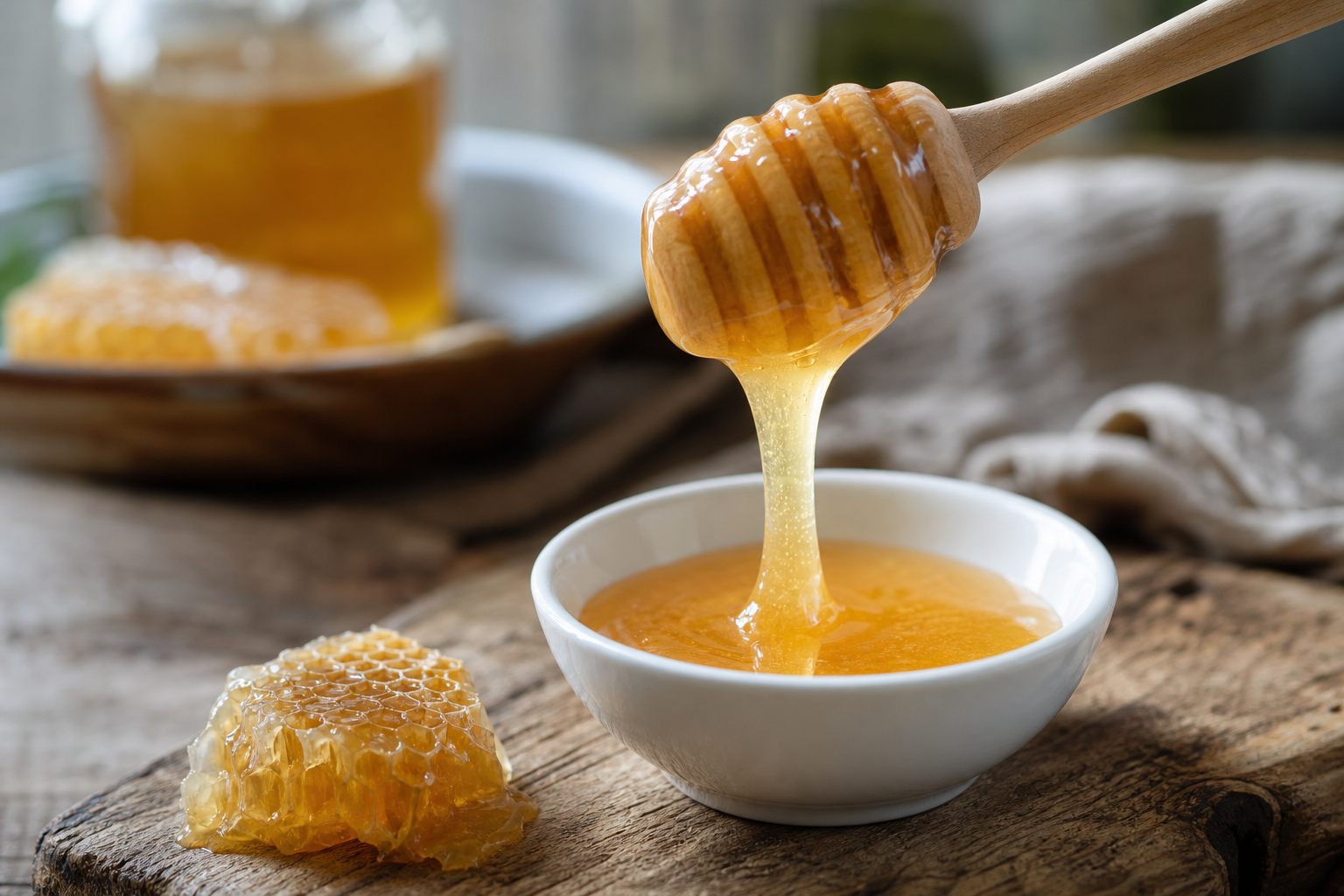
Unfiltered Unheated Honey for Health: Specific Benefits Backed by Research
Antimicrobial and Wound-Healing Properties
Honey’s ability to combat bacteria has been documented for millennia, but modern science has clarified the mechanism. The glucose oxidase enzyme in raw unfiltered unheated honey for health produces hydrogen peroxide in the presence of water — creating a gentle but effective antibacterial environment. Research from the University of Sydney found that some Australian native honeys retained strong antibacterial activity even at significant dilutions. This antibacterial effect is directly linked to enzyme activity — and enzyme activity depends on the honey never being heated.
QLD Honey & Hives’ Melaleuca (Tea Tree) Honey is sourced from hives placed in melaleuca-dense areas of Queensland, where bees forage on the antibacterial tea tree flower — producing a honey with naturally elevated antibacterial compound levels. Kept raw and unfiltered, this honey carries a health profile that processed varieties cannot match.
Digestive and Gut Health Support
Unfiltered unheated honey contains natural prebiotics — compounds that support the growth of beneficial gut bacteria. The oligosaccharides naturally present in raw honey have been studied for their bifidogenic effects, supporting populations of Lactobacillus and Bifidobacterium species. A 2023 review in Food Science & Engineering noted that raw honey’s prebiotic effect is closely tied to its oligosaccharide content — compounds partially degraded during heat processing.
Many Australians report that switching from commercial to raw unheated honey improves their digestion, reduces bloating after consumption, and supports regularity — likely due to both its prebiotic properties and its natural enzyme content supporting food breakdown.
Antioxidant and Anti-Inflammatory Activity
Chronic inflammation underlies many of modern Australia’s most common health conditions — from cardiovascular disease to metabolic syndrome. The polyphenols in unfiltered unheated honey for health have demonstrated anti-inflammatory properties in multiple clinical and laboratory studies. A 2023 review in Nutrients found that regular consumption of raw honey was associated with increased plasma levels of total phenolic compounds and measurable reductions in inflammatory markers.
Important caveat: these effects have been demonstrated with genuinely raw, minimally processed honey — not commercial supermarket honey. Heating destroys a significant portion of the polyphenol content and all of the enzyme-derived activity.
Immune System Support
The combination of enzymes, antioxidants, pollen, and antimicrobial compounds in raw unfiltered honey supports immune function through multiple pathways. Bee pollen alone contains immunomodulatory compounds including quercetin and kaempferol. Propolis residues provide additional antimicrobial protection. And the natural antibacterial properties of unheated honey — mediated through glucose oxidase activity — provide a layer of broad-spectrum protection that disappears when honey is heated.
Sleep and Cough Relief
Raw honey consumed before bed has a well-established folk tradition across Australian, European, and Asian cultures — and there is now clinical evidence to support it. A study published in Pediatric Clinics of North America found that honey was more effective than placebo at reducing cough frequency and improving sleep quality in children with upper respiratory infections. The mechanism involves honey’s osmotic properties soothing irritated tissue, combined with its antioxidant and mild antimicrobial activity. Unheated honey preserves the enzymatic and phytochemical components that make this effective.
How Heat Damages Honey: The Science of Processing
When honey is heated above 40°C, a cascade of chemical changes begins. Understanding these changes makes clear why unfiltered unheated honey for health is not simply a marketing term — it describes a fundamentally different food.
HMF Formation
Hydroxymethylfurfural (HMF) is a chemical compound that forms when fructose is heated in an acidic environment — which is exactly what honey is. Fresh, raw honey contains almost no HMF. The European Union standard for quality honey sets a maximum HMF level of 40 mg/kg. Commercially processed honey regularly exceeds this. Research published in 2023 confirmed a direct inverse relationship: as diastase activity drops during heating, HMF concentration rises.
Research from Australia
Closer to home, Food Processing Australia reported in July 2026 on research showing that gentler processing methods — specifically those minimising heat exposure — produced honey with lower HMF concentrations and lighter colour, both markers of preserved chemical integrity. The research highlighted the Flow Hive method, where honey is extracted without heating and with minimal agitation, as a model for quality-preserving extraction. QLD Honey & Hives uses similar low-intervention extraction practices across all of our hives, ensuring the honey you receive is as close to its natural state as possible.
Queensland Native Honeys and Unfiltered Unheated Quality
Not all unfiltered unheated honey is created equal. The floral source matters enormously — and Queensland’s unique native flora produces some of Australia’s most distinctive and bioactive honeys.
Ironbark Honey
QLD Honey & Hives Ironbark Honey is sourced from ironbark-flowering seasons in Queensland’s hinterland. Ironbark honeys are known for their deep amber colour, bold flavour, and high antioxidant concentration — characteristics of a floral source rich in polyphenols. Kept raw and unfiltered, ironbark honey retains a full complement of enzymes and phytochemicals.
Brushbox Honey
Brushbox Honey from Queensland’s native brushbox eucalyptus trees has a distinctive caramel character and medium amber colour. Like all QLD Honey & Hives varieties, it is extracted without heat treatment and coarse-strained only — preserving pollen, propolis traces, and enzymatic activity.
Polyfloral Raw Honey
Our Polyfloral Honey draws from multiple Queensland native flowering species across a season. This diversity means a broader spectrum of phytochemicals and flavonoids — each floral source contributing its own unique profile of bioactive compounds. Polyfloral honey is often considered among the most nutritionally varied of all honey types for this reason.
How to Identify Genuine Unfiltered Unheated Honey
With terms like “natural”, “pure”, and “raw” used loosely across the supermarket honey aisle, knowing what to look for matters. Here are the genuine markers of unfiltered unheated honey for health:
- Cloudiness or opacity — Unfiltered honey is never brilliantly clear. Pollen and wax particles create natural cloudiness or a matte appearance.
- Crystallisation — Raw unheated honey crystallises naturally over time. This is a sign of quality, not spoilage. Commercial honey resists crystallisation because heating destroys the glucose crystals that seed the process.
- Producer transparency — A genuine raw honey producer will tell you the floral source, the region their hives are placed, and how extraction is handled. Vague labels claiming “Australian honey” with no further detail are a red flag.
- Varied colour and flavour between batches — Real single-origin honey changes with the season and the bloom. Uniform colour and flavour across a commercial brand usually means blending and standardisation — not raw quality.
- No “pure” honey label without raw descriptor — Australian food standards allow the word “pure” on honey that has been fully heated and filtered. Pure does not equal raw. Look specifically for “raw”, “unheated”, or “unfiltered” on the label.
How Much Unfiltered Unheated Honey Should You Consume?
Despite its health benefits, honey is still a concentrated sugar source and should be consumed with this in mind. General guidance for adults includes:
- 1–3 teaspoons per day as a health supplement or sweetener
- Consumed raw — not stirred into boiling water or used in high-heat cooking if you want to preserve the enzyme activity
- Taken directly or in warm (not hot) water or herbal teas kept below 40°C
- Not suitable for infants under 12 months regardless of processing — raw or otherwise
For people managing blood sugar, honey’s glycaemic response is generally lower than refined sugar due to its fructose content and the presence of natural compounds that moderate absorption — but it is not a low-GI food and should be factored into total carbohydrate intake.
Where to Buy Unfiltered Unheated Honey in Queensland
QLD Honey & Hives supplies genuinely raw, unfiltered, unheated honey sourced directly from Queensland apiaries. Every variety we sell is extracted using low-intervention methods — no heat treatment, no micro-filtering, no blending with overseas honey. What leaves our hives is what arrives in your jar.
- Browse our full range in the QLD Honey & Hives online shop — Queensland-wide and Australia-wide delivery available
- Find us at local markets and pop-up events via our Pop-Up Locations page
- Locate stockists near you on the Gold Coast Honey Stockists page
- Contact us for bulk orders, wholesale enquiries, or questions about our extraction methods
FAQ: Unfiltered Unheated Honey for Health
What is the difference between raw honey and unfiltered unheated honey?
“Raw honey” broadly refers to honey that has not been pasteurised. “Unfiltered unheated honey” is more specific — it means the honey has not been heated (even below pasteurisation temperature) and has not been fine-filtered to remove pollen and propolis. The best raw honey is both unfiltered and unheated.
Does cooking with honey destroy its health benefits?
Yes. Exposing honey to temperatures above 40°C begins to degrade its enzymes. Stirring raw honey into boiling water, baking with it at high temperatures, or adding it to hot drinks defeats the purpose of buying unheated honey. For health purposes, consume it raw or in warm liquids kept below 40°C.
Why does unfiltered unheated honey crystallise?
Crystallisation is a natural process driven by the glucose content of honey forming crystals over time. Unfiltered unheated honey crystallises faster than processed honey because it retains the natural pollen particles and glucose crystals that act as seeds for the process. It does not mean the honey has spoiled — gently warm the jar in a water bath below 40°C to re-liquefy it without damaging its active compounds.
Is unfiltered honey safe to eat?
Yes — for adults and children over 12 months. The main safety consideration with any honey is the theoretical presence of Clostridium botulinum spores, which is why honey of any kind should not be given to infants under 12 months. For everyone else, raw unfiltered unheated honey is a safe, traditional food with an excellent safety record.
How long does unfiltered unheated honey last?
Honey has an exceptionally long shelf life due to its low moisture content, high sugar concentration, low pH, and natural antibacterial properties. Properly stored raw honey (in a sealed jar, away from direct sunlight and humidity) can last for years — even decades. Unfiltered unheated honey stored correctly will not go off — it may crystallise, but this is easily reversed with gentle warming.
Is Queensland honey better than imported honey?
Australian honey — including Queensland honey — benefits from among the world’s strictest food safety and biosecurity standards. Australia remains free from Varroa mite and many of the pesticide contamination issues affecting European and Asian honey supplies. Queensland’s unique native flora also produces distinctive monofloral varieties unavailable anywhere else. For genuine quality and traceability, local Queensland unfiltered unheated honey from a named producer is the gold standard. Learn more about QLD Honey & Hives and our Queensland beekeeping heritage.
Can unfiltered unheated honey help with allergies?
Local raw honey containing bee pollen has been traditionally used as a natural desensitisation approach for seasonal allergies, on the theory that consuming small amounts of local pollen may reduce sensitivity over time. The clinical evidence remains mixed — controlled trials show modest results — but the pollen itself is only present in unfiltered honey. Filtered commercial honey contains none. For allergy support purposes, if honey is going to be used, unfiltered is the only logical choice.
Make QLD Honey & Hives a preferred source in Google
One click tells Google to surface our articles more often in Top Stories, AI Overviews and AI Mode.


