Last updated:
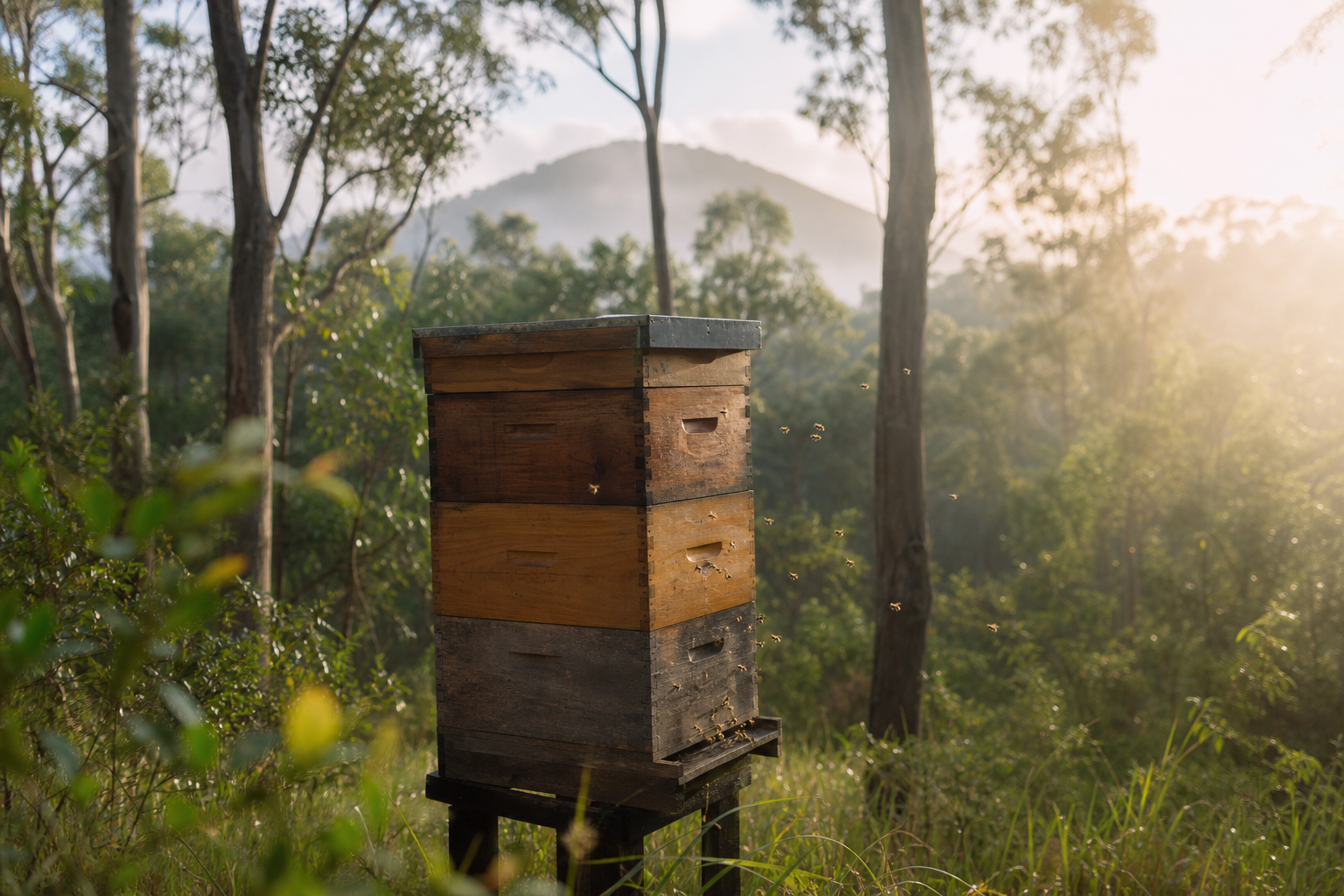
Hinterland honey is raw, single-origin honey harvested from beehives placed throughout the Gold Coast Hinterland — the elevated rainforest ranges, plateaus, and valleys stretching from Tamborine Mountain to Springbrook and Lamington. These remote apiary sites sit among dense stands of ironbark, brushbox, melaleuca, and native wildflowers, producing honey with a depth of flavour and nutritional integrity that coastal or commercially blended honeys simply cannot match. At QLD Honey & Hives, we place our hives across the Gold Coast Hinterland to capture these exceptional nectar flows and deliver genuinely raw, unfiltered Hinterland honey straight to your table.
What Makes Hinterland Honey Different
The Gold Coast Hinterland is a UNESCO World Heritage–listed landscape of ancient volcanic terrain, subtropical rainforest, and open eucalyptus woodland. This diversity of elevation, soil type, and microclimate creates nectar sources that are not available on the coastal plain or in cleared farmland areas.
Hinterland honey stands apart for several reasons:
- Botanical diversity: Bees forage across ironbark, brushbox, tallowwood, bloodwood, melaleuca (tea tree), swamp turpentine, jacaranda, and dozens of native understorey species — often within a single season.
- Minimal chemical exposure: Hives positioned in national park buffer zones, private rural properties, and protected corridors face far less agricultural chemical contact than lowland apiaries.
- Elevation-driven flavour: Higher altitudes on Tamborine Mountain (525 m) and Springbrook (up to 900 m) produce slower nectar flows and denser honey with more concentrated flavour compounds.
- Raw processing: Genuine Hinterland honey is cold-extracted and never heat-treated, preserving the natural enzymes, pollen, and antioxidants that give raw honey its health properties.
When you buy Hinterland honey from a local Gold Coast producer like QLD Honey & Hives, you are getting a product that reflects a specific place and season — not a generic supermarket blend.
Native Flora That Produces Hinterland Honey
The flavour, colour, and texture of any raw honey depends entirely on the nectar source the bees visit. In the Gold Coast Hinterland, the dominant honey-producing trees and plants include the following species.
Ironbark (Eucalyptus siderophloia and E. crebra)
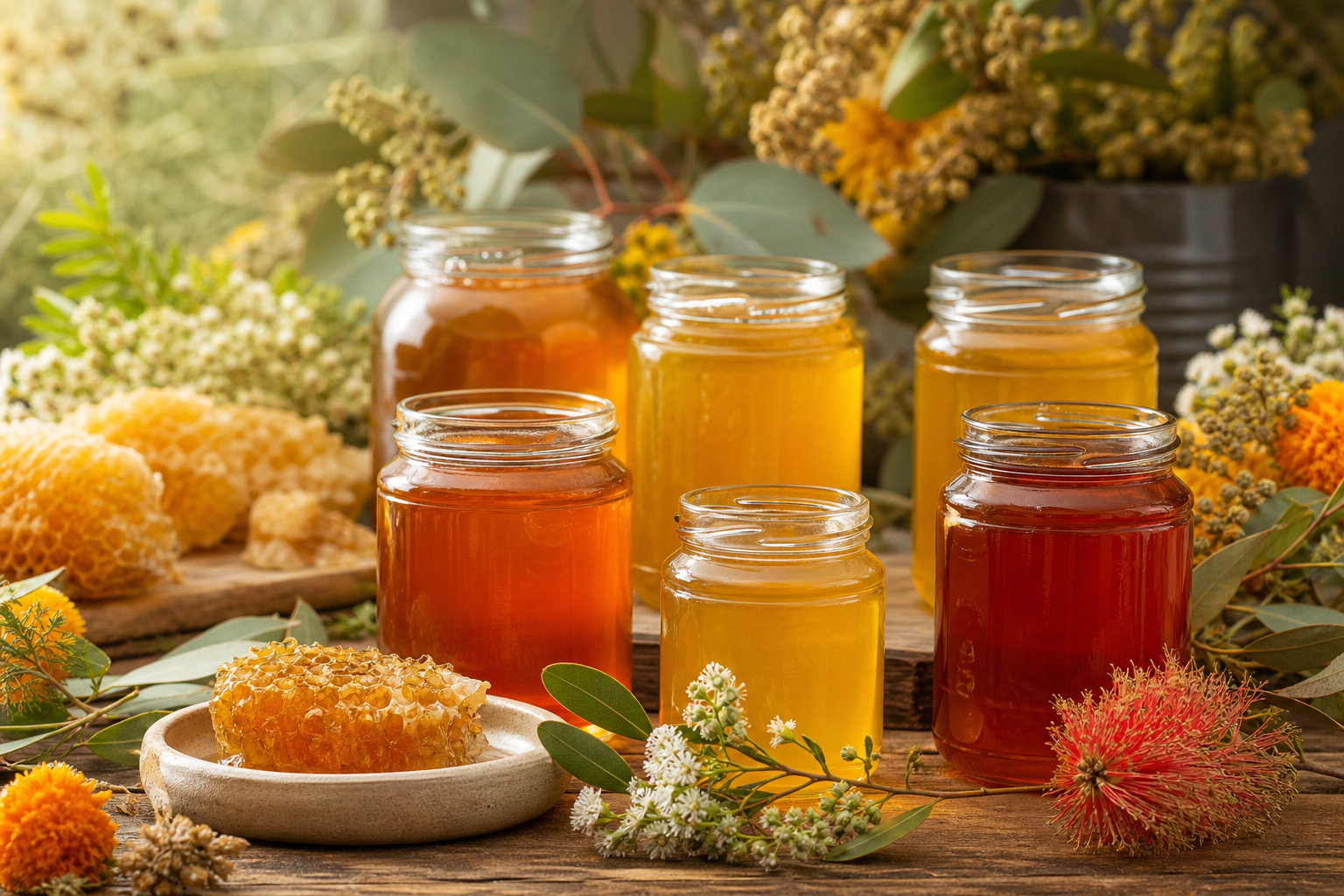
Ironbark is one of Queensland’s most reliable honey trees. It produces a rich, amber honey with a bold, slightly caramelised sweetness and moderate floral notes. Ironbark honey crystallises slowly, making it a favourite for everyday use. Our Ironbark Honey captures this classic Hinterland flavour in every jar.
Brushbox (Lophostemon confertus)
Brushbox trees line the ridges and escarpments of the Hinterland, flowering prolifically in late spring and early summer. Brushbox honey is light gold to amber with a smooth, buttery finish and mild floral aroma. It is one of the most sought-after single-varietal honeys in South East Queensland. Try our Brushbox Honey for a true Hinterland taste.
Melaleuca / Tea Tree (Melaleuca quinquenervia and related species)
Melaleuca trees thrive in the wetter gullies and creek corridors of the Hinterland. The honey they produce has a distinctive herbal, slightly medicinal flavour and is prized for its natural antibacterial properties. Our Melaleuca (Tea Tree) Honey is harvested from hives placed near dense melaleuca stands.
Swamp Turpentine (Lophostemon suaveolens)
A lesser-known but exceptional nectar source, swamp turpentine produces a dark, richly flavoured honey with earthy and malty notes. It is a seasonal rarity that experienced beekeepers prize. You can find our limited Swamp Turpentine Honey in our online shop.
Tallowwood (Eucalyptus microcorys)
Tallowwood eucalyptus grows throughout the upper Hinterland and produces a medium-bodied honey with gentle eucalyptus overtones and a clean finish. It is an excellent everyday table honey.
Bloodwood, Stringybark, and Understorey Wildflowers
Depending on the season, bees also forage on corymbia bloodwoods, stringybark eucalyptus, native banksia, grevillea, and a wide range of understorey flowering plants. This is why polyfloral Hinterland honey — sometimes called mixed-gum or wildflower honey — has such complex, layered flavour. Our Polyfloral Honey is a beautiful expression of this multi-species foraging.
Hinterland Honey and Health Benefits
Raw Hinterland honey retains all of the beneficial compounds that commercial processing destroys. When honey is heat-treated or ultra-filtered — as most supermarket honeys are — enzymes, pollen grains, and delicate bioactive compounds break down. Genuine raw honey from the Hinterland preserves these elements.
Enzymatic Activity and Hydrogen Peroxide
Bees add the enzyme glucose oxidase to nectar during honey production. In raw honey, this enzyme remains active and produces hydrogen peroxide when the honey contacts moisture — such as on a wound or in the throat. A 2025 review published in the National Institutes of Health journal confirmed that honey’s antimicrobial properties, including hydrogen peroxide production, remain effective against antibiotic-resistant pathogens such as MRSA (PMC, 2025).
Antioxidants and Polyphenols
Darker honeys — such as ironbark and swamp turpentine from the Hinterland — contain higher concentrations of polyphenols and flavonoids. These antioxidants help neutralise free radicals and reduce oxidative stress. Research consistently shows that darker, raw honeys score significantly higher on the ORAC (Oxygen Radical Absorbance Capacity) scale than lighter, processed alternatives.
Pollen and Potential Allergy Support
Raw, unfiltered Hinterland honey contains traces of native pollen from the local flora. Some allergy sufferers in the Gold Coast region report that regular consumption of local raw honey helps ease seasonal symptoms, as it may gently expose the immune system to local allergens over time. While clinical evidence is still emerging, the anecdotal tradition of using local honey for hay fever is deeply established in Queensland.
Prebiotic Properties
Raw honey contains natural oligosaccharides that function as prebiotics, feeding beneficial gut bacteria. A healthy gut microbiome supports immune function, nutrient absorption, and overall wellbeing — making raw Hinterland honey a simple daily addition to a balanced diet.
Where Hinterland Honey Is Harvested
The Gold Coast Hinterland spans a large, geographically diverse area. Here are the key regions where Hinterland honey is produced.
Tamborine Mountain
At 525 metres elevation, Tamborine Mountain is one of the most productive beekeeping zones in the Hinterland. The plateau supports dense eucalyptus forest, subtropical rainforest pockets, and rural properties with abundant flowering trees. Ironbark and brushbox are the dominant honey flora here.
Springbrook Plateau
Rising to 900 metres, Springbrook is cooler, wetter, and home to ancient Antarctic beech and Gondwana rainforest. The transitional zones between rainforest and open eucalyptus woodland produce unique nectar flows. Honey from Springbrook often has richer, more complex flavour profiles.
Numinbah Valley and Advancetown
The sheltered Numinbah Valley sits between Springbrook and Lamington, with rich alluvial soils supporting melaleuca stands, bloodwood, and tallowwood along the Nerang River corridor. This area is ideal for tea tree and polyfloral honeys.
Canungra and Beechmont
On the western edge of the Hinterland, Canungra and Beechmont connect to the Scenic Rim. This transitional zone supports ironbark, stringybark, and spotted gum, producing robust honeys with a dry, almost tannic finish.
Mudgeeraba, Guanaba, and Cedar Creek
The eastern foothills of the Hinterland — including Mudgeeraba, Guanaba, Wongawallan, and Cedar Creek — are where the ranges meet the coastal lowlands. These areas offer a blend of Hinterland and coastal nectar sources, producing versatile polyfloral honeys.
How to Identify Genuine Hinterland Honey
Not every jar labelled “Hinterland honey” is the real thing. Here is what to look for when buying genuine Hinterland honey on the Gold Coast.
- Named producer: Look for a specific beekeeper or brand — such as QLD Honey & Hives — rather than a generic label. A genuine producer can tell you exactly where their hives are located.
- Raw and unfiltered: The label should state “raw” and ideally “unfiltered” or “cold-extracted.” If it says “pure” but does not specify raw, it may still be heat-treated.
- Single-origin or named flora: Authentic Hinterland producers often identify the specific nectar source — ironbark, brushbox, melaleuca — or describe the honey as polyfloral from a named area.
- Natural crystallisation: Raw honey crystallises over time. If a jar of honey has remained perfectly liquid on a shelf for months, it has likely been heated or processed.
- Local availability: Genuine Hinterland honey is typically sold at local stockists, farmers’ markets, pop-up locations, and direct from the producer’s website.
Buying Hinterland Honey From QLD Honey & Hives
QLD Honey & Hives is a Gold Coast-based honey producer with hives placed throughout the Hinterland and surrounding regions. We offer a range of single-varietal and polyfloral honeys that reflect the unique flora of the ranges.
You can purchase our Hinterland honey in several ways:
- Online shop: Browse our full range at the QLD Honey & Hives shop and have it delivered Australia-wide.
- Local stockists: Find us at select health food stores, specialty grocers, and cafés across the Gold Coast — see our stockists page.
- Markets and pop-ups: We regularly attend Gold Coast markets and pop-up events — check our pop-up locations page for upcoming dates.
- Gift packs: Our Honey Gift Pack includes a curated selection of Hinterland varieties — a perfect introduction or gift for honey lovers.
Every jar of QLD Honey & Hives honey is raw, unfiltered, and cold-extracted. We never blend with imported honey, and we never heat-treat our product. What you get is exactly what the bees made.
Cooking and Using Hinterland Honey
Hinterland honey is far more than a sweetener. Its complex flavour profiles make it a versatile ingredient in the kitchen and beyond.
In the Kitchen
- Ironbark honey pairs beautifully with strong cheeses, roasted vegetables, and charcuterie boards.
- Brushbox honey works well in baking, smoothies, and as a natural sweetener in tea or coffee.
- Melaleuca honey adds a distinctive herbal note to salad dressings, marinades, and hot toddies.
- Polyfloral honey is an all-purpose table honey — drizzle it on toast, porridge, yoghurt, or pancakes.
For Health and Wellness
- A spoonful of raw Hinterland honey in warm water or herbal tea supports throat comfort during winter.
- Applied topically, raw honey can soothe minor cuts, burns, and dry skin patches.
- Mixed with lemon and ginger, raw honey makes a traditional immune-supporting tonic.
Beyond the Kitchen
Hinterland beeswax — a by-product of honey harvesting — is used to make premium candles, skincare balms, and furniture polish. At QLD Honey & Hives, we stock beeswax candles and Sovereign Soaps Beeswax Balm made from the same Hinterland beeswax.
Sustainability and Beekeeping in the Hinterland
Responsible beekeeping is essential to preserving the Gold Coast Hinterland’s biodiversity. At QLD Honey & Hives, we follow sustainable apiary practices:
- Leave enough for the bees: We harvest only surplus honey, ensuring colonies retain sufficient stores for winter and lean nectar periods.
- No antibiotics or chemical treatments: Our hives are managed using integrated pest management and natural methods.
- Supporting native pollination: Our hives contribute to the pollination of Hinterland flora, supporting the health of native ecosystems and the species that depend on them.
- Registered apiaries: All QLD Honey & Hives apiaries comply with Queensland’s Apiaries Act and Biosecurity Act requirements, including registration and disease monitoring.
When you buy Hinterland honey from a local producer committed to sustainable practices, you are directly supporting both the beekeeper and the environment.
Frequently Asked Questions About Hinterland Honey
What is Hinterland honey?
Hinterland honey is raw honey harvested from beehives placed in the Gold Coast Hinterland — the elevated ranges, valleys, and plateaus behind the Gold Coast coastal strip. The bees forage on native flora including ironbark, brushbox, melaleuca, tallowwood, and dozens of wildflower species, producing honey with complex, terroir-driven flavour.
Why is Hinterland honey more expensive than supermarket honey?
Hinterland honey is produced in small batches from remote apiary sites, cold-extracted by hand, and never blended with imported honey. The additional care, smaller yields, and genuine single-origin provenance justify a higher price compared to mass-produced, heat-treated supermarket blends.
Is Hinterland honey the same as Manuka honey?
No. Manuka honey is produced specifically from the nectar of Leptospermum species and is valued for its unique methylglyoxal (MGO) content. Hinterland honey may come from ironbark, brushbox, melaleuca, or mixed native flora. However, some Hinterland honeys — particularly melaleuca and tea tree varieties — share antibacterial properties with Manuka honey.
How should I store Hinterland honey?
Store raw Hinterland honey in a sealed glass jar at room temperature, away from direct sunlight. Do not refrigerate, as this accelerates crystallisation. If your honey crystallises naturally, gently warm the jar in warm water (not above 40°C) to restore it to a liquid state without damaging the enzymes.
Can I use Hinterland honey for cooking and baking?
Yes. Hinterland honey is excellent for cooking, baking, marinades, dressings, and beverages. Each variety — ironbark, brushbox, melaleuca — brings a different flavour profile, so experiment to find your favourite pairings.
Where can I buy Hinterland honey on the Gold Coast?
You can buy genuine Hinterland honey from QLD Honey & Hives online, at our Gold Coast stockists, or at local markets and pop-ups. We also deliver Australia-wide.
Does Hinterland honey help with allergies?
Some people report that consuming local raw honey — including Hinterland honey — helps reduce seasonal allergy symptoms. The theory is that exposure to small amounts of local pollen in unfiltered honey may gradually desensitise the immune system. Clinical evidence is still limited, but the tradition is well-established among Gold Coast locals. Visit our About Us page to learn more about our raw, unfiltered approach.
Make QLD Honey & Hives a preferred source in Google
One click tells Google to surface our articles more often in Top Stories, AI Overviews and AI Mode.