
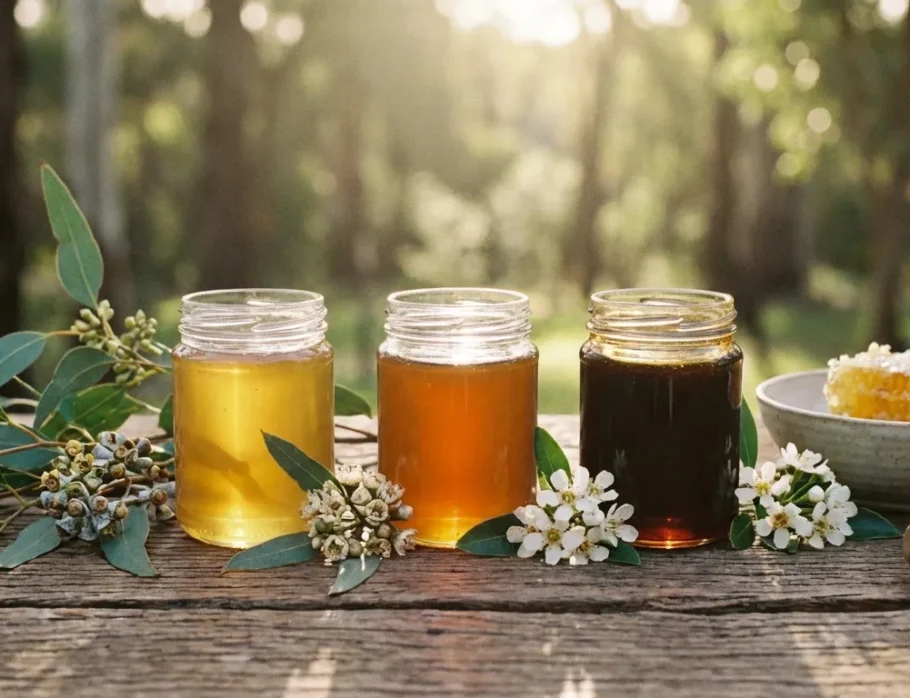
TLDR; Australian honey stands out due to native flora, clean environments, and long flowering seasons, creating distinctive flavours and health benefits you won’t find elsewhere. Ironbark is bold and mineral-rich, Jarrah is smooth with a low GI and antioxidants, and Leatherwood is rare, floral, and prized seasonally. The article highlights why raw honey retains more nutrients than pasteurised honey, why crystallisation is natural, and how local beekeeping supports sustainability and healthy ecosystems. The takeaway is to choose honey based on purpose—health, skincare, or cooking—prioritising raw, local varieties that match your needs and values.
Australia produces some of the most distinctive honey in the world, and that’s usually not an exaggeration. Native forests, clean air, long flowering seasons, and very different regions often come together in ways that are hard to copy elsewhere. The result is flavour profiles you don’t come across very often, which is genuinely enjoyable. Each region brings something specific, and you can taste that difference straight from the jar. If you’ve ever wondered why Australian honey varieties are so well regarded, this guide explains it in plain, simple language. No fuss, no heavy science, just enough context to understand what makes our honey different.
For many families, honey is more than a sweetener. It shows up in daily health habits, natural skincare routines, home remedies, and as thoughtful gifts for people they care about (you’ve probably done this yourself). Choosing honey by flora helps explain why one jar tastes rich and bold while another feels smooth and gentle. From dark Ironbark to mellow Jarrah, and lighter options with soft aromas like Leatherwood, each raw honey reflects where it comes from. Soil. Climate. Time. That connection is usually what makes it genuinely interesting.
At the same time, concern around imported and blended honey has grown. Many shoppers now look for honey that’s raw, pure, and clearly sourced, which often feels like a sensible choice. Supporting Australian beekeepers and protecting bees both matter here. For many households, it often comes down to choosing honest food they feel comfortable serving at home.
This Australian honey varietal guide looks at native flora honeys in more detail. It covers how honey by flora works, what usually separates raw honey from processed options, and how to choose the right jar for health uses, skincare, cooking, or gifting. Sustainability and bee conservation are also included, along with why local sourcing supports beekeepers and gives consumers clearer choices. For further context, you can read more about what to know about Australian honey.
Understanding Australian Honey Varieties and Native Flora
Australian honey varieties are shaped by the flowering plants bees visit most, a system often called honey by flora. Instead of blended supermarket honey, single‑floral or regionally dominant honeys come from one main plant during one season. This focus gives the honey a strong sense of place. Very local. Very specific. You can usually taste the difference straight away.
With more than 1,500 native flowering plants that attract bees, Australia gives beekeepers a huge range to work with. Eucalyptus alone includes over 700 species. That range helps explain why flavours and colours vary so widely. Some honeys are pale and mild, while others turn dark, bold, and almost syrup‑like. Texture changes too. One batch might stay light and smooth, another thicker and darker, depending on nectar source and timing.
What helps Australian honey stand out is how many native plants flower in fairly steady cycles. Beekeepers who know the land well often move hives during peak flowering weeks for a specific plant, usually from late winter through summer depending on the species. By doing this, bees mostly stick to one main floral source instead of bouncing between many. The result is clearer flavour profiles and more consistent traits from batch to batch. Not identical, though. Climate, rainfall, soil type, and altitude still shape the final taste, which is why the same floral honey can shift slightly each year. Nature has moods, and it rarely explains them.
Raw honey fits naturally into this picture. It’s extracted and strained rather than heated or heavily filtered, which helps keep enzymes, pollen, and antioxidants intact. Many health‑conscious consumers choose raw, unfiltered honey because it feels closer to nature. Less processed. More real, in my view.
The Australian honey market keeps growing as interest in high‑quality, locally produced food rises. Industry data shows premium native‑flora honeys are driving much of that growth. Flavour matters, but links to health benefits and sustainable production often matter just as much, especially for people who care where their food comes from.
| Metric | Value | Year |
|---|---|---|
| Australian honey market value | AUD 237.51 million | 2025 |
| Projected market value | AUD 437.54 million | 2034 |
| Beekeeping industry revenue | AUD 335.2 million | 2024, 25 |
Ironbark Honey: Bold, Mineral-Rich and Deeply Nourishing
Ironbark honey comes from several species of eucalyptus trees found across eastern Australia, especially in Queensland and New South Wales. These trees are easy to spot once you know them, with dark bark and famously tough wood. That toughness helps them survive harsh conditions, and many people feel that same strength comes through in the honey they produce.
The nectar creates a honey with real character. It’s strong and straightforward, better described as grounded than delicate. Instead of chasing light or floral notes, it stays closely connected to the land it comes from. This often appeals to people who enjoy flavours that feel rooted and familiar rather than sweet and showy.
Ironbark honey is usually dark amber and can lean toward almost black. The flavour is bold and malty, with a slight bitterness and a heaviness that lingers. Many people describe it as earthy and steady. It suits those who prefer depth over bright, sugary sweetness. It’s not an everyday honey for everyone, which is exactly why it tends to stick in your memory.
From a nutrition point of view, Ironbark honey is known for being richer in minerals than lighter honeys. Darker honeys often contain more potassium and magnesium. These minerals come from the soil, move through the nectar, and end up in the honey itself. The sweetness supports rather than overwhelms, giving it a more balanced feel that many people find filling and satisfying.
When it comes to health, Ironbark honey is recognised for its mineral content and antioxidant activity. Researchers are still looking at eucalyptus honeys for possible links to gut health and immune support. Dr Nural Cokcetin from the University of Technology Sydney has noted promising bioactive properties, though this research is ongoing.
The benefits of Australian eucalyptus honeys including Ironbark and Yellowbox are being investigated for their effectiveness in promoting a healthy gut and stronger immune systems.
Ironbark honey is especially popular in winter. Families often stir it into warm drinks, spread it on toast, or bake with it when a stronger flavour feels right. It also suits marinades and savoury dishes, where you actually want the honey to be noticed.
Among natural skincare enthusiasts, Ironbark honey is appreciated for its cleansing feel. In handmade soaps or simple face masks, it adds a deep, earthy aroma that feels comforting, especially when skin is dry or tired.
Jarrah Honey: Smooth, Low GI and Rich in Antioxidants
Jarrah honey comes from the Jarrah tree, which grows naturally in Western Australia. It’s one of Australia’s most researched honeys and is often compared with Manuka (they get mentioned together a lot), even though they come from different places. Jarrah has built its reputation on its own qualities and many years of study, not short-lived trends. For many people, that long history of research is why it feels like a reliable choice.
In terms of look and taste, Jarrah honey has a dark amber colour and a smooth flavour that’s closer to caramel than straight sweetness. It feels warming rather than sugary and isn’t overly sweet. Compared with lighter honeys, it tastes more balanced, which is why many people find it easy to use every day. It works just as well at breakfast as it does stirred into tea. One thing people often notice is its naturally low glycaemic index, which is why it’s commonly chosen by those who watch their sugar intake.
A low GI means Jarrah honey releases energy more slowly into the bloodstream than refined sugar. That steady release suits people managing blood sugar levels or anyone who wants energy without the sharp highs and crashes. Athletes and active people often use it around training, either before or after, because it’s familiar and simple to use.
Scientific testing shows Jarrah honey is high in antioxidants and has antimicrobial activity. Some studies suggest certain samples perform strongly against bacteria. Over time, this body of research has shaped how it’s seen, especially in wellness and skincare, where ingredients tend to be examined closely.
| Attribute | Measured Value |
|---|---|
| Glycaemic Index | GI 52 |
| Antioxidant activity | 12.81 TE µmol/g |
| Probiotic index | 0.91 |
Jarrah honey is often part of everyday wellness habits. People drizzle it over yoghurt, blend it into smoothies, or use it more during the colder months. It also appears in natural wound care products and a range of skincare formulas.
As a gift, Jarrah honey feels premium without trying too hard. It’s easy to like. Its research-backed reputation and smooth flavour make it a comfortable pick for friends or family who want to try Australian native honeys and are looking for something that genuinely feels different.
Leatherwood Honey: Rare, Floral, Seasonal, and Gift-Worthy
Leatherwood honey comes from Tasmania and is made from nectar collected from the Leatherwood tree. This tree grows in just a few rainforest areas, which is why the honey is closely tied to that place and not easy to find. The trees flower only at certain times of the year, so the honey is available seasonally. Rare and seasonal are both fair ways to describe it.
What really sets Leatherwood honey apart, in my experience, is the smell. When you open a jar, a strong floral scent often fills the room right away. The flavour is more than just sweet. It has layers, with light spice notes and a long finish that stays on the palate. People react to it differently, and that’s part of what makes it interesting. Some enjoy it straight away, while others take a bit of time to warm up to the flavour.
Because the flowers bloom for such a short period, beekeepers need to be careful about where they place hives and when they harvest. Tasmania’s weather can change quickly, which affects how much honey is produced each season. That helps explain why Leatherwood honey can be harder to find and usually costs more.
Studies show Leatherwood honey has higher levels of aroma compounds than many other Australian floral honeys. That strong sensory character is why people often choose it as a gift, especially for holidays or thank-you occasions where something a little different is appreciated.
| Feature | Leatherwood Honey |
|---|---|
| Availability | Limited and seasonal |
| Aroma | Strong floral |
| Popular use | Gifting and desserts |
Many people like Leatherwood honey straight off the spoon or spread generously on sourdough, where the aroma really stands out. It also pairs nicely with bold cheeses and desserts like panna cotta, baked custards, or a simple honey cake.
Eco-conscious buyers often choose Leatherwood honey because its production supports sustainable forestry and careful hive placement in sensitive environments, which appeals to people who care about responsible sourcing.
Raw Honey vs Pasteurised Honey: Why Processing Matters
Once honey leaves the hive, things usually start to change, and how it’s handled often shapes the final result. The biggest difference comes down to processing. Raw honey is taken from the comb, gently strained, and kept close to how it is in nature (basically cleaned just enough to remove bits of wax). Pasteurised honey goes through a very different process. It’s heated and heavily filtered so it stays clear and smooth on the shelf for longer, which suits supermarkets. Same starting point, different goals, different results.
When honey is heated, some natural enzymes can be reduced, so its original qualities may shift. That’s why many people choose raw, unfiltered honey, especially for wellness routines or skin care. You often hear this from people who use it regularly. Enzymes like glucose oxidase help with honey’s natural antibacterial effect, and high heat can lower how active they are. It’s a small change, but one that matters to some people.
Crystallisation is another common question. Raw honey often sets over time, and this can surprise people. It’s not a fault, even if it looks unusual at first. How fast it sets depends on the flower source and sugar balance. Ironbark, for example, sets faster than Jarrah. That’s just nature doing its thing.
Families sometimes worry when honey turns thick or cloudy. In most cases, this simply means the natural sugars and pollen are still there. Sitting the jar in warm water usually brings it back to liquid without affecting what makes it special.
Choosing raw honey can also support smaller beekeepers who focus on careful hive handling and minimal processing. To me, that clear link between the jar and the hive is worth thinking about. You can explore more about using unfiltered honey for health to see why it matters.
Sustainability, Bees and Why Local Honey Matters
Bees are important to how food is grown, especially in Australia. Pollination adds billions of dollars to agriculture each year and supports everyone from small family orchards to large commercial growers. When hives are healthy, crops often perform better, and ecosystems handle change more easily. This is something many farmers see in everyday work on the land.
Australian beekeeping is under real pressure. Habitat loss and changing climate conditions shift from year to year, often faster than beekeepers can plan for. Biosecurity threats add even more challenges. Supporting local honey producers helps pay for hands-on hive care and conservation work based on ongoing research, including tracking hive health and managing pests. That work protects both native bees and European honey bees.
The Australian honey bee and pollination industry plays a vital role in Australian agriculture, contributing more than AU$4.6 billion annually to the economy through pollination services and hive products, primarily honey.
Choosing locally sourced honey usually means fewer transport emissions and stronger regional economies. Local investment often supports healthier bee populations. Australian beekeepers also tend to have lower colony loss rates than many other countries, which is likely linked to strong biosecurity measures already in place.
So choosing Australian honey made from native flora supports conservation and ethical practices in a practical, everyday way, and helps future generations inherit more sustainable farms and ecosystems.
Choosing the Right Honey for Health, Skincare and Cooking
What’s interesting about honey is how clearly each type shows its strengths once you start using it. Ironbark, for example, has a bold flavour and is often picked for winter wellness, especially when someone wants something warming and strong during colder months. Jarrah is more of an everyday favourite; people who want lower GI options often choose it because it fits easily into regular routines. Leatherwood, on the other hand, works especially well for gifts or sweet desserts, where its flavour tends to win people over quickly.
For skincare, darker honeys are often chosen for their mineral and antioxidant content, which explains why they’re included. They’re useful for gentle cleansing and help the skin keep moisture. Many natural brands keep things simple by using raw honey in cleansers and balm-style masks.
In the kitchen, flavour and balance matter. Strong honeys suit roasted vegetables or rich glazes, while lighter, floral options work better in baking, dressings, or herbal tea.
Thinking about how the honey will be used, and how it fits into everyday habits, often makes the choice easier.
Questions Folks Ask
What makes Australian honey varieties different from overseas honey?
And Australian honey usually comes from native plants in clean places. Those simple origins matter. Many types are single‑floral or raw, so flavours and natural properties feel different, and you probably notice them because they’re hard to copy elsewhere.
Is raw honey safe for everyday use?
Raw honey is usually safe for most people older than one year. Many people use it every day for food and simple skincare. One clear exception: never give honey to anyone under one year old.
Which honey is best for immune support?
Many people choose Jarrah or Ironbark because studies often show their bioactive properties, which likely helps them stand out. Raw honey usually keeps these qualities intact.
Why does my honey crystallise?
Crystallisation is natural in raw honey, it’s normal. It’s common and often points to minimal processing, and gentle warming can reverse it without harming the quality.
Is Leatherwood honey worth the higher price?
Leatherwood honey is rare and seasonal, with a floral aroma people notice. It has a texture buyers often mention, and many feel the flavour and care, as a gift, justify the higher price.
Bringing Australian Honey Into Your Daily Life
Australian honey offers more than sweetness. What people often notice is the clear sense of place and season behind it, and the way it’s grown and gathered with more care for the environment (and you can usually taste that). That connection feels genuine. Choosing honey by its floral source brings clearer flavour, helps it fit into certain recipes or daily habits, and builds confidence in what you’re using. That kind of trust matters, especially when it’s part of food or drinks enjoyed almost every day.
What really stands out is how easily honey fits into daily life. It can replace refined sugar, add richness to savoury dishes like glazes or dressings, or become a simple wellness habit. Small, steady use tends to work best. For many, a teaspoon in warm water or herbal tea feels calming and nourishing. It’s simple and honest.
Key takeaways to remember:
- Raw honey often keeps more of its natural goodness
- Native flora shapes flavour in noticeable ways
- Local sourcing often supports bees and nearby communities
- Different honeys suit different needs
Instead of overthinking it, starting with a varietal that fits how someone cooks or lives makes sense, whether that’s stirring it into tea, using it at dinner, or gifting a jar that reflects a place.
For more practical tips, see our guide on buying raw honey online.
Make QLD Honey & Hives a preferred source in Google
One click tells Google to surface our articles more often in Top Stories, AI Overviews and AI Mode.


