
Last updated:
TLDR; The article explains how honey processing affects quality, noting that raw, minimally filtered honey retains more natural enzymes, pollen, and antioxidants than pasteurised versions, which are heated for shelf stability. It clarifies safety concerns, including that honey is safe for most people but should never be given to infants under one year, and that natural crystallisation is a positive sign of purity rather than spoilage. The piece also highlights the benefits of buying locally sourced honey to support sustainability, bee health, and transparency in production. Overall, readers are advised to read labels carefully, choose honey based on their health goals and taste preferences, and view raw, responsibly sourced honey as the better option when possible.
Honey looks simple: golden, sweet, and easy to trust. It feels natural at first glance, the kind of thing you don’t overthink. But once you pause, the label often matters more than most people realise. More than you might expect, honestly, and that surprises a lot of us. That small panel can tell a much bigger story about how the honey was handled before it ever reached the shelf, especially when deciding between raw vs pasteurized honey.
Anyone who has stood there choosing between raw and pasteurized honey isn’t alone. You’re not missing something obvious. Many health‑conscious shoppers want the benefits of honey while still protecting what makes it special. Safety questions come up, especially when kids are involved, which makes sense. Others just want honest honey that hasn’t been heavily processed or pushed too far from its original form. Most of the time, they don’t want to guess. They want clear answers and labels that actually help.
Instead of asking readers to decode fine print, this guide explains things in plain language. It looks at what really happens during honey processing, how raw unfiltered honey is handled, and what changes with pasteurization. These choices can affect nutrition, safety, and how honey fits into daily life. Australian standards, local sourcing, and uses in skincare, home baking, or thoughtful gifts are part of the story too.
What Actually Happens During Raw vs Pasteurized Honey Processing
Honey processing can sound complicated, but once you look at it step by step, it’s usually pretty simple. What shapes the final jar most is how much heat the honey is exposed to and how much it’s filtered. In most cases, those two choices explain almost everything you notice later.
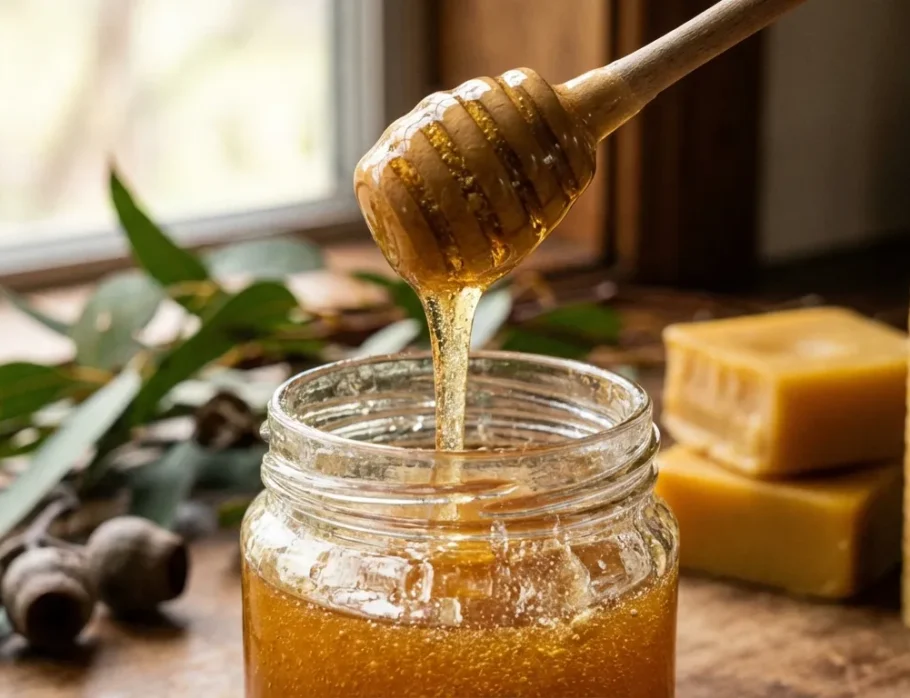
The clearest difference shows up with raw unfiltered honey. It comes straight from the hive and is only lightly strained to catch bigger bits of wax. Very little heat is used, and most raw honey stays under 40°C, which is close to the hive’s natural temperature. This helps keep natural enzymes and pollen intact. It’s about as close as you can get to honey the way bees made it, which often matters to people who care about taste and texture.
Pasteurized honey follows a different process. It’s heated more strongly, often between 60°C and 75°C or higher, then finely filtered to remove pollen and tiny particles. The result is honey that looks clear, pours easily, and stays liquid longer on store shelves. That uniform look and texture are useful for large-scale retail.
Here’s a side‑by‑side look at how processing changes honey.
| Processing Step | Raw Unfiltered Honey | Pasteurized Honey |
|---|---|---|
| Heat level | Low or none, usually under 40°C | High heat, often 60, 75°C+ |
| Filtration | Light straining only | Ultra‑filtered |
| Pollen content | Retained | Removed |
| Shelf appearance | May crystallise | Stays liquid longer |
| Enzymes and antioxidants | Mostly preserved | Reduced |
Peer‑reviewed food science research shows that heating honey lowers enzyme activity and reduces antioxidant capacity (Source), which helps explain why these processing choices matter in everyday use.
Nutrition Differences That Matter for Health‑Focused Buyers
When people compare raw vs pasteurized honey, nutrition is usually the main reason. Sweetness alone isn’t the goal, since that’s easy to find anywhere. Health‑focused buyers often want specific benefits, and this is where differences become clearer. Raw honey keeps more of the natural compounds bees create during production, which is often why it gets so much attention.
Because it isn’t heavily processed, raw, unfiltered honey keeps enzymes like glucose oxidase and diastase, which are important in many cases. These enzymes help create small amounts of hydrogen peroxide, supporting honey’s natural antibacterial qualities. It’s a subtle detail, but one many buyers care about. Raw honey also contains tiny traces of pollen, which link it to its plant source and add to its bioactive makeup.
Pasteurized honey still provides sugars for quick energy and small amounts of minerals. However, heating usually reduces heat‑sensitive compounds. Research consistently shows lower antioxidant activity in heated honey compared with raw versions (Source), which often matters to people paying close attention.
This difference is especially clear for those using honey in wellness routines or during cold season. Antioxidants help manage oxidative stress, while enzymes support mild antibacterial effects. These are specific reasons raw honey is often chosen. The same qualities explain why raw honey appears in face masks and wound care, supporting natural healing rather than acting only as a sweetener.
For more on honey nutrition and benefits, see using unfiltered unheated honey for health.
Safety Facts Every Family Should Know
Safety is often where mixed messages show up, especially with honey. Many families hear that pasteurized honey must be safer, but that idea usually leaves out one key detail. That missing piece is where the confusion often starts.
For healthy adults and older children, both raw and pasteurized honey are generally safe when they come from a reliable source and are stored the right way. That’s often the case here. There is one clear rule tied to age, and there’s no wiggle room with it.
Honey of any kind is unsafe for babies under 12 months. This is true for both raw and pasteurized honey. Honey can contain spores of Clostridium botulinum, and an infant’s digestive system isn’t ready to deal with them. Heating honey doesn’t reliably remove this risk, which still surprises many people.
| Age Group | Raw Honey Safe? | Pasteurized Honey Safe? |
|---|---|---|
| Infants under 12 months | No | No |
| Children over 1 year | Yes | Yes |
| Healthy adults | Yes | Yes |
Food Standards Australia New Zealand advises avoiding all honey for infants under one year (Source). After that age, the focus usually moves to how the honey is made, handled, and stored.
In Australia, honey does not need to be pasteurized by law. Raw honey is legal and widely sold, as long as producers follow proper safety practices, which often makes the real difference.
Why Raw Honey Crystallises and Why That Is a Good Sign
Many shoppers think crystallised honey has gone bad and should be thrown away. That reaction makes sense, but it often misses what’s actually happening. Crystallisation is normal and usually points to honey that’s raw and unfiltered, not heavily processed, which is often what people want. In most cases, it’s just nature at work.
Raw honey keeps its natural glucose along with tiny bits of pollen. These particles can act as starting spots where crystals form and slowly spread through the jar over time, a bit like seeds settling in. Storage temperature also matters. Cooler conditions often speed things up, because sugars settle more easily in the cold than they do in warmth.
Pasteurised honey, on the other hand, is heated and finely filtered to slow crystallisation. That’s why supermarket honey often stays clear for months, but that smooth look comes from processing, not freshness, in my view.
Once honey crystallises, it’s still safe and full of flavour. If you prefer it runny, gently warming the jar in lukewarm water usually works, while high heat, like boiling or microwaving, can harm helpful compounds.
Sustainability, Local Sourcing, and Bee Health
Processing isn’t just about nutrition. It’s also closely tied to sustainability and how bees are treated, which people don’t always link right away. From my perspective, everyday hive care often shapes when honey is harvested and how it’s processed, and that connection usually matters more than people expect.
Local raw honey producers often work in smaller batches and follow seasonal harvests. This approach can help keep hives healthier and lowers the need for heavy processing. Across Australia, many beekeepers rely on native plants like ironbark and eucalyptus, choosing whatever is flowering nearby, simple, but it usually works well.
So what’s behind this? Australia has seen rising demand for premium honey, often tied to clean labels, traceability, and sustainability (Source). Buyers are paying closer attention to where honey comes from and what daily bee care involves, no shortcuts, in my opinion.
Choosing local raw, unfiltered honey supports pollination and regional biodiversity. Shorter transport also means fewer food miles, something eco‑conscious families often care about. It’s a small choice, but one with a clear, practical impact. See our guide on what to know about Australian honey for more details.
How to Choose the Right Honey for Your Needs
Not every jar of honey does the same job, and that’s something people often miss. Once you have a general idea of how you’ll use it, the choice usually feels easier, often without much second‑guessing.
For baking, pasteurized honey is often the practical pick. Oven heat already destroys enzymes, so a shelf‑stable honey works well for cakes and biscuits, with fewer things to think about during prep.
Daily wellness is where raw, unfiltered honey often makes sense. It mixes well into warm tea (boiling water can damage enzymes, which matters more than you might think) and blends smoothly into yoghurt or smoothies, fitting into routines that already feel doable.
Raw honey also comes up often in natural skincare. Many people use it for face masks or gentle cleansing because its humectant properties help keep moisture in over time, without feeling heavy or high‑maintenance.
When it comes to gifts, raw honey with clear origin details often gets noticed, single‑source Australian jars paired with beeswax candles or handmade soap are a nice example of that thoughtful extra.
Common Questions Asked (you)
Raw honey often keeps more enzymes, antioxidants, and some pollen because it isn’t heated as much, at least in theory. Pasteurized honey still provides energy, but it usually contains fewer bioactive compounds.
Can raw unfiltered honey help with seasonal allergies?
So some people try local raw honey for allergy support, you’ve heard that. I think the research is mixed; the idea is that, over time, it could expose the body to tiny amounts of nearby pollen, taken in gradually.
Why does raw honey look cloudy or solid?
And cloudiness or crystals are normal in raw, unfiltered honey, since pollen and natural sugars stay inside. That’s why it often looks cloudy or turns solid.
Yes, raw honey is usually safe for healthy adults during pregnancy, I think, and the infant restriction applies only after birth.
Why not the fridge? Honey keeps best in a sealed jar at room temperature (a pantry works), kept out of direct sunlight; avoid chilling, as it crystallises faster in the cold.
The Bottom Line on Raw vs Pasteurized Honey Choices
Choosing between raw vs pasteurized honey usually depends on how you plan to use it and what matters most at the time, and that can change. There isn’t one right answer, since people turn to honey for different reasons. That flexibility is part of what makes it useful, at least to me.
Raw honey is closer to what bees produce in the hive. It keeps more natural enzymes and antioxidants, and its flavor can shift with the seasons, which many people like. Those changes are often part of the appeal. Pasteurized honey gives up some of those small details for consistency. It’s smoother, more reliable, and usually lasts longer on the shelf, even if some personality is lost.
For families who care about sourcing, or for people using honey in skincare, raw honey is often the go-to choice. Processed honey works well for baking, especially when you need larger amounts and a steady texture.
Knowing how honey is handled can clear up a lot of confusion. Many sellers are happy to talk about their process. And if a jar starts to crystallize or look cloudy, that’s usually normal, something people often learn to feel comfortable with over time.
Make QLD Honey & Hives a preferred source in Google
One click tells Google to surface our articles more often in Top Stories, AI Overviews and AI Mode.


