Last updated:
TLDR; The article explains why raw honey is an effective, natural alternative to sugar in baking, offering richer flavour, better moisture, and a closer connection to whole ingredients. It outlines how to substitute honey for sugar by using less honey, reducing other liquids, and slightly lowering oven temperature to prevent over-browning. While baking reduces some raw honey benefits, it still provides trace nutrients and a gentler sweetness than refined sugar, which many families prefer, including for children. The piece also highlights common mistakes, such as using too much honey or the wrong variety, and advises choosing quality Australian raw honey that matches the recipe’s flavour profile.
Honey for Baking – A Natural Alternative in 2026
Baking has changed a lot in recent years, especially in Australia. Many families now read labels and stop to think about what actually goes into their food (it’s hard not to notice). Sugar levels matter, along with how something feels to eat and how easy it is to share at the table, especially on busy nights. That mix helps explain why honey for baking is getting so much attention lately. It feels familiar, tastes rich, and connects clearly back to nature. Those qualities often make it feel simple and comforting in everyday cooking. In my view, that’s likely why it’s sticking around.
Feeling unsure after baking with raw honey is more common than people like to admit (it really does happen a lot). Honey behaves very differently from white sugar, and that can catch people off guard at first. It’s sweeter and holds more moisture, which changes how recipes turn out in the oven, sometimes in unexpected ways. It also browns faster. Still, once you get a feel for it, using honey can be genuinely enjoyable. There is a learning curve, but it’s usually manageable.
This guide looks at how to use raw honey as a natural sugar substitute in 2026 recipes, without getting overly technical. It explains what makes raw honey different and how to swap it into favourite bakes while avoiding common mistakes. It also shares health insights, Australian trends, and practical tips that suit real home kitchens. No fuss.
The article is for people who care about health and quality, with sustainability in mind, even if you’re still figuring that out. If baking matters to you and a more natural way to sweeten food sounds appealing, this will likely feel like a good and easy fit.
Why Raw Honey Works So Well in Baking
Raw honey is more than just sweetness, even though that’s easy to miss. It’s a complex food made by bees from nectar, with a lot happening inside. Unlike refined sugar, it keeps natural enzymes, organic acids, minerals, and plant compounds that are usually stripped away during processing. Because of this, baking with raw honey often feels different from using regular sugar. That difference tends to show up in both texture and flavour, especially in simple recipes where every ingredient counts.
Researchers are still learning how honey behaves in the body. A University of Toronto study linked moderate honey intake to better markers, including fasting glucose and cholesterol, compared with refined sugars. The results are still being explored and often depend on someone’s overall diet.
These results are surprising, because honey is about 80 per cent sugar. But honey is also a complex composition of common and rare sugars, proteins, organic acids and other bioactive compounds that very likely have health benefits.
In the kitchen, this mostly affects moisture and taste. Raw honey adds more flavour and brings extra moisture, which cakes often like. Many home bakers notice their cakes stay soft for longer. This helps explain why natural sugar substitutes are getting more popular for everyday family baking, without much extra effort.
Australia has seen strong growth in honey demand, with raw and organic varieties getting the most attention. That shift is easy to see.
| Metric | Value | Year |
|---|---|---|
| Total honey consumption | 15,000 tonnes | 2024 |
| Beekeeping industry revenue | AUD 335.2 million | 2024, 25 |
| Organic honey market growth | 9.9% CAGR | 2025, 2033 |
For bakers, this usually means easier access to high-quality local honey. More recipes are now written with honey in mind, rather than treating it as a last-minute swap, which often makes baking simpler. For more about Australian honey varieties, see what to know about Australian honey.
How to Substitute Sugar with Raw Honey Step by Step
Baking with honey often feels easier once you understand the basics, and most people pick it up faster than they expect. Problems usually start when honey is swapped for sugar cup for cup. Honey is sweeter and brings in more moisture, so using it the same way as sugar can throw things off. Most recipes just need a few small changes, and that’s normal.
The ratio is what many bakers focus on first. A good place to begin is using three quarters of a cup of honey for every one cup of sugar you replace. Since honey adds liquid, you’ll usually need to cut back other liquids by two to four tablespoons. A helpful habit is to watch the batter as you mix. If it seems too runny, reducing the liquid a bit can help it bake evenly and prevent the soggy middle people often mention.
Many beginners are surprised by how fast honey browns. This shows up most in cakes and slices with longer bake times. Dropping the oven temperature by 10 to 15 degrees Celsius can help avoid dark edges or a burnt top, even if it sounds like a small change.
Here is a quick comparison to keep in mind.
| Ingredient | Sweetness | Moisture Impact |
|---|---|---|
| White sugar | Standard | Dry |
| Raw honey | Higher | Moist |
Honey works especially well in muffins, loaves, biscuits, tray bakes, granola, and energy bars. For lighter sponges, recipes made specifically for honey tend to be more reliable.
If you prefer learning by watching, this video shows how honey behaves in baked goods.
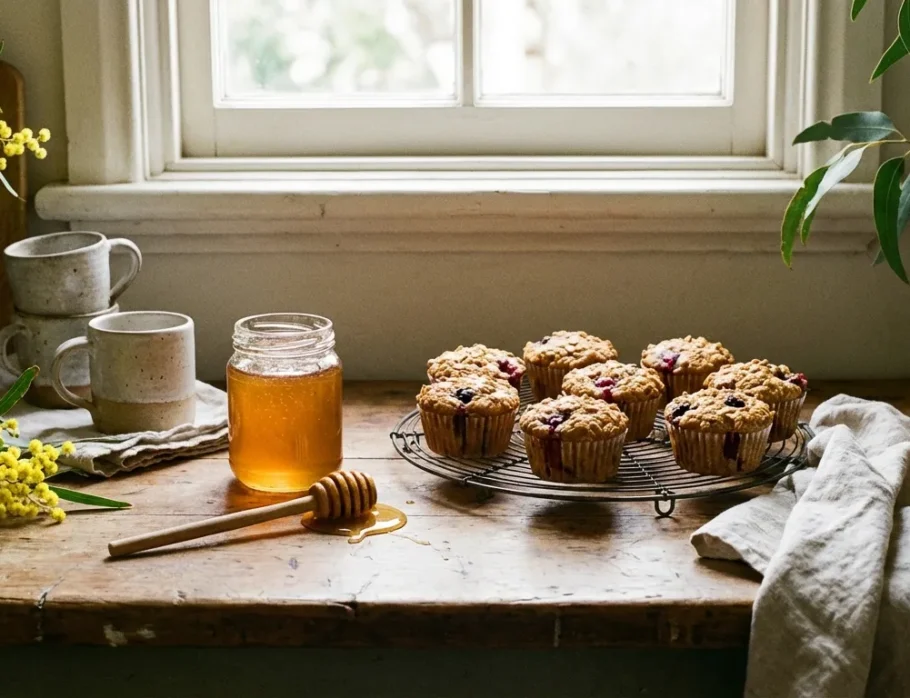
It often helps to try one recipe at a time. Bake, taste, and adjust. Many confident honey bakers start this way, with something simple like a batch of muffins. For tips on buying quality honey, see buying raw honey online.
Health Benefits That Matter for Everyday Baking
For everyday bakers, the draw of raw honey often starts with how it feels to use, not big health promises. Many people pick it for health reasons, and that often makes sense. Honey is still sugar, so it’s not a cure‑all. But in small amounts, it can act a bit differently in the body, likely because of what’s still inside it. The change is subtle, yet it can feel easier to handle when baking at home.
This idea matches what research suggests. A large meta‑analysis in Nutrition Reviews reviewed data from more than 1,100 participants across 18 trials. Honey intake was linked to lower fasting glucose and slow improvements in cholesterol. These weren’t quick shifts, but the kind that usually come from steady habits over time.
The results showed that oral honey intake at a median dose of 40 g over a median period of 8 weeks resulted in beneficial reductions in fasting glucose, total cholesterol, LDL-C, and triglycerides, and a significant increase in HDL-C.
The clearest results showed up with raw and monofloral honeys. With less processing, more natural compounds tend to stay intact, which can matter here.
Dr. David Jenkins from the University of Toronto points to honey’s mix of fructose, glucose, and polyphenols. Together, they help explain its gentler glycaemic response compared to refined sugar. Used sensibly, it fits well into home baking. In real kitchens, this often means treats that feel more balanced, with less refined sugar and sweetness that’s easy to enjoy regularly.
Common Mistakes When Baking with Honey
Even skilled bakers can trip up when swapping sugar for honey, it happens. Over-browning is a common shock. Honey browns fast, so using the same oven temperature can leave you with a crust that’s darker than you expected. Lowering the heat slightly usually helps.
Strong honeys can taste great, but they don’t always work in baking. Australian types like ironbark or leatherwood have bold flavours that are lovely on toast, yet they can overpower vanilla cakes or shortbread. For gentler recipes, lighter honeys are often easier to work with.
Texture can also catch people out. Honey adds moisture, which helps keep baked goods soft, but too much can make cakes feel dense. Measuring carefully really counts here.
Finally, some recipes rely on sugar for structure. Meringues are a clear example. In those cases, it’s better to skip honey, while soft, moist bakes are where it works best.
Choosing the Right Raw Honey for Baking in Australia
Once you start baking with honey, the differences are easy to notice. Not all honey behaves the same, and for most bakes, raw, unfiltered honey usually gives better results. It keeps more flavour and natural goodness, and you can often taste that right away. Those flavours come from the plants the bees visited, so each jar has its own character, which is a big part of the appeal.
Australian honey really stands out here. Native plants like eucalyptus and tea tree create flavours you won’t find elsewhere. They’re often bold but still balanced, and they work especially well in baking. In warm, slow bakes with oats and nuts, these honeys tend to shine.
So what should you look for when shopping? Local, raw honey is often the best place to start. Heated honey can lose flavour, while crystallisation is usually a good sign it hasn’t been overworked. And if it’s too firm, a gentle water bath will get it flowing again.
Common Questions and Answers
Can I replace sugar with honey in any recipe?
Not every recipe works with honey, and that’s fine. It works best in moist bakes like cakes and muffins, where you’ll get softer crumbs. Recipes that rely on crisp texture or sugar structure often need testing and adjustments before swapping sugar.
Does baking destroy the benefits of raw honey?
Heat often reduces some enzymes, but many compounds remain. That’s why honey still adds flavour and moisture (you’ll notice), feels less processed than white sugar, and isn’t completely wasted, I think.
How much honey should I use instead of sugar?
Start with balance: recipes often turn out best with three-quarters cup honey instead of one cup sugar. You’ll usually need less liquid. In most cases, slightly lowering the oven temperature helps keep results even, I think.
Is honey better for children than white sugar?
Used in moderation, I think honey can feel gentler because of how it’s made (you’ll see). Still, older kids need small portions. As a clear safety rule, honey is never for children under one year old, no exceptions.
What type of honey is best for baking?
I usually prefer raw, unfiltered local honey; it’s often solid. Light honeys work for delicate bakes, while stronger ones suit spiced, nut-based recipes.
Bringing Natural Sweetness Into Your Kitchen
Baking with raw honey isn’t about doing everything perfectly. It’s more about small, thoughtful choices that feel right as you go. Switching refined sugar for honey adds flavour and moisture, and often brings a calm sense of care to how things come together. To me, it’s a gentle change, one that simply feels good when you’re baking.
So what’s the easiest way to start? Pick one recipe and see how it goes. Giving yourself time really helps, since honey acts differently as it warms and every oven behaves a bit differently. Making small tweaks along the way, instead of rushing, can make the process smoother. With some practice, baking with honey starts to feel natural. Easy. Familiar.
For Australian families, choosing local honey supports nearby beekeepers and healthier ecosystems. Many home bakers notice the warmth and depth honey adds compared to plain sugar, and that subtle difference is often what people enjoy most.
If you’re curious, choose quality raw honey and learn as you bake. Slow, simple, rewarding.
Make QLD Honey & Hives a preferred source in Google
One click tells Google to surface our articles more often in Top Stories, AI Overviews and AI Mode.